Drug name
Last update: Jul 2026Islatravir (ISL)
Developer(s)
Drug information
Islatravir
Not provided
Small molecule
NRTTI
Not provided
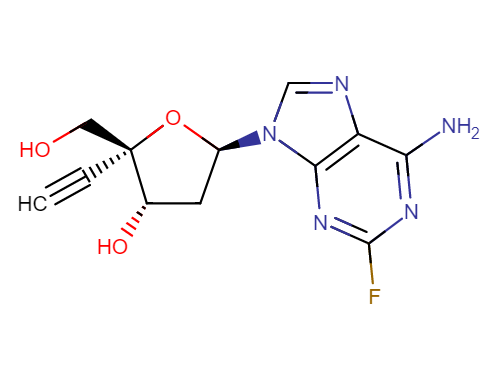
Islatravir (ISL), also known as MK-8591, is a nucleoside reverse transcriptase translocation inhibitor (NRTTI) in clinical development for HIV treatment. ISL is a first-in-class compound with a varied mechanism of action including a strong binding affinity for reverse transcriptase, the ability to block HIV primer translocation and an extended half-life enabling once-weekly oral dosing. ISL is being evaluated in several clinical trials in combination with other antiretroviral therapies including doravirine, lenacapavir and MK-8507. In 2021, the US FDA placed a clinical hold on ISL following a decrease in CD4 T-cell counts in HIV-positive patients, and reduced total lymphocyte counts in HIV-negative trial participants. The FDA clinical hold was lifted after Merck introduced lower ISL dosing
Unknown
Unknown
Therapeutic area(s)
- HIV
- Treatment
Administration route
Oral, Subcutaneous
Associated long-acting platforms
Polymeric implant, Oral solid form
Use of drug
- Administered by a nurse
- Administered by a specialty health worker
- Self-administered
- Daily
- Weekly
Dosage
investigational
Not provided
Not provided
Not provided
Not provided
Related entries
Main compound
ulonivirine (ULO)
Related compounds
Islatravir (ISL)
MK-8591B (islatravir + ulonivirine)
MK-8591D (Islatravir and Lenacapavir)
Extruded Polymer Device (EXPD)
DelSiTech Silica Matrix Drug Delivery
3D printed intravaginal rings
Refillable Nanofluidic Implant
Additional information
Developer(s)

Merck / MSD
Merck & Co., Inc. is an American multinational pharmaceutical company known as Merck Sharp & Drone (MSD) in territories outside of the USA and Canada. Merck was originally established in 1891, and is headquartered in Rahway, New Jersey. The company is particularly well known for developing and manufacturing biologic therapies, vaccines, medicines and animal health products.
Drug structure
Scale-up and manufacturing prospects
The automated lab reactor platforms EasyMax 102 and 402 (Mettler-Toledo AG, AutoChem, Switzerland) were utilised by Merck for the reaction scale-up of Islatravir synthesis. The EasyMax reactors contained integrated measurement probes for pH and temperature, FireStringO2 dissolved oxygen sensors (Pyro-Science GmbH, Germany) and the EasySampler 1210 automated sampling system.
EasyMax 102 and 402 equipped with FireStringO2 sensors and the EasySampler 1210 system. A thermal gas flow controller (Aalborg, USA) to monitor and control oxidation air-gas flow to the reactor, with a suitable compressed air-source. Reactions at the 1L scale should be conducted using the Optimal 1001 automated lab reactor platform (Mettler-Toledo) or equivalent, alongside a sintered steel frit for improved 1L gas distribution for the oxidation reactions.
Several synthetic chemical processes describing the manufacture of ISL have been published, with each approach containing around twelve and eighteen steps. However, it should be noted that these approaches have proved to be complex and highly inefficient, with marked difficulty in controlling 2’-deoxyribonucleoside anomer stereochemistry and the requirement for several protecting-group manipulations. To counter these issues, Merck developed a highly innovative and extraordinarily efficient approach utilising directed evolution to create a novel three-step biocatalytic cascade for ISL synthesis
400 MHz Briker AVANCE III and 500MHz Bruker Ultrashield spectrometer (or equivalent) for 1H, 19F, 31P and 13C NMR. An Accurate-Mass Time-of-Flight (TOF) high resolution mass spectrometer. Molecular Devices plate reader Spectra Max Plus for Spectrophotomeric analyses, alongside a Perkin Elmer polarimeter with a PCB 1500 water Peltier system for optical rotation measurements. Aglient 7890A instrument for gas chromatography. UPLC via Agilent Technologies 1290 Infinity II series or HPLC through Agilent 1100 Series. Corona Ultra RS detector by Dionex for supercritical fluid chromatography.
Excipients & delivery device(s)
Not provided
Not provided
Not provided
Not provided
Safety, Efficacy and Evidence Summary
Not provided
Not provided
Not provided
Not provided