
|
Developed by 

|
Supported by 


|
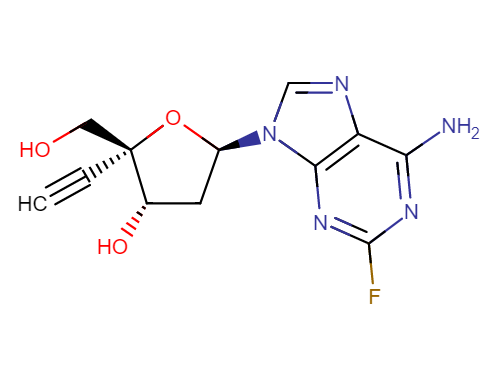
Islatravir (ISL)
Developer(s)

|
Merck / MSD Originator
https://www.msd.com/
United States Merck & Co., Inc. is an American multinational pharmaceutical company known as Merck Sharp & Drone (MSD) in territories outside of the USA and Canada. Merck was originally established in 1891, and is headquartered in Rahway, New Jersey. The company is particularly well known for developing and manufacturing biologic therapies, vaccines, medicines and animal health products. |
Drug structure
Islatravir Chemical Structure
Sourced from DrugBank
Drug information
Associated long-acting platforms
Polymeric implant, Oral solid form
Administration route
Oral, Subcutaneous
Therapeutic area(s)
Use case(s)
Use of drug
Ease of administration
Frequency of administration
User acceptance
Dosage
Available dose and strength
investigational
Maximum dose
Not provided
Recommended dosing regimen
Not provided
Additional comments
Not provided
Dosage link(s)
Not provided
Drug information
Drug's link(s)
Generic name
Brand name
Compound type
Drug class/category
Lifecycle status
Summary
Approval status
Regulatory authorities
Safety
Efficacy
Evidence Summary
Delivery device(s)
Not provided
Scale-up and manufacturing prospects
Scale-up prospects
The automated lab reactor platforms EasyMax 102 and 402 (Mettler-Toledo AG, AutoChem, Switzerland) were utilised by Merck for the reaction scale-up of Islatravir synthesis. The EasyMax reactors contained integrated measurement probes for pH and temperature, FireStringO2 dissolved oxygen sensors (Pyro-Science GmbH, Germany) and the EasySampler 1210 automated sampling system.
Tentative equipment list for manufacturing
EasyMax 102 and 402 equipped with FireStringO2 sensors and the EasySampler 1210 system. A thermal gas flow controller (Aalborg, USA) to monitor and control oxidation air-gas flow to the reactor, with a suitable compressed air-source. Reactions at the 1L scale should be conducted using the Optimal 1001 automated lab reactor platform (Mettler-Toledo) or equivalent, alongside a sintered steel frit for improved 1L gas distribution for the oxidation reactions.
Manufacturing
Several synthetic chemical processes describing the manufacture of ISL have been published, with each approach containing around twelve and eighteen steps. However, it should be noted that these approaches have proved to be complex and highly inefficient, with marked difficulty in controlling 2’-deoxyribonucleoside anomer stereochemistry and the requirement for several protecting-group manipulations. To counter these issues, Merck developed a highly innovative and extraordinarily efficient approach utilising directed evolution to create a novel three-step biocatalytic cascade for ISL synthesis
Specific analytical instrument required for characterization of formulation
400 MHz Briker AVANCE III and 500MHz Bruker Ultrashield spectrometer (or equivalent) for 1H, 19F, 31P and 13C NMR. An Accurate-Mass Time-of-Flight (TOF) high resolution mass spectrometer. Molecular Devices plate reader Spectra Max Plus for Spectrophotomeric analyses, alongside a Perkin Elmer polarimeter with a PCB 1500 water Peltier system for optical rotation measurements. Aglient 7890A instrument for gas chromatography. UPLC via Agilent Technologies 1290 Infinity II series or HPLC through Agilent 1100 Series. Corona Ultra RS detector by Dionex for supercritical fluid chromatography.
Clinical trials
(ISL monthly) MK-8591-016
Identifier
NCT04003103
Link
https://clinicaltrials.gov/study/NCT04003103
Phase
Phase II
Status
Completed
Sponsor
Merck Sharp & Dohme LLC
More details
Not provided
Purpose
This study will evaluate the safety, tolerability and pharmacokinetics (PK) of 6 once-monthly doses of oral islatravir (60 mg and 120 mg) compared with placebo in adults at low risk of HIV-1 infection
Interventions
Intervention 1
Intervention 2
Countries
Sites / Institutions
Not provided
Trials dates
Anticipated Start Date
Not provided
Actual Start Date
2019-09-19
Anticipated Date of Last Follow-up
Not provided
Estimated Primary Completion Date
Not provided
Estimated Completion Date
Not provided
Actual Primary Completion Date
2022-03-18
Actual Completion Date
2022-11-24
Studied populations
Age Cohort
- Adults
- Older Adults
Genders
- All
Accepts pregnant individuals
No
Accepts lactating individuals
No
Accepts healthy individuals
Yes
Comments about the studied populations
Inclusion Criteria: - Is in general good health with acceptable laboratory values at screening. - Is confirmed HIV-uninfected based on negative HIV-1/HIV-2 test result before randomization. - Has low risk of HIV infection, within 12 months prior to screening visit or the rescreening visit (if applicable). - Use contraceptives consistent with local regulations. - Female is not pregnant or breastfeeding, and is not a woman of childbearing potential (WOCBP). - A WOCBP is using an acceptable contraceptive method, or is abstinent from heterosexual intercourse as their preferred and usual lifestyle; or has a negative pregnancy test.
Health status
Study type
Interventional (clinical trial)
Enrollment
242
Allocation
Randomized
Intervention model
Parallel Assignment
Intervention model description
Not provided
Masking
Double-blind masking
Masking description
Double (Participant, Investigator)
Frequency of administration
Studied LA-formulation(s)
Studied route(s) of administration
Use case
PrEP
Indication(s)
HIV
Key resources
| Type | Title | Content | Link |
|---|---|---|---|
| Link | Safety and pharmacokinetics of oral islatravir once monthly for HIV pre-exposure prophylaxis (PrEP): week 24 analysis of a phase 2a trial | https://theprogramme.ias2021.org/Abstract/Abstract/2361 |
(ISL QM PrEP) IMPOWER-022
Identifier
NCT04644029
Link
https://clinicaltrials.gov/study/NCT04644029
Phase
Phase III
Status
Terminated
Sponsor
Merck Sharp & Dohme LLC
More details
Voluntarily terminated due to benefit/risk assessment.
Purpose
This study will evaluate whether oral islatravir (ISL) is effective in preventing Human Immunodeficiency Virus Type 1 (HIV-1) infection in women at high-risk for HIV-1 infection.
Interventions
Intervention 1
Intervention 2
Intervention 3
Intervention 4
Countries
Sites / Institutions
Not provided
Trials dates
Anticipated Start Date
Not provided
Actual Start Date
2021-02-24
Anticipated Date of Last Follow-up
2024-08-06
Estimated Primary Completion Date
Not provided
Estimated Completion Date
2024-07-01
Actual Primary Completion Date
2023-07-18
Actual Completion Date
2024-06-11
Studied populations
Age Cohort
- Adolescents
- Adults
Genders
- Cisgender female
Accepts pregnant individuals
No
Accepts lactating individuals
No
Accepts healthy individuals
Yes
Comments about the studied populations
Inclusion Criteria: - Confirmed HIV-uninfected based on negative HIV-1/HIV-2 test results before randomization. - Sexually active (vaginal and/or anal sex) with a male sexual partner in the 30 days prior to screening. - High risk for HIV-1 infection. - Not pregnant or breastfeeding, and one of the following conditions applies: - Not a woman of childbearing potential (WOCBP) or is a WOCBP and is using an acceptable contraceptive method during the intervention period and for at least 42 days after the last dose. - A WOCBP must have a negative pregnancy test within 24 hours prior to the first dose of study intervention.
Health status
Study type
Interventional (clinical trial)
Enrollment
730
Allocation
Randomized
Intervention model
Parallel Assignment
Intervention model description
Not provided
Masking
Triple-blind masking
Masking description
Triple (Participant, Care Provider, Investigator)
Frequency of administration
Studied LA-formulation(s)
Studied route(s) of administration
Use case
PrEP
Indication(s)
HIV
Key resources
(ISL QM PrEP) IMPOWER-024
Identifier
NCT04652700
Link
https://clinicaltrials.gov/study/NCT04652700
Phase
Phase III
Status
Completed
Sponsor
Merck Sharp & Dohme LLC
More details
Voluntarily terminated due to benefit/risk assessment.
Purpose
Evaluate the safety and tolerability of oral Islatravir (ISL) once monthly as Preexposure Prophylaxis.
Interventions
Intervention 1
Intervention 2
Intervention 3
Intervention 4
Countries
Sites / Institutions
Not provided
Trials dates
Anticipated Start Date
Not provided
Actual Start Date
2021-03-15
Anticipated Date of Last Follow-up
Not provided
Estimated Primary Completion Date
Not provided
Estimated Completion Date
Not provided
Actual Primary Completion Date
2023-08-04
Actual Completion Date
2023-08-04
Studied populations
Age Cohort
- Adolescents
- Adults
- Older Adults
Genders
- Cisgender male
- Transgender female
Accepts pregnant individuals
Unspecified
Accepts lactating individuals
Unspecified
Accepts healthy individuals
Yes
Comments about the studied populations
Cisgender men who have sex with men (MSM) and transgender women (TGW) who have sex with men.
Health status
Study type
Interventional (clinical trial)
Enrollment
494
Allocation
Randomized
Intervention model
Parallel Assignment
Intervention model description
Not provided
Masking
Double-blind masking
Masking description
In Study Part 1, double-blind with in-house blinding is used. In Study Part 2, sponsor personnel not directly involved with blinded safety monitoring will be unblinded to participants' randomized study intervention in Part 1 (personnel involved with Part 2 will remain blinded). In Study Part 3, al participants, investigators, and Sponsor personnel are unblinded as to the participant's original randomized intervention group.
Frequency of administration
Studied LA-formulation(s)
Studied route(s) of administration
Use case
PrEP
Indication(s)
HIV
Key resources
(ISL with GAHT) MK-8591-035
Identifier
NCT05130086
Link
https://clinicaltrials.gov/study/NCT05130086
Phase
Phase II
Status
Withdrawn
Sponsor
Merck Sharp & Dohme LLC
More details
Withdrawn due to Business Reasons.
Purpose
Evaluate the safety and tolerability of Islatravir (ISL) in trans and gender diverse participants who are receiving gender-affirming hormone therapy and are at low-risk for HIV-1 infection.
Interventions
Intervention 1
Countries
Not provided
Sites / Institutions
Not provided
Trials dates
Anticipated Start Date
2022-10-17
Actual Start Date
Not provided
Anticipated Date of Last Follow-up
2022-10-13
Estimated Primary Completion Date
2024-03-25
Estimated Completion Date
2024-03-25
Actual Primary Completion Date
Not provided
Actual Completion Date
Not provided
Studied populations
Age Cohort
- Adults
- Older Adults
Genders
- Transgender female
- Transgender male
- Intersex
- Gender non-binary
Accepts pregnant individuals
No
Accepts lactating individuals
No
Accepts healthy individuals
Yes
Comments about the studied populations
Study participants must identify with a gender that is different from that assigned at birth.
Health status
Study type
Interventional (clinical trial)
Enrollment
Not provided
Allocation
Not provided
Intervention model
Single group assignment
Intervention model description
Not provided
Masking
Open label
Masking description
None (Open Label)
Frequency of administration
Studied LA-formulation(s)
Studied route(s) of administration
Use case
PrEP
Indication(s)
HIV
Key resources
(ISL implant PrEP) MK-8591-043
Identifier
NCT05115838
Link
https://clinicaltrials.gov/study/NCT05115838
Phase
Phase II
Status
Withdrawn
Sponsor
Merck Sharp & Dohme LLC
More details
Withdrawn for business reasons.
Purpose
Evaluate the safety, tolerability, and pharmacokinetics (PK) of an islatravir (ISL)-eluting implant
Interventions
Intervention 1
Intervention 2
Countries
Not provided
Sites / Institutions
Not provided
Trials dates
Anticipated Start Date
2024-01-04
Actual Start Date
Not provided
Anticipated Date of Last Follow-up
Not provided
Estimated Primary Completion Date
2025-10-02
Estimated Completion Date
2025-10-02
Actual Primary Completion Date
Not provided
Actual Completion Date
Not provided
Studied populations
Age Cohort
- Adults
Genders
- All
Accepts pregnant individuals
No
Accepts lactating individuals
No
Accepts healthy individuals
Yes
Comments about the studied populations
Inclusion Criteria: - Is in good health. - Is confirmed human immunodeficiency virus (HIV)-uninfected. - Is at low risk of HIV infection. - For males, uses contraception in accordance with local regulations regarding contraception use for those participating in clinical trials. - For females, is not pregnant or breastfeeding and one of the following applies: (i) Is not a participant of childbearing potential (POCBP). (ii) Is a POCBP and uses an acceptable contraception method or is abstinent.
Health status
Study type
Interventional (clinical trial)
Enrollment
Not provided
Allocation
Randomized
Intervention model
Parallel Assignment
Intervention model description
Not provided
Masking
Triple-blind masking
Masking description
Triple (Participant, Investigator, Outcomes Assessor)
Frequency of administration
Studied LA-formulation(s)
Studied route(s) of administration
Use case
PrEP
Indication(s)
HIV
Key resources
(ISL monoth.) MK-8591-003
Identifier
NCT02217904
Link
https://clinicaltrials.gov/study/NCT02217904
Phase
Phase I
Status
Completed
Sponsor
Merck Sharp & Dohme LLC
More details
Not provided
Purpose
Evaluate the safety, tolerability, pharmacokinetics, and anti-retroviral therapy activity of Islatravir (MK-8591) monotherapy in ART-naive, HIV-1 infected participants.
Interventions
Intervention 1
Countries
Not provided
Sites / Institutions
Not provided
Trials dates
Anticipated Start Date
Not provided
Actual Start Date
2015-09-17
Anticipated Date of Last Follow-up
2019-07-24
Estimated Primary Completion Date
Not provided
Estimated Completion Date
Not provided
Actual Primary Completion Date
2017-05-11
Actual Completion Date
2017-05-11
Studied populations
Age Cohort
- Adults
Genders
- All
Accepts pregnant individuals
No
Accepts lactating individuals
No
Accepts healthy individuals
No
Comments about the studied populations
Inclusion Criteria: - Non-pregnant, non-breast feeding, postmenopausal or surgically sterile female. - Female with reproductive potential agrees to use (or have male partner use) two acceptable methods of birth control. - Male agrees to use acceptable method of contraception during study and for 90 days after last dose of trial drug. - Has stable baseline health, other than HIV infection. - Has no significantly abnormal electrocardiogram. - Is HIV-1 positive. - Have a screening plasma HIV-1 RNA ≥ 10,000 copies/mL within 30 days prior to the treatment phase of this study. For inclusion in Panel Islatravir Extended Observation, participants must also have a screening plasma HIV-1 RNA ≤ 25,000 copies/mL within 30 days prior to the treatment phase. - Is ART naive.
Health status
Study type
Interventional (clinical trial)
Enrollment
30
Allocation
Randomized
Intervention model
Parallel Assignment
Intervention model description
Not provided
Masking
Open label
Masking description
None (Open Label)
Frequency of administration
Studied LA-formulation(s)
Studied route(s) of administration
Use case
Treatment
Indication(s)
HIV
Key resources
| Type | Title | Content | Link |
|---|---|---|---|
| Link | Safety, pharmacokinetics, and antiretroviral activity of islatravir (ISL, MK-8591), a novel nucleoside reverse transcriptase translocation inhibitor, following single-dose administration | https://doi.org/10.1016/s2352-3018(19)30372-8 |
(ISL implant) MK-8591-007
Identifier
EudraCT: 2018-001329-18
Link
https://www.nature.com/articles/s41591-021-01479-3
Phase
Phase I
Status
Completed
Sponsor
Merck Sharp & Dohme LLC
More details
Not provided
Purpose
Safety and pharmacokinetics of islatravir subdermal implant for HIV-1 pre-exposure prophylaxis: a randomized, placebo-controlled phase 1 trial
Interventions
Intervention 1
Intervention 2
Countries
Sites / Institutions
Not provided
Trials dates
Anticipated Start Date
Not provided
Actual Start Date
2018-06-04
Anticipated Date of Last Follow-up
Not provided
Estimated Primary Completion Date
Not provided
Estimated Completion Date
Not provided
Actual Primary Completion Date
2018-07-05
Actual Completion Date
2019-01-25
Studied populations
Age Cohort
- Adults
Genders
- All
Accepts pregnant individuals
No
Accepts lactating individuals
No
Accepts healthy individuals
Yes
Comments about the studied populations
Not provided
Health status
Study type
Interventional (clinical trial)
Enrollment
16
Allocation
Randomized
Intervention model
Parallel Assignment
Intervention model description
Not provided
Masking
Double-blind masking
Masking description
Not provided
Frequency of administration
Studied LA-formulation(s)
Studied route(s) of administration
Use case
PrEP
Indication(s)
HIV
Key resources
| Type | Title | Content | Link |
|---|---|---|---|
| Link | Safety and pharmacokinetics of islatravir subdermal implant for HIV-1 pre-exposure prophylaxis: a randomized, placebo-controlled phase 1 trial | https://www.nature.com/articles/s41591-021-01479-3 |
(ISL/DOR OLE) 8591A-054
Identifier
NCT05766501
Link
https://clinicaltrials.gov/study/NCT05766501
Phase
Phase III
Status
Active, not recruiting
Sponsor
Merck Sharp & Dohme LLC
More details
The purpose of this study is to evaluate the safety and tolerability of DOR/ISL in adult participants with HIV-1 who had been previously treated with DOR/ISL in earlier clinical studies. There are no formal hypotheses to be tested in this study.
Purpose
A Study of Doravirine/Islatravir (DOR/ISL, MK-8591A) for the Treatment of Human Immunodeficiency Virus 1 (HIV-1) Infection in Participants Who Previously Received DOR/ISL (MK-8591A-054)
Interventions
Intervention 1
Countries
Sites / Institutions
Not provided
Trials dates
Anticipated Start Date
Not provided
Actual Start Date
2023-03-17
Anticipated Date of Last Follow-up
2025-12-11
Estimated Primary Completion Date
Not provided
Estimated Completion Date
2028-09-06
Actual Primary Completion Date
2025-10-16
Actual Completion Date
Not provided
Studied populations
Age Cohort
- Adults
- Older Adults
Genders
- All
Accepts pregnant individuals
Unspecified
Accepts lactating individuals
Unspecified
Accepts healthy individuals
No
Comments about the studied populations
Inclusion Criteria: * Is currently receiving doravirine/islatravir (DOR/ISL) adult fixed dose combination (FDC) tablet in Merck Sharp \& Dohme (MSD)-sponsored clinical studies (MK-8591A-018, -020, and -033 \[except for heavily treatment-experienced (HTE) participants\]). Exclusion Criteria: * Has confirmed HIV-1 RNA ≥200 copies/mL in MSD DOR/ISL (100 mg/0.75 mg) MK-8591A-018 /-020, or at screening for participants entering from DOR/ISL (100 mg/0.75 mg) MK-8591A-033. * Has confirmatory laboratory findings for cluster of differentiation 4+ (CD4+) T-cell counts or lymphocyte counts in the prior DOR/ISL study that meet criteria for discontinuation of DOR/ISL. * Is a HTE participant receiving treatment in MK-8591A-019 or -033.
Health status
Not provided
Study type
Interventional (clinical trial)
Enrollment
641
Allocation
Not provided
Intervention model
Single group assignment
Intervention model description
Not provided
Masking
Open label
Masking description
Not provided
Frequency of administration
Studied LA-formulation(s)
Studied route(s) of administration
Use case
Treatment
Indication(s)
HIV
Key resources
(ISL/DOR food) 8591A-055
Identifier
NCT06719570
Link
https://clinicaltrials.gov/study/NCT06719570
Phase
Phase I
Status
Completed
Sponsor
Merck Sharp & Dohme LLC
More details
The purpose of this study is to learn what happens to MK-8591A in a person's body over time. Researchers will compare what happens to MK-8591A in the body when it is given with and without food.
Purpose
A Study of Doravirine and Islatravir as a Single Entity or Combination Therapy and the Effect of Food in Healthy Adult Participants (MK-8591A-055)
Interventions
Intervention 1
Intervention 2
Intervention 3
Countries
Sites / Institutions
Not provided
Trials dates
Anticipated Start Date
Not provided
Actual Start Date
2024-01-23
Anticipated Date of Last Follow-up
2024-12-02
Estimated Primary Completion Date
Not provided
Estimated Completion Date
Not provided
Actual Primary Completion Date
2024-03-15
Actual Completion Date
2024-03-15
Studied populations
Age Cohort
- Adults
Genders
- All
Accepts pregnant individuals
Unspecified
Accepts lactating individuals
Unspecified
Accepts healthy individuals
Yes
Comments about the studied populations
Inclusion Criteria: Inclusion Criteria include, but are not limited to: * Has a body mass index (BMI) ≥ 18.0 and ≤ 32.0 kg/m\^2 * Is medically healthy with no clinically significant medical history, physical examination, clinical laboratory profiles, vital signs, and electrocardiograms (ECGs) Exclusion Criteria: Exclusion Criteria include, but are not limited to: * Has a history or presence of clinically significant endocrine, gastrointestinal, cardiovascular, hematological, hepatic, immunological, renal, respiratory, genitourinary, or major neurological (including stroke and chronic seizures) abnormalities or diseases * Has a history of cancer (malignancy)
Health status
Not provided
Study type
Interventional (clinical trial)
Enrollment
24
Allocation
Randomized
Intervention model
Cross-over assignment
Intervention model description
Not provided
Masking
Open label
Masking description
Not provided
Frequency of administration
Studied LA-formulation(s)
Studied route(s) of administration
Use case
Treatment
Indication(s)
HIV
Key resources
(ISL/3TC PK) 8591-058
Identifier
NCT06811246
Link
https://clinicaltrials.gov/study/NCT06811246
Phase
Phase I
Status
Completed
Sponsor
Merck Sharp & Dohme LLC
More details
The goal of this study is to learn what happens to the medication islatravir (ISL), in a healthy person's body over time--called a pharmacokinetic (PK) study. Researchers want to compare the amount of islatravir in the blood when it is taken alone as a single dose and when it is taken with multiple doses of another medication called lamivudine (3TC).
Purpose
A Clinical Study of Islatravir and Its Interaction With Lamivudine (MK-8591-058)
Interventions
Intervention 1
Intervention 2
Countries
Sites / Institutions
Not provided
Trials dates
Anticipated Start Date
Not provided
Actual Start Date
2024-02-07
Anticipated Date of Last Follow-up
2025-01-31
Estimated Primary Completion Date
Not provided
Estimated Completion Date
Not provided
Actual Primary Completion Date
2024-07-14
Actual Completion Date
2024-07-14
Studied populations
Age Cohort
- Adults
Genders
- All
Accepts pregnant individuals
Unspecified
Accepts lactating individuals
Unspecified
Accepts healthy individuals
Yes
Comments about the studied populations
Inclusion Criteria: The key inclusion criteria include but are not limited to the following: * Is in good health before randomization * Has a body mass index (BMI) ≥18 and ≤32 kg/m\^2 Exclusion Criteria: The key exclusion criteria include but are not limited to the following: * Has a history of clinically significant endocrine, gastrointestinal (GI), cardiovascular, hematological, hepatic, immunological, renal, respiratory, genitourinary, or major neurological (including stroke and chronic seizures) abnormalities or diseases * Is a smoker and/or has used nicotine or nicotine-containing products (for example, nicotine patch and electronic cigarette) within 3 months prior to entering the study
Health status
Not provided
Study type
Interventional (clinical trial)
Enrollment
20
Allocation
Not provided
Intervention model
Single group assignment
Intervention model description
Not provided
Masking
Open label
Masking description
Not provided
Frequency of administration
Not provided
Studied LA-formulation(s)
Not provided
Studied route(s) of administration
Use case
Not provided
Indication(s)
HIV
Key resources
(ISL/DOR lact.) 8591A-061
Identifier
NCT07086079
Link
https://clinicaltrials.gov/study/NCT07086079
Phase
Phase I
Status
Completed
Sponsor
Merck Sharp & Dohme LLC
More details
The goal of this study is to learn what happens to doravirine (DOR) and islatravir (ISL) in a healthy lactating female's body over time. Researchers want to learn if DOR and ISL are in breast milk.
Purpose
A Study of Doravirine/Islatravir in Healthy Lactating Females (MK-8591A-061)
Interventions
Intervention 1
Countries
Sites / Institutions
Not provided
Trials dates
Anticipated Start Date
Not provided
Actual Start Date
2025-09-26
Anticipated Date of Last Follow-up
2026-02-19
Estimated Primary Completion Date
Not provided
Estimated Completion Date
Not provided
Actual Primary Completion Date
2025-12-08
Actual Completion Date
2026-02-04
Studied populations
Age Cohort
- Adults
- Older Adults
Genders
- Female
Accepts pregnant individuals
Unspecified
Accepts lactating individuals
Unspecified
Accepts healthy individuals
Yes
Comments about the studied populations
Inclusion Criteria: The main inclusion criteria include but are not limited to the following: * Is at least 6-weeks postpartum at the time of administration of study drug, following the delivery of a healthy singleton neonate * Is willing and able to express breast milk using an electric pump prior to study drug administration and is expected to be able to express at least 4 times over a 24-hour period after study drug administration Exclusion Criteria: The main exclusion criteria include but are not limited to the following: * Has a history of clinically significant endocrine, gastrointestinal, cardiovascular, hematological, hepatic, immunological, renal, respiratory, genitourinary, psychiatric, or major neurological (including stroke and chronic seizures) abnormalities or diseases *
Health status
Not provided
Study type
Interventional (clinical trial)
Enrollment
12
Allocation
Not provided
Intervention model
Single group assignment
Intervention model description
Not provided
Masking
Open label
Masking description
Not provided
Frequency of administration
Studied LA-formulation(s)
Studied route(s) of administration
Use case
Treatment
Indication(s)
HIV
Key resources
(ISL/DOR Japan) MK-8591A-039
Identifier
jRCT2031200365
Link
https://jrct.niph.go.jp/latest-detail/jRCT2031200365
Phase
Phase I
Status
Completed
Sponsor
Not provided
More details
Not provided
Purpose
A Single-dose Clinical Study to Evaluate the Effect of Food on the Pharmacokinetics of Doravirine / Islatravir (MK-8591A) Final Market Image Formulation in Healthy Adult Japanese Participants.
Interventions
Not provided
Countries
Sites / Institutions
Not provided
Trials dates
Anticipated Start Date
Not provided
Actual Start Date
Not provided
Anticipated Date of Last Follow-up
Not provided
Estimated Primary Completion Date
Not provided
Estimated Completion Date
Not provided
Actual Primary Completion Date
Not provided
Actual Completion Date
Not provided
Studied populations
Age Cohort
Unspecified
Genders
Unspecified
Accepts pregnant individuals
Unspecified
Accepts lactating individuals
Unspecified
Accepts healthy individuals
Unspecified
Comments about the studied populations
Not provided
Health status
Not provided
Study type
Not provided
Enrollment
Not provided
Allocation
Not provided
Intervention model
Not provided
Intervention model description
Not provided
Masking
Not provided
Masking description
Not provided
Frequency of administration
Studied LA-formulation(s)
Studied route(s) of administration
Use case
Treatment
Indication(s)
HIV
Key resources
(ISL/DOR pead. ) - 8591A-028
Identifier
NCT04295772
Link
https://clinicaltrials.gov/study/NCT04295772
Phase
Phase II
Status
Completed
Sponsor
Merck Sharp & Dohme LLC
More details
This is a phase 2, single-group, multi-site, open-label study of an islatravir/doravirine (ISL/DOR, MK-8591A) fixed dose combination (FDC) for the treatment of human immunodeficiency virus type 1 (HIV-1) infection in pediatric participants who are virologically suppressed (VS) on antiretroviral therapy (ART) for ≥3 months or are treatment-naive (TN). The primary purposes of the study are 1) to examine the steady-state pharmacokinetics (PK) of ISL in plasma; 2) the steady-state PK of ISL-triphosphate (ISL-TP) in peripheral blood mononuclear cells (PBMCs); and 3) to examine the safety and tolerability of ISL/DOR.
Purpose
Doravirine/Islatravir (DOR/ISL) in Pediatric Participants With Human Immunodeficiency Virus Type 1 (HIV-1) Who Are <18 Years of Age and Weigh ≥35 kg (MK-8591A-028)
Interventions
Intervention 1
Countries
Sites / Institutions
Not provided
Trials dates
Anticipated Start Date
Not provided
Actual Start Date
2020-11-26
Anticipated Date of Last Follow-up
2024-01-09
Estimated Primary Completion Date
Not provided
Estimated Completion Date
Not provided
Actual Primary Completion Date
2021-12-21
Actual Completion Date
2023-01-25
Studied populations
Age Cohort
- Children
- Adolescents
Genders
- All
Accepts pregnant individuals
Unspecified
Accepts lactating individuals
Unspecified
Accepts healthy individuals
No
Comments about the studied populations
Inclusion Criteria: * Is HIV-1 positive, is \<18 years of age, and weighs ≥35 kg at screening. * VS Participants: Is HIV-1 positive at Screening with plasma HIV-1 RNA \<50 copies/mL and has been receiving continuous, stable oral 2-drug or 3-drug combination ART ± PK booster with documented viral suppression for ≥3 months prior to providing documented informed consent/assent and has no history of prior virologic treatment failure on any past or current regimen. * TN Participants: Is HIV-1 positive at Screening with plasma HIV-1 RNA ≥500 copies/mL and is naive to ART defined as having received \<=10 days of prior therapy with any antiretrovirals following HIV-1 diagnosis other than pre-exposure prophylaxis (PrEP) or potentially exposed person (PEP). * If female, is not pregnant or breastfee
Health status
Not provided
Study type
Interventional (clinical trial)
Enrollment
42
Allocation
Not provided
Intervention model
Single group assignment
Intervention model description
Not provided
Masking
Open label
Masking description
Not provided
Frequency of administration
Studied LA-formulation(s)
Studied route(s) of administration
Use case
Treatment
Indication(s)
HIV
Key resources
(ISL/DOR Naive PLHIV) 8591A-053
Identifier
NCT05705349
Link
https://clinicaltrials.gov/study/NCT05705349
Phase
Phase III
Status
Active, not recruiting
Sponsor
Merck Sharp & Dohme LLC
More details
This is a randomized, active-controlled, double-blind clinical study designed to evaluate the antiretroviral activity, safety, and tolerability of doravirine/islatravir (DOR/ISL \[MK-8591A\]) in treatment-naïve participants with human immunodeficiency virus type 1 (HIV-1) infection. It is hypothesized that DOR/ISL is non-inferior to bictegravir/emtricitabine/tenofovir alafenamide (BIC/FTC/TAF) as assessed by the percentage of participants with HIV-1 ribonucleic acid (RNA) \<50 copies/mL at Week 48.
Purpose
DOR/ISL in HIV-1 Antiretroviral Treatment-naïve Participants (MK-8591A-053)
Interventions
Intervention 1
Intervention 2
Intervention 3
Intervention 4
Countries
Sites / Institutions
Not provided
Trials dates
Anticipated Start Date
Not provided
Actual Start Date
2023-03-08
Anticipated Date of Last Follow-up
2025-10-21
Estimated Primary Completion Date
Not provided
Estimated Completion Date
2029-08-05
Actual Primary Completion Date
2025-10-13
Actual Completion Date
Not provided
Studied populations
Age Cohort
- Adults
- Older Adults
Genders
- All
Accepts pregnant individuals
No
Accepts lactating individuals
No
Accepts healthy individuals
No
Comments about the studied populations
Inclusion Criteria: * Is HIV-1 positive with plasma HIV-1 RNA ≥500 copies/mL at screening * Is naïve to antiretroviral therapy (ART) defined as having received no prior therapy with any antiretroviral agent following a diagnosis of HIV-1 infection * If female, is not a participant of childbearing potential (POCBP); or if a POCBP, is not pregnant or breastfeeding, and is willing to use an acceptable contraceptive method or abstain from heterosexual intercourse for study duration Exclusion Criteria: * Has HIV-2 infection * Has hypersensitivity or other contraindication to any of the components of the study interventions as determined by the investigator * Has a diagnosis of an active AIDS-defining opportunistic infection within 30 days prior to screening * Has active hepatitis B infection
Health status
Study type
Interventional (clinical trial)
Enrollment
537
Allocation
Randomized
Intervention model
Parallel Assignment
Intervention model description
Not provided
Masking
Double-blind masking
Masking description
Not provided
Frequency of administration
Studied LA-formulation(s)
Studied route(s) of administration
Use case
Treatment
Indication(s)
HIV
Key resources
| Type | Title | Content | Link |
|---|---|---|---|
| Link | DOR/ISL (100/0.25 mg) vs BIC/FTC/TAF for Initial HIV-1 Therapy: Week 48 Results of a Phase III Study | https://www.croiconference.org/abstract/2279-2026/ | |
| Publication | Rockstroh J, Kassim S, Paredes R et al. Fixed-dose daily doravirine (100 mg) with islatravir (0·25 mg) versus bictegravir, emtricitabine, and tenofovir alafenamide for initial HIV-1 therapy: 48-week results of a phase 3, randomised, controlled, double-blind, non-inferiority trial. The Lancet HIV, 2026; 13, e440-e451 | BackgroundDoravirine and islatravir is a two-drug regimen being investigated for the treatment of HIV-1. This study evaluated efficacy and safety of once daily doravirine and islatravir versus bictegravir, emtricitabine, and tenofovir alafenamide in adults with HIV-1 who were treatment-naive.MethodsMK-8591A-053 is a phase 3, randomised, double-blind, active-controlled, non-inferiority study being done at 116 research, community, and hospital-based clinics across 20 countries. Adults aged at least 18 years with HIV-1 RNA of 500 copies per mL or more never previously treated for HIV-1 were randomly assigned (1:1), stratified by screening HIV-1 RNA viral load and CD4-cell count, to received either doravirine (100 mg) and islatravir (0·25 mg) or bictegravir (50 mg), emtricitabine (200 mg), and tenofovir alafenamide (25 mg) orally once daily. The primary endpoint was percentage of participants with HIV-1 RNA less than 50 copies per mL at week 48 (FDA snapshot; prespecified non-inferiority margin −10%). Participants who received at least one dose of study intervention were analysed for safety. This trial is ongoing and is registered with ClinicalTrials.govNCT05705349.FindingsWe screened 756 participants for eligibility between March 8, 2023, and Oct 11, 2024. 269 participants were treated with doravirine–islatravir and 267 with bictegravir–emtricitabine–tenofovir. The last study visit for this analysis occurred on Oct 13, 2025. Median age was 32 years (IQR 26–40), 134 (25%) participants were assigned female at birth, 225 (42%) were White, 92 (17%) had CD4 counts less than 200 cells per μL, 197 (37%) had an HIV-1 RNA greater than 100 000 copies per mL, and 314 (59%) had pre-existing resistance-associated mutations. At week 48, doravirine–islatravir was non-inferior to bictegravir–emtricitabine–tenofovir: 247 (91·8%) of 269 versus 242 (90·6%) of 267 had HIV-1 RNA less than 50 copies per mL (estimated difference 1·2%, 95% CI –3·7 to 6·2). Mean increase in CD4 count was 218 cells per μL in the doravirine–islatravir group and 226 cells per μL in the bictegravir–emtricitabine–tenofovir group (estimated difference –6·8, 95% CI –35·8 to 22·2). Two participants in the doravirine–islatravir group and one in the bictegravir–emtricitabine–tenofovir group with pretreatment HIV-1 RNA greater than 1 million copies per mL and CD4 counts less than 200 cells per μL acquired treatment-emergent mutations. Phenotypic analysis revealed resistance to doravirine in two participants treated with doravirine–islatravir. 38 (14%) of 269 participants in the doravirine–islatravir group and 48 (18%) of 267 in the bictegravir–emtricitabine–tenofovir group had treatment-related adverse events: the most common were increased weight (7, 3%), headache (6, 2%), and dizziness (5, 2%) in the doravirine–islatravir group and increased weight (9, 3%), headache (9, 3%), and decreased estimated glomerular filtration rate (8, 3%) in the bictegravir–emtricitabine–tenofovir group.InterpretationDoravirine (100 mg) and islatravir (0·25 mg) is a two-drug, once daily regimen with efficacy and safety similar to bictegravir (50 mg), emtricitabine (200 mg), and tenofovir alafenamide (25 mg) for initial treatment of HIV-1, which could provide an option for treatment without an integrase strand transfer inhibitor. | https://www.thelancet.com/journals/lanhiv/article/PIIS2352-3018(26)00033-0/abstract |
| Publication | Rockstroh JK, et al. Fixed-dose daily doravirine (100 mg) with islatravir (0·25 mg) versus bictegravir, emtricitabine, and tenofovir alafenamide for initial HIV-1 therapy: 48-week results of a phase 3, randomised, controlled, double-blind, non-inferiority trial. Lancet HIV. 2026 Jul;13(7):e440-e451. doi: 10.1016/S2352-3018(26)00033-0. Epub 2026 Feb 25. PMID: 41763226. | Background: Doravirine and islatravir is a two-drug regimen being investigated for the treatment of HIV-1. This study evaluated efficacy and safety of once daily doravirine and islatravir versus bictegravir, emtricitabine, and tenofovir alafenamide in adults with HIV-1 who were treatment-naive.Methods: MK-8591A-053 is a phase 3, randomised, double-blind, active-controlled, non-inferiority study being done at 116 research, community, and hospital-based clinics across 20 countries. Adults aged at least 18 years with HIV-1 RNA of 500 copies per mL or more never previously treated for HIV-1 were randomly assigned (1:1), stratified by screening HIV-1 RNA viral load and CD4-cell count, to received either doravirine (100 mg) and islatravir (0·25 mg) or bictegravir (50 mg), emtricitabine (200 mg), and tenofovir alafenamide (25 mg) orally once daily. The primary endpoint was percentage of participants with HIV-1 RNA less than 50 copies per mL at week 48 (FDA snapshot; prespecified non-inferiority margin -10%). Participants who received at least one dose of study intervention were analysed for safety. This trial is ongoing and is registered with ClinicalTrials.govNCT05705349.Findings: We screened 756 participants for eligibility between March 8, 2023, and Oct 11, 2024. 269 participants were treated with doravirine-islatravir and 267 with bictegravir-emtricitabine-tenofovir. The last study visit for this analysis occurred on Oct 13, 2025. Median age was 32 years (IQR 26-40), 134 (25%) participants were assigned female at birth, 225 (42%) were White, 92 (17%) had CD4 counts less than 200 cells per μL, 197 (37%) had an HIV-1 RNA greater than 100 000 copies per mL, and 314 (59%) had pre-existing resistance-associated mutations. At week 48, doravirine-islatravir was non-inferior to bictegravir-emtricitabine-tenofovir: 247 (91·8%) of 269 versus 242 (90·6%) of 267 had HIV-1 RNA less than 50 copies per mL (estimated difference 1·2%, 95% CI -3·7 to 6·2). Mean increase in CD4 count was 218 cells per μL in the doravirine-islatravir group and 226 cells per μL in the bictegravir-emtricitabine-tenofovir group (estimated difference -6·8, 95% CI -35·8 to 22·2). Two participants in the doravirine-islatravir group and one in the bictegravir-emtricitabine-tenofovir group with pretreatment HIV-1 RNA greater than 1 million copies per mL and CD4 counts less than 200 cells per μL acquired treatment-emergent mutations. Phenotypic analysis revealed resistance to doravirine in two participants treated with doravirine-islatravir. 38 (14%) of 269 participants in the doravirine-islatravir group and 48 (18%) of 267 in the bictegravir-emtricitabine-tenofovir group had treatment-related adverse events: the most common were increased weight (7, 3%), headache (6, 2%), and dizziness (5, 2%) in the doravirine-islatravir group and increased weight (9, 3%), headache (9, 3%), and decreased estimated glomerular filtration rate (8, 3%) in the bictegravir-emtricitabine-tenofovir group.Interpretation: Doravirine (100 mg) and islatravir (0·25 mg) is a two-drug, once daily regimen with efficacy and safety similar to bictegravir (50 mg), emtricitabine (200 mg), and tenofovir alafenamide (25 mg) for initial treatment of HIV-1, which could provide an option for treatment without an integrase strand transfer inhibitor. | https://pubmed.ncbi.nlm.nih.gov/41763226/ |
(ISL/DOR vir. supp. PLHIV) 8591A-052
Identifier
NCT05630755
Link
https://clinicaltrials.gov/study/NCT05630755
Phase
Phase III
Status
Not provided
Sponsor
Merck Sharp & Dohme LLC
More details
The primary objectives of this study are to evaluate the antiretroviral activity of a switch to Doravirine/Islatravir (DOR/ISL) compared with continued Bictegravir/Emtricitabine/Tenofovir Alafenamide (BIC/FTC/TAF) at Week 48; and to evaluate the safety and tolerability of a switch to DOR/ISL compared with continued BIC/FTC/TAF, through Week 48. The primary hypotheses are that (1) DOR/ISL is non-inferior to continued BIC/FTC/TAF, as assessed by the percentage of participants with HIV-1 ribonucleic acid (RNA) ≥50 copies/mL at Week 48, with a margin of 4 percentage points used to define non-inferiority; and (2) DOR/ISL is superior to BIC/FTC/TAF, as assessed by the percentage of participants with HIV-1 RNA ≥50 copies/mL at Week 48.
Purpose
A Switch to Doravirine/Islatravir (DOR/ISL) in Participants With Human Immunodeficiency Virus Type 1 (HIV-1) Who Are Virologically Suppressed on Bictegravir/Emtricitabine/Tenofovir Alafenamide (BIC/FT
Interventions
Intervention 1
Intervention 2
Intervention 3
Intervention 4
Countries
Sites / Institutions
Not provided
Trials dates
Anticipated Start Date
Not provided
Actual Start Date
2023-02-17
Anticipated Date of Last Follow-up
2025-11-04
Estimated Primary Completion Date
Not provided
Estimated Completion Date
2028-08-04
Actual Primary Completion Date
2024-10-25
Actual Completion Date
Not provided
Studied populations
Age Cohort
- Adults
- Older Adults
Genders
- All
Accepts pregnant individuals
Unspecified
Accepts lactating individuals
Unspecified
Accepts healthy individuals
No
Comments about the studied populations
The key inclusion and exclusion criteria include but are not limited to the following: Inclusion Criteria: * Is HIV-1 positive with plasma HIV-1 RNA \<50 copies/mL * Has been receiving BIC/FTC/TAF therapy with documented viral suppression (HIV-1 RNA \<50 copies/mL) for ≥3 consecutive months prior to providing documented informed consent and has no history of prior virologic treatment failure on any past or current regimen * Female is not a participant of childbearing potential (POCBP); or if a participant of childbearing potential, not pregnant or breastfeeding, and is willing to use an acceptable contraceptive method or abstain from heterosexual intercourse for study duration Exclusion Criteria: * Has HIV-2 infection * Has a diagnosis of an active acquired immunodeficiency syndrome (A
Health status
Not provided
Study type
Interventional (clinical trial)
Enrollment
514
Allocation
Randomized
Intervention model
Parallel Assignment
Intervention model description
Not provided
Masking
Double-blind masking
Masking description
Not provided
Frequency of administration
Studied LA-formulation(s)
Studied route(s) of administration
Use case
Treatment
Indication(s)
HIV
Key resources
(ISL/DOR switch) 8591A-051
Identifier
NCT05631093
Link
https://clinicaltrials.gov/study/NCT05631093
Phase
Phase III
Status
Completed
Sponsor
Merck Sharp & Dohme LLC
More details
The primary objectives of this study are to evaluate the safety and tolerability of a switch to Doravirine/Islatravir (DOR/ISL) compared with continued baseline antiretroviral therapy (ART), through Week 48; and to evaluate the antiretroviral activity of a switch to DOR/ISL compared with continued baseline ART at Week 48. The primary hypothesis is that DOR/ISL is non-inferior to continued baseline ART, as assessed by the percentage of participants with HIV-1 ribonucleic acid (RNA) ≥50 copies/mL at Week 48, with a margin of 4 percentage points used to define non-inferiority.
Purpose
A Switch to Doravirine/Islatravir (DOR/ISL) in Participants With Human Immunodeficiency Virus Type 1 (HIV-1) Who Are Virologically Suppressed on Antiretroviral Therapy (ART) (MK-8591A-051)
Interventions
Intervention 1
Intervention 2
Countries
Sites / Institutions
Not provided
Trials dates
Anticipated Start Date
Not provided
Actual Start Date
2023-02-20
Anticipated Date of Last Follow-up
2025-11-11
Estimated Primary Completion Date
Not provided
Estimated Completion Date
2028-07-11
Actual Primary Completion Date
2024-10-10
Actual Completion Date
Not provided
Studied populations
Age Cohort
- Adults
- Older Adults
Genders
- All
Accepts pregnant individuals
Unspecified
Accepts lactating individuals
Unspecified
Accepts healthy individuals
No
Comments about the studied populations
Inclusion Criteria: * Is Human Immunodeficiency Virus-1 (HIV-1) positive with plasma HIV-1 Ribonucleic Acid (RNA) \<50 copies/mL at screening * Has been receiving continuous, stable oral 2-drug or 3-drug combination (± PK booster) antiretroviral therapy ART with documented viral suppression (HIV-1 RNA \<50 copies/mL) for ≥3 consecutive months prior to providing documented informed consent and has no history of prior virologic treatment failure on any past or current regimen * Female is not a participant of childbearing potential (POCBP); or if a POCBP uses an acceptable contraceptive method or abstains from penile-vaginal intercourse as their preferred and usual lifestyle; has a negative highly sensitive pregnancy test; and whose medical history, menstrual history, and recent sexual activ
Health status
Not provided
Study type
Interventional (clinical trial)
Enrollment
553
Allocation
Randomized
Intervention model
Parallel Assignment
Intervention model description
Not provided
Masking
Open label
Masking description
Not provided
Frequency of administration
Studied LA-formulation(s)
Studied route(s) of administration
Use case
Treatment
Indication(s)
HIV
Key resources
(ISL/DOR Naive PLHIV) 8591A-020
Identifier
NCT04233879
Link
https://clinicaltrials.gov/study/NCT04233879
Phase
Phase III
Status
Completed
Sponsor
Merck Sharp & Dohme LLC
More details
This is a phase 3, randomized, controlled, double-blind, multisite clinical study of a once-daily fixed dose combination (FDC) of 100 mg doravirine/0.75 mg islatravir (DOR/ISL \[also known as MK-8591A\]) in treatment-naïve participants living with human immunodeficiency virus type-1 (HIV-1) infection. The primary objectives are to evaluate the antiretroviral activity, safety, and tolerability of DOR/ISL compared to bictegravir/emtricitabine/tenofovir alafenamide (BIC/FTC/TAF). The primary hypothesis is that DOR/ISL is noninferior or superior to BIC/FTC/TAF treatment based on the percentage of participants with HIV-1 ribonucleic acid (RNA) \<50 copies/mL at Week 48.
Purpose
Study of Doravirine/Islatravir (DOR/ISL 100 mg/0.75 mg) to Evaluate the Antiretroviral Activity, Safety, and Tolerability in Treatment-Naïve Participants With Human Immunodeficiency Virus Type 1 (HIV-
Interventions
Intervention 1
Intervention 2
Intervention 3
Intervention 4
Countries
Sites / Institutions
Not provided
Trials dates
Anticipated Start Date
Not provided
Actual Start Date
2020-02-28
Anticipated Date of Last Follow-up
2026-06-01
Estimated Primary Completion Date
Not provided
Estimated Completion Date
Not provided
Actual Primary Completion Date
2022-11-17
Actual Completion Date
2025-01-29
Studied populations
Age Cohort
- Adults
- Older Adults
Genders
- All
Accepts pregnant individuals
Unspecified
Accepts lactating individuals
Unspecified
Accepts healthy individuals
No
Comments about the studied populations
Inclusion Criteria: * Is human immunodeficiency virus type 1 (HIV-1) positive * Is naïve to antiretroviral therapy (ART) defined as having received ≤10 days of prior therapy with any antiretroviral agent following a diagnosis of HIV-1 infection including prevention of mother-to-child transmission up to 1 month prior to screening. * A female participant is eligible to participate if she is not pregnant or breastfeeding, and at least one of the following conditions applies: 1) Is not a woman of childbearing potential (WOCBP); 2) Is a WOCBP and using an acceptable contraceptive method, or be abstinent from heterosexual intercourse as their preferred and usual lifestyle (abstinent on a long term and persistent basis); 3) A WOCBP must have a negative highly sensitive pregnancy test (\[urine or
Health status
Not provided
Study type
Interventional (clinical trial)
Enrollment
599
Allocation
Randomized
Intervention model
Parallel Assignment
Intervention model description
Not provided
Masking
Double-blind masking
Masking description
Not provided
Frequency of administration
Studied LA-formulation(s)
Studied route(s) of administration
Use case
Treatment
Indication(s)
HIV
Key resources
| Type | Title | Content | Link |
|---|---|---|---|
| Publication | Rockstroh JK, et al. Doravirine/Islatravir (100/0.75 mg) Once-Daily Compared With Bictegravir/Emtricitabine/Tenofovir Alafenamide as Initial HIV-1 Treatment: 48-Week Results From a Phase 3, Randomized, Controlled, Double-Blind, Noninferiority Trial. Clin Infect Dis. 2025 Sep 16;81(2):322-332. doi: 10.1093/cid/ciaf077. PMID: 40079835; PMCID: PMC12448626. | Background: Doravirine/islatravir is an investigational regimen that is being studied for human immunodeficiency virus type 1 (HIV-1) treatment.Methods: In this phase 3, double-blind, double-dummy trial (ClinicalTrials.gov NCT04233879), previously untreated adults with HIV-1 were randomized (1:1) and stratified by HIV-1 RNA (≤/>100 000 copies/mL) and CD4 count (</≥200 cells/µL) to doravirine/islatravir (100/0.75 mg) or bictegravir/emtricitabine/tenofovir alafenamide (50/200/25 mg) orally once-daily (primary endpoint: percentage of participants with HIV-1 RNA <50 copies/mL at week 48; US Food and Drug Administration snapshot, 10% noninferiority margin).Results: Overall, 597 participants were treated; enrollment stopped early due to decreases in CD4 and lymphocyte counts observed in other islatravir studies. Doravirine/islatravir was noninferior to bictegravir/emtricitabine/tenofovir alafenamide: 265 of 298 (88.9%) versus 264 of 299 (88.3%) had HIV-1 RNA <50 copies/mL (difference, 0.5%; 95% confidence interval [CI]: -4.7, 5.6). Mean change from baseline in CD4 count was +182 and +234 cells/µL (difference, -50; 95% CI: -79, -21) with doravirine/islatravir versus bictegravir/emtricitabine/tenofovir alafenamide. Mean change in lymphocyte count was 0.01 and 0.21 × 10⁹/L (difference, -0.20; 95% CI: -0.30, -0.10). Adverse events (AEs) occurred in 90.6% and 87.3% of participants, with coronavirus disease 2019 being most common (14.1%, 16.4%). Treatment-related AEs were similar (28.9%, 25.8%). AEs that led to discontinuations were higher with doravirine/islatravir (8.7%, 3.7%) due to protocol-specified criteria that required discontinuation for decreased CD4 and lymphocyte counts.Conclusions: Doravirine/islatravir (100/0.75 mg) once-daily was noninferior to bictegravir/emtricitabine/tenofovir alafenamide through week 48 for initial HIV-1 treatment. Due to decreases in CD4 and lymphocyte counts, development of this dose of doravirine/islatravir was stopped.Clinical trials registration: NCT04233879. | https://pubmed.ncbi.nlm.nih.gov/40079835/ |
(ISL/DOR switch) 8591A-018
Identifier
NCT04223791
Link
https://clinicaltrials.gov/study/NCT04223791
Phase
Phase III
Status
Completed
Sponsor
Merck Sharp & Dohme LLC
More details
This study will evaluate the safety and efficacy of a switch to Doravirine/Islatravir (DOR/ISL) (MK-8591A) (a fixed dose combination of doravirine 100 mg and islatravir 0.75 mg) in participants living with human immunodeficiency virus-1 (HIV-1) virologically suppressed on a regimen of bictegravir/emtricitabine/tenofovir alafenamide (BIC/FTC/TAF). The primary hypothesis is that a switch to DOR/ISL (MK-8591A) will be non-inferior to continued treatment with BIC/FTC/TAF as assessed by the proportion of participants with HIV-1 ribonucleic acid (RNA) ≥50 copies/mL at Week 48. Participants who benefit from their assigned intervention (as determined by investigator) will be able to continue treatment through a 24-week study extension.
Purpose
Switch to Doravirine/Islatravir (DOR/ISL) in Human Immunodeficiency Virus 1 (HIV-1) Participants Treated With Bictegravir/Emtricitabine/Tenofovir Alafenamide (BIC/FTC/TAF) (MK-8591A-018)
Interventions
Intervention 1
Intervention 2
Intervention 3
Intervention 4
Countries
Sites / Institutions
Not provided
Trials dates
Anticipated Start Date
Not provided
Actual Start Date
2020-02-18
Anticipated Date of Last Follow-up
2026-03-09
Estimated Primary Completion Date
Not provided
Estimated Completion Date
Not provided
Actual Primary Completion Date
2021-08-26
Actual Completion Date
2025-02-27
Studied populations
Age Cohort
- Adults
- Older Adults
Genders
- All
Accepts pregnant individuals
Unspecified
Accepts lactating individuals
Unspecified
Accepts healthy individuals
No
Comments about the studied populations
Inclusion Criteria: * Is HIV-1 positive with plasma Human Immunodeficiency Virus 1 (HIV-1) RNA \<50 copies/mL at screening. * Has been receiving bictegravir/emtricitabine/tenofovir alafenamide (BIC/FTC/TAF) therapy with documented viral suppression (HIV-1 RNA \<50 copies/mL) for ≥3 months prior to signing informed consent and has no history of prior virologic treatment failure on any past or current regimen. * Females are eligible to participate if not pregnant or breastfeeding, and at least one of the following conditions applies: Is not a woman of childbearing potential (WOCBP); is a WOCBP and using an acceptable contraceptive method, or be abstinent from heterosexual intercourse as their preferred and usual lifestyle; a WOCBP must have a negative highly sensitive pregnancy test (\[urin
Health status
Not provided
Study type
Interventional (clinical trial)
Enrollment
643
Allocation
Randomized
Intervention model
Parallel Assignment
Intervention model description
Not provided
Masking
Double-blind masking
Masking description
Not provided
Frequency of administration
Studied LA-formulation(s)
Studied route(s) of administration
Use case
Treatment
Indication(s)
HIV
Key resources
(ISL/DOR vir. sup. PLHIV) 8591A-017
Identifier
NCT04223778
Link
https://clinicaltrials.gov/study/NCT04223778
Phase
Phase III
Status
Completed
Sponsor
Merck Sharp & Dohme LLC
More details
This study will evaluate the safety and efficacy of a switch to MK-8591A (a fixed dose combination of doravirine and islatravir) in human immunodeficiency virus -1 (HIV-1)-infected participants virologically suppressed on a protocol-specified antiretroviral regimen. The primary hypothesis is that a switch to MK-8591A will be non-inferior to continued treatment with baseline antiretroviral therapy (ART) as assessed by the percentage of participants with HIV-1 ribonucleic acid (RNA) ≥50 copies/mL at Week 48.
Purpose
Safety and Efficacy of a Switch to Doravirine/Islatravir in Participants With HIV-1 (MK-8591A-017)
Interventions
Intervention 1
Intervention 2
Countries
Sites / Institutions
Not provided
Trials dates
Anticipated Start Date
Not provided
Actual Start Date
2020-02-18
Anticipated Date of Last Follow-up
2026-02-16
Estimated Primary Completion Date
Not provided
Estimated Completion Date
Not provided
Actual Primary Completion Date
2021-09-08
Actual Completion Date
2024-08-26
Studied populations
Age Cohort
- Adults
- Older Adults
Genders
- All
Accepts pregnant individuals
Unspecified
Accepts lactating individuals
Unspecified
Accepts healthy individuals
No
Comments about the studied populations
Inclusion Criteria: * Is human immunodeficiency virus (HIV-1) positive * Has been receiving continuous, stable oral 2-drug or 3-drug combination (± pharmacokinetic (PK) booster) with documented viral suppression (HIV-1 RNA \<50 copies/mL) for ≥3 months prior to signing informed consent and has no history of prior virologic treatment failure on any past or current regimen. * Females are eligible to participate if she is not pregnant or breastfeeding, and at least one of the following conditions applies: is not a woman of childbearing potential (WOCBP); is a WOCBP and using an acceptable contraceptive method, or be abstinent from heterosexual intercourse as their preferred and usual lifestyle; a WOCBP must have a negative highly sensitive pregnancy test (\[urine or serum\] as required by lo
Health status
Not provided
Study type
Interventional (clinical trial)
Enrollment
672
Allocation
Randomized
Intervention model
Parallel Assignment
Intervention model description
Not provided
Masking
Open label
Masking description
Not provided
Frequency of administration
Studied LA-formulation(s)
Studied route(s) of administration
Use case
Treatment
Indication(s)
HIV
Key resources
(ISL/DOR HTE) 8591A-019
Identifier
NCT04233216
Link
https://clinicaltrials.gov/study/NCT04233216
Phase
Phase III
Status
Completed
Sponsor
Merck Sharp & Dohme LLC
More details
This is a 2-part, phase 3 clinical study evaluating the antiretroviral activity and safety/tolerability of islatravir (ISL), doravirine (DOR), and a fixed dose combination (FDC) of DOR/ISL (also known as MK-8591A) in heavily treatment-experienced (HTE) participants with human immunodeficiency virus type 1 (HIV-1) infection. It is hypothesized that the percentage of participants receiving DOR/ISL to achieve ≥0.5 log10 decrease in HIV-1 ribonucleic acid (RNA) from study baseline (Day 1) to Day 8 is superior to placebo, each given in combination with failing antiretroviral therapy (ART).
Purpose
Doravirine/Islatravir (DOR/ISL) in Heavily Treatment-Experienced (HTE) Participants for Human Immunodeficiency Virus Type 1 (HIV-1) Infection (MK-8591A-019)
Interventions
Intervention 1
Intervention 2
Intervention 3
Intervention 4
Intervention 5
Countries
Sites / Institutions
Not provided
Trials dates
Anticipated Start Date
Not provided
Actual Start Date
2020-03-18
Anticipated Date of Last Follow-up
2024-12-09
Estimated Primary Completion Date
Not provided
Estimated Completion Date
Not provided
Actual Primary Completion Date
2022-11-21
Actual Completion Date
2023-11-01
Studied populations
Age Cohort
- Children
- Adults
- Older Adults
Genders
- All
Accepts pregnant individuals
Unspecified
Accepts lactating individuals
Unspecified
Accepts healthy individuals
No
Comments about the studied populations
Inclusion Criteria: * Is HIV-1 positive. * Has been receiving the same baseline ART for ≥3 months prior to signing the Informed Consent Form/Assent Form. * Weighs ≥35 kg. * Has at least triple-class resistance (must include nucleoside reverse transcriptase inhibitor \[NRTI\], non-nucleoside reverse transcriptase inhibitor \[NNRTI\], and resistance to either protease inhibitor (PI) or integrase strand transfer inhibitor (InSTI), based on central laboratory-based resistance or proviral DNA resistance testing at the Screening Visit, or historical resistance testing within 12 months of screening. * Has ≤2 fully active antiretroviral drugs remaining among all antiretroviral classes that can be effectively combined to form a viable regimen based on resistance, tolerability, safety, drug access,
Health status
Not provided
Study type
Interventional (clinical trial)
Enrollment
35
Allocation
Randomized
Intervention model
Parallel Assignment
Intervention model description
Not provided
Masking
Double-blind masking
Masking description
Not provided
Frequency of administration
Studied LA-formulation(s)
Studied route(s) of administration
Use case
Treatment
Indication(s)
HIV
Key resources
IMAGINE-DR (8591-013)
Identifier
NCT04564547
Link
https://clinicaltrials.gov/study/NCT04564547
Phase
Phase II
Status
Completed
Sponsor
Merck Sharp & Dohme LLC
More details
This is a randomized, controlled, double-blind, study to evaluate the safety and tolerability of islatravir (ISL) + ulonivirine based on review of the accumulated safety data, in adult participants with human immunodeficiency virus type 1 (HIV-1) who have been virologically suppressed for ≥6 months on bictegravir/emtricitabine/tenofovir alafenamide (BIC/FTC/TAF) once-daily.
Purpose
Dose Ranging, Switch Study of Islatravir (MK-8591) and Ulonivirine (MK-8507) Once-Weekly in Virologically-Suppressed Adults With Human Immunodeficiency Virus Type 1 (HIV-1) [MK-8591-013]
Interventions
Intervention 1
Intervention 2
Intervention 3
Intervention 4
Intervention 5
Countries
Sites / Institutions
Not provided
Trials dates
Anticipated Start Date
Not provided
Actual Start Date
2021-03-09
Anticipated Date of Last Follow-up
2026-01-08
Estimated Primary Completion Date
Not provided
Estimated Completion Date
Not provided
Actual Primary Completion Date
2025-01-30
Actual Completion Date
2025-01-30
Studied populations
Age Cohort
- Adults
- Older Adults
Genders
- All
Accepts pregnant individuals
No
Accepts lactating individuals
No
Accepts healthy individuals
No
Comments about the studied populations
Inclusion Criteria: * Is HIV-1 positive with plasma human immunodeficiency virus type 1 (HIV-1) RNA \<50 copies/mL at screening * Has been virologically suppressed on bictegravir/emtricitabine/tenofovir alafenamide (BIC/FTC/TAF) for ≥6 months * Has a screening CD4+ T-cell count \>200 cells/mm\^3 (completed by the central laboratory) * Is male or female, at least 18 years of age, at the time of signing the informed consent * Female participants are eligible to participate if not pregnant or breastfeeding, and at least one of the following conditions applies: * Is not a woman of childbearing potential (WOCBP) * Is a WOCBP and using a contraceptive method that is highly effective (with a failure rate of \<1% per year), or be abstinent from heterosexual intercourse as their preferred and
Health status
Study type
Interventional (clinical trial)
Enrollment
161
Allocation
Randomized
Intervention model
Parallel Assignment
Intervention model description
Not provided
Masking
Triple-blind masking
Masking description
Not provided
Frequency of administration
Studied LA-formulation(s)
Studied route(s) of administration
Use case
Treatment
Indication(s)
HIV
Key resources
| Type | Title | Content | Link |
|---|---|---|---|
| Link | Protocol Plain Language Summary | https://trialstransparency.merckclinicaltrials.com/Upload/1115_D1_PPLS_2024-511041-19_for%20pub_01May2024_V1-0_MK-8591-013-04.pdf |
8591B-060
Identifier
NCT06891066
Link
https://clinicaltrials.gov/study/NCT06891066
Phase
Phase II
Status
Active, not recruiting
Sponsor
Merck Sharp & Dohme LLC
More details
Investigators are trying to find better treatments for people with HIV-1. In this clinical study, investigators want to see how well a new treatment called ISL+ULO, taken once a week, works compared to an existing treatment called BIC/FTC/TAF, which is taken every day. Investigators will check how many people still have a high level of the virus in their blood after 24 weeks. The investigators also want to understand if the new treatment, MK-8591B, is safe and how well people can handle it.
Purpose
A Study of Islatravir (ISL) and Ulonivirine (ULO) Once Weekly (QW) in Virologically Suppressed Adults With Human Immunodeficiency Virus Type 1 (HIV-1) (MK-8591B-060)
Interventions
Intervention 1
Intervention 2
Intervention 3
Countries
Sites / Institutions
Not provided
Trials dates
Anticipated Start Date
Not provided
Actual Start Date
2025-04-14
Anticipated Date of Last Follow-up
2025-10-14
Estimated Primary Completion Date
2027-08-10
Estimated Completion Date
2031-09-30
Actual Primary Completion Date
Not provided
Actual Completion Date
Not provided
Studied populations
Age Cohort
- Adults
- Older Adults
Genders
- All
Accepts pregnant individuals
Unspecified
Accepts lactating individuals
Unspecified
Accepts healthy individuals
No
Comments about the studied populations
Inclusion: The main inclusion criteria include but are not limited to the following: \- Has been receiving Bictegravir/Emtricitabine/Tenofovir alafenamide (BIC/FTC/TAF) therapy with documented viral suppression \[Human immunodeficiency virus type 1 (HIV-1) ribonucleic acid (RNA) \<50 copies/mL\] for ≥6 months prior to providing documented informed consent and has no history of prior virologic treatment failure on any past or current regimen. Exclusion: The main exclusion criteria include but are not limited to the following: * Has Human immunodeficiency virus type 2 (HIV-2) infection. * Has a diagnosis of an active Acquired immune deficiency syndrome (AIDS)-defining opportunistic infection. * Has active hepatitis C virus (HCV) coinfection. * Has hepatitis B virus (HBV) coinfection. *
Health status
Study type
Interventional (clinical trial)
Enrollment
150
Allocation
Randomized
Intervention model
Parallel Assignment
Intervention model description
Not provided
Masking
Open label
Masking description
Not provided
Frequency of administration
Studied LA-formulation(s)
Studied route(s) of administration
Use case
Treatment
Indication(s)
HIV
Key resources
| Type | Title | Content | Link |
|---|---|---|---|
| Link | Merck's link to clinical trial NCT06891066 | https://www.merckclinicaltrials.com/trial/nct06891066/ | |
| Link | IAS 2025: Once-weekly oral ART with ulonivirine plus islatravir: 24-week phase 2 results | https://i-base.info/htb/51965 | |
| Link | Ulonivirine Shows Promise for Weekly Oral HIV Treatment - POZ - July 2025 | https://www.poz.com/article/ulonivirine-shows-promise-weekly-oral-hiv-treatment |
8591B-062
Identifier
NCT07266831
Link
https://clinicaltrials.gov/study/NCT07266831
Phase
Phase II/III
Status
Recruiting
Sponsor
Merck Sharp & Dohme LLC
More details
Researchers are looking for new ways to treat HIV-1 (Human Immunodeficiency Virus Type 1). The usual (standard) treatment for HIV-1 is antiretroviral therapy (ART), which includes taking medicines to lower the amount of HIV-1 in the body. Standard ART helps people live longer, but people must take up to 3 medicines up to twice a day. Standard ART may also cause other health problems. Researchers want to know if a study ART works as well as a standard ART to treat HIV-1. The study ART combines 2 medicines, islatravir and ulonivirine, and is taken once a week. The goals of this study are to learn: 1) If the study ART works as well as a standard ART to treat HIV-1, and 2) About the safety of the study ART and if people tolerate it compared to a standard ART.
Purpose
A Clinical Study of Islatravir and Ulonivirine for People With HIV-1 Who Have Not Been Treated Before (MK-8591B-062)
Interventions
Intervention 1
Intervention 2
Intervention 3
Intervention 4
Intervention 5
Countries
Sites / Institutions
Not provided
Trials dates
Anticipated Start Date
Not provided
Actual Start Date
2025-12-18
Anticipated Date of Last Follow-up
2026-10-09
Estimated Primary Completion Date
2029-02-01
Estimated Completion Date
2031-12-18
Actual Primary Completion Date
Not provided
Actual Completion Date
Not provided
Studied populations
Age Cohort
- Adults
- Older Adults
Genders
- All
Accepts pregnant individuals
Unspecified
Accepts lactating individuals
Unspecified
Accepts healthy individuals
No
Comments about the studied populations
Inclusion Criteria: * Phase 2: Is human immunodeficiency virus type 1 (HIV-1) positive with Plasma HIV-1 ribonucleic acid (RNA) ≥500 and ≤100,000 copies/mL. * Phase 3: Is HIV-1 positive with Plasma HIV-1 RNA ≥500 and ≤1,000,000 copies/mL * Phase 2: Has cluster of differentiation 4-positive (CD4+) T-cell count ≥200 cells/mm\^3. * Is naïve to antiretroviral therapy (ART), defined as having received no prior therapy with any antiretroviral agent following a diagnosis of HIV 1 infection. Exclusion Criteria: * Has human immunodeficiency virus type 2 (HIV-2) infection. * Has a diagnosis of an active acquired immune deficiency syndrome (AIDS)-defining opportunistic infection. * Has active hepatitis C virus (HCV) or active hepatitis B virus (HBV) infection. * Has a history of malignancy ≤5 year
Health status
Study type
Interventional (clinical trial)
Enrollment
570
Allocation
Randomized
Intervention model
Parallel Assignment
Intervention model description
Primary purpose: TREATMENT Allocation: RANDOMIZED Intervention Model: PARALLEL
Masking
Double-blind masking
Masking description
Masking: DOUBLE (PARTICIPANT) Masking Description: Phase 2: no masking Phase 3: Participant, Sponsor, and Investigator are masked
Frequency of administration
Studied LA-formulation(s)
Studied route(s) of administration
Use case
Treatment
Indication(s)
HIV
Key resources
ISLEND-2
Identifier
NCT06630299
Link
https://clinicaltrials.gov/study/NCT06630299
Phase
Phase III
Status
Active, not recruiting
Sponsor
Gilead Sciences
More details
Recruitment complete. MSD reported on April 24, 2025 "partial clinical hold for higher doses of islatravir than those used in current clinical trials". The goal of this clinical study is to learn more about the safety and efficacy of switching to a once weekly tablet of islatravir/lenacapavir (ISL/LEN) regimen versus continuing standard of care treatment in PWH who are virologically suppressed (HIV-1 RNA levels \< 50 copies/mL) on a stable standard of care regimen for ≥ 6 months prior to screening. The standard of care includes 2 or 3 medicines, antiretroviral agents (ARVs). The primary objective of the study is to evaluate the efficacy of switching to oral weekly ISL/LEN tablet regimen versus continuing standard of care in virologically suppressed
Purpose
Study to Compare an Oral Weekly Islatravir/Lenacapavir Regimen With Standard of Care in Virologically Suppressed People With HIV-1
Interventions
Intervention 1
Intervention 2
Countries
Sites / Institutions
Not provided
Trials dates
Anticipated Start Date
Not provided
Actual Start Date
2024-10-08
Anticipated Date of Last Follow-up
2026-05-27
Estimated Primary Completion Date
2026-04-01
Estimated Completion Date
2030-08-01
Actual Primary Completion Date
2026-04-23
Actual Completion Date
Not provided
Studied populations
Age Cohort
- Adults
- Older Adults
Genders
- All
Accepts pregnant individuals
No
Accepts lactating individuals
Unspecified
Accepts healthy individuals
No
Comments about the studied populations
Key Inclusion Criteria: - HIV-1 RNA < 50 copies/mL for ≥ 6 months before screening, as documented by: 1. One HIV-1 RNA < 50 copies/mL immediately preceding the 24 weeks period prior to screening. 2. Within 24 weeks prior to screening, if HIV-1 RNA results are available, all levels must be < 50 copies/mL. 3. During the 6 to 12 months period prior to screening, transient detectable viremia ≥ 50 copies/mL is acceptable ("blip") as long as it is not confirmed on 2 consecutive visits. - Plasma HIV-1 RNA levels < 50 copies/mL at screening. - Are receiving guideline-recommended standard of care treatment such as International Antiviral Society (IAS), Department of Health and Human Services (DHHS), European AIDS Clinical Society (EACS) consisting of 2 or 3 ARVs for ≥ 6 months.
Health status
Study type
Interventional (clinical trial)
Enrollment
600
Allocation
Randomized
Intervention model
Parallel Assignment
Intervention model description
Not provided
Masking
Open label
Masking description
None (Open Label)
Frequency of administration
Studied LA-formulation(s)
Studied route(s) of administration
Use case
Treatment
Indication(s)
HIV
Key resources
ISLEND-1
Identifier
NCT06630286
Link
https://clinicaltrials.gov/study/NCT06630286
Phase
Phase III
Status
Active, not recruiting
Sponsor
Gilead Sciences
More details
Recruitment complete. MSD reported on April 24, 2025 "partial clinical hold for higher doses of islatravir than those used in current clinical trials". The goal of this clinical study is to learn about the safety and efficacy of switching to once weekly tablet of islatravir/lenacapavir (ISL/LEN) regimen versus continuing standard treatment of bictegravir/emtricitabine/tenofovir alafenamide (B/F/TAF) in people with human immunodeficiency virus (PWH) who are virologically suppressed (HIV-1 RNA levels \< 50 copies/mL) on B/F/TAF for ≥ 6 months prior to screening. The primary objective is to evaluate the efficacy of switching to oral weekly ISL/LEN tablet regimen versus continuing B/F/TAF in virologically suppressed PWH at Week 48.
Purpose
Study to Compare an Oral Weekly Islatravir/Lenacapavir Regimen With Bictegravir/Emtricitabine/Tenofovir Alafenamide in Virologically Suppressed People With HIV-1
Interventions
Intervention 1
Intervention 2
Countries
Sites / Institutions
Not provided
Trials dates
Anticipated Start Date
Not provided
Actual Start Date
2024-10-09
Anticipated Date of Last Follow-up
2026-04-28
Estimated Primary Completion Date
2026-04-01
Estimated Completion Date
2030-08-01
Actual Primary Completion Date
2026-04-17
Actual Completion Date
Not provided
Studied populations
Age Cohort
- Adults
- Older Adults
Genders
- All
Accepts pregnant individuals
No
Accepts lactating individuals
Unspecified
Accepts healthy individuals
No
Comments about the studied populations
Key Inclusion Criteria: - HIV-1 RNA < 50 copies/mL for ≥ 6 months before screening, as documented by: 1. One HIV-1 RNA < 50 copies/mL immediately preceding the 24 week period prior to screening. 2. Within 24 weeks prior to screening, if HIV-1 RNA results are available, all levels must be < 50 copies/mL. 3. During the 6 to 12 months period prior to screening, transient detectable viremia ≥ 50 copies/mL is acceptable ("blip"), as long as it is not confirmed on 2 consecutive visits. - Plasma HIV-1 RNA levels < 50 copies/mL at screening. - Individuals are receiving B/F/TAF for ≥ 6 months prior to screening and willing to continue until Day 1. - Individuals assigned female at birth and of childbearing potential who engage in heterosexual intercourse must agree to use contraception.
Health status
Study type
Interventional (clinical trial)
Enrollment
609
Allocation
Randomized
Intervention model
Parallel Assignment
Intervention model description
Not provided
Masking
Double-blind masking
Masking description
Double (Participant, Investigator)
Frequency of administration
Studied LA-formulation(s)
Studied route(s) of administration
Use case
Treatment
Indication(s)
HIV
Key resources
| Type | Title | Content | Link |
|---|---|---|---|
| Link | Gilead and Merck Announce Positive Topline Results From Two Phase 3 Studies Evaluating Islatravir/Lenacapavir, an Oral Once-Weekly HIV Treatment | https://www.gilead.com/news/news-details/2026/gilead-and-merck-announce-positive-topline-results-from-two-phase-3-studies-evaluating-islatravirlenacapavir-an-oral-once-weekly-hiv-treatment | |
| Link | Investigational Once-Weekly Oral HIV Treatment Regimen of Islatravir and Lenacapavir Maintained Virological Suppression in Adults With HIV Who Switched Antiretroviral Therapy | https://www.gilead.com/news/news-details/2026/investigational-once-weekly-oral-hiv-treatment-regimen-of-islatravir-and-lenacapavir-maintained-virological-suppression-in-adults-with-hiv-who-switched-antiretroviral-therapy#:~:text=Results%20from%20ISLEND%2D2,FDA%2Ddefined%20snapshot%20algorithm |
GS-US-563-6041
Identifier
NCT05052996
Link
https://clinicaltrials.gov/study/NCT05052996
Phase
Phase II
Status
Active, not recruiting
Sponsor
Gilead Sciences
More details
The primary objective of this study is to evaluate the efficacy of oral weekly islatravir (ISL) in combination with lenacapavir (LEN) in virologically suppressed people with HIV (PWH) at Week 24.
Purpose
Study Evaluating the Safety and Efficacy of Islatravir in Combination With Lenacapavir in Virologically Suppressed People With HIV
Interventions
Intervention 1
Intervention 2
Countries
Sites / Institutions
Not provided
Trials dates
Anticipated Start Date
Not provided
Actual Start Date
2021-10-05
Anticipated Date of Last Follow-up
2026-01-15
Estimated Primary Completion Date
Not provided
Estimated Completion Date
2028-03-01
Actual Primary Completion Date
2023-12-19
Actual Completion Date
Not provided
Studied populations
Age Cohort
- Adults
- Older Adults
Genders
- All
Accepts pregnant individuals
No
Accepts lactating individuals
No
Accepts healthy individuals
No
Comments about the studied populations
Key Inclusion Criteria: - Received bictegravir/emtricitabine/tenofovir alafenamide (B/F/TAF) for ≥ 24 weeks at screening. - Documented plasma human immunodeficiency virus type 1 (HIV-1) ribonucleic acid (RNA) < 50 copies/mL (or undetectable HIV-1 RNA level according to the local assay being used if the limit of detection is ≥ 50 copies/mL) for ≥ 24 weeks before and at screening. - Plasma HIV-1 RNA < 50 copies/mL at screening. Key Exclusion Criteria: * History of prior virologic failure while receiving treatment for HIV-1. * Prior use of, or exposure to, islatravir (ISL) or lenacapavir (LEN). * Active, serious infections requiring parenteral therapy < 30 days before randomization.
Health status
Study type
Interventional (clinical trial)
Enrollment
142
Allocation
Randomized
Intervention model
Parallel Assignment
Intervention model description
Not provided
Masking
Open label
Masking description
None (Open Label)
Frequency of administration
Studied LA-formulation(s)
Studied route(s) of administration
Use case
Treatment
Indication(s)
HIV
Key resources
| Type | Title | Content | Link |
|---|---|---|---|
| Link | Gilead and Merck Announce Phase 2 Data Showing a Treatment Switch to an Investigational Oral Once-Weekly Combination Regimen of Islatravir and Lenacapavir Maintained Viral Suppression in Adults at Wee | https://www.gilead.com/news/news-details/2024/gilead-and-merck-announce-phase-2-data-showing-a-treatment-switch-to-an-investigational-oral-once-weekly-combination-regimen-of-islatravir-and-lenacapavir-maintained-viral-suppression-in-adu | |
| Link | Oral Weekly Islatravir Plus Lenacapavir in Virologically Suppressed People with HIV-1: 96 Week Outcomes from a Phase 2 Study - EACS2025 - October 15, Paris | https://www.natap.org/2025/EACS/EACS_09.htm |
(ISL Renal) 8591-026
Identifier
NCT04303156
Link
https://clinicaltrials.gov/study/NCT04303156
Phase
Phase I
Status
Completed
Sponsor
Merck Sharp & Dohme LLC
More details
This study will evaluate the general tolerability and pharmacokinetics (PK) of a single 60 mg dose of MK-8591 (Islatravir) in participants with severe renal insufficiency, compared to participants in good health.
Purpose
Pharmacokinetics of Islatravir in Participants With Severe Renal Impairment (MK-8591-026)
Interventions
Intervention 1
Countries
Sites / Institutions
Not provided
Trials dates
Anticipated Start Date
Not provided
Actual Start Date
2020-06-18
Anticipated Date of Last Follow-up
2021-09-29
Estimated Primary Completion Date
Not provided
Estimated Completion Date
Not provided
Actual Primary Completion Date
2020-10-19
Actual Completion Date
2020-10-19
Studied populations
Age Cohort
- Adults
- Older Adults
Genders
- All
Accepts pregnant individuals
Unspecified
Accepts lactating individuals
Unspecified
Accepts healthy individuals
Yes
Comments about the studied populations
Inclusion Criteria: Healthy participants must have the following: * Is in good health * Has a body mass index (BMI) ≥18.5 and ≤40 kg/m2. * Female is not pregnant or breastfeeding, and is not one of the following: a woman of childbearing potential (WOCBP); if a WOCBP, is using an acceptable contraceptive method, or is abstinent from heterosexual intercourse as their preferred and usual lifestyle; a WOCBP must have a negative highly sensitive pregnancy test within 24 hours before the first dose of study intervention Renally impaired participants must have the following: * With the exception of renal impairment, is in generally good health * Has a BMI ≥ 18.5 and ≤ 40 kg/m2 * Female is not pregnant or breastfeeding, and is not one of the following: a woman of childbearing potential (WOCBP)
Health status
Not provided
Study type
Interventional (clinical trial)
Enrollment
12
Allocation
Not provided
Intervention model
Single group assignment
Intervention model description
Not provided
Masking
Open label
Masking description
Not provided
Frequency of administration
Not provided
Studied LA-formulation(s)
Studied route(s) of administration
Use case
Treatment
Indication(s)
HIV
Key resources
Excipients
Proprietary excipients used
Not provided
Novel excipients or existing excipients at a concentration above Inactive Ingredients Database (IID) for the specified route of administration
Not provided
Residual solvents used
Not provided
Patent info
Compound patent families
Patent informations
| Patent description | Representative patent | Categories | Patent holder | Licence with MPP | Patent source |
|---|---|---|---|---|---|
|
Islatravir for the treatment or prophylaxis of HIV (dosing regimen less frequent than once-daily)
Expiry date: 2037-02-10 The present invention is directed to methods for inhibition of HIV reverse transcriptase, treatment of infection by HIV, prophylaxis of infection by HIV, and the treatment, prophylaxis and/or delay in the onset or progression of AIDS or ARC by administering a compound of structural Formula (I) or a pharmaceutically acceptable salt or co-crystal thereof, wherein X is -F or -Cl, less frequently than once daily. |
WO2017139519 | Use | MERCK SHARP & DOHME [US] | No |
Patent status
| Patent status/countries | Low, Low- middle and upper-middle | High income |
|---|---|---|
| Granted | Türkiye, North Macedonia, Albania, Bosnia and Herzegovina, Montenegro, Serbia, Moldova, Republic of, Morocco, Argentina, China, Dominican Republic, Turkmenistan, Belarus, Tajikistan, Kazakhstan, Azerbaijan, Kyrgyzstan, Armenia, Mexico, Philippines, El Salvador, World Intellectual Property Organization (WIPO), South Africa, Georgia, Iran (Islamic Republic of), Nicaragua, Ukraine, Malaysia, Botswana, Gambia (the), Ghana, Kenya, Malawi, Namibia, Sierra Leone, Liberia, Zimbabwe, Tunisia, Brazil, Jordan | Belgium, Germany, France, Luxembourg, Netherlands, Switzerland, United Kingdom, Sweden, Italy, Austria, Liechtenstein, Greece, Spain, Denmark, Monaco, Portugal, Ireland, Finland, Cyprus, Bulgaria, Czechia, Estonia, Slovakia, Hungary, Poland, Iceland, Malta, Norway, San Marino, Croatia, Romania, Latvia, Lithuania, Slovenia, Australia, Canada, Chile, Russian Federation, Japan, Korea, Republic of, Singapore, Taiwan, Province of China, United States of America, World Intellectual Property Organization (WIPO), Hong Kong, Israel, New Zealand |
| Filed | ||
| Not in force |
Patent informations
| Patent description | Representative patent | Categories | Patent holder | Licence with MPP | Patent source |
|---|---|---|---|---|---|
|
Islatravir compound and analogues and their use to treat HIV
Expiry date: 2025-03-24 A compound which has excellent anti-HIV activity, is effective also against polypharmacy-resistant HIV strains having resistance to two or more anti-HIV drugs, especially AZT, DDI, DDC, D4T, 3TC, etc., is lowly cytotoxic, and has resistance to deactivation by adenosine deaminase. It is a 4'-C-substituted 2-haloadenosine derivative represented by the following formula [I], [II], or [III]. Also provided is a medicinal composition comprising the derivative and a pharmaceutically acceptable support. [Chemical formula 1] (In the formulae, X represents halogeno; R<1> represents ethynyl or cyano; and R<2> represents hydrogen or the atoms of a residue of phosphoric acid or a derivative thereof.) |
WO2005090349 | Compound | Yamasa Corporation | No |
Patent status
| Patent status/countries | Low, Low- middle and upper-middle | High income |
|---|---|---|
| Granted | ||
| Filed | ||
| Not in force | Türkiye, North Macedonia, Albania, Bosnia and Herzegovina, Serbia, World Intellectual Property Organization (WIPO), Mexico | Belgium, Germany, France, Luxembourg, Netherlands, Switzerland, United Kingdom, Sweden, Italy, Austria, Liechtenstein, Greece, Spain, Denmark, Monaco, Portugal, Ireland, Finland, Cyprus, Bulgaria, Czechia, Estonia, Slovakia, Hungary, Poland, Iceland, Croatia, Romania, Latvia, Lithuania, Slovenia, Canada, Japan, United States of America, World Intellectual Property Organization (WIPO) |
Supporting material
Publications
Derbalah, Abdallaha,b; Karpick, Hayley Christineb,∗; Maize, Hollyb,∗; Skersick, Prestonb,∗; Cottrell, Mackenzieb; Rao, Gauri G.b. Role of islatravir in HIV treatment and prevention: an update. Current Opinion in HIV and AIDS: July 2022 - Volume 17 - Issue 4 - p 240-246
doi: https://doi.org/10.1097/COH.0000000000000740
Link: https://doi.org/10.1097/COH.0000000000000740
Purpose of review
To summarize recent updates on the potential role of islatravir for HIV treatment and prevention.
Recent findings
Islatravir is an investigational antiretroviral agent with unique pharmacologic properties that facilitate flexible dosing regimens. Islatravir has demonstrated potent antiviral activity and a high barrier to resistance when combined with doravirine and lamivudine. A simplified two-drug HIV treatment regimen of islatravir combined with doravirine has also demonstrated comparable efficacy to standard of care three-drug regimens. The long half-life and high potency of islatravir's active metabolite may support its use as a long-acting option for HIV preexposure prophylaxis (PrEP). A once monthly oral dose of islatravir maintains effective concentrations of its active metabolite over the entire dosing interval. Furthermore, an investigational implantable formulation has been projected to provide efficacious concentrations for at least a year and exhibits comparable distribution into vaginal and rectal tissues making it a promising PrEP option for male and female individuals. Islatravir has minimal risks of drug interactions as it is not a substrate, inducer, or inhibitor of major drug metabolizers and transporters. Finally, clinical trials demonstrate islatravir's favorable safety profile revealing only mild and transient adverse events.
Summary
Leveraging the unique pharmacological properties of islatravir offers opportunities for simplified HIV treatment regimens and long-acting PrEP making it a valuable addition to the antiretroviral arsenal.
Beloor J, Kudalkar SN, Buzzelli G, Yang F, Mandl HK, Rajashekar JK, Spasov KA, Jorgensen WL, Saltzman WM, Anderson KS, Kumar P. Long-acting and extended-release implant and nanoformulations with a synergistic antiretroviral two-drug combination controls HIV-1 infection in a humanized mouse model. Bioeng Transl Med. 2021 Jun 26;7(1):e10237. DOI: https://doi.org/10.1002/btm2.10237. PMID: 35079625; PMCID: PMC8780078.
Link: https://doi.org/10.1002/btm2.10237
The HIV pandemic has affected over 38 million people worldwide with close to 26 million currently accessing antiretroviral therapy (ART). A major challenge in the long-term treatment of HIV-1 infection is nonadherence to ART. Long-acting antiretroviral (LA-ARV) formulations, that reduce dosing frequency to less than once a day, are an urgent need that could tackle the adherence issue. Here, we have developed two LA-ART interventions, one an injectable nanoformulation, and the other, a removable implant, for the delivery of a synergistic two-drug ARV combination comprising a pre-clinical nonnucleoside reverse transcriptase inhibitor (NNRTI), Compound I, and the nucleoside reverse transcriptase inhibitor (NRTI), 4′-ethynyl-2-fluoro-2′-deoxyadenosine. The nanoformulation is poly(lactide-co-glycolide)-based and the implant is a copolymer of ω-pentadecalactone and p-dioxanone, poly(PDL-co-DO), a novel class of biocompatible, biodegradable materials. Both the interventions, packaged independently with each ARV, released sustained levels of the drugs, maintaining plasma therapeutic indices for over a month, and suppressed viremia in HIV-1-infected humanized mice for up to 42 days with maintenance of CD4+ T cells. These data suggest promise in the use of these new drugs as LA-ART formulations in subdermal implant and injectable mode.
Huffman, M.A., Fryszkowska, A., Alvizo, O., Borra-Garske, M., Campos, K.R., Canada, K.A., Devine, P.N., Duan, D., Forstater, J.H., Grosser, S.T., Halsey, H.M., Hughes, G.J., Jo, J., Joyce, L.A., Kolev, J.N., Liang, J., Maloney, K.M., Mann, B.F., Marshall, N.M. and McLaughlin, M. (2019). Design of an in vitro biocatalytic cascade for the manufacture of islatravir. Science, 366(6470), pp.1255–1259. doi: https://doi.org/10.1126/science.aay8484.
Link: https://doi.org/10.1126/science.aay8484
Enzyme-catalyzed reactions have begun to transform pharmaceutical manufacturing, offering levels of selectivity and tunability that can dramatically improve chemical synthesis. Combining enzymatic reactions into multistep biocatalytic cascades brings additional benefits. Cascades avoid the waste generated by purification of intermediates. They also allow reactions to be linked together to overcome an unfavorable equilibrium or avoid the accumulation of unstable or inhibitory intermediates. We report an in vitro biocatalytic cascade synthesis of the investigational HIV treatment islatravir. Five enzymes were engineered through directed evolution to act on non-natural substrates. These were combined with four auxiliary enzymes to construct islatravir from simple building blocks in a three-step biocatalytic cascade. The overall synthesis requires fewer than half the number of steps of the previously reported routes.
McLaughlin M, Kong J, Belyk KM, Chen B, Gibson AW, Keen SP, Lieberman DR, Milczek EM, Moore JC, Murray D, Peng F, Qi J, Reamer RA, Song ZJ, Tan L, Wang L, Williams MJ. Enantioselective Synthesis of 4'-Ethynyl-2-fluoro-2'-deoxyadenosine (EFdA) via Enzymatic Desymmetrization. Org Lett. 2017 Feb 17;19(4):926-929. doi: https://doi.org/10.1021/acs.orglett.7b00091. Epub 2017 Feb 6. PMID: 28165251.
Link: https://doi.org/10.1021/acs.orglett.7b00091
An enantioselective synthesis of the potent anti-HIV nucleoside EFdA is presented. Key features of stereocontrol include construction of the fully substituted 4'-carbon via a biocatalytic desymmetrization of 2-hydroxy-2-((triisopropylsilyl)ethynyl)propane-1,3-diyl diacetate and a Noyori-type asymmetric transfer hydrogenation to control the stereochemistry of the 3'-hydroxyl bearing carbon. The discovery of a selective crystallization of an N-silyl nucleoside intermediate enabled isolation of the desired β-anomer from the glycosylation step.
Kageyama M, Nagasawa T, Yoshida M, Ohrui H, Kuwahara S. Enantioselective total synthesis of the potent anti-HIV nucleoside EFdA. Org Lett. 2011 Oct 7;13(19):5264-6. doi: https://doi.org/10.1021/ol202116k. Epub 2011 Sep 2. PMID: 21888325.
Link: https://doi.org/10.1021/ol202116k
A concise enantioselective total synthesis of 4'-ethynyl-2-fluoro-2'-deoxyadenosine (EFdA), an extremely potent anti-HIV agent, has been accomplished from (R)-glyceraldehyde acetonide in 18% overall yield by a 12-step sequence involving a highly diastereoselective ethynylation of an α-alkoxy ketone intermediate.
Fukuyama K, Ohrui H, Kuwahara S. Synthesis of EFdA via a diastereoselective aldol reaction of a protected 3-keto furanose. Org Lett. 2015 Feb 20;17(4):828-31. doi: https://doi.org/10.1021/ol5036535. Epub 2015 Feb 2. PMID: 25642994.
Link: https://doi.org/10.1021/ol5036535
An efficient enantioselective total synthesis of EFdA, a remarkably potent anti-HIV nucleoside analogue with various favorable pharmacological profiles, has been achieved in 37% overall yield from diacetone-D-glucose by a 14-step sequence that features a highly diastereoselective installation of the tetrasubstituted stereogenic center at the C4' position, direct oxidative cleavage of an acetonide-protected diol derivative to an aldehyde, and one-pot 2'-deoxygenation of a ribonucleoside intermediate.
Kageyama M, Miyagi T, Yoshida M, Nagasawa T, Ohrui H, Kuwahara S. Concise synthesis of the anti-HIV nucleoside EFdA. Biosci Biotechnol Biochem. 2012;76(6):1219-25. doi: https://doi.org/10.1271/bbb.120134. Epub 2012 Jun 7. PMID: 22790950.
Link: https://doi.org/10.1271/bbb.120134
EFdA (4'-ethynyl-2-fluoro-2'-deoxyadenosine), a nucleoside reverse transcriptase inhibitor with extremely potent anti-HIV activity, was concisely synthesized from (R)-glyceraldehyde acetonide in an 18% overall yield by a 12-step sequence involving highly diastereoselective ethynylation of an α-alkoxy ketone intermediate. The present synthesis is superior, both in overall yield and in the number of steps, to the previous one which required 18 steps from an expensive starting material and resulted in a modest overall yield of 2.5%.
Kinvig, H., Cottura, N., Lloyd, A. et al. Evaluating Islatravir Administered Via Microneedle Array Patch for Long-Acting HIV Pre-exposure Prophylaxis Using Physiologically Based Pharmacokinetic Modelling. Eur J Drug Metab Pharmacokinet 47, 855–868 (2022). https://doi.org/10.1007/s13318-022-00793-6
Link: https://doi.org/10.1007/s13318-022-00793-6
Technologies for long-acting administration of antiretrovirals (ARVs) for the prevention and treatment of HIV are at the forefront of research initiatives aiming to tackle issues surrounding drug adherence with the current standard of once-daily oral administration. Islatravir (ISL) is an emerging ARV that shows promising characteristics for long-acting prevention and treatment both orally as well as through alternative routes of administration. Microneedle array patches (MAPs) are a pain-free and discreet transdermal delivery technology that offer extended-release administration of nanoparticulate drugs. This study aimed to utilise physiologically based pharmacokinetic (PBPK) modelling to predict the pharmacokinetics resulting from ISL administered via MAP and to identify key MAP characteristics required to sustain effective concentrations over extended dosing intervals.
Rockstroh J, Kassim S, Paredes R et al. Fixed-dose daily doravirine (100 mg) with islatravir (0·25 mg) versus bictegravir, emtricitabine, and tenofovir alafenamide for initial HIV-1 therapy: 48-week results of a phase 3, randomised, controlled, double-blind, non-inferiority trial. The Lancet HIV, 2026; 13, e440-e451
Link: https://www.thelancet.com/journals/lanhiv/article/PIIS2352-3018(26)00033-0/abstract
Background
Doravirine and islatravir is a two-drug regimen being investigated for the treatment of HIV-1. This study evaluated efficacy and safety of once daily doravirine and islatravir versus bictegravir, emtricitabine, and tenofovir alafenamide in adults with HIV-1 who were treatment-naive.
Methods
MK-8591A-053 is a phase 3, randomised, double-blind, active-controlled, non-inferiority study being done at 116 research, community, and hospital-based clinics across 20 countries. Adults aged at least 18 years with HIV-1 RNA of 500 copies per mL or more never previously treated for HIV-1 were randomly assigned (1:1), stratified by screening HIV-1 RNA viral load and CD4-cell count, to received either doravirine (100 mg) and islatravir (0·25 mg) or bictegravir (50 mg), emtricitabine (200 mg), and tenofovir alafenamide (25 mg) orally once daily. The primary endpoint was percentage of participants with HIV-1 RNA less than 50 copies per mL at week 48 (FDA snapshot; prespecified non-inferiority margin −10%). Participants who received at least one dose of study intervention were analysed for safety. This trial is ongoing and is registered with ClinicalTrials.govNCT05705349.
Findings
We screened 756 participants for eligibility between March 8, 2023, and Oct 11, 2024. 269 participants were treated with doravirine–islatravir and 267 with bictegravir–emtricitabine–tenofovir. The last study visit for this analysis occurred on Oct 13, 2025. Median age was 32 years (IQR 26–40), 134 (25%) participants were assigned female at birth, 225 (42%) were White, 92 (17%) had CD4 counts less than 200 cells per μL, 197 (37%) had an HIV-1 RNA greater than 100 000 copies per mL, and 314 (59%) had pre-existing resistance-associated mutations. At week 48, doravirine–islatravir was non-inferior to bictegravir–emtricitabine–tenofovir: 247 (91·8%) of 269 versus 242 (90·6%) of 267 had HIV-1 RNA less than 50 copies per mL (estimated difference 1·2%, 95% CI –3·7 to 6·2). Mean increase in CD4 count was 218 cells per μL in the doravirine–islatravir group and 226 cells per μL in the bictegravir–emtricitabine–tenofovir group (estimated difference –6·8, 95% CI –35·8 to 22·2). Two participants in the doravirine–islatravir group and one in the bictegravir–emtricitabine–tenofovir group with pretreatment HIV-1 RNA greater than 1 million copies per mL and CD4 counts less than 200 cells per μL acquired treatment-emergent mutations. Phenotypic analysis revealed resistance to doravirine in two participants treated with doravirine–islatravir. 38 (14%) of 269 participants in the doravirine–islatravir group and 48 (18%) of 267 in the bictegravir–emtricitabine–tenofovir group had treatment-related adverse events: the most common were increased weight (7, 3%), headache (6, 2%), and dizziness (5, 2%) in the doravirine–islatravir group and increased weight (9, 3%), headache (9, 3%), and decreased estimated glomerular filtration rate (8, 3%) in the bictegravir–emtricitabine–tenofovir group.
Interpretation
Doravirine (100 mg) and islatravir (0·25 mg) is a two-drug, once daily regimen with efficacy and safety similar to bictegravir (50 mg), emtricitabine (200 mg), and tenofovir alafenamide (25 mg) for initial treatment of HIV-1, which could provide an option for treatment without an integrase strand transfer inhibitor.
Rockstroh JK, et al. Fixed-dose daily doravirine (100 mg) with islatravir (0·25 mg) versus bictegravir, emtricitabine, and tenofovir alafenamide for initial HIV-1 therapy: 48-week results of a phase 3, randomised, controlled, double-blind, non-inferiority trial. Lancet HIV. 2026 Jul;13(7):e440-e451. doi: 10.1016/S2352-3018(26)00033-0. Epub 2026 Feb 25. PMID: 41763226.
Link: https://pubmed.ncbi.nlm.nih.gov/41763226/
Background: Doravirine and islatravir is a two-drug regimen being investigated for the treatment of HIV-1. This study evaluated efficacy and safety of once daily doravirine and islatravir versus bictegravir, emtricitabine, and tenofovir alafenamide in adults with HIV-1 who were treatment-naive.
Methods: MK-8591A-053 is a phase 3, randomised, double-blind, active-controlled, non-inferiority study being done at 116 research, community, and hospital-based clinics across 20 countries. Adults aged at least 18 years with HIV-1 RNA of 500 copies per mL or more never previously treated for HIV-1 were randomly assigned (1:1), stratified by screening HIV-1 RNA viral load and CD4-cell count, to received either doravirine (100 mg) and islatravir (0·25 mg) or bictegravir (50 mg), emtricitabine (200 mg), and tenofovir alafenamide (25 mg) orally once daily. The primary endpoint was percentage of participants with HIV-1 RNA less than 50 copies per mL at week 48 (FDA snapshot; prespecified non-inferiority margin -10%). Participants who received at least one dose of study intervention were analysed for safety. This trial is ongoing and is registered with ClinicalTrials.govNCT05705349.
Findings: We screened 756 participants for eligibility between March 8, 2023, and Oct 11, 2024. 269 participants were treated with doravirine-islatravir and 267 with bictegravir-emtricitabine-tenofovir. The last study visit for this analysis occurred on Oct 13, 2025. Median age was 32 years (IQR 26-40), 134 (25%) participants were assigned female at birth, 225 (42%) were White, 92 (17%) had CD4 counts less than 200 cells per μL, 197 (37%) had an HIV-1 RNA greater than 100 000 copies per mL, and 314 (59%) had pre-existing resistance-associated mutations. At week 48, doravirine-islatravir was non-inferior to bictegravir-emtricitabine-tenofovir: 247 (91·8%) of 269 versus 242 (90·6%) of 267 had HIV-1 RNA less than 50 copies per mL (estimated difference 1·2%, 95% CI -3·7 to 6·2). Mean increase in CD4 count was 218 cells per μL in the doravirine-islatravir group and 226 cells per μL in the bictegravir-emtricitabine-tenofovir group (estimated difference -6·8, 95% CI -35·8 to 22·2). Two participants in the doravirine-islatravir group and one in the bictegravir-emtricitabine-tenofovir group with pretreatment HIV-1 RNA greater than 1 million copies per mL and CD4 counts less than 200 cells per μL acquired treatment-emergent mutations. Phenotypic analysis revealed resistance to doravirine in two participants treated with doravirine-islatravir. 38 (14%) of 269 participants in the doravirine-islatravir group and 48 (18%) of 267 in the bictegravir-emtricitabine-tenofovir group had treatment-related adverse events: the most common were increased weight (7, 3%), headache (6, 2%), and dizziness (5, 2%) in the doravirine-islatravir group and increased weight (9, 3%), headache (9, 3%), and decreased estimated glomerular filtration rate (8, 3%) in the bictegravir-emtricitabine-tenofovir group.
Interpretation: Doravirine (100 mg) and islatravir (0·25 mg) is a two-drug, once daily regimen with efficacy and safety similar to bictegravir (50 mg), emtricitabine (200 mg), and tenofovir alafenamide (25 mg) for initial treatment of HIV-1, which could provide an option for treatment without an integrase strand transfer inhibitor.
Rockstroh JK, et al. Doravirine/Islatravir (100/0.75 mg) Once-Daily Compared With Bictegravir/Emtricitabine/Tenofovir Alafenamide as Initial HIV-1 Treatment: 48-Week Results From a Phase 3, Randomized, Controlled, Double-Blind, Noninferiority Trial. Clin Infect Dis. 2025 Sep 16;81(2):322-332. doi: 10.1093/cid/ciaf077. PMID: 40079835; PMCID: PMC12448626.
Link: https://pubmed.ncbi.nlm.nih.gov/40079835/
Background: Doravirine/islatravir is an investigational regimen that is being studied for human immunodeficiency virus type 1 (HIV-1) treatment.
Methods: In this phase 3, double-blind, double-dummy trial (ClinicalTrials.gov NCT04233879), previously untreated adults with HIV-1 were randomized (1:1) and stratified by HIV-1 RNA (≤/>100 000 copies/mL) and CD4 count (</≥200 cells/µL) to doravirine/islatravir (100/0.75 mg) or bictegravir/emtricitabine/tenofovir alafenamide (50/200/25 mg) orally once-daily (primary endpoint: percentage of participants with HIV-1 RNA <50 copies/mL at week 48; US Food and Drug Administration snapshot, 10% noninferiority margin).
Results: Overall, 597 participants were treated; enrollment stopped early due to decreases in CD4 and lymphocyte counts observed in other islatravir studies. Doravirine/islatravir was noninferior to bictegravir/emtricitabine/tenofovir alafenamide: 265 of 298 (88.9%) versus 264 of 299 (88.3%) had HIV-1 RNA <50 copies/mL (difference, 0.5%; 95% confidence interval [CI]: -4.7, 5.6). Mean change from baseline in CD4 count was +182 and +234 cells/µL (difference, -50; 95% CI: -79, -21) with doravirine/islatravir versus bictegravir/emtricitabine/tenofovir alafenamide. Mean change in lymphocyte count was 0.01 and 0.21 × 10⁹/L (difference, -0.20; 95% CI: -0.30, -0.10). Adverse events (AEs) occurred in 90.6% and 87.3% of participants, with coronavirus disease 2019 being most common (14.1%, 16.4%). Treatment-related AEs were similar (28.9%, 25.8%). AEs that led to discontinuations were higher with doravirine/islatravir (8.7%, 3.7%) due to protocol-specified criteria that required discontinuation for decreased CD4 and lymphocyte counts.
Conclusions: Doravirine/islatravir (100/0.75 mg) once-daily was noninferior to bictegravir/emtricitabine/tenofovir alafenamide through week 48 for initial HIV-1 treatment. Due to decreases in CD4 and lymphocyte counts, development of this dose of doravirine/islatravir was stopped.
Clinical trials registration: NCT04233879.
Additional documents
No documents were uploaded