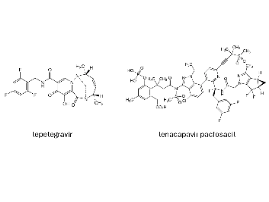
Drug name
Last update: Oct 2026lepetegravir + lenacapavir pacfosacil (GS-1720+GS-4182)
Developer(s)
Drug information
Not provided
lepetegravir + lenacapavir pacfosacil
investigational
Small molecule
INSTI (Integrase Strand Transfer Inhibitor), Capsid inhibitor — GS-1720 is an oral, long-acting integrase strand transfer inhibitor (INSTI) and GS-4182 is a prodrug of the capsid inhibitor lenacapavir.
Active / In Development (Phase 1/2/3) — Only the switch study continues (WONDERS1) (clinical hold lifted on GS-1720)
The candidate HIV treatment regimen based on the co-administration of GS-1720+GS-4182 is investigated as once-weekly oral regimen in people with HIV. The trials using GS-1720 and/or GS-4182 were put on clinical hold in June 2025, because some participants developed low levels of CD4+T-cells and reduced count of total white blood cells.
investigational
investigational
Therapeutic area(s)
- HIV
- Treatment
Administration route
Oral
Associated long-acting platforms
Oral solid form
Use of drug
- Self-administered
- Weekly
Dosage
GS-1720 (650 mg tablet) and GS-4182 (300 mg tablet) (or the fixed-dose combination)
GS-1720 (650 mg tablet) and GS-4182 (300 mg tablet)
investigational dosing is ongoing
Not provided
Not provided
Not provided
Additional information
Developer(s)

Gilead
Drug structure
Scale-up and manufacturing prospects
Undisclosed
Undisclosed
Undisclosed
Undisclosed
Excipients & delivery device(s)
Not provided
Not provided
Not provided
No delivery device
Safety, Efficacy and Evidence Summary
On 1 April 2026, Gilead discontinued one of two phase 2/3 studies looking at the once-weekly oral combination of GS-1720 and GS-4182. Both studies (WONDERS1 and 2) were put on hold in June 2025 due to safety concerns about reduced lymphocytes, including low CD4 counts. These have since either returned to baseline or to within a normal range. The WONDERS2 study in treatment-naive participants has now been permanently stopped although the WONDERS1 switch study is still showing as on hold.
Not provided
Not provided
Not provided
There are either no relevant patents or these were not yet submitted to LAPaL