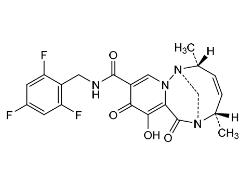
Drug name
Last update: Apr 2026Developer(s)
Not provided
GS-1720
investigational
Small molecule
integrase strand transfer inhibitor (INSTI)
GS-1720 is an oral integrase strand transfer inhibitor (INSTI) with potent anti-HIV-1 activity. GS-1720 is an investigational candidate in a once-weekly oral treatment regimen in both treatment-naïve and switch populations of people living with HIV.
GS-1720 is currently in clinical development and not yet approved in any jurisdiction.
Oral
Oral solid form
Not provided
650mg is the investigated dose
1300mg is the investigated loading dose (2 tablets)
In the phase 2/3 study (NCT06613685), participants will receive a 1-day loading dose of GS-1720 (1300 mg) and GS-4182 (600 mg) on Day 1.Thereafter, participants will take weekly doses of single agent GS-1720 (650 mg) and GS-4182 (300 mg) co-administered for at least 48 weeks.
Not provided
Not provided
Not provided
Detailed manufacturing information is not currently available for this compound.
Not provided
Not provided
Not provided
Not provided
P035 Pharmacokinetic/pharmacodynamic and resistance analyses of GS-1720, a once-weekly oral integrase strand transfer inhibitor, Brie Falkard et al. HIV Glasgow, 10-13 Nov. 2024
Background: Long-acting oral antiretrovirals remain an unmet medical need. GS-1720 is an oral integrase strand transfer inhibitor (INSTI) with potent anti-HIV-1 activity. In a phase Ib study in people with HIV-1, GS-1720 was well tolerated and demonstrated antiviral activity (mean reduction in HIV-1 RNA across four dosing cohorts [30, 150, 450 and 900 mg] of 1.74−2.44 log10 copies/ml from baseline to day [D] 11) [1], comparable with approved once-daily INSTIs. We report GS-1720 pharmacokinetics/pharmacodynamics and resistance data from this phase Ib study.
Methods: In this open-label multicohort study, participants, who were treatment-naïve or treatment-experienced but naïve to INSTIs and off antiretroviral therapy for ≥12 weeks, were administered oral GS-1720 on D1 and D2 and followed for 10 days. Participants were tested for genotypic and phenotypic integrase (IN) resistance at baseline and D11. Endpoints included: change in HIV-1 RNA (log10 copies/ml) from baseline to D11 [1], GS-1720 concentrations on D11, correlation between concentrations at D11 versus reduction of plasma HIV-1 RNA, emergence of IN resistance mutations at D11.
Results: Participants were enrolled into 30, 150, 450 and 900 mg cohorts (n = 28; 7/cohort). Median (range) age was 33 (18–62) years; 89.3% were male. Mean GS-1720 concentrations on D11 were 1.64, 5.87, 8.78 and 18.4 µg/ml in 30, 150, 450 and 900 mg cohorts, respectively; mean HIV-1 RNA reductions on D11 were 1.74, 2.18, 2.44 and 2.37 log10 copies/ml, respectively. In participants with GS-1720 concentrations at D11 above two-fold the inhibitory quotient (IQ2; 3.876 µg/ml), robust antiviral activity (≥1.5 log10 copies/ml reduction in HIV-1 RNA from baseline to D11) was observed. No participant had primary resistance-associated mutations (RAMs) in IN at screening. No resistance to the INSTI-class was detected at D11. One individual (lowest dose [30 mg] cohort) had increasing HIV-1 RNA after D7 of the monotherapy period. However, resistance testing showed no INSTI RAMs at D11.
Conclusions: GS-1720 showed robust antiviral activity with D11 concentrations above IQ2. There were no observed cases of treatment-emergent IN resistance, including participants with low GS-1720 concentrations. The robust pharmacokinetics/pharmacodynamics data and lack of resistance support further clinical development and dose selection for GS-1720.
Reference
1. Fichtenbaum CJ, Berhe M, Bordon J, Lalezari JP, Oguchi G, Sinclair G, et al. Antiviral activity, safety, and pharmacokinetics of GS-1720, a novel weekly oral INSTI [CROI Abstract 116]. Top Antivir Med. 2024;32(1):19.
No documents were uploaded
Consider on a case by case basis, collaborating on developing long acting products with potential significant public health impact, especially for low- and middle-income countries (LMICs), utilising the referred to long-acting technology
Provide necessary technical information to a potential partner, under confidentiality agreement, to enable preliminary assessment of whether specific medicines of public health importance in LMICs might be compatible with the referred to long-acting technology to achieve a public health benefit
In the event that a product using the referred to long-acting technology is successfully developed, the technology IP holder(s) will work with the Medicines Patent Pool towards putting in place the most appropriate strategy for timely and affordable access in low and middle-income countries, including through licensing