
|
Developed by 

|
Supported by 


|
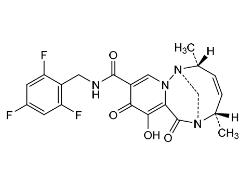
lepetegravir (GS-1720)
Developer(s)
|
Drug structure
Lepetegravir Chemical Structure
WHO Drug Information, Vol. 39, No. 2, 2025 Proposed INN: List 133 International Nonproprietary Names for Pharmaceutical Substances (INN)
Drug information
Associated long-acting platforms
Oral solid form
Administration route
Oral
Therapeutic area(s)
Use case(s)
Use of drug
Ease of administration
Frequency of administration
User acceptance
Dosage
Available dose and strength
650mg is the investigated dose
Maximum dose
1300mg is the investigated loading dose (2 tablets)
Recommended dosing regimen
In the phase 2/3 study (NCT06613685), participants will receive a 1-day loading dose of GS-1720 (1300 mg) and GS-4182 (600 mg) on Day 1.Thereafter, participants will take weekly doses of single agent GS-1720 (650 mg) and GS-4182 (300 mg) co-administered for at least 48 weeks.
Additional comments
Not provided
Dosage link(s)
Not provided
Drug information
Drug's link(s)
Not provided
Generic name
Brand name
Compound type
Drug class/category
Lifecycle status
Summary
Approval status
Regulatory authorities
Safety
Efficacy
Evidence Summary
Delivery device(s)
Not provided
Scale-up and manufacturing prospects
Scale-up prospects
Detailed manufacturing information is not currently available for this compound.
Tentative equipment list for manufacturing
Detailed manufacturing information is not currently available for this compound.
Manufacturing
Detailed manufacturing information is not currently available for this compound.
Specific analytical instrument required for characterization of formulation
Detailed manufacturing information is not currently available for this compound.
Clinical trials
WONDERS2
Identifier
NCT06613685
Link
https://clinicaltrials.gov/study/NCT06613685
Phase
Phase II/III
Status
Terminated
Sponsor
Gilead Sciences
More details
The goal of this clinical study is to learn more about the experimental drugs GS-1720 (an oral, long-acting integrase strand transfer inhibitor (INSTI)) and GS-4182 (a prodrug of Lenacapavir (LEN)); to compare the combination of GS-1720 and GS-4182 with the current standard-of-care treatment bictegravir/emtricitabine/tenofovir alafenamide (B/F/TAF) (Biktarvy), to see if the combination of GS-1720 and GS-4182 is safe and if it works for treating human immunodeficiency virus type 1 (HIV-1) infection in treatment-naive people with HIV-1 (PWH). This study has two phases: Phase 2 and Phase 3. The primary objectives of this study are: Phase 2: To evaluate the efficacy of oral weekly GS-1720 coadministered with GS-4182 versus continuing Biktarvy (BVY) in treatment-naive PWH at Week 24. Phase
Purpose
Study of Oral Weekly GS-1720 and GS-4182 Compared With Biktarvy in People With HIV-1 Who Have Not Been Treated
Interventions
Intervention 1
Intervention 2
Intervention 3
Intervention 4
Intervention 5
Countries
Sites / Institutions
Not provided
Trials dates
Anticipated Start Date
Not provided
Actual Start Date
2024-10-21
Anticipated Date of Last Follow-up
2026-03-26
Estimated Primary Completion Date
2029-01-01
Estimated Completion Date
2030-08-01
Actual Primary Completion Date
2026-03-16
Actual Completion Date
2026-03-16
Studied populations
Age Cohort
- Adults
- Older Adults
Genders
- All
Accepts pregnant individuals
Unspecified
Accepts lactating individuals
Unspecified
Accepts healthy individuals
No
Comments about the studied populations
Key Inclusion Criteria: * HIV-1 RNA ≥ 500 copies/mL at screening. * Antiretroviral (ARV) treatment-naive, except the use of oral pre-exposure prophylaxis (PrEP) or postexposure prophylaxis (PEP) with emtricitabine/tenofovir disoproxil fumarate (FTC/TDF) or F/TAF, up to 1 month prior to screening. Key Exclusion Criteria: * Prior use of any long acting parenteral antiretrovirals (ARVs) such as monoclonal antibodies, broadly neutralizing antibodies targeting HIV-1, LEN, injectable cabotegravir (including oral cabotegravir lead-in), and/or injectable rilpivirine. * Documented resistance to the integrase strand-transfer inhibitor class, specifically, resistance-associated mutations E92G/Q, G118R, F121Y, Y143C/H/R, S147G, Q148H/K/R, N155H/S, or R263K in the integrase gene. * Any of the follow
Health status
Study type
Interventional (clinical trial)
Enrollment
73
Allocation
Randomized
Intervention model
Sequential assignment
Intervention model description
Not provided
Masking
Double-blind masking
Masking description
Not provided
Frequency of administration
Studied LA-formulation(s)
Studied route(s) of administration
Use case
Treatment
Indication(s)
HIV
Key resources
| Type | Title | Content | Link |
|---|---|---|---|
| Link | Study of Oral Weekly GS-1720 and GS-4182 Compared With Biktarvy in People With HIV-1 Who Have Not Been Treated (WONDERS2) - Gilead's clinical trials website | https://www.gileadclinicaltrials.com/study?nctid=NCT06613685 | |
| Link | Gilead Provides Update on Clinical Studies Evaluating GS-1720 and/or GS-4182 for the Treatment of HIV-1 Infection - on hold | https://www.gilead.com/company/company-statements/2025/gilead-provides-update-on-clinical-studies-evaluating-gs-1720-and-or-gs-4182-for-the-treatment-of-hiv-1-infection |
GS-US-544-5905
Identifier
NCT05585307
Link
https://clinicaltrials.gov/study/NCT05585307
Phase
Phase I
Status
Completed
Sponsor
Gilead Sciences
More details
Master protocol: The goal of this master clinical trial study is to learn how novel antiretrovirals (medicines that stop the virus from multiplying) affect the human immunodeficiency virus-1 (HIV-1) infection in people living with HIV (PWH). Substudy-01 (GS-US-544-5905-01) will evaluate bavtavirine in PWH. Substudy-02 (GS-US-544-5905-02) will evaluate GS-1720 in PWH. Substudy-03 (GS-US-544-5905-03) will evaluate GS-6212 in PWH. Substudy GS-US-544-5905-05 is to learn more about the study drug GS-3242 in PWH.
Purpose
Study of Novel Antiretrovirals in Participants With HIV-1
Interventions
Intervention 1
Intervention 2
Intervention 3
Intervention 4
Intervention 5
Countries
Sites / Institutions
Not provided
Trials dates
Anticipated Start Date
Not provided
Actual Start Date
2022-10-26
Anticipated Date of Last Follow-up
2025-04-18
Estimated Primary Completion Date
Not provided
Estimated Completion Date
Not provided
Actual Primary Completion Date
2024-02-17
Actual Completion Date
2024-03-18
Studied populations
Age Cohort
- Adults
- Older Adults
Genders
- All
Accepts pregnant individuals
No
Accepts lactating individuals
No
Accepts healthy individuals
No
Comments about the studied populations
Key Inclusion Criteria: All Substudies: * Plasma human immunodeficiency virus-1 (HIV-1) ribonucleic acid (RNA) ≥ 5000 copies/mL but ≤ 400,000 copies/mL at screening. * Cluster of differentiation 4 (CD4) cell count \> 200 cells/mm\^3 at screening. * Antiretroviral (ARV) treatment-naive or treatment-experienced but naive to the investigational ARV drug class being investigated in the given substudy and have not received any ARV within 12 weeks of screening, including medications received for pre-exposure prophylaxis (PrEP) or postexposure prophylaxis (PEP) (note that current or prior receipt of long acting (LA) parenteral ARVs such as monoclonal antibodies (mAbs) targeting HIV-1, injectable cabotegravir (CAB), or injectable rilpivirine (RPV) is exclusionary). * Have adequate renal function
Health status
Study type
Interventional (clinical trial)
Enrollment
49
Allocation
Non-randomized
Intervention model
Sequential assignment
Intervention model description
Not provided
Masking
Open label
Masking description
Not provided
Frequency of administration
Not provided
Studied LA-formulation(s)
Studied route(s) of administration
Use case
Treatment
Indication(s)
HIV
Key resources
WONDERS1
Identifier
NCT06544733
Link
https://clinicaltrials.gov/study/NCT06544733
Phase
Phase II/III
Status
Active, not recruiting
Sponsor
Gilead Sciences
More details
The goal of this clinical study is to learn more about the experimental drugs GS-1720 and GS-4182; to compare the combination of GS-1720 and GS-4182 with the current standard-of-care treatment bictegravir/emtricitabine/tenofovir alafenamide (B/F/TAF, BVY), to see if the combination of GS-1720 and GS-4182 is safe and if it works for treating human immunodeficiency virus type 1 (HIV-1) infection. This study has two phases: Phase 2 and Phase 3. The primary objectives of this study are: Phase 2: To evaluate the efficacy of switching to oral weekly GS-1720 in combination with GS-4182 versus continuing BVY in virologically suppressed people with HIV-1 (PWH) at Week 24. Phase 3: To evaluate the efficacy of switching to oral weekly GS-1720/GS-4182 Fixed-dose combination (FDC) tablet regimen ve
Purpose
Study of Oral Weekly GS-1720 and GS-4182 Versus Biktarvy in People With HIV-1 Who Are Virologically Suppressed
Interventions
Intervention 1
Intervention 2
Intervention 3
Intervention 4
Intervention 5
Countries
Sites / Institutions
Not provided
Trials dates
Anticipated Start Date
Not provided
Actual Start Date
2024-08-20
Anticipated Date of Last Follow-up
2026-04-14
Estimated Primary Completion Date
2028-01-01
Estimated Completion Date
2029-06-01
Actual Primary Completion Date
Not provided
Actual Completion Date
Not provided
Studied populations
Age Cohort
- Adults
- Older Adults
Genders
- All
Accepts pregnant individuals
Unspecified
Accepts lactating individuals
Unspecified
Accepts healthy individuals
No
Comments about the studied populations
Key Inclusion Criteria: * Documented plasma HIV-1 RNA \< 50 copies/mL for ≥ 24 weeks before and at screening. * Receiving BVY for ≥ 24 weeks prior to screening. Key Exclusion Criteria: * Prior use of, or exposure to LEN, GS-1720, or GS-4182. * History of virologic failure while on an integrase strand-transfer inhibitor (INSTI)-based regimen. * Documented integrase strand-transfer inhibitor (INSTI) resistance, specifically, resistance-associated mutations (RAMs) E92G/Q, G118R, F121Y, Y143C/H/R, S147G, Q148H/K/R, N155H/S, or R263K in the integrase gene. * Prior use of any long-acting (LA) parenteral antiretrovirals (ARV) such as monoclonal antibodies (mAbs) or broadly neutralizing antibodies (bNAbs) targeting HIV-1, injectable cabotegravir (including oral cabotegravir lead-in), or injecta
Health status
Not provided
Study type
Interventional (clinical trial)
Enrollment
675
Allocation
Randomized
Intervention model
Sequential assignment
Intervention model description
Not provided
Masking
Double-blind masking
Masking description
Not provided
Frequency of administration
Studied LA-formulation(s)
Studied route(s) of administration
Use case
Treatment
Indication(s)
HIV
Key resources
TBD
Identifier
Not provided
Link
Phase
Phase II
Status
Not yet recruiting
Sponsor
Gilead Sciences
More details
Patients will be receiving once-weekly oral lenacapavir plus GS-1720.
Purpose
Phase II clinical trial of oral lenacapavir plus GS-1720 for HIV
Interventions
Intervention 1
Countries
Sites / Institutions
Not provided
Trials dates
Anticipated Start Date
2027-01-01
Actual Start Date
Not provided
Anticipated Date of Last Follow-up
Not provided
Estimated Primary Completion Date
Not provided
Estimated Completion Date
2028-01-01
Actual Primary Completion Date
Not provided
Actual Completion Date
Not provided
Studied populations
Age Cohort
Unspecified
Genders
Unspecified
Accepts pregnant individuals
Unspecified
Accepts lactating individuals
Unspecified
Accepts healthy individuals
Unspecified
Comments about the studied populations
Not provided
Health status
Not provided
Study type
Not provided
Enrollment
Not provided
Allocation
Not provided
Intervention model
Not provided
Intervention model description
Not provided
Masking
Not provided
Masking description
Not provided
Frequency of administration
Studied LA-formulation(s)
Studied route(s) of administration
Use case
Treatment
Indication(s)
HIV
Key resources
Excipients
Proprietary excipients used
Not provided
Novel excipients or existing excipients at a concentration above Inactive Ingredients Database (IID) for the specified route of administration
Not provided
Residual solvents used
Not provided
Patent info
Compound patent families
Patent informations
| Patent description | Representative patent | Categories | Patent holder | Licence with MPP | Patent source |
|---|---|---|---|---|---|
|
GS-1720 compound and analogues
Expiry date: 2042-01-18 The present disclosure relates generally to certain tricyclic compounds, pharmaceutical compositions comprising said compounds, and methods of making said compounds and pharmaceutical compositions. The compounds of the disclosure are useful in treating or preventing human immunodeficiency virus (HIV) infection. |
WO2022159387 | Compound | Gilead Sciences, Inc | No |
Patent status
| Patent status/countries | Low, Low- middle and upper-middle | High income |
|---|---|---|
| Granted | ||
| Filed | ||
| Not in force | World Intellectual Property Organization (WIPO), Argentina, China, Colombia, Dominican Republic, Morocco, Tunisia, Albania, Serbia, Bosnia and Herzegovina, Cambodia, Montenegro, Türkiye, Moldova, Republic of, North Macedonia, Mexico, Peru, South Africa, Sierra Leone, Eswatini, Liberia, Namibia, Sao Tome and Principe, Mozambique, Uganda, Zambia, Zimbabwe, Tanzania, United Republic of, Malawi, Ghana, Rwanda, Sudan, Botswana, Lesotho, Kenya, Gambia (the), India, Brazil, Egypt, Guatemala, Indonesia, Malaysia, Nigeria, Philippines, Tajikistan, Belarus, Azerbaijan, Turkmenistan, Armenia, Kyrgyzstan, Kazakhstan, Thailand, Viet Nam, Ukraine, Uzbekistan | World Intellectual Property Organization (WIPO), Australia, Canada, Chile, Costa Rica, Liechtenstein, Italy, Norway, Malta, Denmark, Belgium, United Kingdom, Greece, Netherlands, Hungary, Croatia, Switzerland, Spain, San Marino, Slovenia, Austria, Romania, Iceland, Cyprus, Finland, France, Bulgaria, Slovakia, Poland, Latvia, Ireland, Estonia, Germany, Luxembourg, Portugal, Czechia, Lithuania, Monaco, Sweden, Israel, Japan, Korea, Republic of, Saudi Arabia, Taiwan, Province of China, United States of America, Seychelles, Bahrain, Hong Kong, Kuwait, Oman, New Zealand, Panama, Qatar, Russian Federation, Singapore, United Arab Emirates |
Supporting material
Publications
Standardisation of monitoring routines for new long-acting antiretrovirals in development.
Hoffmann, Rockstroh — Lancet HIV — 2026-04-01
Link: https://www.sciencedirect.com/science/article/abs/pii/S2352301825003297
Summary: As long-acting antiretroviral therapy advances, maintaining rigorous immunological surveillance becomes essential to balance dosing convenience against potential immunological risks.
The US Food and Drug Administration's clinical hold on Gilead Sciences' once-weekly combination of GS-1720 and GS-4182 due to unexpected CD4 T-cell and lymphocyte count declines represents a key safety signal in long-acting HIV therapy development. This event parallels the earlier islatravir trials, in which similar immunological effects led to a downsized development programme with lower doses of the drug. The current safety signal must involve different mechanisms, as the combination contains an integrase inhibitor and a capsid inhibitor rather than a nucleoside reverse transcriptase translocation inhibitor. Although GS-1720 appears well tolerated in early studies, the high doses used might have contributed to toxicity. As GS-4182 is a prodrug that converts to lenacapavir, the parent compound warrants careful evaluation, particularly given lenacapavir's anticipated widespread use for HIV prevention. Existing lenacapavir data show favourable safety profiles. However, CD4 T-cell reporting has been inconsistent across trials, and different study populations and dosing regimens might not fully capture all potential immunological effects. CD4 T-cell declines represent a key concern for people with HIV. Future trials should implement standardised monitoring protocols with individual participant trajectories, predefined decline thresholds, and clear discontinuation criteria. As long-acting antiretroviral therapy advances, maintaining rigorous immunological surveillance becomes essential to balance dosing convenience against potential immunological risks.
Pharmacokinetic/pharmacodynamic and resistance analyses of GS-1720, a once-weekly oral integrase strand transfer inhibitor
Falkland B. — HIV Glasgow conference - Poster P035 — 2024-11-01
Summary: GS-1720 showed robust antiviral activity with D11 concentrations above IQ2. There were no observed cases of treatment-emergent IN resistance, including participants with low GS-1720 concentrations. The robust pharmacokinetics/pharmacodynamics data and lack of resistance support further clinical development and dose selection for GS-1720
Background: Long-acting oral antiretrovirals remain an unmet medical need. GS-1720 is an oral integrase strand transfer inhibitor (INSTI) with potent anti-HIV-1 activity. In a phase Ib study in people with HIV-1, GS-1720 was well tolerated and demonstrated antiviral activity (mean reduction in HIV-1 RNA across four dosing cohorts [30, 150, 450 and 900 mg] of 1.74−2.44 log10 copies/ml from baseline to day [D] 11) [1], comparable with approved once-daily INSTIs. We report GS-1720 pharmacokinetics/pharmacodynamics and resistance data from this phase Ib study.
Methods: In this open-label multicohort study, participants, who were treatment-naïve or treatment-experienced but naïve to INSTIs and off antiretroviral therapy for ≥12 weeks, were administered oral GS-1720 on D1 and D2 and followed for 10 days. Participants were tested for genotypic and phenotypic integrase (IN) resistance at baseline and D11. Endpoints included: change in HIV-1 RNA (log10 copies/ml) from baseline to D11 [1], GS-1720 concentrations on D11, correlation between concentrations at D11 versus reduction of plasma HIV-1 RNA, emergence of IN resistance mutations at D11.
Results: Participants were enrolled into 30, 150, 450 and 900 mg cohorts (n = 28; 7/cohort). Median (range) age was 33 (18–62) years; 89.3% were male. Mean GS-1720 concentrations on D11 were 1.64, 5.87, 8.78 and 18.4 µg/ml in 30, 150, 450 and 900 mg cohorts, respectively; mean HIV-1 RNA reductions on D11 were 1.74, 2.18, 2.44 and 2.37 log10 copies/ml, respectively. In participants with GS-1720 concentrations at D11 above two-fold the inhibitory quotient (IQ2; 3.876 µg/ml), robust antiviral activity (≥1.5 log10 copies/ml reduction in HIV-1 RNA from baseline to D11) was observed. No participant had primary resistance-associated mutations (RAMs) in IN at screening. No resistance to the INSTI-class was detected at D11. One individual (lowest dose [30 mg] cohort) had increasing HIV-1 RNA after D7 of the monotherapy period. However, resistance testing showed no INSTI RAMs at D11.
Conclusions: GS-1720 showed robust antiviral activity with D11 concentrations above IQ2. There were no observed cases of treatment-emergent IN resistance, including participants with low GS-1720 concentrations. The robust pharmacokinetics/pharmacodynamics data and lack of resistance support further clinical development and dose selection for GS-1720.
Reference
1. Fichtenbaum CJ, Berhe M, Bordon J, Lalezari JP, Oguchi G, Sinclair G, et al. Antiviral activity, safety, and pharmacokinetics of GS-1720, a novel weekly oral INSTI [CROI Abstract 116]. Top Antivir Med. 2024;32(1):19.
Additional documents
No documents were uploaded