Drug name
Last update: Sep 2026CAB 6 times a year (CAB-LA; Cabotegravir 2-monthly)
Developer(s)
Drug information
Cabotegravir
Apretude, Vocabria
Small molecule
integrase strand transfer inhibitor (INSTI)
Not provided
Cabotegravir (CAB), also known as GSK1265744, is a HIV-1 integrase strand transfer inhibitor (INSTI) used for pre-exposure prophylaxis (PrEP) and the treatment of individuals infected with HIV. CAB is utilised in combination with Rilpivirine (a non-nucleoside reverse transcriptase inhibitor, NNRTI) for HIV treatment. Long-acting versions of CAB (CAB-LA) are currently administered once monthly or every-2-months as a intramuscular (IM) injection containing an extended-release drug particle nanosuspension, with an optional ~30 day oral-lead in period. CAB-LA administered by IM injection requires approximately one week to achieve maximal plasma drug concentration. CAB is metabolised in the body by the enzyme UGT1A1; with the average half-life of IM CAB-LA ranging from 5.6 to 11.5 weeks.
CAB-LA (APRETUDE) 600mg/3mL extended-release IM injectable suspension single dose vials have received approval for use in HIV-1 PrEP for HIV-negative adults and adolescents weighing ≥ 35 kilograms who are at risk of infection. CAB-LA (VOCABRIA) is used together with another medicine called rilpivirine (REKAMBYS) (or co-packed as a2-drug co-packaged product CABENUVA) as a complete regimen for the treatment to treat adults (and children, depending on approvals) living with human HIV-1. VOCABRIA is available as tablets to be taken by mouth and as a prolonged-release suspension for injection.
CAB-LA has received regulatory approval from several Stringent Regulatory Approval authorities (SRAs), including, those of US, Europe, Australia, Canada. The product for PrEP use is indicated for individuals without prior HIV-1 infection and devoid of any indications of drug resistance. Medicine Control Authority of Zimbabwe was the first African regulatory body to approve CAB-LA for HIV-PrEP. Furthermore, the World Health Organization's Guideline Development Group has conditionally recommended CAB-LA as an adjunctive preventive measure for those at substantial risk of HIV-1 infection. CAB-LA is also approved for the treatment indication in combination with Rilpivirine by several SRAs.
Therapeutic area(s)
- HIV
- Pre-Exposure Prophylaxis (PrEP)
- Treatment
- Prevention
Administration route
Oral, Intramuscular
Associated long-acting platforms
Aqueous drug particle suspension
Use of drug
- Administered by a nurse
- Administered by a specialty health worker
- Monthly
- Every 2 months
Dosage
600 mg/3 mL
200 mg/mL
Not provided
Not provided
Not provided
Related entries
Cabotegravir + Lenacapavir
Cabotegravir + Rilpivirine
Cabotegravir + Rilpivirine 3 times a year (CAB4M + RPV4M)
Cabotegravir 3 times a year (CAB 4M)
cabotegravir PH20
Additional information
Cabotegravir for PrEP is included in WHO guidelines. CAB+RPV LA injectable for treatment, is also recommended by WHO to be used as an alternative switching option for adults and adolescents with undetectable HIV viral load on oral ART and without active hepatitis B infection : https://www.who.int/teams/global-hiv-hepatitis-and-stis-programmes/guidelines
ViiV Healthcare and Medicines Patent Pool have signed a voluntary licensing agreement to enable access to long-acting injectable cabotegravir for HIV PrEP and HIV treatment https://tinyurl.com/VL-CAB-MPP
Developer(s)

ViiV Healthcare
ViiV Healthcare is a pharmaceutical company that specializes in the development of therapies for HIV infection. The company is headquartered in Brentford in the United Kingdom and was initially formed in November 2009 as a part of a joint venture between GlaxoSmithKline and Pfizer.
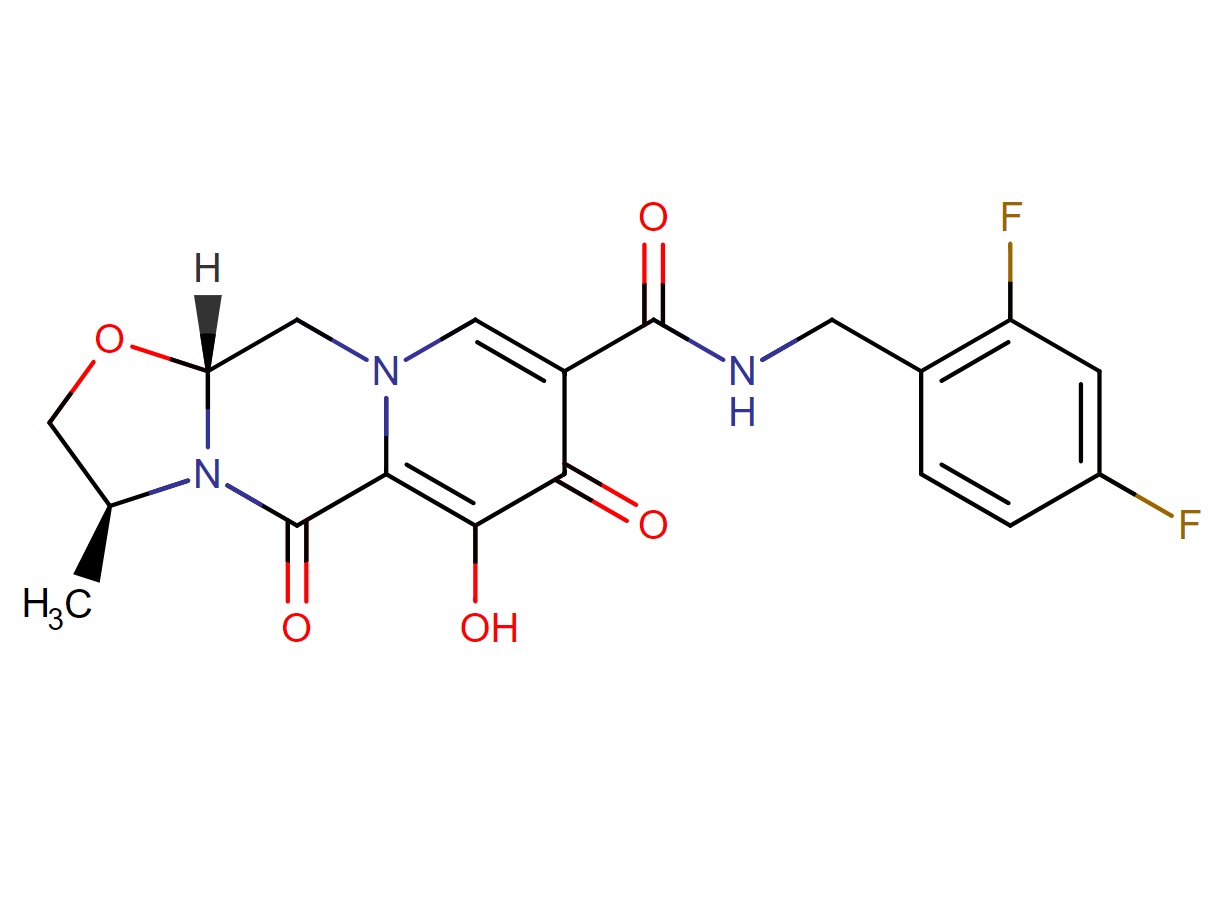
Drug structure
Scale-up and manufacturing prospects
Compound is commercially manufactured by the innovator and three generic manufacturers have received a licence through the medicines patent pool to manufacture generic versions by 2026/2027.
Conventional wet-bead milling (ball mill), depyrogenated glass vials.
Cabotegravir is subject to a gamma-irradiation pre-sterilization step prior to a conventional wet-bead milling manufacturing procedure. The Cabotegravir milling process is initiated alongside pharmaceutical excipients (polyethylene glycol 3350, water for injection, polysorbate 20 and mannitol) for an overall 200nm drug particle size. Sterilized de-pyrogenated glass vials are used to store the finished drug nanosuspension, before an additional gamma irradiation (25kGy) step to ensure aseptic packaging conditions.
PANalytical X’Pert PRO diffractometer equipped with a theta/theta coupled goniometer (or equivalent x-ray powder diffractor) to determine drug particle size, Mettler TGA/DSC 1 instrument for thermal analysis, HPLC to evaluate drug content, impurities and dissolution, HPLC UV-Vis Detector for drug identification.
Excipients & delivery device(s)
No proprietary excipient used
No novel excipient or existing excipient used
No residual solvent used
No delivery device
Safety, Efficacy and Evidence Summary
Not provided
Injectable cabotegravir was superior to daily oral tenofovir disoproxil fumarate plus emtricitabine for HIV prevention in two pivotal trials (HPTN083 and HPTN084). Both trials had the primary aim of establishing the HIV prevention efficacy of long-acting injectable cabotegravir pre-exposure prophylaxis (PrEP) compared with tenofovir disoproxil fumarate plus emtricitabine daily oral PrEP.
Not provided