Technology name
Last update: Sep 2024Vaginal Film (MATRIX)
Sponsor(s)

Type of technology
Vaginal film
Administration route
Topical (Vaginal)
Development state and regulatory approval
Dapivirine (DPV)
Phase I
Not provided
Description
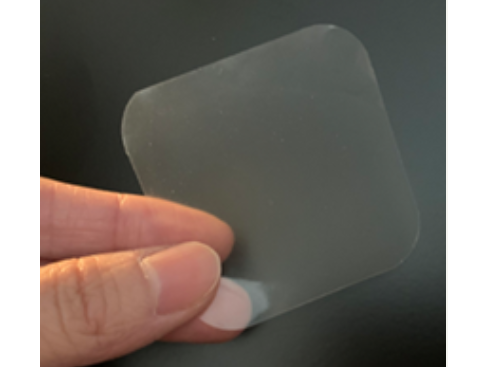
Matrix vaginal film technology represents a novel, once-monthly, self-administered biodegradable polymer designed for the prevention of HIV and unplanned pregnancies. This polymer is typically cellulosic, such as carboxycellulose. Upon insertion into the vagina, contact with vaginal fluids initiates the slow dissolution of the film, facilitating the gradual release of API drug molecules. This delivery system ensures the sustained release of the API over the course of a month until complete dissolution of the film occurs and the entire drug is delivered locally.
Developer(s)

University of Pittsburgh
The University of Pittsburgh, founded in 1787, is one of the oldest universities in the United States. It has a notable research profile, particularly in biomedical research, engineering advancements, and public health initiatives. As a member of the prestigious Association of American Universities (AAU), it reflects a high level of research activity.

Magee-Womens Research Institute & Foundation
The Magee-Womens Research Institute (MWRI) is a renowned institution dedicated to advancing women's health through research and education. It specializes in areas such as reproductive biology, obstetrics, gynaecology, and women's cancers. MWRI has initiated numerous research studies aimed at improving healthcare outcomes for women globally, with a strong focus on personalized medicine.
Technology highlight
i. Made up of biodegradable polymer materials ii. Self-administration iii. Minimal impact on the innate microbiome iv. Low systemic toxicity
Illustration(s)
Technology main components
(i) HEC: HMC: CMC [or] HEC: HPMC: NaCMC (at varying concentrations) (ii) Plasticizer (eg: glycerin, polyethylene gylcol monomethyl ether, propylene glycol, sorbitol sorbitan solution, castor oil) (iii) Dispersant (iv) Humectant (v) Disintegrant (eg: PEG 400, PEG 6000; PEG 8000) (v) Solubilizing/ alkalizing agent (eg: sodium hydroxide)
Not provided
Safety, Efficacy and Evidence Summary
A Phase 1 clinical trial involving 78 healthy volunteers demonstrated that 91% of participants experienced solely Grade 1 adverse events (AEs). These AEs were evenly distributed across both the film tenofovir treatment and film placebo control groups, indicating a favourable safety and tolerability profile for the film formulation. Nevertheless, adherence challenges were reported by 50% of the study population.
Not provided
Not provided
Not provided
APIs compatibility profile
Antiretroviral drugs, including dapivirine, tenofovir disoproxil, and hormone replacement drugs such as levonorgestrel, are the focus of targeted drug of choice. Other targeted therapeutic classes include antibacterial, antiprotozoal, and antifungal drugs.
Not provided
Not provided
Not provided
2 different APIs : A combination of antiretroviral API and a hormonal API is been used.
Not provided
Scale-up and manufacturing prospects
Not provided
1) Elcometer 4340 Motorised/Automatic Film Applicator, Mixing vessels (with vacuum applicator) 2) Metrohm, 758 KFD Titrino 3) Coating and drying vessels 4) Packaging instrumentations (not specified)
The manufacturing of vaginal films using a Hot Melt Extrusion Process requires a cleanroom environment and involves several key steps: Feeding: Selected materials are introduced into an extruder. Melting: In the extruder, materials are heated to a temperature where polymers melt—above their melting point but below their decomposition temperature. Mixing: The molten material is mixed thoroughly to ensure even distribution of the API and excipients. Extrusion: The uniform mixture is extruded through a die to form a continuous sheet or film. Cooling: Extruded film is cooled rapidly to solidifies.
1) X-ray diffraction (To examine solid state solubility) 2) TX-XT Plus texture analyser 3) UPLC
Excipients & delivery device(s)
No proprietary excipient used
No novel excipient or existing excipient used
No residual solvent used
Not provided
Additional features
- Biodegradable
- Drug-eluting
- Non-removable
- Reservoir-type
- Room temperature storage
Preclinical data indicate sufficient dissolution and drug release properties for a range of antiretroviral agents within the film matrix. Notably, a single-dose study of a 40 mg tenofovir (TFV) film demonstrated superior TFV delivery compared to the TFV vaginal gel formulation. Plasma and cervicovaginal fluid TFV concentrations were elevated on day 1 following TFV film administration compared to the gel, though levels converged by days 3 and 7 days later.
Not applicable
A six-month accelerated stability test was conducted at 40°C to evaluate the integrity of vaginal films produced via hot melt extrusion. The results demonstrated that the weight of the films remained stable over the testing period. Variability in water content and puncture strength was found to be insignificant, indicating robust physical properties. The films with tenofovir showed good compatibility with various strains of lactobacilli as well.
Preclinical stability studies demonstrated no loss of API from vaginal films stored at 30, 40, and 50°C for 14 days. However, further investigation of storage conditions is warranted to establish long-term stability at cold storage conditions.
Therapeutic area(s)
- Contraception
- HIV
- Pre-Exposure Prophylaxis (PrEP)
Potential associated API(s)
- Dapivirine (DPV)
- Levonorgestrel (LNG)
Use of technology
- Self-administered
Monthly
Targeted user groups
- Adults
- Older Adults
- Female
- Cisgender female
- Transgender female
No
Unspecified
Unspecified
Not provided
Antiretroviral agent
Phase I
HIV
Not provided
Once monthly
Not provided
Levonorgestrel (LNG)
Synthetic progestin
Phase I
Not provided
Contraception and HIV prevention
18-50 years women
Once monthly
Not provided
Vaginal Films
Provided herein are stable, dissolvable films containing active ingredients, such as antimicrobial composition, antiviral compositions, or anti-retroviral compositions for intravaginal or intrarectal placement to provide prophylaxis against viral infections.
US20240099986A1
Device
University of Pittsburgh
Not provided
September 13, 2043
Granted
Hot melt extrusion for pharmaceutical vaginal film products
Hot melt extrusion is disclosed as a process for forming vaginal drug delivery films. The methods involve extruding a composition comprising one or more active pharmaceutical ingredients and one or more polymer carriers at an elevated temperature through a die to thereby provide the film. Films prepared by hot melt extrusion are also described.
US20230346693A1
Manufacturing Process
University of Pittsburgh
Not provided
May 3, 2043
Granted