Technology name
Last update: May 2025Nanocrystalline Prodrug Technology
Developer(s)
Sponsor(s)

Type of technology
Aqueous drug particle suspension
Administration route
Intramuscular, Subcutaneous
Development state and regulatory approval
Cabotegravir (CAB)
Pre-clinical
XVIR-110 (Cabotegravir 18 Carbon ester prodrug) is prepared for IND
Description
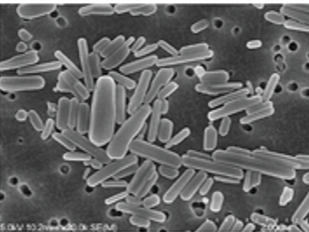
ProTide Prodrug Technology is an ultra-long-acting nanoformulation. The Pro-Tide technology contains nanocrystals of ester prodrug of the API. Further, the duration of the formulation is dependent on the carbon length of the ester fatty acid. In addition to that, the lipophilicity of the prodrug depends on the physiochemical properties of the fatty acid and the location of the fatty acid attached. Also, this nanoformulation has no residual solvents.
Developer(s)

Exavir Therapeutics
Exavir Therapeutics is a spun-out company that originated in 2020 by Alborz and was developed by the University of Nebraska Medical Center. Exavir is specialized in ultra-long-acting drug delivery systems. Exavir has received an NIAD grant in 2023. Exavir currently works on HIV therapeutics off-patent drugs. Howard Gendelman and other researchers play a vital role in Exavir.
Technology highlight
1) ProTide prodrugs have controlled hydrolysis of the ester chain. The length of the carbon chain can be customizable based on the API. 2) Tissue penetrance can be overcome. 3) Prolonged drug release, plasma circulation rate, and tissue binding of API. 4) Poloxamer 407 is used as a stabilizer; thus, the formulation is stable for 98 days in vivo.
Illustration(s)
Technology main components
1) ProTide prodrug (14 to 18 carbon ester-linked API) 2) Poloxamer 308 and/or 407 3) Other excipients such as surfactants.
Not provided
Safety, Efficacy and Evidence Summary
No safety concerns were observed in the preclinical toxicology studies. Further, clinical safety studies are yet to be conducted.
Not provided
Not provided
Not provided
APIs compatibility profile
The ProTide formulation targets non-nucleotide reverse transcriptase inhibitors and integrase strand transfer inhibitors such as cabotegravir, tenofovir, dolutegravir, and nevirapine.
The solubility of each ProTide can be tailored by modifying the physicochemical properties of the API through adjustments to the hydrophilic or hydrophobic nature of the ester chain, specifically by varying the length of the fatty acid moiety.
Not provided
75-90 wt%
1 single API :
Min: -1.6 Max: 4
Scale-up and manufacturing prospects
The Exavir does not have its own manufacturing facilities.
Avestin EmulsiFlex-C3 High-pressure homogenizer
1. Disperse solid drug/prodrug in a poloxamer 407 solution at a drug/prodrug to surfactant ratio of 10:1 w/w in endotoxin-free water to form a presuspension. 2. Homogenize the presuspension using an Avestin EmulsiFlex-C3 high-pressure homogenizer at 20,000 ± 1000 PSI until the desired particle size is achieved. 3. Characterize formulations for particle size, polydispersity index (PDI), and zeta potential using DLS with a Malvern Zetasizer Nano-ZSP. 4. Quantify drug loading using LC-MS. 5. Assess endotoxin concentrations using a Charles River Endosafe Nexgen system.
1. Scanning Electron Microscope (SEM) 2. Dynamic Light Scattering + Malvern Zetasizer Nano-ZSP 3. Ultra-performance liquid chromatography-tandem mass spectrometry (LC-MS/MS) 4. Charles River Endosafe Nexgen system
Excipients & delivery device(s)
Not provided
Not provided
Not provided
No delivery device
Additional features
- At least 1 year shelf life
Nanocrystals facilitate drug delivery to macrophages by forming intracellular and tissue drug reservoirs within endosomes. This intracellular sequestration shields the drug from systemic circulation, thereby extending the half-life of the API. The prodrug undergoes biotransformation into its active form through intracellular kinase-mediated activation.
ProTide formulations are injected via intramuscular injection via a 20-25 gauge needle.
In preclinical stability studies of the CAB 18-carbon ester ProTide prodrug nanoparticles, the prodrug demonstrated approximately 100% stability, with negligible drug release observed from the intact nanoparticles over the course of one year of storage.
Studies show that the formulation can maintain its integrity over 98 days under various storage conditions.
Therapeutic area(s)
- Other(s) : "Opoid Use Disorder"
- HIV
Not provided
Potential associated API(s)
- Cabotegravir (CAB)
- Dolutegravir (DTG)
- Tenofovir (TFV)
- Rilpivirine (RPV)
- Bictegravir (BIC)
Use of technology
- Administered by a community health worker
- Administered by a nurse
- Administered by a specialty health worker
Every 6 months, Yearly
Targeted user groups
- Adults
- Older Adults
- Male
- Female
Unspecified
Unspecified
Unspecified
Not provided
HIV integrase strand transfer inhibitor
Pre-clinical
Not provided
HIV Treatment and PrEP
Not provided
Once yearly
XVIR-110 (Cabotegravir 18 Carbon ester prodrug) is prepared for IND
Dolutegravir (DTG)
HIV integrase inhibitors
Pre-clinical
Not provided
HIV treatment and PrEP
Not provided
Once yearly
Not provided
Tenofovir (TFV)
Nucleoside reverse transcriptase inhibitors (NRTIs)
Pre-clinical
Not provided
HIV Treatment and PrEP
Not provided
Once yearly
Not provided
Non-nucleoside reverse transcriptase inhibitors (NNRTIs)
Pre-clinical
Not provided
HIV Treatment and PrEP
Not provided
Once yearly
Not provided
HIV integrase strand transfer inhibitor (INSTI)
Pre-clinical
Not provided
HIV Treatment and PrEP
Not provided
Six monthly
Not provided
Antiviral prodrugs compounds and crystalline nanoparticle formulations
Prodrug compounds of cabotegravir (CAB), raltegravir (RAL), elvitegravir (EVG), dolutegravir (DTG), bictegravir (BIC), BI 224436, and MK-2048. Crystalline nanoparticle formulations comprising one of the prodrugs listed above and and at least one polymer or surfactant. Method of use of said formulation for treating HIV
WO2020086555
Compound/Formulation/Method of treatment
Board of regents of the University of Nebraska
Not provided
October 22, 2039
Granted: CN, US, MX, EP (BE, CH, CY, DE, ES, FI, FR, GB, HU, IE, IT, LI, LU, MC, MT, NL, RO), SA, EA (AM, AZ, BY, KG, KZ, RU, TJ, TM), Pending: AU, BR, CA, EG, HK, ID, IL, JP, KR, MY, NZ, PH, SG Not in force: AT, BG, CZ, DK, EE, GR, HR, IS, LT, LV, NO, PT, RS, SE, SI, SK, SM, TR, IN, , KH, MA, MD, TN, BA, ME
Partnerships
No partner indicated