Drug name
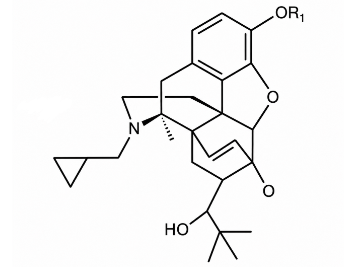
Last update: Jul 2026Ultra-Long Acting Buprenorphine Prodrug (AM-510)
Developer(s)
Drug information
Buprenorphine; AM-510
Buprenorphine
Small molecule
Mu-Opioid Receptor Partial Agonist
Not provided
Buprenorphine prodrug (AM-510) is under preclinical investigation for cell-based drug uptake, retention and cytotoxicity. Further PK and safety testings were conducted in rats which indicates that intramuscular administration of Formulation 1 showed dose‑dependent increases in exposure, with Cmax rising from 13.9 to 26.9 ng/mL and AUC₀–∞ from 530 to 893.9 ng·day/mL when the dose increased from 45 to 90 mg/kg BUP equivalents, alongside prolonged half‑life and MRT. In contrast, subcutaneous delivery of Formulation 2 at 45 mg/kg produced a lower Cmax but markedly extended half‑life (74.8 days) and MRT (73.6 days), indicating more sustained systemic exposure consistent with an ultra long‑acting release profile.
Not approved yet (under preclinical investigation)
Not approved yet (under preclinical investigation)
Therapeutic area(s)
- Substance use disorders
- Pain management (incl. joints, lower back, knee)
Not provided
Administration route
Subcutaneous, Intramuscular
Associated long-acting platforms
Polymer-based particles
Use of drug
- Administered by a community health worker
- Administered by a nurse
- Administered by a specialty health worker
- Self-administered
- To be determined
- Every 6 months
Dosage
AM-510 - 45mg/kg IM; 90 mg/kg IM & SC preclinical doses
90 mg/kg IM
1) 45 mg/kg SC STAT 2) 45 mg/kg IM STAT 3) 90 mg/kg IM STAT
Not provided
Not provided
Not provided
Related entries
Not provided
Additional information
Developer(s)
University of Nebraska Medical Center
Nebraska Medical Center began with UNMC, founded in 1869 and chartered in 1881 as Omaha Medical College. It joined the University of Nebraska in 1902. The modern center formed in 1997 when University Hospital merged with Clarkson Hospital. Today, UNMC/Nebraska Medicine is known for care, research, and drug discovery through pharmacy, nanomedicine, cancer, and drug design programs.
Exavir Therapeutics
Exavir Therapeutics, Inc. is a San Francisco-based biotechnology company co-founded by Howard Gendelman, Benson Edagwa, and Alborz Yazdi. Originating from UNMC-linked HIV nanomedicine research, it develops ultra-long-acting antivirals, including prodrug formulations for HIV PrEP and treatment. Its pipeline includes VH-310, XV-122, and XV-207, with ViiV Healthcare partnering on VH-310.
Drug structure
Scale-up and manufacturing prospects
Not provided
High‑pressure homogenizer
Manufacturing of Buprenorphine prodrug involves: Mixing Coordinated buprenorphine–hydrophilic linker prodrug complex with Tween® and polyethylene glycol (PEG) and processed by high‑pressure homogenization to yield a polymer‑coated prodrug formulation.
LC-MS/MS
Excipients & delivery device(s)
Not provided
1) Tween 2) Polyethylene Glycol
Not provided
Not provided
Safety, Efficacy and Evidence Summary
Not provided
Not provided
Not provided
Not provided
There are either no relevant patents or these were not yet submitted to LAPaL