Drug name
Last update: Aug 2026Lopinavir and Ritonavir LAI
Developer(s)
Drug information
Not provided
Lopinavir and Ritonavir nanoparticle suspension
Lopinavir and Ritonavir nanoparticle suspension
Small molecule
HIV protease inhibitors
Not provided
long-acting subcutaneous injectable formulation of lopinavir (LPV) and ritonavir (RTV) was developed with in situ self-assembly nanoparticle technology (ISNP) to address adherence challenges associated with daily HIV therapy. The formulation combines LPV and RTV (4:1 w/w) with oleic acid and TPGS, forming nanoparticles upon contact with physiological fluids. Pharmacologically, co-formulated RTV enhances LPV exposure by inhibiting CYP3A4-mediated metabolism. The ISNPs demonstrated high entrapment efficiency (>98%), particle size of ~168 nm, and drug loading of 23.5% (LPV) and 5.9% (RTV). Pharmacokinetic studies in rats showed sustained systemic exposure following a single subcutaneous dose, maintaining LPV trough concentrations >160 ng/mL and RTV >50 ng/mL for 6 days, with t1/2=22 and 44 h.
Under preclinical investigation, not approved yet.
Under preclinical investigation, not approved yet.
Therapeutic area(s)
- HIV
- Treatment
Administration route
Subcutaneous
Associated long-acting platforms
Based on other organic particles, Micellar suspension
Use of drug
- Administered by a community health worker
- Administered by a nurse
- Administered by a specialty health worker
- Weekly
Dosage
Dose: Lopinavir (LPV): 50 mg; Ritonavir (RTV): 12.5 mg (LPV:RTV = 4:1 w/w). Strength: 100 mg/kg LPV and 25 mg/kg RTV
N/A
The dosing regimen used in preclinical studies shows: 100 mg/kg LPV + 25 mg/kg RTV (4:1 w/w) administered as a single subcutaneous injection in rats. Each preparation contains 50 mg LPV, 12.5 mg RTV, 50 mg oleic acid, and 100 mg TPGS.
Not provided
Not provided
Not provided
Related entries
Not provided
Additional information
Developer(s)

University of North Texas Health Science Center
Founded in 1970 as a private osteopathic college, UNT Health Fort Worth became a state institution in 1975. It expanded into a comprehensive graduate medical center by 1993. The 33-acre Fort Worth campus features the high-tech Interdisciplinary Research Building and the Center for BioHealth, which houses advanced imaging suites and virtual reality simulation labs.
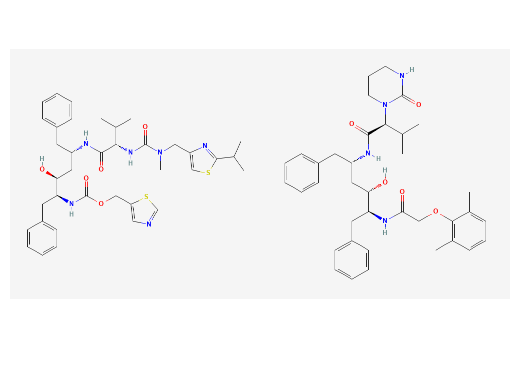
Drug structure
Scale-up and manufacturing prospects
Not provided
Not provided
ISO Class 9 cleanroom: Aseptically manufactured lipid-surfactant injectable made by simply heating and mixing LPV/RTV with oleic acid and TPGS (Sterile hot-melt mixing of LPV, RTV, oleic acid, and TPGS at 50°C for 10 min, followed by cooling; nanoparticles self-assemble only upon exposure to saline/body fluids after administration). No preformed nanoparticles, no lyophilization, room-temperature storage possible, and readily scalable using standard pharmaceutical manufacturing equipment.
Not provided
Excipients & delivery device(s)
Not provided
1) Oleic acid 2) D-α-Tocopherol polyethylene glycol 1000 succinate (TPGS)
Not provided
Not provided
Safety, Efficacy and Evidence Summary
1) No injection-site irritation or inflammation 2) No redness, swelling, or skin hypersensitivity reactions 3) No signs of illness, dehydration, hypothermia, pain, or distress during the 6-day observation period.
1) LPV exhibited controlled release, with only ~20% released by Day 5 and sustained release extending beyond 14 days. LPV trough concentration (Ctrough) >160 ng/mL at Day 6. 2) RTV showed a biphasic release profile, releasing faster than LPV during the first 5 days and more slowly thereafter. RTV trough concentration ≈50 ng/mL at Day 6. 3) Approximately 60% of LPV and 40% of RTV were released over 14 days, demonstrating prolonged drug retention in the formulation.
The ISNP-based long-acting lopinavir/ritonavir (LPV/RTV) injectable formulation demonstrated a favorable preliminary safety profile and sustained drug exposure in rats. No injection-site irritation, inflammation, redness, swelling, or hypersensitivity reactions were observed following subcutaneous administration. In addition, animals showed no signs of illness, dehydration, hypothermia, pain, or distress during the 6-day observation period, indicating good local and systemic tolerability. The formulation provided controlled and prolonged drug release, supporting its potential as a long-acting HIV therapy. LPV exhibited slow release, with only ~20% released by Day 5 and sustained release beyond 14 days, maintaining trough plasma concentrations above 160 ng/mL at Day 6. RTV showed an initial faster release followed by slower release thereafter, with trough concentrations of approximately 50 ng/mL at Day 6. Overall, LPV + RTV LAI has favourable preclinical results.
There are either no relevant patents or these were not yet submitted to LAPaL