
|
Developed by
|
Supported by
|
|
University of North Texas Health Science Center Originator
https://www.unthealth.edu/index.html
United States of America Founded in 1970 as a private osteopathic college, UNT Health Fort Worth became a state institution in 1975. It expanded into a comprehensive graduate medical center by 1993. The 33-acre Fort Worth campus features the high-tech Interdisciplinary Research Building and the Center for BioHealth, which houses advanced imaging suites and virtual reality simulation labs. |

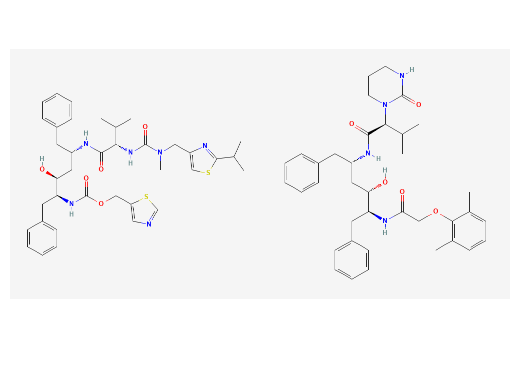
Schematic Structure of Ritonavir (C37H48N6O5S2) & Lopinavir (C37H48N6O5S2)
https://pubchem.ncbi.nlm.nih.gov/
Based on other organic particles, Micellar suspension
Subcutaneous
Dose: Lopinavir (LPV): 50 mg; Ritonavir (RTV): 12.5 mg (LPV:RTV = 4:1 w/w). Strength: 100 mg/kg LPV and 25 mg/kg RTV
N/A
The dosing regimen used in preclinical studies shows: 100 mg/kg LPV + 25 mg/kg RTV (4:1 w/w) administered as a single subcutaneous injection in rats. Each preparation contains 50 mg LPV, 12.5 mg RTV, 50 mg oleic acid, and 100 mg TPGS.
Not provided
Not provided
Not provided
Not provided
Not provided
Not provided
ISO Class 9 cleanroom: Aseptically manufactured lipid-surfactant injectable made by simply heating and mixing LPV/RTV with oleic acid and TPGS (Sterile hot-melt mixing of LPV, RTV, oleic acid, and TPGS at 50°C for 10 min, followed by cooling; nanoparticles self-assemble only upon exposure to saline/body fluids after administration). No preformed nanoparticles, no lyophilization, room-temperature storage possible, and readily scalable using standard pharmaceutical manufacturing equipment.
Not provided
Not provided
1) Oleic acid 2) D-α-Tocopherol polyethylene glycol 1000 succinate (TPGS)
Not provided
There are either no relevant patents or these were not yet submitted to LAPaL
Tanaudommongkon, I., Tanaudommongkon, A., & Dong, X. (2021). Development of In Situ Self-Assembly Nanoparticles to Encapsulate Lopinavir and Ritonavir for Long-Acting Subcutaneous Injection. Pharmaceutics, 13(6), 904. https://doi.org/10.3390/pharmaceutics13060904
Irin Tanaudommongkon — Pharmaceutics - MDPI — 2021-07-18
Summary: Acute Preclinical studies of the fixed drug combination of Lopinavir and Ritonavir investigated the pharmacokinetics and safety profile of the in situ forming nanoparticle subcutaneous injection.
Most antiretroviral medications for human immunodeficiency virus treatment and prevention require high levels of patient adherence, such that medications need to be administered daily without missing doses. Here, a long-acting subcutaneous injection of lopinavir (LPV) in combination with ritonavir (RTV) using in situ self-assembly nanoparticles (ISNPs) was developed to potentially overcome adherence barriers. The ISNP approach can improve the pharmacokinetic profiles of the drugs. The ISNPs were characterized in terms of particle size, drug entrapment efficiency, drug loading, in vitro release study, and in vivo pharmacokinetic study. LPV/RTV ISNPs were 167.8 nm in size, with a polydispersity index of less than 0.35. The entrapment efficiency was over 98% for both LPV and RTV, with drug loadings of 25% LPV and 6.3% RTV. A slow release rate of LPV was observed at about 20% on day 5, followed by a sustained release beyond 14 days. RTV released faster than LPV in the first 5 days and slower than LPV thereafter. LPV trough concentration remained above 160 ng/mL and RTV trough concentration was above 50 ng/mL after 6 days with one subcutaneous injection. Overall, the ISNP-based LPV/RTV injection showed sustained release profiles in both in vitro and in vivo studies.
No documents were uploaded
There are no additional links