Drug name
Last update: Oct 2026Atazanavir + Ritonavir + Tenofovir Nanoparticle suspension
Developer(s)
Drug information
Not provided
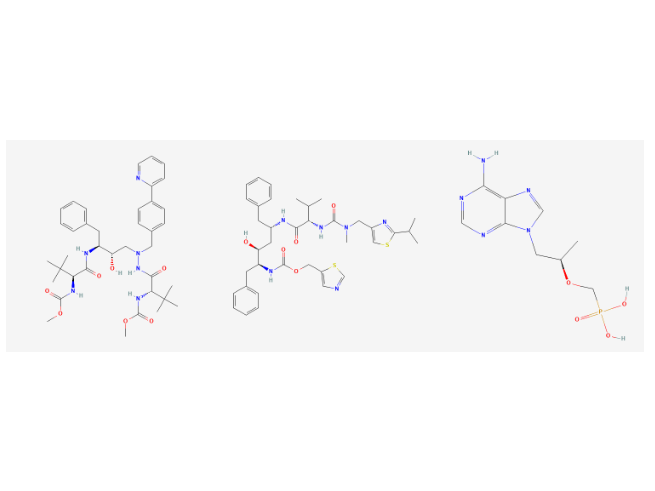
Atazanavir (ATV) + Ritonavir (RTV) + Tenofovir (TFV) drug-combination nanoparticle (DcNP) suspension
Not provided
Small molecule
NRTI (Nucleoside/Nucleotide Reverse Transcriptase Inhibitor), Protease Inhibitor (PI), Pharmacokinetic Enhancer/booster — Protease Inhibitor (PI) + Nucleoside/Nucleotide Reverse Transcriptase Inhibitor (NRTI)
Preclinical / IND
1. Clinical Pharmacology: In nonhuman primates, single SC dose of ATV/RTV/TFV DcNP sustained plasma concentrations for 14 days and PBMC concentrations for 8-14 days versus 1-2 days with free drugs. ATV showed 110-fold longer t½ (469 vs 4.3 h), 5-fold higher AUC (3.2 vs 0.6 h·µM), and 116-fold longer MBRT (650 vs 5.6 h). TFV demonstrated 35-fold higher AUC (3057 vs 85 h·µM). 2. Safety: The formulation (25 mg/kg ATV, 12.8 mg/kg RTV, and 15.3 mg/kg TFV) was successfully administered subcutaneously and was well tolerated in the study; no significant safety concerns were reported, although findings remain preclinical. 3. Efficacy: DcNP increased intracellular exposure with 33-fold higher ATV PBMC AUC (435 vs 13 h·µM) and 5-fold higher TFV PBMC AUC (1134 vs 260 h·µM) versus free drug.
Under preclinical investigation, not approved yet.
Under preclinical investigation, not approved yet.
Therapeutic area(s)
- HIV
- Treatment
Administration route
Subcutaneous
Associated long-acting platforms
Inorganic nanoparticles, Drug Combination Nanoparticles (DcNP)
Use of drug
- Administered by a community health worker
- Administered by a nurse
- Administered by a specialty health worker
- Every 2 weeks
Dosage
Strength - ATV - 25mg/mL; RTV - 12.8 mg/mL; TFV - 15.3 mg/mL (invivo preclinical dosage)
ATV: 137.5 mg RTV: 70.4 mg TFV: 84.2 mg (for 5.5kg macaque)
Not provided
Not provided
Not provided
Not provided
Related entries
Not provided
Additional information
Developer(s)

University of Washington
The University of Washington is a public research university in Seattle, Washington, United States. Founded in 1861, it is one of the oldest universities on the West Coast. The university has a 700-acre main campus in the city's University District, with satellite campuses in nearby cities of Tacoma and Bothell.
Drug structure
Scale-up and manufacturing prospects
Not provided
1. Weighing and dispensing booths (Grade D/C) 2. Analytical balances and precision scales 3. Solvent preparation tanks/vessels 4. Glass-lined or stainless-steel mixing reactors 5. Nitrogen gas supply and evaporation system 6. Vacuum drying/desiccation unit 7. Temperature-controlled rehydration vessel (60°C) 8. High-pressure homogenizer (5,000-6,000 psi) 9.Bath sonicator (for development/small-scale batches) 10. Sterile filtration system (where applicable) 11. Aseptic holding vessels 12. pH meter 13. Osmometer
The ATV/RTV/TFV drug-combination nanoparticle (DcNP) is manufactured as a sterile injectable nanosuspension under GMP-compliant aseptic conditions. Production involves solvent-based lipid-drug mixing (chloroform/ethanol), nitrogen evaporation, vacuum drying, rehydration at 60°C for 2 h, and high-pressure homogenization (5,000-6,000 psi). Critical environmental controls include microbial and particulate monitoring, maintenance of pH 7.2-7.6, osmolality of ~213.5 mOsm/kg, and refrigerated storage at 4-8°C. Key quality attributes include particle size (6-62 nm).
1. Dynamic Light Scattering (DLS) 2. Zeta Potential Analyzer 3. HPLC/LC-MS/MS 4. Gas Chromatography (GC) 5. Transmission Electron Microscopy (TEM/Cryo-TEM)
Excipients & delivery device(s)
Not provided
(i) 1,2-Distearoyl-sn-glycero-3-phosphocholine (DSPC) (ii) 1,2-distearoyl-sn-glycero-3-phosphoethanolamine-N-[poly (ethylene glycol)2000] (DSPE-mPEG2000) DSPC and DSPE-mPEG2000 at a molar ratio of 9:1
Not provided
No delivery device
Safety, Efficacy and Evidence Summary
Not provided
Not provided
Not provided
Not provided
Long-acting therapeutic agent combinations and methods thereof
The present disclosure describes simple, stable, and scalable antiviral therapeutic agent compositions that transform short-acting antiviral (e.g., anti-HIV) therapeutic agents that would otherwise require daily short-acting oral administration into long-acting injectable forms that lasts for many weeks per administration. A mixture of water-soluble and water-insoluble antiviral therapeutic agents can be present in the long-acting and drug-combination composition.
US20230270677A1
Not provided
University of Washington
Not provided
Not provided
Pending