
|
Developed by
|
Supported by
|
|
University of Washington Originator
https://washington.edu/
United States of America The University of Washington is a public research university in Seattle, Washington, United States. Founded in 1861, it is one of the oldest universities on the West Coast. The university has a 700-acre main campus in the city's University District, with satellite campuses in nearby cities of Tacoma and Bothell. |

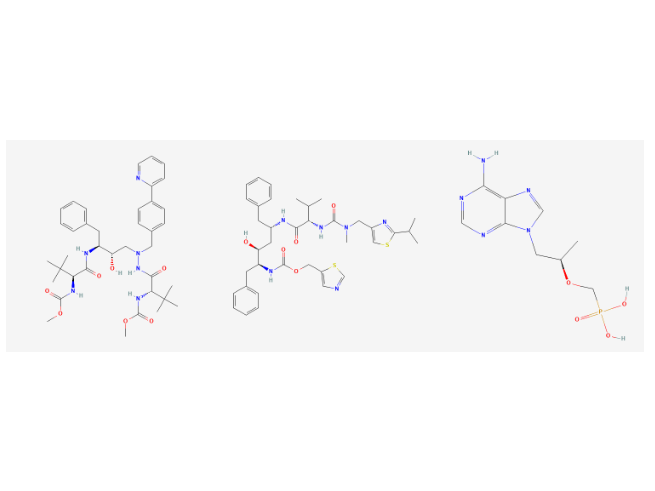
Structure of Atazanavir: C₃₈H₅₂N₆O₇ Ritonavir: C₃₇H₄₈N₆O₅S₂ Tenofovir: C₉H₁₄N₅O₄P
https://pubchem.ncbi.nlm.nih.gov/
Inorganic nanoparticles, Drug Combination Nanoparticles (DcNP)
Subcutaneous
No significant adverse events (AE) , toxicity, deaths, were reported in the preclinical studies
Strength - ATV - 25mg/mL; RTV - 12.8 mg/mL; TFV - 15.3 mg/mL (invivo preclinical dosage)
ATV: 137.5 mg RTV: 70.4 mg TFV: 84.2 mg (for 5.5kg macaque)
Not provided
Not provided
Not provided
Not provided
No delivery device
Not provided
1. Weighing and dispensing booths (Grade D/C) 2. Analytical balances and precision scales 3. Solvent preparation tanks/vessels 4. Glass-lined or stainless-steel mixing reactors 5. Nitrogen gas supply and evaporation system 6. Vacuum drying/desiccation unit 7. Temperature-controlled rehydration vessel (60°C) 8. High-pressure homogenizer (5,000-6,000 psi) 9.Bath sonicator (for development/small-scale batches) 10. Sterile filtration system (where applicable) 11. Aseptic holding vessels 12. pH meter 13. Osmometer
The ATV/RTV/TFV drug-combination nanoparticle (DcNP) is manufactured as a sterile injectable nanosuspension under GMP-compliant aseptic conditions. Production involves solvent-based lipid-drug mixing (chloroform/ethanol), nitrogen evaporation, vacuum drying, rehydration at 60°C for 2 h, and high-pressure homogenization (5,000-6,000 psi). Critical environmental controls include microbial and particulate monitoring, maintenance of pH 7.2-7.6, osmolality of ~213.5 mOsm/kg, and refrigerated storage at 4-8°C. Key quality attributes include particle size (6-62 nm).
1. Dynamic Light Scattering (DLS) 2. Zeta Potential Analyzer 3. HPLC/LC-MS/MS 4. Gas Chromatography (GC) 5. Transmission Electron Microscopy (TEM/Cryo-TEM)
Not provided
(i) 1,2-Distearoyl-sn-glycero-3-phosphocholine (DSPC) (ii) 1,2-distearoyl-sn-glycero-3-phosphoethanolamine-N-[poly (ethylene glycol)2000] (DSPE-mPEG2000) DSPC and DSPE-mPEG2000 at a molar ratio of 9:1
Not provided
Long-acting therapeutic agent combinations and methods thereof
The present disclosure describes simple, stable, and scalable antiviral therapeutic agent compositions that transform short-acting antiviral (e.g., anti-HIV) therapeutic agents that would otherwise require daily short-acting oral administration into long-acting injectable forms that lasts for many weeks per administration. A mixture of water-soluble and water-insoluble antiviral therapeutic agents can be present in the long-acting and drug-combination composition.
US20230270677A1
Not provided
University of Washington
Not provided
Not provided
Pending
Perazzolo S, Shireman LM, Koehn J, et al. Three HIV Drugs, Atazanavir, Ritonavir, and Tenofovir, Coformulated in Drug-Combination Nanoparticles Exhibit Long-Acting and Lymphocyte-Targeting Properties in Nonhuman Primates. J Pharm Sci. 2018;107(12):3153-3162. doi:10.1016/j.xphs.2018.07.032
Drug-combination nanoparticles (DcNPs) administered subcutaneously represent a potential long-acting lymphatic-targeting treatment for HIV infection. The DcNP containing lopinavir (LPV)-ritonavir (RTV)-tenofovir (TFV), Targeted-Long-Acting-Antiretroviral-Therapy product candidate 101 (TLC-ART 101), has shown to provide long-acting lymphocyte-targeting performance in nonhuman primates. To extend the TLC-ART platform, we replaced TLC-ART 101 LPV with second-generation protease inhibitor, atazanavir (ATV). Pharmacokinetics of the ATV-RTV-TFV DcNP was assessed in macaques, in comparison to the equivalent free drug formulation and to the TLC-ART 101. After single subcutaneous administration of the DcNP formulation, ATV, RTV, and TFV concentrations were sustained in plasma for up to 14 days, and in peripheral blood mononuclear cells for 8 to 14 days, compared with 1 to 2 days in those macaques treated with free drug combination. By 1 week, lymph node mononuclear cells showed significant levels for all 3 drugs from DcNPs, whereas the free controls were undetectable. Compared with TLC-ART 101, the ATV-RTV-TFV DcNP exhibited similar lymphocyte-targeted long-acting features for all 3 drugs and similar pharmacokinetics for RTV and TFV, whereas some pharmacokinetic differences were observed for ATV versus LPV. The present study demonstrated the flexibility of the TLC-ART's DcNP platform to include different antiretroviral combinations that produce targeted long-acting effects on both plasma and cells.
No documents were uploaded
There are no additional links
|
|
Collaborate for developmentConsider on a case by case basis, collaborating on developing long acting products with potential significant public health impact, especially for low- and middle-income countries (LMICs), utilising the referred to long-acting technology Not provided |
|
|
Share technical information for match-making assessmentProvide necessary technical information to a potential partner, under confidentiality agreement, to enable preliminary assessment of whether specific medicines of public health importance in LMICs might be compatible with the referred to long-acting technology to achieve a public health benefit Not provided |
|
|
Work with MPP to expand access in LMICsIn the event that a product using the referred to long-acting technology is successfully developed, the technology IP holder(s) will work with the Medicines Patent Pool towards putting in place the most appropriate strategy for timely and affordable access in low and middle-income countries, including through licensing Not provided |
Not provided