access-principles-1access-principles-2access-principles-3backcarrierdevelopmentease_of_administrationexportimplantableinjectablenon-implantablenon_carriernon_injectableother_featuresprintroute_of_administrationtherapeutic_areatype_of_tech

Drug information

Drug's link(s)

Not provided

Generic name

VH-4011499

Brand names

Not provided

Compound type

Small molecule

Drug class/category

HIV-1 Capsid inhibitor

Summary

VH-499 is an investigational drug currently in clinical development for long-acting HIV-1 treatment and pre-exposure prophylaxis. It functions via a multistage mechanism of action inhibiting both early and late HIV-1 replication. VH-499 has shown potent antiviral activity against a broad range of HIV-1 lab strains and clinical isolates at picomolar EC50 levels. Pre-existing resistance to this inhibitor is thought to have a low likelihood. The geometric mean half-life was estimated to have a range 51-66 hours. Interim results of NCT06724640 shows that median time to maximum VH-499 concentration (tmax) was approximately 7 to 18 days post-dose for IM; tmax was approximately 112 days post-dose for SC due to slower absorption. Maximum VH-499 concentrations were lower for SC compared to IM.

Approval status

Compound is currently in clinical development and not yet approved in any jurisdiction.

Regulatory authorities

Not approved yet.

Therapeutic area(s)

  • HIV
Use case(s)
  • Pre-Exposure Prophylaxis (PrEP)
  • Treatment
  • Prevention

Administration route

Subcutaneous, Intramuscular, Oral

Associated long-acting platforms

Unknown

Use of drug

Ease of administration
  • Administered by a community health worker
  • Administered by a nurse
  • Administered by a specialty health worker
  • Self-administered
Frequency of administration
  • Every 6 months
  • Yearly
  • Every 4 months
User acceptance

In the Phase 1 trial, injection site pain of Grade 1 or Grade 2 severity was reported in 75% of participants who received VH-499. No serious adverse events (SAEs) were reported.

Dosage

Available dose and strength

100, 200, and 400 mg IM or SC

Maximum dose

VH-499 400 mg long-acting injection (IM or SC)

Recommended dosing regimen

VH-4011499 is 100 mg, 200 mg, or 400 mg, administered via subcutaneous (SC) or intramuscular (IM) injection.

Additional comments

The recommended dose and dosing regimen were derived from the interim results of clinical trial NCT06724640.

Dosage link(s)

Not provided

Associated technologies

Not provided

Comment & Information

Not provided

Developer(s)

ViiV Healthcare
Originator
United Kingdom

ViiV Healthcare

ViiV Healthcare (ViiV), a subsidiary of GSK plc, is a research company. It researches and develops the use of HIV medicines. The company offers nucleoside reverse transcriptase inhibitors, non-nucleoside reverse transcriptase inhibitors, protease inhibitors, and CCR5 antagonists for the treatment of HIV.

GSK plc
Originator
United Kingdom

GSK plc

GSK plc is a British multinational pharmaceutical and biotechnology company. It was established in 2000 by a merger of Glaxo Wellcome and SmithKline Beecham, which was itself a merger of a number of pharmaceutical companies around the Smith, Kline & French firm. It is headquartered in London, England.

Shionogi & Co., Ltd
Originator
Japan

Shionogi & Co., Ltd

From 20 January 2026, Shionogi & Co will hold subsidary stake in ViiV healthcare ltd. Shinogi is a drug discovery-based pharmaceutical company to create innovative products and services and to deliver value in collaboration with a diverse array of partners.

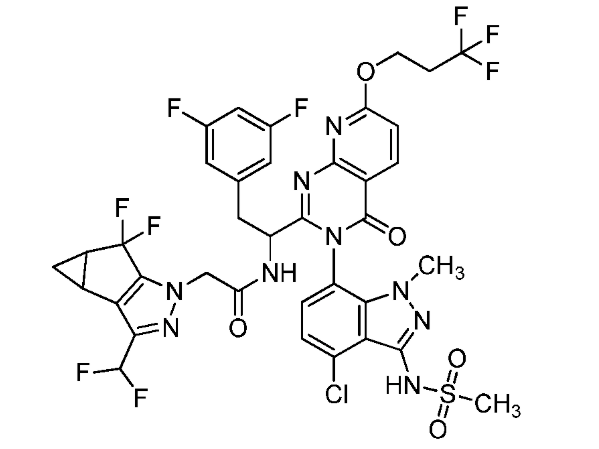
Drug structure

Scale-up and manufacturing prospects

Scale-up prospects

Not provided

Tentative equipment list for manufacturing

Not provided

Manufacturing

Not provided

Specific analytical instrument required for characterization of formulation

Not provided

Excipients

Proprietary excipients used

Not provided

Novel excipients or existing excipients at a concentration above Inactive Ingredient Database (IID) for the specified route of administration

Not provided

Residual solvents used

Not provided

Delivery device(s)

Not provided

Description

Dezecapavir (formula Id) composition solution, comprising PEG

Brief description

A pharmaceutical composition comprising the compound of Formula Ia, Formula Ib, Formula Ic, or Formula Id, or a pharmaceutically acceptable salt thereof, is set forth. (Formula Ia), (Formula Ib), (Formula Ic), (Formula Id)

Representative patent

WO2021209900

Category

Formulation

Patent holder

VIIV HEALTHCARE UK

Exclusivity

Not provided

Expiration date

April 13, 2041

Status

Pending: AU, BR, CA, CL, CN, EP, IL, JP, KR, MY, MX, RU, ZA, US, VN

Description

Dezecapavir (VH4011499) compound

Brief description

The invention relates to compounds, compositions, and methods for the treatment of human immunodeficiency virus (HIV) infection. More particularly, the invention provides novel inhibitors of HIV, pharmaceutical compositions containing such compounds, and methods for using these compounds in the treatment of HIV infection. The invention also relates to methods for making the compounds hereinafter described.

Representative patent

WO2020254985

Category

Compound

Patent holder

VIIV HEALTHCARE UK

Exclusivity

Not provided

Expiration date

June 17, 2040

Status

Granted: AU, CN, DZ, EA (AM, AZ, BY, KG, KZ, TJ, TM), EP (AL, AT, BE, BG, CH, CY, CZ, DE, DK, EE, ES, FI, FR, GB, GR, HR, HU, IE, IS, IT, LI, LT, LU, LV, MC, MK, MT, NL, NO, PL, PT, RO, RS, SE, SI, SK, SM, TR, BA, ME, MA, MD), IL, IN, MX, NG, RU, SG, UA, US Pending: AR, BR, CA, CL, CO, CR, DO, EG, GC, HK, ID, JP, KR, MY, NZ, PK, PA, PE, PH, ZA, TW, TH, TT, UY, VE, VN

Publications

Thakkar N, Griesel R, Pierce A, et al. Clinical Pharmacokinetics and Safety of Orally Administered VH4011499, a New HIV-1 Capsid Inhibitor, in Adults Without HIV. Infect Dis Ther. Published online April 2, 2025. doi:10.1007/s40121-025-01129-y

Introduction: This first-time-in-human study describes the pharmacokinetics, drug-drug interaction potential, and safety of VH4011499 (VH-499), a new HIV-1 capsid inhibitor.

Methods: This double-blind, randomized, placebo-controlled, phase 1 study evaluated VH-499 in adults without HIV administered orally as single ascending doses as powder-in-bottle (PiB; part 1) and tablet (part 3) formulations and as multiple ascending doses as PiB formulation dosed once daily for 14 days (part 2). Midazolam was used to evaluate the effect of VH-499 on cytochrome P450 3A (CYP3A) activity (part 2).

Results: Overall, 73 participants were included (VH-499, n = 56; placebo, n = 17). VH-499 plasma exposures were less than dose-proportional, with median time to maximum observed concentration of 8.0-12.0 h for the PiB formulation and 24.0 h for the tablet formulation. Geometric mean terminal half-life was 51.2-66.5 h (2-3 days). The tablet formulation resulted in 45-63% lower exposures compared with PiB. Concomitant midazolam administration after single and multiple VH-499 doses did not lead to clinically significant changes in midazolam or 1-hydroxymidazolam exposures; therefore, VH-499 is not expected to inhibit or induce CYP3A4. VH-499 was well tolerated. Adverse event (AE) frequency was comparable between placebo and VH-499 groups. VH-499-related AEs were predominantly grade 1. No serious AEs across VH-499 groups, AEs leading to withdrawal from drug/study, or deaths occurred. There were no trends in vital signs, electrocardiograms, or laboratory hematology parameters and no clinically relevant changes in chemistry parameters.

Conclusion: First-time-in-human data further characterize the pharmacokinetics of orally administered VH-499 and provide support for development of VH-499 as part of a complete long-acting regimen for HIV-1 treatment and prevention.

Clinical trial registration: ClinicalTrials.gov, NCT05393271.

Umumararungu T, Nyandwi JB, Katandula J, et al. Current status of the small molecule anti-HIV drugs in the pipeline or recently approvedBioorg Med Chem. 2024;111:117860. doi:10.1016/j.bmc.2024.117860

Human Immunodeficiency Virus (HIV) is the causative agent of Acquired Immunodeficiency Syndrome (AIDS) with high morbidity and mortality rates. Treatment of AIDS/HIV is being complicated by increasing resistance to currently used antiretroviral (ARV) drugs, mainly in low- and middle-income countries (LMICs) due to drug misuse, poor drug supply and poor treatment monitoring. However, progress has been made in the development of new ARV drugs, targeting different HIV components (Fig. 1). This review aims at presenting and discussing the progress made towards the discovery of new ARVs that are at different stages of clinical trials as of July 2024. For each compound, the mechanism of action, target biomolecule, genes associated with resistance, efficacy and safety, class, and phase of clinical trial are discussed. These compounds include analogues of nucleoside reverse transcriptase inhibitors (NRTIs) - islatravir and censavudine; non-nucleoside reverse transcriptase inhibitors (NNRTIs) - Rilpivirine, elsulfavirine and doravirine; integrase inhibitors namely cabotegravir and dolutegravir and chemokine coreceptors 5 and 2 (CC5/CCR2) antagonists for example cenicriviroc. Also, fostemsavir is being developed as an attachment inhibitor while lenacapavir, VH4004280 and VH4011499 are capsid inhibitors. Others are maturation inhibitors such as GSK-254, GSK3532795, GSK3739937, GSK2838232, and other compounds labelled as miscellaneous (do not belong to the classical groups of anti-HIV drugs or to the newer classes) such as obefazimod and BIT225. There is a considerable progress in the development of new anti-HIV drugs and the effort will continue since HIV infections has no cure or vaccine till now. Efforts are needed to reduce the toxicity of available drugs or discover new drugs with new classes which can delay the development of resistance.


N. Thakkar et al. Injectable HIV-1 Capsid Inhibitor VH4011499 (VH-499) Formulation Supports Ultra-Long-Acting Dosing. Presented at the 33rd Conference on Retroviruses and Opportunistic Infections (CROI). February 2026.

Background: The HIV-1 capsid inhibitor VH4011499 (VH-499) is currently in development as a long-acting antiretroviral agent for HIV-1. In a proof-ofconcept study, oral VH-499 demonstrated rapid and potent antiviral activity in people with HIV-1 and was well tolerated. Here we present safety and pharmacokinetics (PK) findings from a first-time-in-human study assessing the ultra-long-acting (ULA) potential of an injectable VH-499 formulation. Methods: In this double-blind (sponsor-unblinded) ongoing phase 1 study (NCT06724640), we randomized participants without HIV-1 to receive single ascending intramuscular (IM) or subcutaneous (SC) doses of VH-499 (100, 200, or 400 mg evaluated herein) or placebo. Safety and PK data were collected post-dose. Single-dose PK parameters using available data were evaluated by non-compartmental analyses. Results: Overall, 48 participants received VH-499 or placebo as an IM or SC injection (6 groups total, n=8 each). Median age was 36 years, 94% of participants were male, and 40% identified as non-White. Most adverse events (AEs) had a maximum grade of 1 or 2 in severity across all treatment groups. VH-499–related AEs were primarily injection site reactions (ISRs), most frequently injection site pain (27/36; 75%). Median overall ISR event duration ranged from 1 to 3 days across all groups. Frequency of VH-499–related ISRswas higher in SC vs IM groups (83%-100% vs 33%-83%). No participants withdrew for safety reasons. No serious AEs were reported. Based on preliminary PK analysis, median time to maximum VH-499 concentration (tmax) was approximately 7 to 18 days post-dose for IM; tmax was approximately 112 days post-dose for SC due to slower absorption (Figure). Maximum VH-499 concentrations were lower after SC administration compared with IM at all doses. Given the relatively flat VH-499 PK profile for both IM and SC routes, no terminal half-life could be identified based on available data, and longer-term PK data are required. Conclusions: Both IM and SC single-dose injections of VH-499 were well tolerated and demonstrated slower absorption through SC administration in people without HIV-1. These results suggest that the long-acting injectable VH-499 formulation has the potential to support ULA (ie, ≥4 months) dosing intervals, and either healthcare provider or self-administration could be feasible. Model-informed drug development approaches using emerging PK and safety data from this study will help to optimize the design of the future development of VH-499.

Collaborate for development

Consider on a case by case basis, collaborating on developing long acting products with potential significant public health impact, especially for low- and middle-income countries (LMICs), utilising the referred to long-acting technology

Share technical information for match-making assessment

Provide necessary technical information to a potential partner, under confidentiality agreement, to enable preliminary assessment of whether specific medicines of public health importance in LMICs might be compatible with the referred to long-acting technology to achieve a public health benefit

Work with MPP to expand access in LMICs

In the event that a product using the referred to long-acting technology is successfully developed, the technology IP holder(s) will work with the Medicines Patent Pool towards putting in place the most appropriate strategy for timely and affordable access in low and middle-income countries, including through licensing