
|
Developed by 

|
Supported by 


|
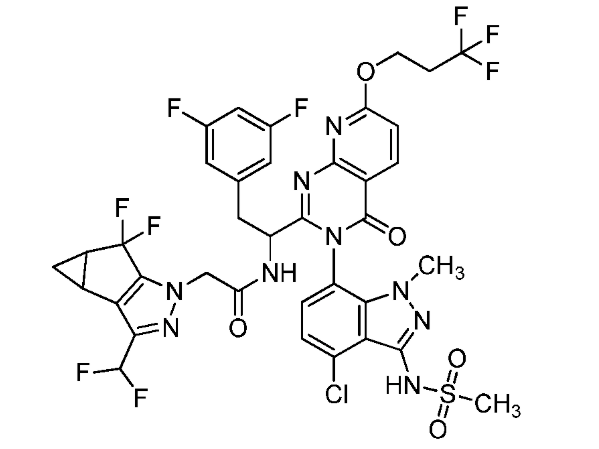
fremocapavir (VH-499)
Developer(s)
|
ViiV Healthcare Originator
https://viivhealthcare.com/
United Kingdom ViiV Healthcare is a pharmaceutical company that specializes in the development of therapies for HIV infection. The company is headquartered in Brentford in the United Kingdom and was initially formed in November 2009 as a part of a joint venture between GlaxoSmithKline and Pfizer. Shionogi joined in October 2012 |

|
Shionogi Originator
https://www.shionogi.com/
Japan From 20 January 2026, Shionogi & Co will hold subsidary stake in ViiV healthcare ltd. Shinogi is a drug discovery-based pharmaceutical company to create innovative products and services and to deliver value in collaboration with a diverse array of partners. |
Drug structure
fremocapavir (VH-499;VH-4011499)
https://pubchem.ncbi.nlm.nih.gov/compound/155427795
Drug information
Associated long-acting platforms
Unknown
Administration route
Subcutaneous, Intramuscular, Oral
Therapeutic area(s)
Use case(s)
Use of drug
Ease of administration
Frequency of administration
User acceptance
Dosage
Available dose and strength
100 1200mg IM or SC
Maximum dose
VH-499 1200mg long-acting injection (IM or SC)
Recommended dosing regimen
VH-4011499 is being studied with doses between 100 mg to 1200mg, administered via subcutaneous (SC) or intramuscular (IM) injection.
Additional comments
The recommended dose and dosing regimen were derived from the interim results of clinical trial NCT06724640, and are subject to changes during the development program.
Dosage link(s)
Not provided
Drug information
Drug's link(s)
Not provided
Generic name
Brand name
Compound type
Drug class/category
Lifecycle status
Summary
Approval status
Regulatory authorities
Safety
Efficacy
Evidence Summary
Delivery device(s)
Not provided
Scale-up and manufacturing prospects
Scale-up prospects
Not provided
Tentative equipment list for manufacturing
Not provided
Manufacturing
Not provided
Specific analytical instrument required for characterization of formulation
Not provided
Clinical trials
CINNAMON
Identifier
NCT06039579
Link
https://clinicaltrials.gov/study/NCT06039579
Phase
Phase II
Status
Completed
Sponsor
ViiV Healthcare
More details
The primary purpose of the study is to evaluate the antiviral activity of orally administered VH4004280 and VH4011499 monotherapy over 10 days in human immunodeficiency virus (HIV-1) infected Treatment-Naïve (TN) participants.
Purpose
Proof of Concept Treatment Study of Orally Administered VH4004280 or VH4011499 in HIV-1 Infected Adults
Interventions
Intervention 1
Intervention 2
Intervention 3
Intervention 4
Countries
Sites / Institutions
Not provided
Trials dates
Anticipated Start Date
Not provided
Actual Start Date
2023-10-25
Anticipated Date of Last Follow-up
2025-09-09
Estimated Primary Completion Date
Not provided
Estimated Completion Date
Not provided
Actual Primary Completion Date
2024-06-24
Actual Completion Date
2024-06-24
Studied populations
Age Cohort
- Adults
- Older Adults
Genders
- All
Accepts pregnant individuals
No
Accepts lactating individuals
No
Accepts healthy individuals
No
Comments about the studied populations
Inclusion Criteria: * Participants who are overtly healthy (other than HIV-1 infection). * Screening cluster of differentiation-4 (CD4+) T-cell count greater than or equal to (≥)200 cells/microliter (µL). * Documented HIV-1 infection and Screening plasma HIV-1 RNA ≥3000 copies/milliliter (mL). * Treatment-naïve: Defined as no antiretroviral therapy received after the diagnosis of HIV-1 infection. Prior use of oral pre-exposure prophylaxis (PreP) is permitted. Prior use of parenteral PreP is exclusionary. * Has body mass index (BMI) within the range of 18.5-31.0 kilograms per meter square (kg/m\^2). * Participants male at birth must use male condoms and participants female at birth who are of childbearing potential must be using acceptable forms of birth control.
Health status
Study type
Interventional (clinical trial)
Enrollment
44
Allocation
Randomized
Intervention model
Parallel Assignment
Intervention model description
Not provided
Masking
Double-blind masking
Masking description
Double (Participant, Investigator)
Frequency of administration
Studied LA-formulation(s)
Not provided
Studied route(s) of administration
Use case
Treatment
Indication(s)
HIV
Key resources
| Type | Title | Content | Link |
|---|---|---|---|
| Link | Proof of concept study of orally administered VH4004280 or VH4011499 in HIV-1 infected adults | https://www.hra.nhs.uk/planning-and-improving-research/application-summaries/research-summaries/proof-of-concept-study-of-orally-administered-vh4004280-or-vh4011499-in-hiv-1-infected-adults/ |
218547
Identifier
NCT06724640
Link
https://clinicaltrials.gov/study/NCT06724640
Phase
Phase I
Status
Recruiting
Sponsor
ViiV Healthcare
More details
The purpose of this study is to investigate safety and tolerability following single ascending subcutaneous (SC) and intramuscular (IM) doses of VH4011499 in participants without HIV. The study will also describe the pharmacokinetics following single ascending SC and IM doses of VH4011499 in participants without HIV.
Purpose
A Study to Assess the Safety, Tolerability, and Pharmacokinetics of VH4011499 Compared to Placebo in Adults Without HIV
Interventions
Intervention 1
Intervention 2
Countries
Sites / Institutions
Not provided
Trials dates
Anticipated Start Date
Not provided
Actual Start Date
2024-12-16
Anticipated Date of Last Follow-up
2025-10-27
Estimated Primary Completion Date
2028-08-16
Estimated Completion Date
2028-08-16
Actual Primary Completion Date
Not provided
Actual Completion Date
Not provided
Studied populations
Age Cohort
- Adults
Genders
- All
Accepts pregnant individuals
Unspecified
Accepts lactating individuals
Unspecified
Accepts healthy individuals
Yes
Comments about the studied populations
Inclusion Criteria: * Participant must be 18 to 55 years of age inclusive, at the time of signing the informed consent. * Participants who are overtly healthy. * Male or female of non-childbearing potential. * Capable of giving signed informed consent. Exclusion Criteria: * History or presence of cardiovascular, respiratory, hepatic, renal, gastrointestinal, endocrine, hematological, neurological or psychiatric disorders capable of significantly altering the absorption, metabolism, or elimination of drugs; constituting a risk when taking the study intervention or interfering with the interpretation of data. * Abnormal blood pressure. * Lymphoma, leukemia, or any malignancy within the past 5 years except for basal cell or squamous epithelial carcinomas of the skin that have been resected
Health status
Study type
Interventional (clinical trial)
Enrollment
168
Allocation
Randomized
Intervention model
Sequential assignment
Intervention model description
Not provided
Masking
Double-blind masking
Masking description
Double (Participant, Investigator)
Frequency of administration
Studied LA-formulation(s)
Studied route(s) of administration
Use case
Treatment
Indication(s)
HIV
Key resources
222420
Identifier
NCT06368986
Link
https://clinicaltrials.gov/study/NCT06368986
Phase
Phase I
Status
Completed
Sponsor
ViiV Healthcare
More details
The purpose of this study is to evaluate effect of food (in fasted and fed conditions) on the bioavailability of CAI VH4011499.
Purpose
A Study to Investigate the Effect of Food on the Bioavailability of a Capsid Inhibitor (CAI) in Male and Female Healthy Participants
Interventions
Intervention 1
Intervention 2
Countries
Sites / Institutions
Not provided
Trials dates
Anticipated Start Date
Not provided
Actual Start Date
2024-04-17
Anticipated Date of Last Follow-up
2025-02-13
Estimated Primary Completion Date
Not provided
Estimated Completion Date
Not provided
Actual Primary Completion Date
2024-10-02
Actual Completion Date
2024-10-02
Studied populations
Age Cohort
- Adults
Genders
- All
Accepts pregnant individuals
No
Accepts lactating individuals
No
Accepts healthy individuals
Yes
Comments about the studied populations
Inclusion Criteria: * Participants who are 18 to 55 years of age. * Participants who are overtly healthy. * One SARs-CoV-2 negative test is required prior to dosing * Body weight within 50-100 kg and body mass index (BMI) within the range 19-32 kg/m2 (inclusive). * Capable of giving signed informed consent. * Participants male at birth must use male condoms, and participants female at birth who are of childbearing potential must be using acceptable forms of birth control.
Health status
Study type
Interventional (clinical trial)
Enrollment
60
Allocation
Randomized
Intervention model
Parallel Assignment
Intervention model description
Not provided
Masking
Open label
Masking description
None (Open Label)
Frequency of administration
Not provided
Studied LA-formulation(s)
Not provided
Studied route(s) of administration
Not provided
Use case
Not provided
Indication(s)
HIV
Key resources
218306
Identifier
NCT06012136
Link
https://clinicaltrials.gov/study/NCT06012136
Phase
Phase I
Status
Completed
Sponsor
ViiV Healthcare
More details
The primary purpose of the study is to investigate safety and tolerability following single ascending subcutaneous (SC) and intramuscular (IM) doses of capsid inhibitors (VH4004280 and VH4011499) in healthy participants. The study will also describe the pharmacokinetics following single ascending SC and IM doses of capsid inhibitors in healthy participants.
Purpose
A Study to Evaluate the Safety, Tolerability, and Pharmacokinetics of a Single Suspension Injection of Investigational Capsid Inhibitors Compared to Placebo in Healthy Adults
Interventions
Intervention 1
Intervention 2
Intervention 3
Countries
Sites / Institutions
Not provided
Trials dates
Anticipated Start Date
Not provided
Actual Start Date
2023-08-24
Anticipated Date of Last Follow-up
2026-08-02
Estimated Primary Completion Date
2026-09-02
Estimated Completion Date
2026-09-02
Actual Primary Completion Date
2026-06-09
Actual Completion Date
2026-06-09
Studied populations
Age Cohort
- Adults
Genders
- All
Accepts pregnant individuals
Unspecified
Accepts lactating individuals
Unspecified
Accepts healthy individuals
Yes
Comments about the studied populations
Inclusion Criteria: * Participants who are overtly healthy. * Participants who are negative on a single test for Severe Acute Respiratory Syndrome Coronavirus 2 (SARS-CoV-2) (approved molecular polymerase chain reaction (PCR), point of care test), performed on the day of admission (Day -1). A negative result is required prior to the administration of study intervention on Day 1. * Male or female participants of non-childbearing potential. * Capable of giving signed informed consent. Exclusion Criteria: * History or presence of cardiovascular, respiratory, hepatic, renal, gastrointestinal, endocrine, hematological, neurological or psychiatric disorders capable of significantly altering the absorption, metabolism, or elimination of drugs.
Health status
Study type
Interventional (clinical trial)
Enrollment
85
Allocation
Randomized
Intervention model
Sequential assignment
Intervention model description
Not provided
Masking
Double-blind masking
Masking description
Double (Participant, Investigator)
Frequency of administration
Studied LA-formulation(s)
Studied route(s) of administration
Use case
Treatment
Indication(s)
HIV
Key resources
| Type | Title | Content | Link |
|---|---|---|---|
| Link | Proof-of-Concept Trial of Oral VH4011499 (VH-499), a New HIV-1 Capsid Inhibitor | https://www.natap.org/2025/CROI/croi_29.htm |
218490
Identifier
NCT05393271
Link
https://clinicaltrials.gov/study/NCT05393271
Phase
Phase I
Status
Completed
Sponsor
ViiV Healthcare
More details
This FTIH study aims to evaluate the safety, tolerability and PK of the novel investigational Human immunodeficiency virus (HIV)-1 capsid inhibitor VH4011499 in healthy adults. The study will be conducted in 3 parts: Part 1 will investigate single ascending doses (SAD) and Part 2 will investigate multiple ascending doses (MAD). Part 3 will investigate single dose of a new formulation of VH4011499. The transition from SAD to MAD will be based on the assessment of the Safety and Dose Escalation Committee.
Purpose
First-Time-in-Human (FTIH) Study to Evaluate the Safety, Tolerability and Pharmacokinetics (PK) of VH4011499 in Healthy Participants
Interventions
Intervention 1
Intervention 2
Intervention 3
Countries
Sites / Institutions
Not provided
Trials dates
Anticipated Start Date
Not provided
Actual Start Date
2022-10-03
Anticipated Date of Last Follow-up
2025-03-31
Estimated Primary Completion Date
Not provided
Estimated Completion Date
Not provided
Actual Primary Completion Date
2023-04-24
Actual Completion Date
2023-04-24
Studied populations
Age Cohort
- Adults
Genders
- All
Accepts pregnant individuals
Unspecified
Accepts lactating individuals
Unspecified
Accepts healthy individuals
Yes
Comments about the studied populations
Inclusion Criteria: * Participants who are overtly healthy. * Participants must have two consecutive Severe Acute Respiratory Syndrome Coronavirus 2 (SARs-CoV-2) Polymerase chain reaction (PCR) negative results prior to dosing. * Participants must have body weight \> 50 kilograms (kg) and body mass index (BMI) within the range 19-32 kilograms per meter square (kg/m^2). * Male or female participants (either of non-childbearing potential or of child-bearing potential and using acceptable contraception). * Capable of giving signed informed consent.
Health status
Study type
Interventional (clinical trial)
Enrollment
73
Allocation
Randomized
Intervention model
Sequential assignment
Intervention model description
This is a double-blind (sponsor unblinded) study.
Masking
Double-blind masking
Masking description
Double (Participant, Investigator)
Frequency of administration
Studied LA-formulation(s)
Not provided
Studied route(s) of administration
Use case
Treatment
Indication(s)
HIV
Key resources
| Type | Title | Content | Link |
|---|---|---|---|
| Publication | Thakkar N, Griesel R, Pierce A, et al. Clinical Pharmacokinetics and Safety of Orally Administered VH4011499, a New HIV-1 Capsid Inhibitor, in Adults Without HIV. Infect Dis Ther. Published online April 2, 2025. doi:10.1007/s40121-025-01129-y | Introduction: This first-time-in-human study describes the pharmacokinetics, drug-drug interaction potential, and safety of VH4011499 (VH-499), a new HIV-1 capsid inhibitor.Methods: This double-blind, randomized, placebo-controlled, phase 1 study evaluated VH-499 in adults without HIV administered orally as single ascending doses as powder-in-bottle (PiB; part 1) and tablet (part 3) formulations and as multiple ascending doses as PiB formulation dosed once daily for 14 days (part 2). Midazolam was used to evaluate the effect of VH-499 on cytochrome P450 3A (CYP3A) activity (part 2).Results: Overall, 73 participants were included (VH-499, n = 56; placebo, n = 17). VH-499 plasma exposures were less than dose-proportional, with median time to maximum observed concentration of 8.0-12.0 h for the PiB formulation and 24.0 h for the tablet formulation. Geometric mean terminal half-life was 51.2-66.5 h (2-3 days). The tablet formulation resulted in 45-63% lower exposures compared with PiB. Concomitant midazolam administration after single and multiple VH-499 doses did not lead to clinically significant changes in midazolam or 1-hydroxymidazolam exposures; therefore, VH-499 is not expected to inhibit or induce CYP3A4. VH-499 was well tolerated. Adverse event (AE) frequency was comparable between placebo and VH-499 groups. VH-499-related AEs were predominantly grade 1. No serious AEs across VH-499 groups, AEs leading to withdrawal from drug/study, or deaths occurred. There were no trends in vital signs, electrocardiograms, or laboratory hematology parameters and no clinically relevant changes in chemistry parameters.Conclusion: First-time-in-human data further characterize the pharmacokinetics of orally administered VH-499 and provide support for development of VH-499 as part of a complete long-acting regimen for HIV-1 treatment and prevention.Clinical trial registration: ClinicalTrials.gov, NCT05393271. |
CINERGY
Identifier
NCT07816250
Link
https://clinicaltrials.gov/study/NCT07816250
Phase
Phase II
Status
Not yet recruiting
Sponsor
ViiV Healthcare
More details
The purpose of this Phase 2b study is to evaluate the efficacy and therapeutic window of chronically dosed VH4011499 paired with an integrase strand transfer inhibitor (INSTI). This study will explore 4 different regimens of VH4011499 when paired with cabotegravir (CAB) as an initial two-drug regimen.
Purpose
A Phase 2b Study Evaluating VH4011499 Capsid Inhibitor Long-Acting Injectable Plus Cabotegravir in Treatment Naïve Adults (CINERGY)
Interventions
Intervention 1
Intervention 2
Intervention 3
Countries
Not provided
Sites / Institutions
Not provided
Trials dates
Anticipated Start Date
2026-10-19
Actual Start Date
Not provided
Anticipated Date of Last Follow-up
2026-09-06
Estimated Primary Completion Date
2032-06-10
Estimated Completion Date
2032-06-11
Actual Primary Completion Date
Not provided
Actual Completion Date
Not provided
Studied populations
Age Cohort
- Adults
- Older Adults
Genders
- All
Accepts pregnant individuals
Unspecified
Accepts lactating individuals
Unspecified
Accepts healthy individuals
No
Comments about the studied populations
Inclusion Criteria: * Participant must be at least 18 years of age (or older, if required for adults by local regulations). * Screening CD4+ T-cell count ≥ 200 cells/µL. * Documented HIV-1 infection and screening plasma HIV-1 RNA ≥ 1 000 and ≤ 100 000 copies/mL. * Treatment-naïve. Prior use of oral pre-exposure prophylaxis (PrEP) or oral post-exposure prophylaxis (PEP) that is not INSTI or CAI based is permitted. * Body weight ≥ 50.0 kg (110 lbs) for participants assigned male at birth and ≥ 45.0 kg (99 lbs) for participants assigned female at birth. * Agrees to adequate birth control if a participant of childbearing potential Exclusion Criteria: * Participants with acute HIV-1 infection * Prior exposure to any HIV-1 capsid inhibitor or any HIV-1 INSTI for any reason is prohibited. *
Health status
Not provided
Study type
Interventional (clinical trial)
Enrollment
200
Allocation
Randomized
Intervention model
Parallel Assignment
Intervention model description
Not provided
Masking
Open label
Masking description
Not provided
Frequency of administration
Studied LA-formulation(s)
Studied route(s) of administration
Not provided
Use case
Treatment
Indication(s)
HIV
Key resources
Excipients
Proprietary excipients used
Not provided
Novel excipients or existing excipients at a concentration above Inactive Ingredients Database (IID) for the specified route of administration
Not provided
Residual solvents used
Not provided
Patent info
Compound patent families
Patent informations
| Patent description | Representative patent | Categories | Patent holder | Licence with MPP | Patent source |
|---|---|---|---|---|---|
|
Fremocapavir or lenapacavir formulation with polyethylene glycol and ethanol
Expiry date: 2042-10-12 |
WO2023062559 | Composition | No |
Patent status
| Patent status/countries | Low, Low- middle and upper-middle | High income |
|---|---|---|
| Granted | ||
| Filed | ||
| Not in force | World Intellectual Property Organization (WIPO), China, Morocco, Tunisia, Albania, Serbia, Bosnia and Herzegovina, Cambodia, Montenegro, Türkiye, Moldova, Republic of, North Macedonia, Mexico, India, Brazil, Malaysia, Viet Nam | World Intellectual Property Organization (WIPO), Australia, Canada, Chile, Liechtenstein, Italy, Norway, Malta, Denmark, Belgium, United Kingdom, Greece, Netherlands, Hungary, Croatia, Switzerland, Spain, San Marino, Slovenia, Austria, Romania, Iceland, Cyprus, Finland, France, Bulgaria, Slovakia, Poland, Latvia, Ireland, Estonia, Germany, Luxembourg, Portugal, Czechia, Lithuania, Monaco, Sweden, Israel, Japan, Korea, Republic of, United States of America, Hong Kong, Russian Federation |
Patent informations
| Patent description | Representative patent | Categories | Patent holder | Licence with MPP | Patent source |
|---|---|---|---|---|---|
|
Fremocapavir composition comprising polyethylene glycol
Expiry date: 2041-04-13 |
WO2021209900 | Composition | No |
Patent status
| Patent status/countries | Low, Low- middle and upper-middle | High income |
|---|---|---|
| Granted | ||
| Filed | ||
| Not in force | World Intellectual Property Organization (WIPO), Brazil, China, Morocco, Tunisia, Albania, Serbia, Bosnia and Herzegovina, Cambodia, Montenegro, Türkiye, Moldova, Republic of, North Macedonia, Mexico, Malaysia, South Africa, Viet Nam, India | World Intellectual Property Organization (WIPO), Australia, Canada, Chile, Liechtenstein, Italy, Norway, Malta, Denmark, Belgium, United Kingdom, Greece, Netherlands, Hungary, Croatia, Switzerland, Spain, San Marino, Slovenia, Austria, Romania, Iceland, Cyprus, Finland, France, Bulgaria, Slovakia, Poland, Latvia, Ireland, Estonia, Germany, Luxembourg, Portugal, Czechia, Lithuania, Monaco, Sweden, Israel, Japan, Korea, Republic of, United States of America, Russian Federation |
Patent informations
| Patent description | Representative patent | Categories | Patent holder | Licence with MPP | Patent source |
|---|---|---|---|---|---|
|
Fremocapavir compound
Expiry date: 2040-06-17 |
WO2020254985 | Compound | No |
Patent status
| Patent status/countries | Low, Low- middle and upper-middle | High income |
|---|---|---|
| Granted | ||
| Filed | ||
| Not in force | World Intellectual Property Organization (WIPO), Argentina, Brazil, China, Colombia, Morocco, Tunisia, Albania, Serbia, Bosnia and Herzegovina, Cambodia, Montenegro, Türkiye, Moldova, Republic of, North Macedonia, Mexico, Malaysia, Peru, Philippines, Ukraine, India, Algeria, Dominican Republic, Egypt, Indonesia, Nigeria, Pakistan, Thailand, Venezuela (Bolivarian Republic of), Viet Nam, South Africa, Tajikistan, Belarus, Azerbaijan, Turkmenistan, Armenia, Kyrgyzstan, Kazakhstan | World Intellectual Property Organization (WIPO), Australia, Canada, Chile, Costa Rica, Liechtenstein, Italy, Norway, Malta, Denmark, Belgium, United Kingdom, Greece, Netherlands, Hungary, Croatia, Switzerland, Spain, San Marino, Slovenia, Austria, Romania, Iceland, Cyprus, Finland, France, Bulgaria, Slovakia, Poland, Latvia, Ireland, Estonia, Germany, Luxembourg, Portugal, Czechia, Lithuania, Monaco, Sweden, Israel, Japan, Korea, Republic of, Taiwan, Province of China, United States of America, Uruguay, Hong Kong, New Zealand, Panama, Trinidad and Tobago, Russian Federation, Kuwait, United Arab Emirates, Bahrain, Saudi Arabia, Oman, Qatar |
Supporting material
Publications
Umumararungu T, Nyandwi JB, Katandula J, et al. Current status of the small molecule anti-HIV drugs in the pipeline or recently approved. Bioorg Med Chem. 2024;111:117860. doi:10.1016/j.bmc.2024.117860
Link: https://pubmed.ncbi.nlm.nih.gov/39094527/
Human Immunodeficiency Virus (HIV) is the causative agent of Acquired Immunodeficiency Syndrome (AIDS) with high morbidity and mortality rates. Treatment of AIDS/HIV is being complicated by increasing resistance to currently used antiretroviral (ARV) drugs, mainly in low- and middle-income countries (LMICs) due to drug misuse, poor drug supply and poor treatment monitoring. However, progress has been made in the development of new ARV drugs, targeting different HIV components (Fig. 1). This review aims at presenting and discussing the progress made towards the discovery of new ARVs that are at different stages of clinical trials as of July 2024. For each compound, the mechanism of action, target biomolecule, genes associated with resistance, efficacy and safety, class, and phase of clinical trial are discussed. These compounds include analogues of nucleoside reverse transcriptase inhibitors (NRTIs) - islatravir and censavudine; non-nucleoside reverse transcriptase inhibitors (NNRTIs) - Rilpivirine, elsulfavirine and doravirine; integrase inhibitors namely cabotegravir and dolutegravir and chemokine coreceptors 5 and 2 (CC5/CCR2) antagonists for example cenicriviroc. Also, fostemsavir is being developed as an attachment inhibitor while lenacapavir, VH4004280 and VH4011499 are capsid inhibitors. Others are maturation inhibitors such as GSK-254, GSK3532795, GSK3739937, GSK2838232, and other compounds labelled as miscellaneous (do not belong to the classical groups of anti-HIV drugs or to the newer classes) such as obefazimod and BIT225. There is a considerable progress in the development of new anti-HIV drugs and the effort will continue since HIV infections has no cure or vaccine till now. Efforts are needed to reduce the toxicity of available drugs or discover new drugs with new classes which can delay the development of resistance.
N. Thakkar et al. Injectable HIV-1 Capsid Inhibitor VH4011499 (VH-499) Formulation Supports Ultra-Long-Acting Dosing. Presented at the 33rd Conference on Retroviruses and Opportunistic Infections (CROI). February 2026.
Background: The HIV-1 capsid inhibitor VH4011499 (VH-499) is currently in development as a long-acting antiretroviral agent for HIV-1. In a proof-ofconcept study, oral VH-499 demonstrated rapid and potent antiviral activity in people with HIV-1 and was well tolerated. Here we present safety and pharmacokinetics (PK) findings from a first-time-in-human study assessing the ultra-long-acting (ULA) potential of an injectable VH-499 formulation. Methods: In this double-blind (sponsor-unblinded) ongoing phase 1 study (NCT06724640), we randomized participants without HIV-1 to receive single ascending intramuscular (IM) or subcutaneous (SC) doses of VH-499 (100, 200, or 400 mg evaluated herein) or placebo. Safety and PK data were collected post-dose. Single-dose PK parameters using available data were evaluated by non-compartmental analyses. Results: Overall, 48 participants received VH-499 or placebo as an IM or SC injection (6 groups total, n=8 each). Median age was 36 years, 94% of participants were male, and 40% identified as non-White. Most adverse events (AEs) had a maximum grade of 1 or 2 in severity across all treatment groups. VH-499–related AEs were primarily injection site reactions (ISRs), most frequently injection site pain (27/36; 75%). Median overall ISR event duration ranged from 1 to 3 days across all groups. Frequency of VH-499–related ISRswas higher in SC vs IM groups (83%-100% vs 33%-83%). No participants withdrew for safety reasons. No serious AEs were reported. Based on preliminary PK analysis, median time to maximum VH-499 concentration (tmax) was approximately 7 to 18 days post-dose for IM; tmax was approximately 112 days post-dose for SC due to slower absorption (Figure). Maximum VH-499 concentrations were lower after SC administration compared with IM at all doses. Given the relatively flat VH-499 PK profile for both IM and SC routes, no terminal half-life could be identified based on available data, and longer-term PK data are required. Conclusions: Both IM and SC single-dose injections of VH-499 were well tolerated and demonstrated slower absorption through SC administration in people without HIV-1. These results suggest that the long-acting injectable VH-499 formulation has the potential to support ULA (ie, ≥4 months) dosing intervals, and either healthcare provider or self-administration could be feasible. Model-informed drug development approaches using emerging PK and safety data from this study will help to optimize the design of the future development of VH-499.
Thakkar N, Griesel R, Pierce A, et al. Clinical Pharmacokinetics and Safety of Orally Administered VH4011499, a New HIV-1 Capsid Inhibitor, in Adults Without HIV. Infect Dis Ther. Published online April 2, 2025. doi:10.1007/s40121-025-01129-y
Introduction: This first-time-in-human study describes the pharmacokinetics, drug-drug interaction potential, and safety of VH4011499 (VH-499), a new HIV-1 capsid inhibitor.
Methods: This double-blind, randomized, placebo-controlled, phase 1 study evaluated VH-499 in adults without HIV administered orally as single ascending doses as powder-in-bottle (PiB; part 1) and tablet (part 3) formulations and as multiple ascending doses as PiB formulation dosed once daily for 14 days (part 2). Midazolam was used to evaluate the effect of VH-499 on cytochrome P450 3A (CYP3A) activity (part 2).
Results: Overall, 73 participants were included (VH-499, n = 56; placebo, n = 17). VH-499 plasma exposures were less than dose-proportional, with median time to maximum observed concentration of 8.0-12.0 h for the PiB formulation and 24.0 h for the tablet formulation. Geometric mean terminal half-life was 51.2-66.5 h (2-3 days). The tablet formulation resulted in 45-63% lower exposures compared with PiB. Concomitant midazolam administration after single and multiple VH-499 doses did not lead to clinically significant changes in midazolam or 1-hydroxymidazolam exposures; therefore, VH-499 is not expected to inhibit or induce CYP3A4. VH-499 was well tolerated. Adverse event (AE) frequency was comparable between placebo and VH-499 groups. VH-499-related AEs were predominantly grade 1. No serious AEs across VH-499 groups, AEs leading to withdrawal from drug/study, or deaths occurred. There were no trends in vital signs, electrocardiograms, or laboratory hematology parameters and no clinically relevant changes in chemistry parameters.
Conclusion: First-time-in-human data further characterize the pharmacokinetics of orally administered VH-499 and provide support for development of VH-499 as part of a complete long-acting regimen for HIV-1 treatment and prevention.
Clinical trial registration: ClinicalTrials.gov, NCT05393271.
Additional documents
No documents were uploaded