Drug name
Last update: Sep 2026Teropavimab (TAB) (mAb)
Developer(s)
Drug information
Teropavimab; TAB; GS-5423; 3BNC117-LS; 3BNC117-LS-J (variant produced for IAVI/ACTG studies); CAS No.: 2417213-72-8
Not applicable (investigational; no brand name assigned)
Biotherapeutic
bNAb targeting the CD4 binding site of gp120 on HIV-1 envelope
Not provided
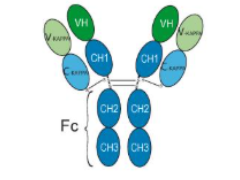
Teropavimab (GS-5423) is the long-acting LS variant of the broadly neutralising antibody 3BNC117, discovered at The Rockefeller University and licensed to Gilead Sciences in January 2020. It is a human IgG1 targeting the CD4 binding site of the HIV-1 envelope; the LS substitutions (M428L/N434S) in the Fc region increase FcRn binding and extend serum half-life without changing the antigen-binding region. In phase 2, a single 2,550 mg IV infusion gave a mean half-life of 63.5 days in people with HIV; in viraemic participants, the mean half-life was 41.6 days, consistent with antigen-mediated clearance. Teropavimab is developed exclusively as part of a twice-yearly regimen with zinlirvimab (10-1074-LS) and subcutaneous lenacapavir.
Not approved in any jurisdiction as of September 2026. Phase 3 (Daybreak 1 and 2) registered in 2026 as part of the lenacapavir + teropavimab + zinlirvimab regimen;
Unknown
Therapeutic area(s)
- HIV
- Treatment
Administration route
Intravenous
Associated long-acting platforms
Monoclonal antibodies and antibody drug conjugates
Use of drug
- Administered by a nurse
- Administered by a specialty health worker
- Every 6 months
No formal acceptability data published. In the phase 2 study there were no infusion-related reactions to teropavimab; the most common adverse events in the regimen were injection site reactions to subcutaneous lenacapavir.
Dosage
Investigational: 2,550 mg IV infusion (phase 2 and phase 3 regimen).
2,550 mg IV (regimen dose)
No approved regimen. Phase 2/3 regimen: teropavimab 2,550 mg IV + zinlirvimab 2,550 mg IV on day 1 with lenacapavir 927 mg SC (two 1.5 mL injections) plus oral lenacapavir loading (600 mg on days 1 and 2), repeated every 6 months.
Viral susceptibility to both bNAbs is a protocol eligibility requirement.
Not provided
Related entries
Main compound
Zinlirvimab (ZAB) (mAb)
Related compounds
Teropavimab (TAB) (mAb)
Additional information
Developer(s)
Gilead
Drug structure
Scale-up and manufacturing prospects
Not reported for this product. Generic mAb scale-up considerations apply: formulation stability at high concentration, pharmacokinetic suitability, and maintenance of critical quality attributes.
Not reported for this product. Standard therapeutic mAb train may be assumed: production bioreactors, disc-stack centrifugation and depth/membrane filtration for harvest clarification, Protein A and polishing chromatography, viral inactivation and filtration, ultrafiltration/diafiltration, sterile fill-finish.
Recombinant human IgG1 produced in mammalian cell culture by Gilead. Process details not published.
Not reported for this product. Standard mAb characterisation applies: ion-exchange chromatography and capillary isoelectric focusing (charge variants), size-exclusion chromatography (aggregates), DSC (thermal stability), subvisible particle counting, ELISA for serum concentrations, TZM.bl neutralisation assays for susceptibility.
Excipients & delivery device(s)
Not provided
Not provided
Not provided
No delivery device
Safety, Efficacy and Evidence Summary
Not provided
Not provided
Not provided
Not provided
There are either no relevant patents or these were not yet submitted to LAPaL