Drug name
Last update: Oct 2026Teropavimab + Zinlirvimab
Developer(s)
Drug information
Not provided
Teropavimab (3BNC117-LS, GS-5423) and Zinlirvimab (10-1074-LS, GS-2872)
Not provided
Biotherapeutic
mAb (Monoclonal antibody) — 2 bNAbs targeting gp120 on HIV-1 envelope ( CD4bs and V3 Loop respectively)
Active / In Development (Phase 1/2/3)
Teropavimab (GS-5423; 3BNC117-LS) and zinlirvimab (GS-2872; 10-1074-LS) are a long-acting combination of the broadly neutralising antibodies (bNAbs) 3BNC117 and 10-1074 currently in clinical development for the treatment of HIV-1 infection. The crystallisable fragment domains of both teropavimab and zinlirvimab contain two directed amino acid substitutions termed “LS” (residues N434S and M428L) resulting in long-acting bNAbs with improved efficacy and half-life. Teropavimab functions by targeting the CD4-binding site of the HIV-1 envelope glycoprotein gp120, while zinlirvimab targets the HIV-1 envelope V3 glycan supersite. These interactions mechanistically disrupt the initial entry of HIV-1 virions into the host CD4+ cell, which is an essential step in HIV infection.
Unknown
Unknown
Therapeutic area(s)
- HIV
- Treatment
Administration route
Intravenous, Subcutaneous
Associated long-acting platforms
Broadly neutralising monoclonal antibody
Use of drug
- Administered by a nurse
- Administered by a specialty health worker
- Every 6 months
Dosage
Not provided
Not provided
Not provided
Not provided
Not provided
Not provided
Additional information
Developer(s)

Gilead
Gilead Sciences, Inc. is a multinational biopharmaceutical company that develops and manufactures innovative medicines for life-threatening diseases, including anti-viral therapeutics for HIV/AIDS, Hepatitis B, Hepatitis C and Covid-19. Headquartered in Foster City, California, Gilead was originally founded in 1987 and is currently listed on both the S&P 500 and the NASDAQ Biotechnology Index.
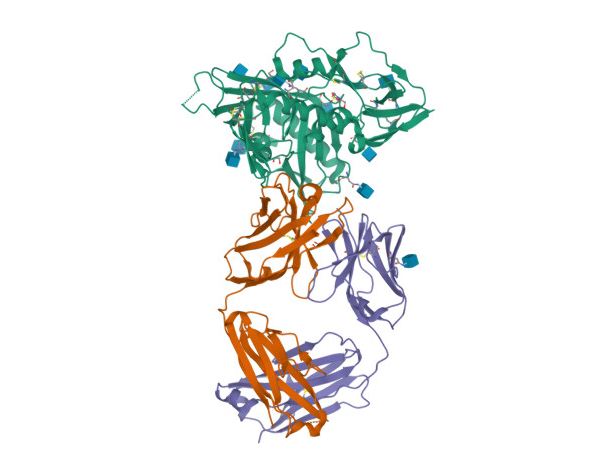
Drug structure
Scale-up and manufacturing prospects
Production scale up and manufacturing requirements for therapeutic monoclonal antibody products are primarily related to formulation stability, pharmacokinetic suitability and maintenance of quality attributes. The industrial manufacture of high-concentration broadly neutralising antibody (bNAb) formulations for parenteral administration can introduce production challenges regarding aggregation propensity and formulation viscosity. Exploratory process optimisations such as bNAb co-formulation and multi-specific antibody composition have the potential to reduce overall manufacturing costs.
Industrial bioreactor vessel with a production volume capacity of between 5-25kL. Continuous disc stack centrifuges for bioreactor harvesting with subsequent membrane and depth filtration for supernatant clarification. Protein A chromatography or other suitable affinity capture apparatus followed by two chromatographic polishing steps such as cation- and anion-exchange. Ultrafiltration membrane system to concentrate and formulate the final product.
Biological activity of bNAbs is highly dependant on their chemical, conformational and structural stability. Reduced glycosylation of bNAbs during manufacture and chemical degradation processes such as deamidation can result in increased aggregation, loss of activity and diminished solubility. Degradation may occur at any stage throughout the manufacturing process including bioprocessing, purification, product delivery and storage. Considerations to increase formulation stability may include pH optimisation and the addition of suitable excipients (e.g. surfactants, stabilizers and buffers).
Formulation characterisation for single-entity bNAb production include capillary isoelectric focusing and ion-exchange chromatography for identification of post-translational modifications, subvisible particle quantitation, thermal DSC, size-exclusion chromatography for measurement of concentration dependent aggregation rates and capillary electrophoresis for antibody fragmentation and clipping. Co-formulated bNAbs in mixture may utilise SE-HPLC, capillary electrophoresis sodium dodecyl sulphate, dynamic light scattering, microflow imaging and multi-attribute method mass spectrometry analysis.
Excipients & delivery device(s)
Not provided
Not provided
Not provided
No delivery device
Safety, Efficacy and Evidence Summary
Not provided
Not provided
Not provided
Not provided
Zinlirvimab+Teropamivimab combination
Zinlirvimab variants + combination with Teropamivimab (Heavy chain e.g. SEQ 59-61)
WO2020056145
Combination of active substances
The Rockefeller University
Not provided
September 12, 2039
Filed in China, India, Us, EP
Zinlirvimab- Broadly neutralising anti-HIV antibodies
The invention relates to anti-HIV antibodies. Also disclosed are related methods and compositions.
WO2014063059
Active substance
The Rockefeller University; California Institute of Technology
Not provided
October 18, 2033
Granted in China, US, EAPO, EP
Teropavimab - HIV neutralizing antibodies and methods of use thereof
The invention provides broadly neutralizing antibodies directed to epitopes of Human Immunodeficiency Virus, or HIV. The invention further provides compositions containing HIV antibodies used for prophylaxis, and methods for diagnosis and treatment of HIV infection. Claims include antibody comprising aa 1-112 teropavimab H chain and 1-89 of L chain
WO2012158948
Active substance
The Rockefeller University; California Institute of Technology
Not provided
May 17, 2032
Granted in US, EAPO, EP