Drug name
Last update: Oct 2026GS-3242
Developer(s)
Drug information
Not provided
GS-3242
Not provided
Small molecule
INSTI (Integrase Strand Transfer Inhibitor) — Integrase Strand Transfer Inhibitors (INSTIs)
Active / In Development (Phase 1/2/3)
GS-3242 is a long-acting injectable (LAI) under development for the treatment of people living with HIV with plasma HIV-1 RNA levels of 5,000–400,000 copies/mL. In vitro data predict a dosing interval of ≥3 months. Two clinical studies (Phase 1a/1b) are ongoing. In Phase 1a, intramuscular doses of 400 mg (n=9), 800 mg (n=8), or 1200 mg (n=9) were administered. In Phase 1b, participants received GS-3242 250 mg orally on Days 1 and 2. Interim results showed treatment-emergent adverse events limited to injection-site reactions (Grade 1: 58%; Grade 2: 42%). Mean plasma HIV-1 RNA reduction was −2.31 log10 copies/mL. The terminal half-life was 47–56 days, with dose-proportional Cmax values of 5,062 μg/mL (400mg) , 9,640 μg/mL (800 mg), and 14,580 μg/mL (1200mg), respectively.
Not approved yet.
Not approved yet.
Therapeutic area(s)
- HIV
- Treatment
Administration route
Oral, Intramuscular
Associated long-acting platforms
Not provided
Use of drug
- Administered by a community health worker
- Administered by a nurse
- Administered by a specialty health worker
- Self-administered
- Every 4 months
- Every 3 months
- Other/Variable/Unknown : To be determined
Dosage
400 mg, 800 mg and 1200mg IM & 450 mg PO
1200 mg IM
Based on clinical trial dosing plan: 1) 400 mg IM (possible dosing interval of Q3M or longer) 2) 800 mg IM (possible dosing interval of Q3M or longer) 3) 1200 mg IM (possible dosing interval of Q3M or longer) 4) 450 mg PO
Approved dosing regimen is not available (as of March 2026)
Not provided
Additional information
Developer(s)

Gilead
Gilead Sciences, Inc. is a leading American biopharmaceutical company headquartered in Foster City, California. Founded in 1987 by Michael L. Riordan, the company has grown into a global powerhouse in the development of antiviral drugs and has significantly expanded its presence in oncology and inflammatory diseases. In Feb 2026, Gilead announced its intention to acquire Arcellx for $7.8 billion.
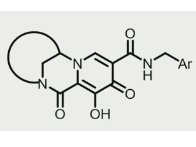
Drug structure
Scale-up and manufacturing prospects
Not provided
Not provided
Not provided
Not provided
Excipients & delivery device(s)
Not provided
Not provided
Not provided
Not provided
Safety, Efficacy and Evidence Summary
Not provided
Not provided
Not provided
Not provided
There are either no relevant patents or these were not yet submitted to LAPaL