
|
Developed by 

|
Supported by 


|
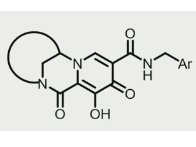
GS-3242
Developer(s)

|
Gilead Originator
https://www.gilead.com/
United States of America Gilead Sciences, Inc. is a leading American biopharmaceutical company headquartered in Foster City, California. Founded in 1987 by Michael L. Riordan, the company has grown into a global powerhouse in the development of antiviral drugs and has significantly expanded its presence in oncology and inflammatory diseases. In Feb 2026, Gilead announced its intention to acquire Arcellx for $7.8 billion. |
Drug structure
Structure of GS-3242
Gilead
Drug information
Associated long-acting platforms
Not provided
Administration route
Oral, Intramuscular
Therapeutic area(s)
Use case(s)
Use of drug
Ease of administration
Frequency of administration
User acceptance
Dosage
Available dose and strength
400 mg, 800 mg and 1200mg IM & 450 mg PO
Maximum dose
1200 mg IM
Recommended dosing regimen
Based on clinical trial dosing plan: 1) 400 mg IM (possible dosing interval of Q3M or longer) 2) 800 mg IM (possible dosing interval of Q3M or longer) 3) 1200 mg IM (possible dosing interval of Q3M or longer) 4) 450 mg PO
Additional comments
Approved dosing regimen is not available (as of March 2026)
Dosage link(s)
Not provided
Drug information
Drug's link(s)
Not provided
Generic name
Brand name
Compound type
Drug class/category
Lifecycle status
Summary
Approval status
Regulatory authorities
Safety
Efficacy
Evidence Summary
Delivery device(s)
Not provided
Scale-up and manufacturing prospects
Scale-up prospects
Not provided
Tentative equipment list for manufacturing
Not provided
Manufacturing
Not provided
Specific analytical instrument required for characterization of formulation
Not provided
Clinical trials
GS-US-544-5905-05
Identifier
NCT07001319
Link
https://clinicaltrials.gov/study/NCT07001319
Phase
Phase I
Status
Completed
Sponsor
Gilead Sciences
More details
This study is part of a master study. The goal of master protocol (GS-US-544-5905, NCT05585307) is to learn how novel antiretrovirals (medicines that stop the virus from multiplying) affect the human immunodeficiency virus-1 (HIV-1) infection in people living with HIV (PWH). Substudy GS-US-544-5905-05 is to learn more about the study drug GS-3242 in PLHIV. Participants will receive single dose of GS-3242 450 mg on Days 1 and 2 in the fasted condition. On day 11, they intiate SoC or Biktarvy
Purpose
Study of GS-3242 in Participants With HIV-1; Substudy-05
Interventions
Intervention 1
Intervention 2
Intervention 3
Countries
Sites / Institutions
Not provided
Trials dates
Anticipated Start Date
Not provided
Actual Start Date
2025-05-29
Anticipated Date of Last Follow-up
2026-05-08
Estimated Primary Completion Date
2026-04-01
Estimated Completion Date
2027-02-01
Actual Primary Completion Date
2026-03-03
Actual Completion Date
2026-04-16
Studied populations
Age Cohort
- Adults
- Older Adults
Genders
- All
Accepts pregnant individuals
No
Accepts lactating individuals
No
Accepts healthy individuals
No
Comments about the studied populations
Key Inclusion Criteria: All Substudies: * Plasma human immunodeficiency virus-1 (HIV-1) ribonucleic acid (RNA) ≥ 5000 copies/mL but ≤ 400,000 copies/mL at screening. * Cluster of differentiation 4 (CD4) cell count \> 200 cells/mm\^3 at screening. * Antiretroviral (ARV) treatment-naive or treatment-experienced but naive to the investigational ARV drug class being investigated in the given substudy and have not received any ARV within 12 weeks of screening, including medications received for pre-exposure prophylaxis (PrEP) or postexposure prophylaxis (PEP) (note that current or prior receipt of long acting (LA) parenteral ARVs such as monoclonal antibodies (mAbs) targeting HIV-1, injectable cabotegravir (CAB), injectable rilpivirine (RPV) or injectable Lenacapavir (LEN) is exclusionary).
Health status
Study type
Interventional (clinical trial)
Enrollment
27
Allocation
Non-randomized
Intervention model
Sequential assignment
Intervention model description
Not provided
Masking
Open label
Masking description
Not provided
Frequency of administration
Studied LA-formulation(s)
Studied route(s) of administration
Use case
Treatment
Indication(s)
HIV
Key resources
GS-US-544-5905
Identifier
NCT05585307
Link
https://clinicaltrials.gov/study/NCT05585307
Phase
Phase I
Status
Completed
Sponsor
Gilead Sciences
More details
Master protocol: The goal of this master clinical trial study is to learn how novel antiretrovirals (medicines that stop the virus from multiplying) affect the human immunodeficiency virus-1 (HIV-1) infection in people living with HIV (PWH). Substudy-01 (GS-US-544-5905-01) will evaluate bavtavirine in PWH. Substudy-02 (GS-US-544-5905-02) will evaluate GS-1720 in PWH. Substudy-03 (GS-US-544-5905-03) will evaluate GS-6212 in PWH. Substudy GS-US-544-5905-05 is to learn more about the study drug GS-3242 in PWH.
Purpose
Study of Novel Antiretrovirals in Participants With HIV-1
Interventions
Intervention 1
Intervention 2
Intervention 3
Intervention 4
Intervention 5
Countries
Sites / Institutions
Not provided
Trials dates
Anticipated Start Date
Not provided
Actual Start Date
2022-10-26
Anticipated Date of Last Follow-up
2025-04-18
Estimated Primary Completion Date
Not provided
Estimated Completion Date
Not provided
Actual Primary Completion Date
2024-02-17
Actual Completion Date
2024-03-18
Studied populations
Age Cohort
- Adults
- Older Adults
Genders
- All
Accepts pregnant individuals
No
Accepts lactating individuals
No
Accepts healthy individuals
No
Comments about the studied populations
Key Inclusion Criteria: All Substudies: * Plasma human immunodeficiency virus-1 (HIV-1) ribonucleic acid (RNA) ≥ 5000 copies/mL but ≤ 400,000 copies/mL at screening. * Cluster of differentiation 4 (CD4) cell count \> 200 cells/mm\^3 at screening. * Antiretroviral (ARV) treatment-naive or treatment-experienced but naive to the investigational ARV drug class being investigated in the given substudy and have not received any ARV within 12 weeks of screening, including medications received for pre-exposure prophylaxis (PrEP) or postexposure prophylaxis (PEP) (note that current or prior receipt of long acting (LA) parenteral ARVs such as monoclonal antibodies (mAbs) targeting HIV-1, injectable cabotegravir (CAB), or injectable rilpivirine (RPV) is exclusionary). * Have adequate renal function
Health status
Study type
Interventional (clinical trial)
Enrollment
49
Allocation
Non-randomized
Intervention model
Sequential assignment
Intervention model description
Not provided
Masking
Open label
Masking description
Not provided
Frequency of administration
Not provided
Studied LA-formulation(s)
Studied route(s) of administration
Use case
Treatment
Indication(s)
HIV
Key resources
GS-US-643-7710
Identifier
NCT07645287
Link
https://clinicaltrials.gov/study/NCT07645287
Phase
Phase II
Status
Recruiting
Sponsor
Gilead Sciences
More details
The study will have two parts: Part A and Part B. In Part A, the goal of the study is to compare the effectiveness of switching to the study drugs GS-3242 plus Lenacapavir (LEN) versus continuing Biktarvy (bictegravir/emtricitabine/tenofovir alafenamide (B/F/TAF)), in virologically suppressed people with HIV-1 (PWH) in treatment Group 1, 2 and 3 at Week 35. In Part B the goal of the study is to compare the effectiveness of switching to the study drugs, GS-3242 and LEN versus continuing B/F/TAF in Groups 4 and 3 at Week 26. The primary objective of part A is to evaluate the efficacy of switching to intramuscular (IM) GS-3242 plus IM LEN versus continuing on B/F/TAF PWH who are virologically suppressed in treatment Groups 1, 2, and 3 at Week 35 and Part B is to evaluate the efficacy of swit
Purpose
A Study of GS-3242 in Combination With Lenacapavir Versus Biktarvy in Virologically Suppressed People With HIV-1
Interventions
Intervention 1
Intervention 2
Intervention 3
Intervention 4
Intervention 5
Countries
Sites / Institutions
Not provided
Trials dates
Anticipated Start Date
Not provided
Actual Start Date
2026-06-15
Anticipated Date of Last Follow-up
2026-09-03
Estimated Primary Completion Date
2027-08-01
Estimated Completion Date
2033-04-01
Actual Primary Completion Date
Not provided
Actual Completion Date
Not provided
Studied populations
Age Cohort
- Adults
- Older Adults
Genders
- All
Accepts pregnant individuals
Unspecified
Accepts lactating individuals
Unspecified
Accepts healthy individuals
No
Comments about the studied populations
Key Inclusion Criteria: * Documented human immunodeficiency virus type 1 (HIV-1) ribonucleic acid (RNA) \< 50 copies/mL for ≥ 6 months before screening. * Plasma HIV-1 RNA levels \< 50 copies/mL at screening. * Receiving bictegravir/emtricitabine/tenofovir alafenamide (coformulated; Biktarvy®) (B/F/TAF) for ≥ 6 months prior to screening. * No documented resistance to GS-3242 (integrase mutation Q148H/K/R plus at least 2 of the following integrase mutations: L74I/M, T97A, E138A/K/T, or G140A/C/S). Key Exclusion Criteria: * Prior use of, or exposure to GS-3242 or LEN. * History of virologic failure while on an integrase strand transfer inhibitor (INSTI)-based regimen. * Prior use of any long-acting parenteral antiretroviral therapy (ART) medications such as monoclonal antibodies or broadl
Health status
Study type
Interventional (clinical trial)
Enrollment
175
Allocation
Randomized
Intervention model
Parallel Assignment
Intervention model description
Not provided
Masking
Open label
Masking description
Not provided
Frequency of administration
Studied LA-formulation(s)
Studied route(s) of administration
Not provided
Use case
Treatment
Indication(s)
HIV
Key resources
| Type | Title | Content | Link |
|---|---|---|---|
| Link | Protocol design and endpoint interpretation | https://synapse.patsnap.com/blog/clinical-landscape-nct07645287-gs-3242-trial-report-2026-mcp |
GS-US-643-6557
Identifier
NCT07708727
Link
https://clinicaltrials.gov/study/NCT07708727
Phase
Phase II/III
Status
Recruiting
Sponsor
Gilead Sciences
More details
The study will have two portions: Phase 2 and Phase 3. Phase 2 will further have 2 parts: Part A and Part B. The goal of Phase 2, Part A is to assess the effectiveness of study drugs GS-3242 plus Lenacapavir (LEN) versus Biktarvy (bictegravir/emtricitabine/tenofovir alafenamide (B/F/TAF)), in people with HIV-1 (PWH) who are new to treatment. This will be done in Treatment Groups 1, 2 and 3 at Week 35. The goal of Phase 2, Part B is to compare the effectiveness of study drugs, GS-3242 and LEN versus B/F/TAF in Groups 4 and 3 at Week 26. The goal of Phase 3 is to assess the long-term effectiveness of study drug GS-3242 and LEN versus B/F/TAF, at Week 52. The primary objectives of this study are: Phase 2, Part A: To evaluate the efficacy of intramuscular (IM) GS-3242 plus IM LEN versus B
Purpose
Study of an Injectable Regimen of GS-3242 With Lenacapavir Compared to Biktarvy in People New to HIV-1 Treatment
Interventions
Intervention 1
Intervention 2
Intervention 3
Intervention 4
Intervention 5
Countries
Not provided
Sites / Institutions
Not provided
Trials dates
Anticipated Start Date
2026-07-01
Actual Start Date
2026-07-29
Anticipated Date of Last Follow-up
2026-09-04
Estimated Primary Completion Date
2030-10-01
Estimated Completion Date
2033-04-01
Actual Primary Completion Date
Not provided
Actual Completion Date
Not provided
Studied populations
Age Cohort
- Adults
- Older Adults
Genders
- All
Accepts pregnant individuals
Unspecified
Accepts lactating individuals
Unspecified
Accepts healthy individuals
No
Comments about the studied populations
Key Inclusion Criteria: * HIV-1 ribonucleic acid (RNA) ≥ 500 copies/mL at screening. * Antiretroviral (ARV) treatment-naive, except for prior use of oral daily pre-exposure prophylaxis (PrEP) or postexposure prophylaxis (PEP) up to 1 month prior to screening. Key Exclusion Criteria: * Prior usage of, or exposure to LEN or GS-3242 * Prior use of any long-acting parenteral ARV therapy (ART) medications such as monoclonal antibodies or broadly neutralizing antibodies targeting HIV-1, injectable cabotegravir (including oral cabotegravir lead-in), or injectable rilpivirine. Note: Other protocol defined Inclusion/Exclusion criteria may apply.
Health status
Not provided
Study type
Interventional (clinical trial)
Enrollment
700
Allocation
Randomized
Intervention model
Parallel Assignment
Intervention model description
Not provided
Masking
Open label
Masking description
Not provided
Frequency of administration
Studied LA-formulation(s)
Studied route(s) of administration
Use case
Treatment
Indication(s)
HIV
Key resources
Excipients
Proprietary excipients used
Not provided
Novel excipients or existing excipients at a concentration above Inactive Ingredients Database (IID) for the specified route of administration
Not provided
Residual solvents used
Not provided
Patent info
There are either no relevant patents or these were not yet submitted to LAPaL
Supporting material
Publications
Arens, Y., & Gulick, R. M. (2025). Future options for long-acting HIV treatment and prevention. Current Opinion in HIV and AIDS, 20(1), 39-47.
Purpose of review
The aim of this review was to describe future options for long-acting HIV treatment and preexposure prophylaxis (PrEP) regimens featuring both innovations with currently approved antiretrovirals and a profile of investigational agents in the pipeline.
Recent findings
Newer formulations and modes of delivery for existing antiretroviral drugs and a number of investigational agents are under study for long-acting HIV treatment and PrEP. Regimens with weekly oral dosing for HIV treatment, monthly oral dosing for HIV PrEP, and injectable agents with longer dosing intervals (every 3 months or longer) for treatment and PrEP are in clinical development. Newer agents with novel mechanisms of action and newer modes of administration including vaginal rings, implants, patches, and rectal douches also are under investigation.
Summary
Despite the success of current antiretroviral therapy and PrEP with one-pill, once-daily regimens, there is a continuing need for new formulations, investigational agents, and novel modes of delivery to overcome barriers to implementation and ensure real-world effectiveness. Newer long-acting antiretroviral regimens for HIV treatment and PrEP using novel preparations and strategies will offer choice, enhance adherence, decrease toxicity, and improve patient and provider satisfaction.
Additional documents
No documents were uploaded