Drug name
Last update: Oct 2026ePGT121v1LS
Developer(s)
Drug information
Not provided
ePGT121v1-LS; ePGT121v1LS; enhanced PGT121 variant 1 LS
Not applicable (investigational; no brand name assigned)
Biotherapeutic
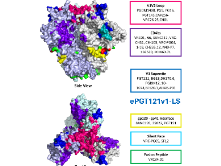
mAb (Monoclonal antibody) — ePGT121v1-LS is an engineered broadly neutralising antibody (bNAb) targeting V3-glycan supersite of the HIV-1 envelope glycoprotein gp120. Affinity-matured, LS-modified engineered variant of PGT121.
Active / In Development (Phase 1/2/3) — First-in-human phase 1 in adults began 19 March 2026 (HVTN 141/HPTN 105). A second adult phase 1 (PedMAb1-Ex) opened July 2026. Two phase 1/2 trials in infants living with HIV (ENABLE 1 and ENABLE 2) are planned to start January 2027.
ePGT121v1-LS derives from PGT121, which IAVI and partners isolated from donor samples in Protocol G, an IAVI cohort study of adults living with HIV. IAVI and Scripps Research affinity-matured the parental antibody using yeast surface display and directed evolution, producing a variant with improved antibody-dependent cellular cytotoxicity (ADCC) relative to PGT121; the LS (M428L/N434S) Fc modification extends serum half-life. It was selected for clinical development on the strength of its pre-clinical potency. Clinical trial material has been produced at 125 mg/mL, a concentration high enough to make low-volume subcutaneous dosing practical, which is a prerequisite for neonatal administration. The molecule is being developed explicitly for paediatric use, with adult first-in-human studies run to inform dose and route selection before paediatric entry. Its intended indication is post-natal prophylaxis (PNP) of HIV in infants, covering the breastfeeding period, alongside use in infants already living with HIV. Approximately 120,000 children acquire HIV each year, predominantly through breastfeeding, and this residual transmission after maternal ART is the gap the molecule targets.
Not yet approved
Not yet approved
Therapeutic area(s)
- HIV
- Treatment
- Prevention
Administration route
Intravenous, Subcutaneous
Associated long-acting platforms
Monoclonal antibodies and antibody drug conjugates
Use of drug
- Administered by a nurse
- Administered by a specialty health worker
- Every 6 months
- Every 3 months
To be determined. No acceptability data published. Caregiver, community and health-worker acceptability of infant bNAb administration is a formal endpoint of the ENABLE project, in which IAVI leads community engagement through a stakeholder task force focused on bNAbs for peri- and post-natal HIV prophylaxis.
Dosage
Investigational. Adults: 5, 20, 40 mg/kg IV; 125 mg per SC injection, 375 mg per SC dose (three injections); 125 mg SC in 3 Abs comb. Clinical trial material at 125 mg/mL. Infant doses not discd
40 mg/kg IV (HVTN 141/HPTN 105 Part A, Group 3)
No approved regimen. Regimens under investigation in HVTN 141/HPTN 105: ePGT121v1-LS 5, 20 or 40 mg/kg IV at week 0 and week 24 (alone, Groups 1-3); ePGT121v1-LS plus PGDM1400LS plus VRC07-523LS at 5 mg/kg each, 20 mg/kg each or 40 mg/kg each IV, sequentially in that order, at week 0 and week 24 (Groups 4-6); ePGT121v1-LS 375 mg SC as three 125 mg injections at week 0 and week 12 (Group 7); ePGT121v1-LS 125 mg plus PGDM1400LS 100 mg plus VRC07-523LS 100 mg SC, sequentially in that order, at week 0 and week 12 (Group 8).
Adult dose-finding is explicitly intended to inform paediatric dose and route selection. The SC three-antibody regimen (125 + 100 + 100 mg, 12-weekly) is the configuration most relevant to a future infant prophylaxis product, because fixed low-volume SC dosing is what makes administration feasible at birth and at routine immunisation contacts. Infant dosing in ENABLE 1 and ENABLE 2 has not been disclosed.
Not provided
Additional information
Developer(s)
IAVI

Scripps Research
Drug structure
Scale-up and manufacturing prospects
GMP production at 2,000 L (2KL) batch scale was reported in 2023, with clinical trial material formulated at 125 mg/mL. High formulation concentration supports low-volume subcutaneous administration, which is a practical requirement for neonatal and infant dosing. To be confirmed.
Bioreactors, incubators, filtration units, formulation vessels, vial filling and sealing equipment.
Engineered from parental PGT121 by IAVI with Scripps Research using yeast surface display and directed evolution to enhance affinity, with glycoengineering to improve Fc effector function (ADCC) and LS (M428L/N434S) Fc mutations to extend half-life. Expressed in mammalian cell culture, purified by affinity chromatography. GMP clinical trial material formulated at 125 mg/mL. Cell line and process details are not publicly disclosed.
HPLC, mass spectrometry, yeast surface display and FACS (used in the directed-evolution engineering), deep sequencing, surface plasmon resonance, TZM-bl neutralisation assay for serum neutralising activity.
Excipients & delivery device(s)
Not provided
Not provided
Not provided
Not provided
Safety, Efficacy and Evidence Summary
No clinical safety data published. Selected for development following pre-clinical potency evaluation. Safety and tolerability are the primary endpoints of HVTN 141/HPTN 105 and PedMAb1-Ex.
No efficacy data. In vitro neutralisation and serum neutralising activity are endpoints of HVTN 141/HPTN 105. Pre-clinical selection was based on potency; the V3-glycan class shows approximately 50 to 90%+ neutralisation breadth.
Not provided
Not provided
Antibody characteristics
Molecular identity
Not provided
Not provided
Not provided
Not provided
Not provided
Not provided
Epitope and engineering
Not provided
Not provided
Not provided
Not provided
Not provided
Delivery
Not provided
Not provided
Not provided
Not provided
Not provided
There are either no relevant patents or these were not yet submitted to LAPaL