Drug name
Last update: Oct 2026albuvirtide (ABT)
Developer(s)
Drug information
Albuvirtide (ABT)
Aikening
Biotherapeutic
HIV entry inhibitor (fusion inhibitor) - synthetic peptide
Not provided
Albuvirtide is a synthetic long-acting HIV-1 fusion inhibitor that binds to gp41 and prevents fusion of HIV-1 with host cells, thereby inhibiting viral entry. In vitro, it demonstrates potent antiviral activity against multiple HIV-1 subtypes and retains activity against several enfuvirtide-resistant strains. Following intravenous administration, pharmacokinetics are dose-proportional and consistent with linear elimination. At steady state following weekly 320 mg dosing, mean AUC₀-∞, Cmax and Ctrough were 4946 mg·h/L, 57.0 mg/L and 6.9 mg/L, respectively. Albuvirtide is widely distributed, primarily eliminated via the kidneys, and does not significantly inhibit major CYP450 enzymes. Clinical trials investigated once-weekly and every-2-weeks IV administration of Albuvirtide for HIV treatment.
Aikening (albuvirtide) 160 mg/vial received marketing authorisation in China in 2018 as a long-acting intravenous treatment for HIV-1 infection for maintenance therapy in virologic suppressed patients.
Aikening injection was approved by the National Medical Products Administration (NMPA) in China in 2018. It was also approved in Malaysia by the National Pharmaceutical Regulatory Agency (NPRA) in April 2024.
Therapeutic area(s)
- HIV
- Treatment
Administration route
Intravenous
Associated long-acting platforms
Albumin-binding peptide conjugate
Use of drug
- Administered by a community health worker
- Administered by a nurse
- Administered by a specialty health worker
- Weekly
- Every 2 weeks
AIKENING was reported in China to be widely accepted in real-world clinical practice, particularly among patients with high unmet treatment needs. Factors supporting acceptance included once-weekly administration, reduced pill burden, rapid onset of action, a high barrier to resistance and a well-tolerated safety profile.
Dosage
Dose: 320 mg; Strength: 160 mg/vial
320 mg
For adults and adolescents <16 years old, AIKENING is administered by intravenous infusion at 320 mg once daily on Days 1, 2, 3, and 8, and thereafter once weekly.
Administer Albuvirtide solution by intravenous infusion via a peripheral vein in one of the upper extremities for 45±8 minutes. Albuvirtide infusion preparation involves determining the required number of vials according to the assigned dose. For a 0.32 g dose, two vials are required. A 100 mL bag of 0.9% sodium chloride is prepared by removing 12 mL, leaving 88 mL. Each vial is reconstituted with 1.2 mL of 5% sodium bicarbonate and vortexed until completely dissolved. Subsequently, 6 mL of sodium chloride solution is added to each vial and gently mixed. The contents of each vial are then transferred back into the original infusion bag, resulting in approximately 90 mL of AIKENING™ infusion solution.
Related entries
Not provided
Additional information
Developer(s)

Frontier Biotechnologies Inc
Frontier Biotechnologies Inc. (also known as "Frontier Biotech") is a publicly listed, commercial-stage, research-based biopharmaceutical firm committed to the discovery, development, production, and marketing of novel medications. Founded by a group of US-trained scientists, Frontier Biotech is a 20-year-old company with about 500 employees. It received its first product approval in China in 2018
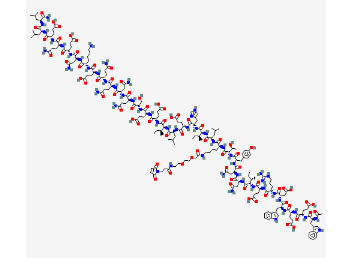
Drug structure
Scale-up and manufacturing prospects
Not provided
Not provided
Not provided
Not provided
Excipients & delivery device(s)
Not provided
Not provided
Not provided
No delivery device
Safety, Efficacy and Evidence Summary
Most frequently reported adverse reactions observed were: i) Diarrhoea ii) Headache iii) Dizziness Common laboratory abnormalities included: i) Hyperlipaemia ii) Hypertriglyceridaemia iii) Increased ALT iv) Increased AST v) Increased γ-GT vi) Elevated bilirubin vii) Increased serum uric acid
Phase III results of Albuvirtide + lopinavir/ritonavir (LPV/r) demonstrate the following: i) 80.4% of participants had HIV-1 RNA <50 copies/mL (comparator was WHO second-line regimen) ii) 79.5% reduction in HIV-1 RNA <50 copies/mL at Week 24 vs 78.3% in the control arm iii) 320 mg dose showed better antiviral activity than the 160 mg dose
Phase 3 Clinical studies demonstrated that Albuvirtide + lopinavir/ritonavir (LPV/r) combination therapy demonstrated strong antiviral efficacy, achieving up to 80.4% virologic suppression at Week 48, accompanied by improvements in CD4+ T-cell counts and a low risk of resistance development. The treatment was generally well tolerated, with the most common adverse events being diarrhoea, headache, and dizziness, while laboratory abnormalities were primarily related to lipid and liver function parameters and were mostly mild to moderate in severity.
Stable albuvirtide compositions
A liquid compositions and stable lyophilized compositions comprising albuvirtide, an HIV-1 fusion inhibitor. The present invention also provides the manufacturing process thereof and use of these compositions for the prevention, treatment or prophylaxis of diseases caused by HIV.
WO2020223906A1
Composition
Frontier Biotechnologies Co Ltd
Not provided
November 7, 2027
Ceased