
|
Developed by 

|
Supported by 


|
albuvirtide (ABT)
Developer(s)

|
Frontier Biotechnologies Inc Originator
https://en.frontierbiotech.com/information.html
China Frontier Biotechnologies Inc. (also known as "Frontier Biotech") is a publicly listed, commercial-stage, research-based biopharmaceutical firm committed to the discovery, development, production, and marketing of novel medications. Founded by a group of US-trained scientists, Frontier Biotech is a 20-year-old company with about 500 employees. It received its first product approval in China in 2018 |
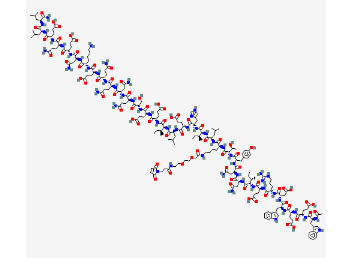
Drug structure
Chemical Structure of C204H306N54O72
https://pubchem.ncbi.nlm.nih.gov/compound/Albuvirtide
Drug information
Associated long-acting platforms
Albumin-binding peptide conjugate
Administration route
Intravenous
Therapeutic area(s)
Use case(s)
Use of drug
Ease of administration
Frequency of administration
User acceptance
AIKENING was reported in China to be widely accepted in real-world clinical practice, particularly among patients with high unmet treatment needs. Factors supporting acceptance included once-weekly administration, reduced pill burden, rapid onset of action, a high barrier to resistance and a well-tolerated safety profile.
Dosage
Available dose and strength
Dose: 320 mg; Strength: 160 mg/vial
Maximum dose
320 mg
Recommended dosing regimen
For adults and adolescents <16 years old, AIKENING is administered by intravenous infusion at 320 mg once daily on Days 1, 2, 3, and 8, and thereafter once weekly.
Additional comments
Administer Albuvirtide solution by intravenous infusion via a peripheral vein in one of the upper extremities for 45±8 minutes. Albuvirtide infusion preparation involves determining the required number of vials according to the assigned dose. For a 0.32 g dose, two vials are required. A 100 mL bag of 0.9% sodium chloride is prepared by removing 12 mL, leaving 88 mL. Each vial is reconstituted with 1.2 mL of 5% sodium bicarbonate and vortexed until completely dissolved. Subsequently, 6 mL of sodium chloride solution is added to each vial and gently mixed. The contents of each vial are then transferred back into the original infusion bag, resulting in approximately 90 mL of AIKENING™ infusion solution.
Dosage link(s)
Drug information
Drug's link(s)
Generic name
Brand name
Compound type
Drug class/category
Lifecycle status
Summary
Approval status
Regulatory authorities
Safety
Efficacy
Evidence Summary
Delivery device(s)
No delivery device
Scale-up and manufacturing prospects
Scale-up prospects
Not provided
Tentative equipment list for manufacturing
Not provided
Manufacturing
Not provided
Specific analytical instrument required for characterization of formulation
Not provided
Clinical trials
FB-ABWT-402
Identifier
NCT05206019
Link
https://clinicaltrials.gov/study/NCT05206019
Phase
Phase I
Status
Completed
Sponsor
Frontier Biotechnologies Inc.
More details
This is a single-center,randomized,open, single-dose, parallel-design study, which will be only enrolled Chinese healthy volunteers.
Purpose
Study to Evaluate Pharmacokinetic and Safety of Albuvirtide Between Intravenous Drip and Intravenous Injection
Interventions
Intervention 1
Countries
Sites / Institutions
Not provided
Trials dates
Anticipated Start Date
Not provided
Actual Start Date
2022-02-16
Anticipated Date of Last Follow-up
2023-01-05
Estimated Primary Completion Date
Not provided
Estimated Completion Date
Not provided
Actual Primary Completion Date
2022-04-17
Actual Completion Date
2022-05-02
Studied populations
Age Cohort
- Adults
Genders
- All
Accepts pregnant individuals
Unspecified
Accepts lactating individuals
Unspecified
Accepts healthy individuals
Yes
Comments about the studied populations
Inclusion Criteria: 1. Age of 18-55, healthy volunteers (including the threshold, based on time of signing informed consent form). 2. BMI of 19 to 26 kg/m2 (including the threshold), with male ≥ 50 kg and female ≥ 45 kg. 3. Subjects and their partners agreed never to have children from 2 weeks prior to screening until 6 months after administration and volunteered to use effective contraception, regardless of sperm or oocyte donation plans. Exclusion Criteria: 1. Allergic to investigational drug or allergic constitution . 2. With difficulty in intravenous administration/blood collection or a history of dizziness from needles and blood. 3. Have substance abuse in the past 5 years or used drugs in the past 3 months prior to screening, or drug tested positive. 4. Smoked an average of \>5 ci
Health status
Not provided
Study type
Interventional (clinical trial)
Enrollment
30
Allocation
Randomized
Intervention model
Parallel Assignment
Intervention model description
Not provided
Masking
Open label
Masking description
Not provided
Frequency of administration
Studied LA-formulation(s)
Studied route(s) of administration
Use case
Treatment
Key resources
ABT-3BNC117_202
Identifier
NCT04819347
Link
https://clinicaltrials.gov/study/NCT04819347
Phase
Phase II
Status
Completed
Sponsor
Frontier Biotechnologies Inc.
More details
This is a phase 2 study to evaluate the safety and tolerability of combination therapy with Albuvirtide (ABT) and 3BNC117 in virologically suppressed subjects with HIV-1 infection and explore the potential of viral suppression and viral reservoir clearance after analytical treatment interruption (ATI).
Purpose
Albuvirtide in Combination With 3BNC117 in Virologically Suppressed Subjects With HIV-1 Infection
Interventions
Intervention 1
Intervention 2
Countries
Sites / Institutions
Not provided
Trials dates
Anticipated Start Date
2021-05-01
Actual Start Date
Not provided
Anticipated Date of Last Follow-up
2021-03-24
Estimated Primary Completion Date
2022-06-01
Estimated Completion Date
2022-12-01
Actual Primary Completion Date
Not provided
Actual Completion Date
Not provided
Studied populations
Age Cohort
- Adults
- Older Adults
Genders
- All
Accepts pregnant individuals
Unspecified
Accepts lactating individuals
Unspecified
Accepts healthy individuals
No
Comments about the studied populations
Inclusion Criteria: 1. Males and females, age ≥18 years 2. For cohort 1: HIV-1 infected subjects initiated a stable combination antiretroviral therapy (ART) within 6 months of primary HIV infection (PHI), having the document evidence of initial diagnosis of HIV-1 infection and initiation of ART therapy within 6 months of PHI. For cohort 2: Chronically HIV-1 infected subjects initiated a stable combination antiretroviral therapy (ART) after 6 months of primary HIV infection (PHI), having the document evidence of initial diagnosis of HIV-1 infection and initiation of ART therapy after 6 months of PHI. 3. Plasma HIV-1 RNA \<50 copies/mL for at least 12 months prior to Screening Visit. An exception for a recorded HIV-1 RNA "blip" (e.g., transient HIV-1 RNA \>50 copies/mL) can be considere
Health status
Not provided
Study type
Interventional (clinical trial)
Enrollment
24
Allocation
Not provided
Intervention model
Parallel Assignment
Intervention model description
Not provided
Masking
Open label
Masking description
Not provided
Frequency of administration
Studied LA-formulation(s)
Studied route(s) of administration
Use case
Treatment
Key resources
ABL
Identifier
NCT03719664
Link
https://clinicaltrials.gov/study/NCT03719664
Phase
Phase II
Status
Completed
Sponsor
Frontier Biotechnologies Inc.
More details
The study is an adaptive, phase 2, multicenter, three-part study to establish the dosage, safety and antiviral activity of combination therapy with albuvirtide (ABT) and 3BNC117 as long-acting maintenance therapy in virologically suppressed subjects with HIV-1 infection.
Purpose
Albuvirtide and 3BNC117 as Long-Acting Maintenance Therapy in Virologically Suppressed Subjects
Interventions
Intervention 1
Intervention 2
Intervention 3
Countries
Sites / Institutions
Not provided
Trials dates
Anticipated Start Date
Not provided
Actual Start Date
2018-12-17
Anticipated Date of Last Follow-up
2021-09-28
Estimated Primary Completion Date
2022-12-01
Estimated Completion Date
2022-12-01
Actual Primary Completion Date
Not provided
Actual Completion Date
Not provided
Studied populations
Age Cohort
- Adults
- Older Adults
Genders
- All
Accepts pregnant individuals
Unspecified
Accepts lactating individuals
Unspecified
Accepts healthy individuals
No
Comments about the studied populations
Inclusion Criteria: * Potential subjects are required to meet all of the following criteria for enrollment into the study. 1. HIV-1 seropositive; 2. Males and females, age ≥18 years; 3. Receiving oral combination antiretroviral therapy for last 24 weeks; 4. No change in antiretroviral regimen within last 4 weeks prior to Screening Visit and in-between Screening Visit and First Treatment Visit with an exception that subjects on NNRTI-containing regimens will be allowed to switch to protease inhibitor- or integrase strand transferase inhibitor-based regimens and such change, if needed, should occur at least 4 weeks prior to cessation of oral antiretroviral therapy; 5. Subject has two or more potential alternative antiretroviral drug options available; 6. Plasma HIV-1 RNA \<50 c
Health status
Not provided
Study type
Interventional (clinical trial)
Enrollment
80
Allocation
Randomized
Intervention model
Parallel Assignment
Intervention model description
Not provided
Masking
Open label
Masking description
Not provided
Frequency of administration
Studied LA-formulation(s)
Studied route(s) of administration
Use case
Treatment
Key resources
ABT-3BNC117_203
Identifier
NCT04560569
Link
https://clinicaltrials.gov/study/NCT04560569
Phase
Phase II
Status
Completed
Sponsor
Frontier Biotechnologies Inc.
More details
The primary objectives are to assess the antiviral activity, clinical safety and tolerability parameters of albuvirtide/3BNC117 combination therapy in reducing HIV-1 viral load during the 1-week induction period treatment period.
Purpose
Albuvirtide in Combination With 3BNC117 in Patients With Multi-Drug Resistant (MDR) HIV-1 Infection
Interventions
Intervention 1
Intervention 2
Countries
Sites / Institutions
Not provided
Trials dates
Anticipated Start Date
2021-11-30
Actual Start Date
Not provided
Anticipated Date of Last Follow-up
2021-09-28
Estimated Primary Completion Date
2022-11-01
Estimated Completion Date
2022-12-01
Actual Primary Completion Date
Not provided
Actual Completion Date
Not provided
Studied populations
Age Cohort
- Adults
- Older Adults
Genders
- All
Accepts pregnant individuals
Unspecified
Accepts lactating individuals
Unspecified
Accepts healthy individuals
No
Comments about the studied populations
Inclusion Criteria: 1. Males and females, age ≥ 18 years; 2. HIV-1 seropositive with documented HIV-1 infection by official, signed, written history (e.g. Laboratory report) 3. Receiving a combination antiretroviral therapy (cART) (failing regimen) for at least 8 weeks before Screening and are willing to continue on the failing regimen during the Screening Phase and up to Day 14 of the Treatment Phase, OR have failed in the past 8 weeks of Screening, are off therapy and are willing to stay off therapy until Day 14 of the Treatment Phase; 4. Plasma HIV-1 RNA ≥ 1000 copies/mL at the Screening Visit and documented detectable viral load (HIV-1 RNA \>200 copies/ml) within the last 3 months prior to the Screening Visit; 5. Highly treatment-experienced HIV-infected patients with genotypic and/or
Health status
Not provided
Study type
Interventional (clinical trial)
Enrollment
20
Allocation
Randomized
Intervention model
Parallel Assignment
Intervention model description
Not provided
Masking
Open label
Masking description
Not provided
Frequency of administration
Studied LA-formulation(s)
Studied route(s) of administration
Use case
Treatment
Key resources
| Type | Title | Content | Link |
|---|---|---|---|
| Publication | Albuvirtide plus 3BNC117 provides a promising combination strategy for multidrug-resistant HIV-1 infection: a prospective, open-label, multicenter phase 2 trial. BMC infectious diseases, 26(1), 911. https://doi.org/10.1186/s12879-026-12987-3 | Background: Albuvirtide (ABT), a fusion inhibitor, and 3BNC117, a broadly neutralizing antibody, were evaluated for efficacy and safety in combination with an optimized background regimen (OBR) in adults with multidrug-resistant (MDR) HIV-1.Methods: In this phase 2 trial conducted in China via an international collaborative screening effort, we enrolled MDR HIV-1 patients with prior treatment failures and baseline viral loads > 1000 copies/mL. After a 6-day control period on existing therapy, participants received 3BNC117 on day 7 and ABT on days 7-9. On day 14, eligible patients were randomized 1:1 to Group A (ABT once weekly and 3BNC117 once every two weeks) or Group B (ABT and 3BNC117 once every two weeks), each with an OBR containing at least one fully active drug, for 24 weeks. The primary endpoint was the proportion with ≥ 0.5 log10 viral load reduction from day 7 to 14.Results: Sixteen patients completed the study. Baseline mean viral load was 4.47 log10 copies/mL, and mean CD4 + T-cell count was 165 cells/µL. By day 14, 62.5% showed a ≥ 0.5 log10 reduction from day 7 (p = 0.012 vs. control), with a mean drop of 1.05 log10. At end of treatment (EOT), the mean decrease was 2.82 log10, and 87.5% had viral load < 50 copies/mL. Viral load < 50 copies/mL was seen in 75% of Group A and 100% of Group B. No deaths or serious ABT+3BNC117-related adverse events were reported.Conclusions: In patients with MDR HIV-1 infection who have limited treatment therapeutic options, the combination of ABT+3BNC117 plus an OBR was observed to have significant antiviral activity during a 34-week study period.Trial registration: Clinicaltrials.gov NCT04560569, Sep 23, 2020. |
TALENT
Identifier
NCT02369965
Link
https://clinicaltrials.gov/study/NCT02369965
Phase
Phase III
Status
Completed
Sponsor
Frontier Biotechnologies Inc.
More details
The purpose of this study is to evaluate the efficacy and safety of albuvirtide combined with lopinavir-ritonavir (LPV/r) in HIV-1-infected patients who failed first-line antiretroviral therapy (ART).
Purpose
Test Albuvirtide in Experienced Patients
Interventions
Intervention 1
Intervention 2
Intervention 3
Intervention 4
Countries
Sites / Institutions
Not provided
Trials dates
Anticipated Start Date
Not provided
Actual Start Date
2014-02-19
Anticipated Date of Last Follow-up
2021-09-28
Estimated Primary Completion Date
Not provided
Estimated Completion Date
Not provided
Actual Primary Completion Date
2018-04-02
Actual Completion Date
2018-04-02
Studied populations
Age Cohort
- Children
- Adults
Genders
- All
Accepts pregnant individuals
Unspecified
Accepts lactating individuals
Unspecified
Accepts healthy individuals
No
Comments about the studied populations
Inclusion Criteria: 1. 16-60 years old, male or female. 2. Those who meet the Diagnostic Criteria of AIDS and HIV Infection, the Health Industry Standard of the People's Republic of China (WS 293-2008). 3. Those who have been undergoing antiretroviral treatment with nucleosides and non-nucleoside reverse transcriptase inhibitors (NRTIs+NNRTIs) for at least 6 months. 4. HIV-RNA ≥ 1000 copies/mL. 5. Those who have no serious hepatic or renal functional impairment and other parameters are generally in the normal ranges according to the comprehensive physical examinations (including general physical examination, routine blood and urine tests, blood chemistry tests, ECG, etc.). 6. The subjects should have a full understanding of the objective, nature, methods of the trial and the possible reac
Health status
Not provided
Study type
Interventional (clinical trial)
Enrollment
418
Allocation
Randomized
Intervention model
Parallel Assignment
Intervention model description
Not provided
Masking
Open label
Masking description
Not provided
Frequency of administration
Studied LA-formulation(s)
Studied route(s) of administration
Use case
Treatment
Key resources
| Type | Title | Content | Link |
|---|---|---|---|
| Publication | Efficacy and safety of the long-acting fusion inhibitor albuvirtide in antiretroviral-experienced adults with human immunodeficiency virus-1: interim analysis of the randomized, controlled, phase 3, non-inferiority TALENT study | Background: Albuvirtide is a once-weekly injectable human immunodeficiency virus (HIV)-1 fusion inhibitor. We present interim data for a phase 3 trial assessing the safety and efficacy of albuvirtide plus lopinavir-ritonavir in HIV-1-infected adults already treated with antiretroviral drugs.Methods: We carried out a 48-week, randomized, controlled, open-label non-inferiority trial at 12 sites in China. Adults on the World Health Organization (WHO)-recommended first-line treatment for >6 months with a plasma viral load >1000 copies/mL were enrolled and randomly assigned (1:1) to receive albuvirtide (once weekly) plus ritonavir-boosted lopinavir (ABT group) or the WHO-recommended second-line treatment (NRTI group). The primary endpoint was the proportion of patients with a plasma viral load below 50 copies/mL at 48 weeks. Non-inferiority was prespecified with a margin of 12%.Results: At the time of analysis, week 24 data were available for 83 and 92 patients, and week 48 data were available for 46 and 50 patients in the albuvirtide and NRTI groups, respectively. At 48 weeks, 80.4% of patients in the ABT group and 66.0% of those in the NRTI group had HIV-1 RNA levels below 50 copies/mL, meeting the criteria for non-inferiority. For the per-protocol population, the superiority of albuvirtide over NRTI was demonstrated. The frequency of grade 3 to 4 adverse events was similar in the two groups; the most common adverse events were diarrhea, upper respiratory tract infections, and grade 3 to 4 increases in triglyceride concentration. Renal function was significantly more impaired at 12 weeks in the patients of the NRTI group who received tenofovir disoproxil fumarate than in those of the ABT group.Conclusions: The TALENT study is the first phase 3 trial of an injectable long-acting HIV drug. This interim analysis indicates that once-weekly albuvirtide in combination with ritonavir-boosted lopinavir is well tolerated and non-inferior to the WHO-recommended second-line regimen in patients with first-line treatment failure.Trial registration: ClinicalTrials.gov Identifier: NCT02369965; https://www.clinicaltrials.gov.Chinese Clinical Trial Registry No. ChiCTR-TRC-14004276; http://www.chictr.org.cn/enindex.aspx. |
FB-ABWT-401
Identifier
NCT04006353
Link
https://clinicaltrials.gov/study/NCT04006353
Phase
Marketed
Status
Completed
Sponsor
Shanghai Public Health Clinical Center
More details
This study is designed to estimate the drug interaction between RIF and ABT. This will be a single-center, open-label, parallel study in healthy adult subjects.
Purpose
The Drug Interaction Between Albuvirtide (ABT) and Rifampin( RIF) in Healthy Adult Subjects
Interventions
Intervention 1
Intervention 2
Countries
Sites / Institutions
Not provided
Trials dates
Anticipated Start Date
Not provided
Actual Start Date
2019-07-11
Anticipated Date of Last Follow-up
2021-09-23
Estimated Primary Completion Date
Not provided
Estimated Completion Date
Not provided
Actual Primary Completion Date
2019-09-30
Actual Completion Date
2019-12-03
Studied populations
Age Cohort
- Adults
- Older Adults
Genders
- All
Accepts pregnant individuals
Unspecified
Accepts lactating individuals
Unspecified
Accepts healthy individuals
Yes
Comments about the studied populations
Inclusion Criteria: * Males and females, age between 18 and 65 years; * Healthy as determined by a responsible and experienced physician, based on a medical evaluation including physical examination, laboratory tests, Chest X-ray, abdominal B-ultrasound and ECG; No serious liver and kidney dysfunction, normal albumin value, and other indicators are in the normal range; * Subjects weighing ≥50 kg and their BMI within the range 18.5-27.0 kg/m\^2 (inclusive); * Agrees not to consume alcohol during the study; * Both male and female subjects and their partners of childbearing potential agree to use contraception during the study; * Females of childbearing potential must have a negative serum pregnancy test at Screening visit prior to receiving the first dose of study drug; * ALT、AST、ALP and TB
Health status
Not provided
Study type
Interventional (clinical trial)
Enrollment
24
Allocation
Randomized
Intervention model
Parallel Assignment
Intervention model description
Not provided
Masking
Open label
Masking description
Not provided
Frequency of administration
Studied LA-formulation(s)
Studied route(s) of administration
Use case
Treatment
Key resources
Excipients
Proprietary excipients used
Not provided
Novel excipients or existing excipients at a concentration above Inactive Ingredients Database (IID) for the specified route of administration
Not provided
Residual solvents used
Not provided
Patent info
Description
Stable albuvirtide compositions
Brief description
A liquid compositions and stable lyophilized compositions comprising albuvirtide, an HIV-1 fusion inhibitor. The present invention also provides the manufacturing process thereof and use of these compositions for the prevention, treatment or prophylaxis of diseases caused by HIV.
Representative patent
WO2020223906A1
Category
Composition
Patent holder
Frontier Biotechnologies Co Ltd
Exclusivity
Not provided
Expiration date
November 7, 2027
Status
Ceased
Supporting material
Publications
Caiqin Hu — Infection and Drug Resistance - Dovepress — 2026-08-27
Summary: Safety profile of Albuvirtide therapy
Background: To control HIV-1 viral load and maintain optimal immune function, albuvirtide (ABT) combined with antiretroviral therapy (ART) is used in designated AIDS hospitals in China. However, the standard weekly 320-mg ABT injection regimen poses adherence-related challenges. This study explored the safety and virological outcomes of a modified ABT intensification regimen in people with HIV.
Methods: This single-arm, uncontrolled prospective cohort enrolled 20 people with HIV who received intravenous ABT 320 mg for three consecutive days every four weeks while continuing their baseline ART regimens. Peripheral blood samples were collected to measure alanine aminotransferase (ALT), aspartate aminotransferase (AST), triglyceride (TAG), cholesterol, CD4+ T-cell counts, HIV-RNA levels, and plasma ABT concentrations.
Results: No adverse events considered related to ABT were observed in this cohort. Pharmacokinetic analysis demonstrated sustained therapeutic exposure, with mean trough concentrations of 4.71 mg/L, 3.83 mg/L, and 4.53 mg/L at Weeks 4, 8, and 12, respectively, each exceeding 50-fold the IC9 0. During follow-up, mean HIV-RNA decreased from 1.65 log10 copies/mL at baseline to 0.59 log10 copies/mL at Week 12 (mean reduction: 1.06 log1 0 copies/mL; P = 0.0007). Among patients with baseline HIV-RNA above 20 copies/mL, the viral load decreased from 2.55 to 1.43 log10 copies/mL.
Conclusion: Preliminary results demonstrate that 4-week ABT antiviral intensification regimen is feasible and exhibits potential antiviral activity.
Albuvirtide plus 3BNC117 provides a promising combination strategy for multidrug-resistant HIV-1 infection: a prospective, open-label, multicenter phase 2 trial. BMC infectious diseases, 26(1), 911. https://doi.org/10.1186/s12879-026-12987-3
Yihong Zhou — BMC Infectious Diseases — 2026-05-28
Summary: Safety and Efficacy Study of Albuvirtide + 3BNC117
Background: Albuvirtide (ABT), a fusion inhibitor, and 3BNC117, a broadly neutralizing antibody, were evaluated for efficacy and safety in combination with an optimized background regimen (OBR) in adults with multidrug-resistant (MDR) HIV-1.
Methods: In this phase 2 trial conducted in China via an international collaborative screening effort, we enrolled MDR HIV-1 patients with prior treatment failures and baseline viral loads > 1000 copies/mL. After a 6-day control period on existing therapy, participants received 3BNC117 on day 7 and ABT on days 7-9. On day 14, eligible patients were randomized 1:1 to Group A (ABT once weekly and 3BNC117 once every two weeks) or Group B (ABT and 3BNC117 once every two weeks), each with an OBR containing at least one fully active drug, for 24 weeks. The primary endpoint was the proportion with ≥ 0.5 log10 viral load reduction from day 7 to 14.
Results: Sixteen patients completed the study. Baseline mean viral load was 4.47 log10 copies/mL, and mean CD4 + T-cell count was 165 cells/µL. By day 14, 62.5% showed a ≥ 0.5 log10 reduction from day 7 (p = 0.012 vs. control), with a mean drop of 1.05 log10. At end of treatment (EOT), the mean decrease was 2.82 log10, and 87.5% had viral load < 50 copies/mL. Viral load < 50 copies/mL was seen in 75% of Group A and 100% of Group B. No deaths or serious ABT+3BNC117-related adverse events were reported.
Conclusions: In patients with MDR HIV-1 infection who have limited treatment therapeutic options, the combination of ABT+3BNC117 plus an OBR was observed to have significant antiviral activity during a 34-week study period.
Trial registration: Clinicaltrials.gov NCT04560569, Sep 23, 2020.
Bin Su — Chinese Medical Journal — 2020-11-25
Summary: TALENT Study
Background: Albuvirtide is a once-weekly injectable human immunodeficiency virus (HIV)-1 fusion inhibitor. We present interim data for a phase 3 trial assessing the safety and efficacy of albuvirtide plus lopinavir-ritonavir in HIV-1-infected adults already treated with antiretroviral drugs.
Methods: We carried out a 48-week, randomized, controlled, open-label non-inferiority trial at 12 sites in China. Adults on the World Health Organization (WHO)-recommended first-line treatment for >6 months with a plasma viral load >1000 copies/mL were enrolled and randomly assigned (1:1) to receive albuvirtide (once weekly) plus ritonavir-boosted lopinavir (ABT group) or the WHO-recommended second-line treatment (NRTI group). The primary endpoint was the proportion of patients with a plasma viral load below 50 copies/mL at 48 weeks. Non-inferiority was prespecified with a margin of 12%.
Results: At the time of analysis, week 24 data were available for 83 and 92 patients, and week 48 data were available for 46 and 50 patients in the albuvirtide and NRTI groups, respectively. At 48 weeks, 80.4% of patients in the ABT group and 66.0% of those in the NRTI group had HIV-1 RNA levels below 50 copies/mL, meeting the criteria for non-inferiority. For the per-protocol population, the superiority of albuvirtide over NRTI was demonstrated. The frequency of grade 3 to 4 adverse events was similar in the two groups; the most common adverse events were diarrhea, upper respiratory tract infections, and grade 3 to 4 increases in triglyceride concentration. Renal function was significantly more impaired at 12 weeks in the patients of the NRTI group who received tenofovir disoproxil fumarate than in those of the ABT group.
Conclusions: The TALENT study is the first phase 3 trial of an injectable long-acting HIV drug. This interim analysis indicates that once-weekly albuvirtide in combination with ritonavir-boosted lopinavir is well tolerated and non-inferior to the WHO-recommended second-line regimen in patients with first-line treatment failure.
Trial registration: ClinicalTrials.gov Identifier: NCT02369965; https://www.clinicaltrials.gov.Chinese Clinical Trial Registry No. ChiCTR-TRC-14004276; http://www.chictr.org.cn/enindex.aspx.
Additional documents
No documents were uploaded