Technology name
Last update: Feb 2025TransCon Technology
Developer(s)
Sponsor(s)
Not specified
Type of technology
Inorganic nanoparticles, Polymer-based particles, Based on other organic particles, Fat based particles, lecithin based particles, Micellar suspension
Administration route
Intravenous, Intratumoral, Subcutaneous
Development state and regulatory approval
Palopegteriparatide
Marketed
YORVIPATH® is approved by the US FDA, EMA, NMPA and Ministry of Food and Drug Safety of South Korea
Description
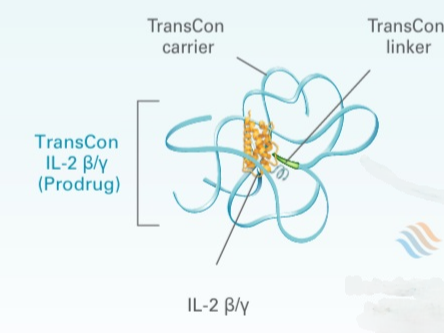
TransCon technology is a carrier-based system that transiently converts an active drug into a prodrug by conjugating it to a carrier via a cleavable linker. This mechanism enables sustained therapeutic drug levels across systemic and localized administration routes. Initially designed for pediatric sustained-release drug delivery, its application now extends to adult diseases, primarily targeting endocrinological disorders and solid tumors. The choice of carrier and linker is tailored to the route of administration and the desired release kinetics of each API.
Developer(s)
Ascendis Pharma
Ascendis Pharma A/S, founded in 2006 in Copenhagen, Denmark, develops innovative therapies using its TransCon® technology, focusing on endocrinology and oncology. With a global presence and ~879 employees, its market cap is ~$7.9B (2025). Recent milestones include YORVIPATH® approval for hypoparathyroidism. Despite revenue challenges with SKYTROFA, it remains committed to advancing its pipeline.
Technology highlight
1. TransCon carriers include lipids (ufasomes), polymers (polymerosomes), transfersomes, ethosomes, and sphingosomes. 2. The inertness of the carrier reduces drug clearance, enhancing circulation time. 3. Enables high target-site drug concentrations while minimizing systemic toxicity.
Illustration(s)
Technology main components
1) API—Can be a small molecule, peptide, or protein. 2) Carrier (with Albumin Avidity)—Either soluble or insoluble, tailored to stability and release profile. 3) Reversible prodrug linker—Aromatic Cyclic Imide, DKP Carbamate, Bicin, AEG (2-((2-aminoethyl)amino)acetic acid), Pyroglutamate 4) Functional agents—antiadsorbents, buffering agents, isotonicity modifiers, preservatives, antimicrobials, stabilizers, diffusion enhancers, and oxidation protectants. 5) Excipients—mannitol, metacresol, sodium hydroxide, succinic acid, water for injection, diluents, adjuvants, and vehicles optimized based on the API’s physicochemical properties.
Yorvipath 294 micrograms/0.98ml solution for injection prefilled pen (2 pen pack) costs 9272.97 USD
Safety, Efficacy and Evidence Summary
In a 52-week efficacy and safety clinical study of TransCon PTH, 72 out of 78 patients (92%) experienced at least one Grade 1 treatment-emergent adverse event (TEAE) by the 52nd week. Additionally, eight patients experienced a serious adverse event (SAE). Treatment-related TEAEs reported in participants included injection site reactions (26%), hypercalcemia (14%), nausea (9%), headache (8%), and hypocalcemia (5%). Two out of 8 SAEs were attributed to hypocalcemia.
Not provided
Not provided
Not provided
APIs compatibility profile
TransCon has the ability to encapsulate small molecules, but the targeted spectrum of pharmacological class is not disclosed.
TransCon has the ability to encapsulate RNA molecules, but the targeted spectrum of pharmacological class is not disclosed.
Although TransCon has the ability to conjugate with Antibodies, Antibody Fragments, Proteins, Peptides, currently, TransCon is focused on hormones and cell surface proteins targeting neoplastic cells.
Not provided
Not provided
75-90 wt%
2 different APIs : At least one of the drugs should be a biologically active moiety or a drug that enhances the effect of the other API.
Not provided
Not provided
Scale-up and manufacturing prospects
Novo Nordisk oversees the commercial manufacturing, clinical development, regulatory approval, and market distribution of products within the TransCon Metabolic Disorders pipeline.
Not provided
Not provided
Not provided
Excipients & delivery device(s)
No proprietary excipient used
No novel excipient or existing excipient used
No residual solvent used
No delivery device
Additional features
- Biodegradable
- Room temperature storage
- At least 1 year shelf life
The unmodified API, encapsulated within the TransCon carrier, is gradually released from the microsphere environment into the surrounding tissues by deconjugating from the linker. This controlled release facilitates the distribution of the API and subsequent activation of target receptors. Additionally, the inactive carrier is dissociated and subsequently eliminated from the system. This mechanism results in pharmacokinetic properties comparable to those observed with daily dosing regimens.
TransCon formulations (pre-filled pen) can be administered via intravenous, subcutaneous, or intratumoral routes. These formulations can be injected using a standard injection kit equipped with a 21–25 gauge needle as a ready-to-use liquid formulation with a pen injector, depending on the designated route of administration and the molecular integrity of the formulation.
TransCon prefilled pens remain stable for at least one year when stored at cold temperatures.
Do not freeze. Store away from heat. Keep TransCon Formulation in the packaging to protect it from light. Until first use, store the formulation in the refrigerator between 2°C to 8°C. After first use, store it for 14 days at room temperature below 30°C (86°F). After each use, remove the needle and put the pen cap on to protect from light. Discard the prefilled pen 14 days after first use.
Therapeutic area(s)
- Other(s) : "Endocrinological disorders"
- Oncology : "Locally Advanced or Metastatic Solid Tumor Malignancies"
- Treatment
Potential associated API(s)
- Human Growth Hormone Agonists , Lonasomatropin
- Palopegteriparatide
- CNP agonist
- TLR7/8 agonist
Use of technology
- Administered by a community health worker
- Administered by a nurse
- Administered by a specialty health worker
Weekly, Monthly
Targeted user groups
- Children
- Adolescents
- Adults
- Older Adults
- All
No
Unspecified
Unspecified
Not provided
Human Growth Hormone Agonists , Lonasomatropin
Somatotropins
Marketed
Pediatric, Adult GHD and Turner Syndrome
Children and adults suffering from Growth Hormone Deficiency
Once weekly
Lonapegsomatropin-tcgd (SKYTROFA®) was approved by USFDA in August 2021 for treating pediatric GHD. It is also approved by EMA, China, Russia, Belarus and South Korea.
Palopegteriparatide
Somatotropin and somatropin agonists
Marketed
Pediatric and Adult Hypoparathyroidism
Children and adultoscents
Once weekly
YORVIPATH® is approved by the US FDA, EMA, NMPA and Ministry of Food and Drug Safety of South Korea
CNP agonist
Vasodilators
Phase II
Not provided
Pediatric Achondroplasia
Children and adolescents
Once weekly
Not provided
TLR7/8 agonist
Immunostimulant - Antineoplastic agent
Phase II
Solid Tumors
Not provided
Once weekly
Not provided
Combination therapy with controlled-release CNP agonists
The present invention relates to combinations, or pharmaceutical compositions comprising, a CNP agonist, preferably a controlled-release CNP agonist, and at least one further biologically active moiety or drug, and their use in methods for the treatment or prevention of disorders that benefit from stimulating growth, such as achondroplasia.
AU2023201709B2
formulation
Ascendis Pharma Endocrinology Division AS
Not provided
September 28, 2037
Active
Cnp prodrugs with carrier attachment at the ring moiety
The present invention relates to CNP prodrugs in which the carrier is covalently and reversibly attached to the ring moiety of a CNP moiety, to pharmaceutical compositions comprising such CNP prodrugs, to their uses and to methods of treating diseases that can be treated with the CNP prodrugs of the present invention.
AU2023210599B2
Not provided
Ascendis Pharma Endocrinology Division AS
Not provided
May 1, 2037
Active
All sponsors
No sponsor indicated