Technology name
Last update: Jul 2026Hydrogel Microspheres with β-eliminative Linker Technology
Developer(s)
Sponsor(s)
Not specified
Type of technology
Polymer-based particles, PEGylated hydrogel and beta-eliminative cross-linker
Administration route
Subcutaneous, Intravenous, Intratumoral
Development state and regulatory approval
Topoisomerase 1 inhibitors (TOP1i)
Phase II
Not provided
Description
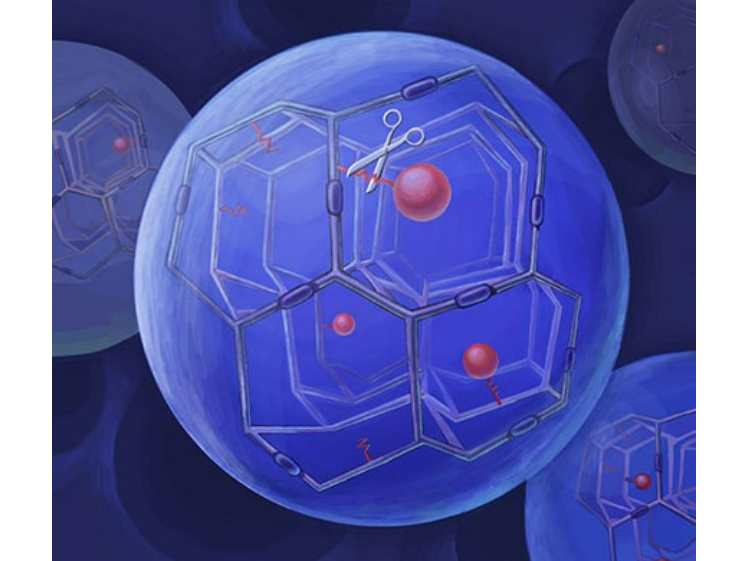
ProLynx's platform leverages custom-synthesized chemical linkers to conjugate therapeutic molecules to carrier systems, thereby enabling controlled and sustained drug release. The biodegradable nature of these linkers, which degrade at predefined rates determined by their molecular architecture, facilitates predictable and prolonged therapeutic efficacy. This technology is versatile, accommodating a broad spectrum of therapeutic modalities, including small molecules, peptides, and proteins.
Developer(s)
ProLync
ProLynx is a biotechnology company that specializes in developing long-acting drug delivery systems. Their technology involves attaching therapeutic agents to proprietary linkers that degrade at a controlled rate, allowing for the sustained release of drugs over extended periods. This approach is designed to reduce the frequency of dosing and improve patient compliance.
Technology highlight
1) Drug release in the Prolynx formulation is mediated by β-eliminative linkers, which undergo a rate-controlled elimination reaction. 2) Each linker within the library incorporates a unique “modulator” that independently regulates the drug release kinetics, irrespective of enzymatic influence. 3) The carrier system is composed of circulating macromolecules, such as polyethylene glycol (PEG), fabricated into 40 µm porous PEG-hydrogel microspheres. 4) To synchronize drug release with the degradation of the polymeric matrix, slower-cleaving linkers are integrated into the hydrogel crosslinks.
Illustration(s)
Technology main components
1) One or more API 2) Cross linker - it has a functional group that reacts with the reactive polymer and a moiety that cleaves by elimination under physiological conditions also comprising a functional group that reacts with one or more polymers. 3) PEGlated hydrogel microspheres 4) Gel-forming solvent (eg: water, alcohols, acetonitrile, or tetrahydrofuran)
Not provided
Safety, Efficacy and Evidence Summary
Phase II studies of PLX038 show that it is safe and effective in previously treated advanced breast cancer. It is a conjugated active metabolite of Irinotecan.
Not provided
Not provided
Not provided
APIs compatibility profile
Not provided
Not provided
Not provided
Not provided
Not provided
Scale-up and manufacturing prospects
A large-scale aseptic manufacturing of injectable microsphere is proposed. This unit is capable of preparing up to ∼2 L of high-quality 50 μm diameter hydrogel microspheres/day.
• Reflux Condensers • Magnetic Stirrer • Centrifuge • Filtration Equipment (vacuum filters) • Rotary Evaporator • pH Meter • Oven or Drying Chamber • Cryogenic Freezer
Manufacturing process requires ISO Class 5 or 7 environment. The manufacturing process includes: • Reflux Apparatus - Crosslinking of Polymers and Incorporation of Drugs • Filtration and Centrifugation Equipment • Spectroscopic Instruments
• Size Exclusion Chromatography (SEC) • Dynamic Light Scattering (DLS) • Mechanical Testing
Excipients & delivery device(s)
No proprietary excipient used
No novel excipient or existing excipient used
No residual solvent used
No delivery device
Additional features
- Biodegradable
- Drug-eluting
- Monolithic
- Non-removable
1) Drug release is governed by a rate-controlled β-elimination mechanism. The drug release rate is directly proportional to the degree of ionization at physiological pH 2) The API is covalently linked to the hydrogel matrix via a cleavable linker. 3) Hydrolysis of this linker liberates the API, increasing plasma drug concentration and the half-life of the drug. Various acidity of the functional group added to the API controls the rate of release from the hydrogel. 4) The controlled release profile is attributed to the slower degradation rate of the hydrogel matrix.
A 25 to 30-gauge needle is used for subcutaneous injections. Insert the needle at an angle of 45° or 90° depending on the length of the needle and/or depth of the subcutaneous layer.
The structure and integrity of hydrogel remain stable in physiological conditions of pH and temperature.
Not provided
Therapeutic area(s)
- Other(s) : "Ocular disorders and achondroplasia"
- Pain management (incl. joints, lower back, knee)
- Oncology
- Treatment
Potential associated API(s)
- Exenatide
- Poly (ADP-ribose) polymerase (PARP) inhibitors (PARPi)
- Topoisomerase 1 inhibitors (TOP1i)
- Interleukin 15 (IL-15)
- C-type natriuretic peptides (CNP)
Use of technology
- Administered by a community health worker
- Administered by a nurse
- Administered by a specialty health worker
Monthly, Once every 2 weeks
Targeted user groups
- Adults
- All
Unspecified
Unspecified
No
Not provided
Exenatide
Antidiabetic
Pre-clinical
Not provided
Diabetes
Not provided
Once a week
Not provided
Poly (ADP-ribose) polymerase (PARP) inhibitors (PARPi)
PEG-PARP inhibitor
Pre-clinical
Not provided
Oncology
Not provided
Not provided
Not provided
Topoisomerase 1 inhibitors (TOP1i)
Antineoplastic agent - Topoisomerase 1 inhibitor
Phase II
Advanced Breast Cancer
Women more than 18 years old who are previously treated with chemotherapy
Every three weeks
Not provided
Interleukin 15 (IL-15)
Immunotherapy
Pre-clinical
Not provided
Not provided
Not provided
Not provided but the PK study shows that the t1/2 (half life) is approximately 5 days
Not provided
C-type natriuretic peptides (CNP)
Modified type C natriuretic peptide (CNP) analog
Pre-clinical
Not provided
Achondroplasia
Not provided
Every 2 weeks and once monthly
Not provided
Hydrogels with biodegradable crosslinking
Hydrogels that degrade under appropriate conditions of pH and temperature by virtue of crosslinking compounds that cleave through an elimination reaction are described. The hydrogels may be used for delivery of various agents, such as pharmaceuticals.
US11454861B2
Formulation
Prolynx LLC
Not provided
August 30, 2039
Active
Slow-release conjugates of SN-38
Conjugates of SN-38 that provide optimal drug release rates and minimize the formation of the corresponding glucuronate are described. The conjugates release SN-38 from a polyethylene glycol through a β-elimination mechanism.
US10342792B2
Not provided
Prolynx LLC
Not provided
June 14, 2038
Active
Prodrugs and drug-macromolecule conjugates having controlled drug release rates
The present invention provides methods and compositions that permit controlled and prolonged drug release in vivo. The compounds are either prodrugs with tunable rates of release, or conjugates of the drug with macromolecules which exhibit tunable controlled rates of release.
US9387254B2
Not provided
Prolynx LLC
Not provided
March 21, 2034
Active
Conjugates of somatostatin analogues
Conjugates of carriers and hydrogels for controlling the biological half-life of somatostatin and its analogs are disclosed.
US10413594B2
Not provided
Prolynx LLC
Not provided
June 22, 2024
Active



All sponsors
No sponsor indicated