Technology name
Last update: Jul 2026FluidCrystal®
Developer(s)
Sponsor(s)
Not specified
Type of technology
Based on other organic particles, Amphiphile-based
Administration route
Subcutaneous, Intravenous, Optical
Development state and regulatory approval
Buprenorphine
Marketed
Buprenorphine long acting is approved under the brand name - Brixadi by US FDA and as Buvidal by EMA for Opoid Dependence.
Description
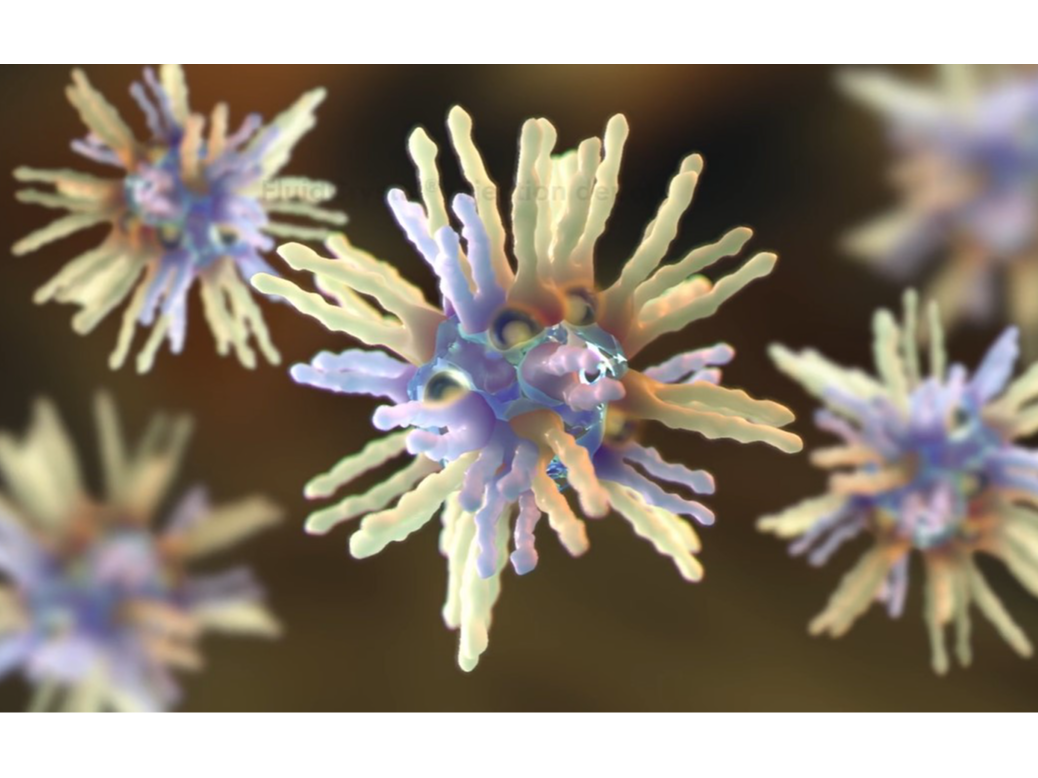
FluidCrystal Technology is an advanced injectable formulation utilizing endogenous lipids, characterized by low viscosity and long-acting properties. This technology enables the administration of active pharmaceutical ingredients (APIs) with controlled release durations ranging from days to months. The mechanism underlying this system involves reversed non-lamellar liquid crystalline phases, which facilitate the efficient encapsulation of APIs. These phases ensure a sustained and steady-state release of the API into the bloodstream, thereby enhancing therapeutic efficacy.
Developer(s)

Camurus
Camurus AB is a biopharmaceutical company that creates long-acting treatments for serious and chronic diseases. This company originated in 1991. Camurus, based on scientific understanding, aims to enhance patient outcomes through innovative therapies. They specialise in pharmaceutical commercialization and have a portfolio that includes clinical trial products as well as two FDA-approved drugs.
Technology highlight
• Self assembling lipids forms a nanostructure reversed-phase nonlamellar liquid crystal around the API in an aqueous environment • Easy and convenient administration • High treatment adherence • Adapted to prefilled syringes and pen injection devices • Small injection volume with a thin needle.
Illustration(s)
Technology main components
The level of each component varies based on the physiological and chemical properties of the API a) One or more neutral diacyl lipids and / or at least one tocopherol b) One or more 5–90% phospholipids c) One or more biocompatible , oxygen-containing, or low-viscosity organic solvents d) At least one bioactive agent is dissolved or dispersed in the low-viscosity mixture e) One or more oxygen-containing solvent selected from alcohols , ketones , esters , ethers , amides and sulfoxide
The price of Brixadi (FDA approved FluidCrystal drug) is 459.13 USD. Camurus obtains commercially available, high-quality sources of key components for FluidCrystal formulation.
Safety, Efficacy and Evidence Summary
A recent study aimed to evaluate the safety and efficacy of Buprenorphine administered via weekly or monthly subcutaneous (SC) injection using the FluidCrystal technology, compared to the traditional daily sublingual administration. Among the 215 patients assigned to receive SC Buprenorphine, 128 reported experiencing at least one adverse effect. The most frequently observed adverse events included injection-site pain, headache, constipation, nausea, as well as injection-site pruritus and erythema.
Not provided
Not provided
Not provided
APIs compatibility profile
Small molecules that are targeted for FluidCrystal Technology are Opioids, local analgesics, hormones, anti-emetics, local antibiotics, and prostacyclins
Peptides & proteins that are targeted for FluidCrystal Technology are somatostatin & analogues, LHRH agonists, Glucagon & insulin, GLP-1 & analogues, MC4 agonists, and antibody fragments
Not provided
Not provided
< 10 wt%
Not provided
Scale-up and manufacturing prospects
In 2022, 830,000 doses were manufactured
Not provided
Manufacturing and distribution of Camurus’ products is based on a multi-stage supply chain with several participants involved. Braeburn Pharmaceuticals overlooks the manufacturing of the FDA approved drugs of FluidCrystal in liaison with a third party manufacturer. The manufacturing process includes: - Compounding - Filtration - Filing The aim of the manufacturing process setup is to reduce product manufacturing waste by 20% and to increase the use of packaging material originating from sustainable sources to at least 50%.
The listed analytical instrument used was HPLC with UV detection
Excipients & delivery device(s)
No proprietary excipient used
No novel excipient or existing excipient used
No residual solvent used
No delivery device
Additional features
- Biodegradable
- Drug-eluting
- Monolithic
Upon administration of the FluidCrystal SC injection, lamellar liquid crystal nanoparticles are formed by phospholipids in conjunction with the active pharmaceutical ingredient (API). This structural formation results in an initial burst release of the API into the fatty tissue environment. Subsequently, the plasma concentration of the API gradually decreases, yielding a near dose-proportional drug release over a target period of four weeks. Furthermore, repeated weekly administrations of the FluidCrystal product demonstrate smaller and less frequent fluctuations in the plasma concentration.
Use a 23 to 25 gauge, 5/8-inch needle for the subcutaneous FluidCrystal injection. Clean the injection site and inject into the subcutaneous tissue of the abdomen, upper arm, or thigh, rotating sites each time.
Not provided
FluidCrystal formulations are should be stored at room temperature, specifically between 20ºC to 25ºC . Within the range of 15°C to 30°C, fluctuations are allowed. In case of unexpected temperature variations, products should have a fall-back at refrigerated storage conditions.
Therapeutic area(s)
- Other(s) : "Acromegaly, Polycystic liver disease, Genetic obesity disorders, Raynaud's phenomenon, Pulmonary arterial hypertension, Chemotherapy-induced nausea and vomiting, Endocrine disorders"
- Pain management (incl. joints, lower back, knee)
- Oncology
- Substance use disorders
- Treatment
Potential associated API(s)
- Buprenorphine
- Pituitary and hypothalamic hormones and analogues
Use of technology
- Administered by a community health worker
- Administered by a nurse
- Administered by a specialty health worker
- Self-administered
Weekly, Monthly
Targeted user groups
- Adults
- Older Adults
- All
Unspecified
Unspecified
Unspecified
Not provided
Analgesics
Marketed
Opoid Dependence and Chronic Pain Management
All genders above the age of 18 years
Once weekly (8mg, 16mg, 24mg and 32mg) and Once monthly injections (64mg, 96mg and 128mg)
Buprenorphine long acting is approved under the brand name - Brixadi by US FDA and as Buvidal by EMA for Opoid Dependence.
Pituitary and hypothalamic hormones and analogues
Synthetic Stomatostatin
Phase III
Acromegaly, Gastroenteropancreatic neuroendocrine tumors and Polycystic liver disease
Not provided
Once monthly
holds Orphan Drug Designation in the EU for CAM2029 for the treatment of acromegaly
Lipid Depot Formulations
The invention relates to pre-formulations made from low viscosity, non-liquid crystalline mixtures of a neutral diacyl lipid, tocopherol, phospholipid, and a biocompatible organic solvent. The bioactive agent is dissolved in the mixture, and the pre-formulation forms a liquid crystalline phase structure upon contact with an aqueous fluid. These preformulations are suitable for generating depot compositions for sustained release of active agents. The invention also relates to methods of delivery, treatment, and the use of preformulations in the manufacture of a medicament.
WO2005117830
formulation
Camurus AB
Not provided
June 6, 2035
Granted in : AU, BR, CA, CN, IL, JP, KR, MX, NZ, RU, ZA, UA, EP (GB, DK, FR, DE, IS, IE, IT, NL, PL, ES, SE, CH, TR,) SG, US
Depot precursor formulation comprising buprenorphine for sustained delivery of and for treatment of pain or opioid dependence
A depot precursor formulation comprising: a) a controlled-release matrix; b) at least oxygen containing organic solvent; c) at least 12% by weigh of at least one active agent selected from buprenorphine and salts thereof, calculated as buprenorphine free base. Corresponding depot compositions and methods of treatment in pain management, by opioid maintenance and related methods are provided.
WO2014016428
formulation
Camurus AB
Not provided
July 26, 2033
Granted in: AU, BR, CA, CL, CN, CO, IN, ID, JP, KR, MX, NZ, PE, SG, ZA, TH, US, EA (AM, AZ ,BY, KZ, RU, TJ, TM), EP (AT, BE, BG, CH, CY, CZ, DE, DK, EE, ES, FI, FR, GB, GR, HR, HU, IE, IS, IT, LI, LT, LU, LV, MC, NL, NO, PL, PT, RO, RS, SE, SI, SK, TR) Pending in: AR, IL, MY, HK
Composition for the delayed delivery of a peptide active agent
A composition for the delayed delivery of a peptide active agent comprising; i) a salt of said peptide active agent comprising at least one positively charged peptide ion and at least one negatively charged counter-ion ii) a sustained-release delivery vehicle. Wherein said at least one negatively charged counter-ion is a halide ion, preferably a chloride or bromide ion.
WO2008152401
formulation
Camurus AB
Not provided
June 13, 2028
Not provided




All sponsors
No sponsor indicated