Technology name
Last update: Jul 2026Enhanced Antibody Drug Conjugates (ADC)
Developer(s)
Sponsor(s)

Type of technology
Antibody conjugated drug molecule
Administration route
Intravenous, Oral, Subcutaneous, Topical (Rectal), Transdermal
Development state and regulatory approval
ARX788
Phase III
FDA granted orphan drug designation to ARX788 for the treatment of HER2-positive gastric cancer
Description
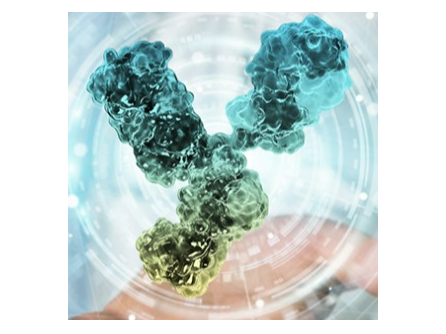
Antibody-drug conjugates (ADCs) employ site-specific antibodies incorporating non-natural amino acids, novel linker chemistries designed for both in vitro and in vivo stability, and a combination of existing and novel targeted receptor agonists as payloads. The primary mechanism of action for these ADCs involves the accumulation of free payload in the targeted tissues, which emerges as the predominant driver of biological activity. Due to this mechanism, the drug conjugate remains in the body for an extended period with increased plasma concentration peak stability compared to the parent drug.
Developer(s)

Ambrx
Ambrx, founded in 2003 in San Diego, California, emerged from pioneering work in synthetic biology, specifically with the goal of expanding the genetic code to enable precise modifications of proteins. This idea was initiated by co-founders Peter Schultz and others from The Scripps Research Institute.

Johnson & Johnson
Technology highlight
1) ADC contains a novel linker molecule that conjugates the drug molecule/ therapeutic protein with the human antibody. 2) Linker molecule is a synthetic amino acid (SAA) with site-specificity, homogenous, and undergoes stable conjugation. 3) These ADCs are based on AMBRX's proprietary genetic code technology i.e., noncanonical amino acids (ncAA) based protein engineering (amber codon (UAG) suppression) 4) These ADCs target human antigen-presenting immune cells, binding to them to subsequently activate specific cell signaling pathways. This leads to stimulation or inhibition of the targeted protein synthesis. Consequently leading to a sustained pharmacological action of the API payload at the target site.
Illustration(s)
Technology main components
1) Payload (API) (Drug that has a functional group that forms a covalent linkage with phosphate linker) 2) Targeting Ligand (eg: Chimeric, humanized, or human antibodies) 3) Linker Arm (Eg: Pyrophosphate ester; triphosphate ester; Tetraphosphate ester) 4) Phosphate Group All these ingredients combine to form a complex. This complex is stable extracellularly and labile intracellularly.
Not provided
Safety, Efficacy and Evidence Summary
Phase 1 clinical trials of ARX788 revealed no dose-limiting toxicities or treatment-related serious adverse events (TEAE). 28/30 (93.3%) patients experienced at least one drug-related adverse event (AE) and 13.3% experienced grade 3 ARX788-related AEs. Preclinical studies in monkeys demonstrated a favorable safety profile for ARX788.
Not provided
Not provided
Not provided
APIs compatibility profile
ADC has targeted enzyme inhibitors such as dihydrofolate reductase inhibitors and thymidylate synthase inhibitors, DNA intercalators, glucocorticoid receptor agonists, nuclear receptor agonists, anti-inflammatory agents, DNA cleavers, topoisomerase inhibitors, anthracycline family of drugs, vinca drugs, the mitomycins, bleomycin, the cytotoxic nucleosides, pteridine, diynenes, podophyllotoxins, differentiation inducers, and taxols. Cytotoxic drugs such as duocarmycins and CC-1065 and analogs of CBI, MCBI, doxorubicin, aolastatins, combretastatin, etc. Other drugs are glucocorticoid agonists.
Biotherapeutics such as Monoclonal Antibodies (Eg: Brentuximab vedotin, Trastuzumab emtansine, Polatuzumab vedotin, Inotuzumab ozogamicin, Moxetumomab pasudotox) are targeted for the ADC formulation. Therapeutic proteins are also targeted as a payload for the ADC formulation.
Not provided
Not provided
75-90 wt%
2 different APIs : Not provided
Min: 3 Max: 6
Scale-up and manufacturing prospects
Ambrx has a manufacturing capacity of 2000 liters for ADC formulations.
Not provided
1. Expression and purification of antibodies with non-natural amino acids 2. Synthesis of ADC payloads and linkers 3. Site-specific conjugation 4. Intact Mass determination 5. DAR determination and antibody preparation evaluation
1. Mass Spectrometry (using Thermo Deconvolution 2.0 Software) 2. HPLC 3. Flow Cytometry 4. LCMS
Excipients & delivery device(s)
No proprietary excipient used
No novel excipient or existing excipient used
No residual solvent used
No delivery device
Additional features
- Drug-eluting
Preclinical studies of ARX788 show that the API released from the ADC increases with time.
18-22 gauge needle is used for the ADC injection infusion
1. Structural stability - Preclinical studies show that ADCs have robust plasma stability coupled with rapid release of payload in a lysosomal environment. 2. Formulation stability - As a formulation, the stability data of ADC has not yet been disclosed.
Not provided
Therapeutic area(s)
- Oncology : "Prostate cancer"
- Treatment
Potential associated API(s)
Use of technology
- Administered by a community health worker
- Administered by a nurse
- Administered by a specialty health worker
Weekly, Monthly
Targeted user groups
- Adults
- Older Adults
- All
Unspecified
Unspecified
No
Not provided
anti-HER2 antibody drug conjugate
Phase III
HER2-positive gastric cancer, advanced or metastatic HER2-positive breast cancer, and other solid tumors
Adults < 18 years of old having HER-2 positive gastric cancer
Every 3 weeks
FDA granted orphan drug designation to ARX788 for the treatment of HER2-positive gastric cancer
anti-PSMA antibody drug conjugate
Phase I/II
Prostate cancer
Adults who are <18 years old with metastatic castration-resistant prostate cancer
Every 3 weeks; Every 4 weeks
Not provided
anti-CD-70 antibody drug conjugate
Pre-clinical
Not provided
Not provided
Not provided
Not provided
Not provided
IL2 cytokine (PEGlated)
Pre-clinical
Not provided
Not provided
Not provided
Not provided
Not provided
Antibody drug conjugate for anti-inflammatory applications
Antibody-drug conjugates (ADCs) comprising an antibody conjugated to an anti-inflammatory therapeutic agent via a phosphate-based linker with tunable extracellular and intracellular stability are described.
US11510993B2
Not provided
Merck Sharp and Dohme LLC Ambrx Inc
Not provided
November 15, 2038
Active
Phosphate based linkers for intracellular delivery of drug conjugates
Phosphate-based linkers with tunable stability for intracellular delivery of drug conjugates are described. The phosphate-based linkers comprise a monophosphate, diphosphate, triphosphate, or tetraphosphate group (phosphate group) and a linker arm comprising a tuning element and optionally a spacer. A payload is covalently linked to the phosphate group at the distal end of the linker arm and the functional group at the proximal end of the linker arm is covalently linked to a cell-specific targeting ligand such as an antibody. These phosphate-based linkers have differentiated and tunable stability in blood vs. an intracellular environment (e.g. lysosomal compartment).
US10550190B2
Not provided
Ambrx Inc; Merck Sharp and Dohme LLC
Not provided
March 12, 2036
Active
Prostate-specific membrane antigen antibody drug conjugates
This invention relates to prostate-specific membrane antigen (PSMA) antibodies and antibody drug conjugates comprising at least one non-naturally-encoded amino acid. Disclosed herein are αPSMA antibodies with one or more non-naturally encoded amino acids and further disclosed are antibody drug conjugates wherein the αPSMA antibodies of the invention are conjugated to one or more toxins. Also disclosed herein are non-natural amino acid dolastatin analogs that are further modified post-translationally, methods for effecting such modifications, and methods for purifying such dolastatin analogs. Typically, the modified dolastatin analogs include at least one oxime, carbonyl, dicarbonyl, and/or hydroxylamine group. Further disclosed are methods for using such non-natural amino acid antibody dru
US20220033518A1
Formulation
Ambrx Inc
Not provided
March 2, 2022
Pending