Drug name
Last update: Aug 2025Developer(s)
Not provided
VRC-01
Not provided
Biotherapeutic
bNAb targeting gp120 on HIV-1 virus envelope
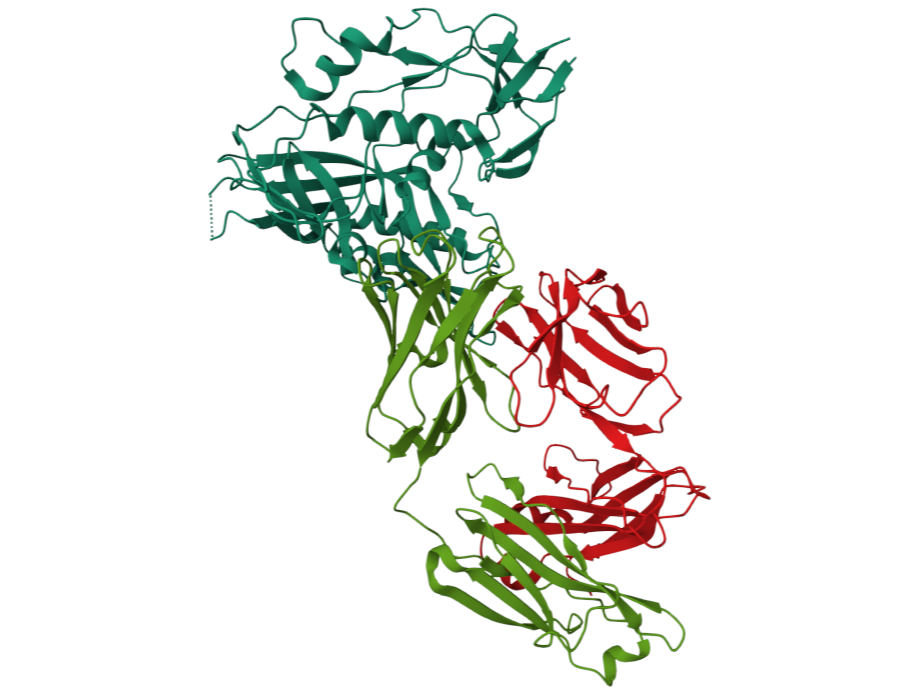
The crystal structure of VRC01 in complex with the HIV-1 gp120 core has demonstrated that this broadly neutralizing antibody, which targets the CD4 binding site (CD4bs), partially mimics the interaction between gp120 and its primary receptor, CD4. The VRC-01-gp120 interaction has a trimeric viral envelope spike that acts as an aid to gain deeper insights into the antibody’s neutralization mechanism and to identify viral determinants associated with resistance to VRC01-mediated neutralization. The half-life of VRC-01 is estimated to be ~15-20 days with a volume of distribution (Vd) of 3-5 L and a clearance (Cl) of ~0.2–0.3 mL/hr/kg. VRC-01 follows first order of kinetics at 5-30 mg/kg.
Not approved yet
Not approved yet
Intravenous, Subcutaneous
Solution
to be determined
5 mg/kg; 20mg/kg; 40mg/kg
40 mg/kg
Not provided
Not provided
Not provided
Not provided
The NIAID Vaccine Research Center (VRC), founded in 1999 at NIH, was established to accelerate vaccine development for infectious diseases like HIV, Ebola, and COVID-19. Located in Bethesda, it includes advanced labs, a vaccine production facility, and clinical trial units, enabling seamless translational research from bench to bedside. Vaccine Production Program (VPP) develops vaccines in-house.
Not provided
Bioreactors, Incubators, filtration units, lyophilizers, formulation vessels,
VRC01 is a monoclonal antibody, and its production involves several key steps: 1. Gene Cloning and Vector Construction: The genes encoding the heavy and light chains of VRC01 are cloned and inserted into suitable expression vectors optimized for antibody production in host cells. 2. Expression Systems: Recombinant VRC01 is expressed in various systems, including human embryonic kidney (HEK) cell lines, plant-based systems (Nicotiana benthamiana or tabacum), and yeast (Pichia pastoris), depending on the desired yield and glycosylation pattern. 3. Protein Purification via affinity chromatography
HPLC, mass spectrometry, spectrophotometers, and sterility tests.
Not provided
Not provided
Not provided
No delivery device
VRC01 antibody and method of treatment of HIV
Monoclonal neutralizing antibodies are disclosed that specifically bind to the CD4 binding site of HIV-I gpl20. Monoclonal neutralizing antibodies also are disclosed that specifically bind to HIV-I gp41. The identification of these antibodies, and the use of these antibodies are also disclosed. Methods are also provided for enhancing the binding and neutralizing activity of any antibody using epitope scaffold probes.
WO2011038290
Compound, MoT
THE UNITED STATES OF AMERICA, as represented by THE SECRETARY, DEPARTMENT OF HEALTH AND HUMAN SERVICES
Not provided
September 24, 2030
Granted: AU, CA, CN, EP (BE, CH, DE, FR, GB, IT, LI), IN, US
Li, Y., O'Dell, S., Walker, L. M., Wu, X., Guenaga, J., Feng, Y., Schmidt, S. D., McKee, K., Louder, M. K., Ledgerwood, J. E., Graham, B. S., Haynes, B. F., Burton, D. R., Wyatt, R. T., & Mascola, J. R. (2011). Mechanism of neutralization by the broadly neutralizing HIV-1 monoclonal antibody VRC01. Journal of virology, 85(17), 8954–8967. https://doi.org/10.1128/JVI.00754-11
The structure of VRC01 in complex with the HIV-1 gp120 core reveals that this broadly neutralizing CD4 binding site (CD4bs) antibody partially mimics the interaction of the primary virus receptor, CD4, with gp120. Here, we extended the investigation of the VRC01-gp120 core interaction to the biologically relevant viral spike to better understand the mechanism of VRC01-mediated neutralization and to define viral elements associated with neutralization resistance. In contrast to the interaction of CD4 or the CD4bs monoclonal antibody (MAb) b12 with the HIV-1 envelope glycoprotein (Env), occlusion of the VRC01 epitope by quaternary constraints was not a major factor limiting neutralization. Mutagenesis studies indicated that VRC01 contacts within the gp120 loop D, the CD4 binding loop, and the V5 region were necessary for optimal VRC01 neutralization, as suggested by the crystal structure. In contrast to interactions with the soluble gp120 monomer, VRC01 interaction with the native viral spike did not occur in a CD4-like manner; VRC01 did not induce gp120 shedding from the Env spike or enhance gp41 membrane proximal external region (MPER)-directed antibody binding to the Env spike. Finally, VRC01 did not display significant reactivity with human antigens, boding well for potential in vivo applications. The data indicate that VRC01 interacts with gp120 in the context of the functional spike in a manner distinct from that of CD4. It achieves potent neutralization by precisely targeting the CD4bs without requiring alterations of Env spike configuration and by avoiding steric constraints imposed by the quaternary structure of the functional Env spike.
Corey, L., Gilbert, P. B., Juraska, M., Montefiori, D. C., Morris, L., Karuna, S. T., Edupuganti, S., Mgodi, N. M., deCamp, A. C., Rudnicki, E., Huang, Y., Gonzales, P., Cabello, R., Orrell, C., Lama, J. R., Laher, F., Lazarus, E. M., Sanchez, J., Frank, I., Hinojosa, J., … HVTN 704/HPTN 085 and HVTN 703/HPTN 081 Study Teams (2021). Two Randomized Trials of Neutralizing Antibodies to Prevent HIV-1 Acquisition. The New England journal of medicine, 384(11), 1003–1014. https://doi.org/10.1056/NEJMoa2031738
Background: Whether a broadly neutralizing antibody (bnAb) can be used to prevent human immunodeficiency virus type 1 (HIV-1) acquisition is unclear.
Methods: We enrolled at-risk cisgender men and transgender persons in the Americas and Europe in the HVTN 704/HPTN 085 trial and at-risk women in sub-Saharan Africa in the HVTN 703/HPTN 081 trial. Participants were randomly assigned to receive, every 8 weeks, infusions of a bnAb (VRC01) at a dose of either 10 or 30 mg per kilogram (low-dose group and high-dose group, respectively) or placebo, for 10 infusions in total. HIV-1 testing was performed every 4 weeks. The VRC01 80% inhibitory concentration (IC80) of acquired isolates was measured with the TZM-bl assay.
Results: Adverse events were similar in number and severity among the treatment groups within each trial. Among the 2699 participants in HVTN 704/HPTN 085, HIV-1 infection occurred in 32 in the low-dose group, 28 in the high-dose group, and 38 in the placebo group. Among the 1924 participants in HVTN 703/HPTN 081, infection occurred in 28 in the low-dose group, 19 in the high-dose group, and 29 in the placebo group. The incidence of HIV-1 infection per 100 person-years in HVTN 704/HPTN 085 was 2.35 in the pooled VRC01 groups and 2.98 in the placebo group (estimated prevention efficacy, 26.6%; 95% confidence interval [CI], -11.7 to 51.8; P = 0.15), and the incidence per 100 person-years in HVTN 703/HPTN 081 was 2.49 in the pooled VRC01 groups and 3.10 in the placebo group (estimated prevention efficacy, 8.8%; 95% CI, -45.1 to 42.6; P = 0.70). In prespecified analyses pooling data across the trials, the incidence of infection with VRC01-sensitive isolates (IC80 <1 μg per milliliter) per 100 person-years was 0.20 among VRC01 recipients and 0.86 among placebo recipients (estimated prevention efficacy, 75.4%; 95% CI, 45.5 to 88.9). The prevention efficacy against sensitive isolates was similar for each VRC01 dose and trial; VRC01 did not prevent acquisition of other HIV-1 isolates.
Conclusions: VRC01 did not prevent overall HIV-1 acquisition more effectively than placebo, but analyses of VRC01-sensitive HIV-1 isolates provided proof-of-concept that bnAb prophylaxis can be effective. (Supported by the National Institute of Allergy and Infectious Diseases; HVTN 704/HPTN 085 and HVTN 703/HPTN 081 ClinicalTrials.gov numbers, NCT02716675 and NCT02568215.).
No documents were uploaded
There are no additional links
Consider on a case by case basis, collaborating on developing long acting products with potential significant public health impact, especially for low- and middle-income countries (LMICs), utilising the referred to long-acting technology
Provide necessary technical information to a potential partner, under confidentiality agreement, to enable preliminary assessment of whether specific medicines of public health importance in LMICs might be compatible with the referred to long-acting technology to achieve a public health benefit
In the event that a product using the referred to long-acting technology is successfully developed, the technology IP holder(s) will work with the Medicines Patent Pool towards putting in place the most appropriate strategy for timely and affordable access in low and middle-income countries, including through licensing