access-principles-1access-principles-2access-principles-3backcarrierdevelopmentease_of_administrationexportimplantableinjectablenon-implantablenon_carriernon_injectableother_featuresprintroute_of_administrationtherapeutic_areatype_of_tech

Drug information

Drug's link(s)

Not provided

Generic name

Sorfequiline tartrate; TBAJ-876 LAI

Brand names

Sorfequiline

Compound type

Small molecule

Drug class/category

Diarylquinoline antimycobacterial agent

Summary

High-concentration aqueous LAI suspensions of TBAJ-876 tartrate were developed using wet media milling. Drug concentrations up to 650 mg/mL (free-base equivalent) were achieved while maintaining injectability and acceptable physical properties. The formulation comprised TBAJ-876 tartrate particles stabilized with polysorbate 20 in citrate buffer. Peak plasma concentrations (Cmax) ranged from ~165–268 ng/mL, depending on particle size, with AUC0–3 months of 42,500–49,100 ng·h/mL. Plasma concentrations were sustained for at least 3 months after a single injection.

Approval status

Not yet approved. Although the non-LAI formulation of TBAJ-876 is currently being evaluated in ongoing clinical trials (NCT06058299 and NCT07672405), the LAI formulation remains under preclinical investigation.

Regulatory authorities

Not approved yet

Therapeutic area(s)

  • TB
Use case(s)
  • Treatment

Administration route

Intramuscular

Associated long-acting platforms

Aqueous drug particle suspension

Use of drug

Ease of administration
  • Administered by a community health worker
  • Administered by a nurse
  • Administered by a specialty health worker
  • To be determined
Frequency of administration
  • Other/Variable/Unknown : Unknown
  • Every 3 months
User acceptance

Not provided

Dosage

Available dose and strength

Dose: 28 mg; Strengths: 280 mg/mL (Preclinical dosage)

Maximum dose

652 mg/mL (highest injectable concentration tested)

Recommended dosing regimen

0.1 ml of Sorfequiline 280 mg/mL (free-base equivalent) was administered via intramuscular (IM) injection to rats. Drug concentrations were monitored for up to three months.

Additional comments

Not provided

Dosage link(s)

Not provided

Associated technologies

Not provided

Comment & Information

Not provided

Developer(s)

TB Alliance
Originator
United States of America

TB Alliance

TB Alliance, formally known as the Global Alliance for TB Drug Development, is a not-for-profit product development partnership dedicated to the discovery, development, and delivery of faster-acting, safer, and affordable treatments for tuberculosis (TB). Since its establishment in 2000, the organization has played a pivotal role in advancing TB drug research and has built the largest pipeline.

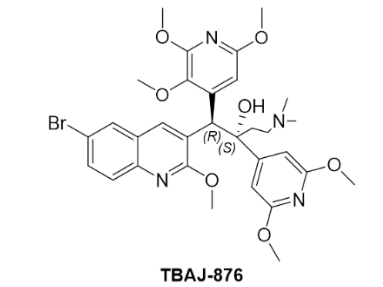
Drug structure

Scale-up and manufacturing prospects

Scale-up prospects

Not provided

Tentative equipment list for manufacturing

1. Standard reaction vessels/flasks 2. Rotary evaporator 3. Filtration setup 4. Drying chamber 5. Dual centrifuge wet media mill 6. Yttrium-stabilized zirconia milling beads

Manufacturing

Manufacturing is required to be conducted in Grade C/D cleanroom environments 1. Vehicle preparation 2. Wet media milling (critical step) 3. Particle-size characterization 4. Bulk suspension holding 5. Sterile manufacture / aseptic processing 6. Fill-finish 7. Final product is lyophilized and reconstitution is required before use

Specific analytical instrument required for characterization of formulation

1. Mastersizer 3000 laser diffraction analyzer 2. X-ray Powder Diffraction (XRPD) 3. Scanning Electron Microscopy (SEM) 4. High-Performance Liquid Chromatography (HPLC) 5. Osmometer

Excipients

Proprietary excipients used

No proprietary excipient used

Novel excipients or existing excipients at a concentration above Inactive Ingredient Database (IID) for the specified route of administration

No novel excipient or existing excipient used

Residual solvents used

No residual solvent used

Delivery device(s)

No delivery device

There are either no relevant patents or these were not yet submitted to LAPaL

Publications

Hansen MF, Hopper C, Zulbeari N, Morgen P, Holm R. Development of high-concentration long-acting injectable formulations of TBAJ-587 and TBAJ-876 as an extended treatment strategy against tuberculosis. J Control Release. 2026;393:114806. doi:10.1016/j.jconrel.2026.114806

This study investigated the potential of developing long-acting injectable (LAI) formulations of the next-generation diarylquinoline antibacterial compounds TBAJ-587 and TBAJ-876, which have the potential to impact the tuberculosis (TB) treatment by providing an extended treatment option. The performance of these compounds, formulated as LAIs, were evaluated based on particle size stability, drug loading capacity, and in vivo pharmacokinetics in rats. The data showed that particularly high drug loadings could be obtained in aqueous suspensions using the salt forms of TBAJ-587 and TBAJ-876, with concentrations up to 750 mg/mL TBAJ-587 fumarate and 650 mg/mL TBAJ-876 tartrate, expressed as the equivalent concentration of free base. A long-term stability study of the TBAJ-876 tartrate formulation suggested that a relatively stable suspension was defined when stored at both ambient temperature and at 40 °C. In contrast, the TBAJ-587 fumarate suspension formulation showed significant particle size growth as a function of time, indicating physical instability in the colloidal system. Analysis of both compounds by X-ray powder diffraction (XRPD) revealed no major changes in the crystal structure following milling or after 24 weeks of storage at 40 °C. The in vivo pharmacokinetic study in rats showed that the suspensions containing either TBAJ-587 fumarate or TBAJ-876 tartrate offered a promising LAI option for the prolonged treatment of TB, as all formulations achieved prolonged drug plasma exposure for at least three months following administration.

Ammerman NC, Nuermberger EL, Owen A, Rannard SP, Meyers CF, Swindells S. Potential Impact of Long-Acting Products on the Control of Tuberculosis: Preclinical Advancements and Translational Tools in Preventive Treatment. Clin Infect Dis. 2022;75(Suppl 4):S510-S516. doi:10.1093/cid/ciac672

A key component of global tuberculosis (TB) control is the treatment of latent TB infection. The use of long-acting technologies to administer TB preventive treatment has the potential to significantly improve the delivery and impact of this important public health intervention. For example, an ideal long-acting treatment could consist of a single dose that could be administered in the clinic (ie, a "1-shot cure" for latent TB). Interest in long-acting formulations for TB preventive therapy has gained considerable traction in recent years. This article presents an overview of the specific considerations and current preclinical advancements relevant for the development of long-acting technologies of TB drugs for treatment of latent infection, including attributes of target product profiles, suitability of drugs for long-acting formulations, ongoing research efforts, and translation to clinical studies.

Additional documents

No documents were uploaded

Collaborate for development

Consider on a case by case basis, collaborating on developing long acting products with potential significant public health impact, especially for low- and middle-income countries (LMICs), utilising the referred to long-acting technology

Share technical information for match-making assessment

Provide necessary technical information to a potential partner, under confidentiality agreement, to enable preliminary assessment of whether specific medicines of public health importance in LMICs might be compatible with the referred to long-acting technology to achieve a public health benefit

Work with MPP to expand access in LMICs

In the event that a product using the referred to long-acting technology is successfully developed, the technology IP holder(s) will work with the Medicines Patent Pool towards putting in place the most appropriate strategy for timely and affordable access in low and middle-income countries, including through licensing