Drug name
Last update: Aug 2026Rilpivirine 2-monthly
Developer(s)
Drug information
Rilpivirine
Edurant, Rekambys, Eviplera/Complera, Odefsey
Small molecule
NNRTI
Not provided
Rilpivirine (RPV), also known as TMC278, is a HIV-1 non-nucleoside reverse transcriptase inhibitor (NNRTI) used to treat antiretroviral naïve individuals with HIV. RPV is a derivative of diarylpyrimidine and functions by mechanistically binding to the HIV reverse transcriptase enzyme. This interaction prevents the conversion of RNA into viral DNA, which is an essential step in HIV infection. RPV is available in multiple formulations, including short-acting oral medication (Edurant) and combination tablets (Odefsey, Juluca and Eviplera/Complera), in addition to a long-acting intramuscular injectable (Rekambys). In Jan 2021, Rekambys received U.S. FDA approval to be administered alongside Vocabria (Cabotegravir) for HIV treatment in adults and adolescents weighing 77 pounds (35kg) or more.
Unknown
Unknown
Therapeutic area(s)
- HIV
- Treatment
Administration route
Oral, Intramuscular
Associated long-acting platforms
Aqueous drug particle suspension
Use of drug
- Administered by a nurse
- Administered by a specialty health worker
- Administered by a community health worker
- Monthly
- Every 2 months
Dosage
Not provided
Not provided
Not provided
Not provided
Not provided
Not provided
Related entries
Cabotegravir + Rilpivirine
Cabotegravir + Rilpivirine 3 times a year (CAB4M + RPV4M)
Rilpivirine Prodrug Nanoformulation (NM3RPV)
Additional information
Developer(s)

Johnson & Johnson
Janssen Pharmaceuticals is a subsidiary company of Johnson & Johnson headquartered in Beerse, Belgium. They manufacture and develop pharmaceutical products for use in areas such as, Immunology, Infectious Diseases & Vaccines, Pulmonary Hypertension, Cardiovascular & Metabolism, Oncology, and Neuroscience.
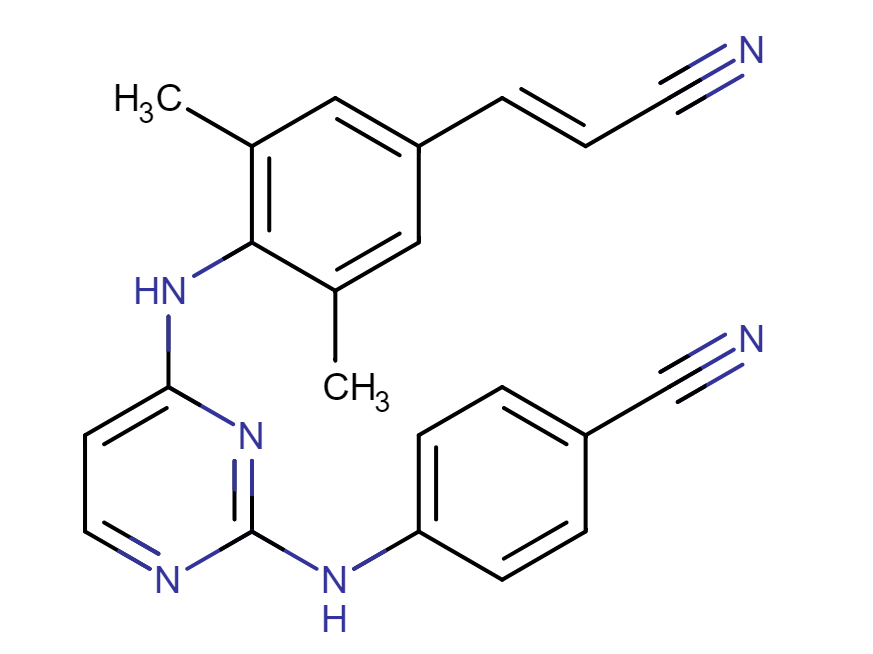
Drug structure
Scale-up and manufacturing prospects
Compound is commercially manufactured.
Netzsch ball mill, high pressure homogenizer.
The manufacturing process for RPV is considered to be non-standard due to the inclusion of an aseptic processing step. RPV is light-sensitive, and exposure to light can induce conversion into a Z-isomer form which can affect pharmacokinetic data and activity. Therefore, all processing, manufacturing and storage stages must implement mitigation procedures and protection from light. The RPV nanosuspension is stored aseptically in single-use glass vials with a protective nitrogen atmosphere. The formulation requires refrigerated storage and is stable for up to three years at 5°C.
Laser diffractor (determine particle size), FT-IR UHPLC (chemical identification), UHPLC (chromatographic purity), paddle apparatus & UPLC/UV (determine in-vitro drug release for QC / dissolution testing).
Excipients & delivery device(s)
No proprietary excipient used
The novel excipient poloxamer 338 (P338) is used in the final G001 clinical formulation. Following both an in-vitro mammalian chromosome aberration and an Ames test, it was considered to be non-genotoxic with no evidence for mutagenicity. Further P338 fertility, genotoxicity and development studies have been conducted with no negative effects, in addition to a 6-week and 9-month minipig repeat-dose toxicity study. No adverse local or systemic toxicity was reported in the minipigs at 100mg/month (Margin of Exposure:19).
No residual solvent used
No delivery device
Safety, Efficacy and Evidence Summary
Not provided
Not provided
Not provided
Not provided