access-principles-1access-principles-2access-principles-3backcarrierdevelopmentease_of_administrationexportimplantableinjectablenon-implantablenon_carriernon_injectableother_featuresprintroute_of_administrationtherapeutic_areatype_of_tech

Drug information

Drug's link(s)

Not provided

Generic name

N6LS

Brand names

Not provided

Compound type

Biotherapeutic

Drug class/category

bNAb targeting gp120 on HIV-1 virus envelope

Summary

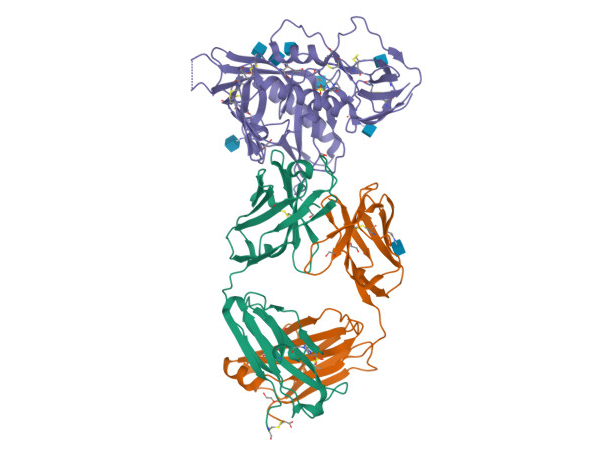
N6LS (GSK3810109A; VH3810109) is a long-acting version of the broadly neutralising antibody (bNAb) N6 currently in clinical development for the treatment of HIV-1 infection. The crystallisable fragment domain of N6LS contains two site-directed mutagenesis substitutions at amino acid residues N434S and M428L to extend bNAb efficacy and half-life. In contrast to other bNAbs that target the HIV-1 CD4-binding site, N6LS has a unique binding method that places less importance on the highly variable gp120 V5 loop and instead concentrates on highly conserved regions of the HIV-1 envelope. This interaction process enables N6LS to avoid major resistance mutations resulting from alterations in the highly glycosylated V5 loop region, which act to reduce the efficacy of other VRC01-class antibodies.

Approval status

Unknown

Regulatory authorities

Unknown

Therapeutic area(s)

  • HIV
Use case(s)
  • Treatment

Administration route

Intravenous, Subcutaneous

Associated long-acting platforms

Broadly Neutralising Monoclonal Antibody

Use of drug

Ease of administration
  • Administered by a nurse
  • Administered by a specialty health worker
Frequency of administration

Not provided

User acceptance

Not provided

Dosage

Available dose and strength

Not provided

Maximum dose

Not provided

Recommended dosing regimen

Not provided

Additional comments

Not provided

Dosage link(s)

Not provided

Associated technologies

Not provided

Comment & Information

Not provided

Developer(s)

ViiV Healthcare
Originator
United Kingdom

ViiV Healthcare

ViiV Healthcare is a pharmaceutical company that specializes in the development of therapies for HIV infection. The company is headquartered in Brentford in the United Kingdom and was initially formed in November 2009 as a part of a joint venture between GlaxoSmithKline and Pfizer.

Drug structure

Scale-up and manufacturing prospects

Scale-up prospects

Production scale up and manufacturing requirements for therapeutic monoclonal antibody products are primarily related to formulation stability, pharmacokinetic suitability and maintenance of quality attributes. The industrial manufacture of high concentration broadly neutralising antibody (bNAb) formulations for parenteral administration can introduce production challenges regarding aggregation propensity and formulation viscosity.

Tentative equipment list for manufacturing

Industrial bioreactor vessel with a production volume capacity of between 5-25kL. Continuous disc stack centrifuges for bioreactor harvesting with subsequent membrane and depth filtration for supernatant clarification. Protein A chromatography or other suitable affinity capture apparatus followed by two chromatographic polishing steps such as cation- and anion-exchange. Ultrafiltration membrane system to concentrate and formulate the final product.

Manufacturing

Biological activity of bNAbs is highly dependent on their chemical, conformational and structural stability. Reduced glycosylation of bNAbs during manufacture and chemical degradation processes such as deamidation can result in increased aggregation, loss of activity and diminished solubility. Degradation may occur at any stage throughout the manufacturing process including bioprocessing, purification, product delivery and storage. Considerations to increase formulation stability may include pH optimisation and the addition of suitable excipients (e.g. surfactants, stabilizers and buffers).

Specific analytical instrument required for characterization of formulation

Formulation characterisation for single-entity bNAb production includes capillary isoelectric focusing and ion-exchange chromatography for identification of post-translational modifications, subvisible particle quantitation, thermal DSC, size-exclusion chromatography for measurement of concentration dependent aggregation rates and capillary electrophoresis for antibody fragmentation and clipping.

Excipients

Proprietary excipients used

Not provided

Novel excipients or existing excipients at a concentration above Inactive Ingredient Database (IID) for the specified route of administration

Not provided

Residual solvents used

Not provided

Delivery device(s)

No delivery device

Description

N6LS combination with fostemsavir and temsavir

Brief description

Relates to therapeutic methods or methods of treating, clearing, preventing or curing HIV infection. Provides a combination of at least one agent selected from the group consisting of: fostemsavir and temsavir, or a pharmaceutically acceptable salt thereof and a CD4 binding site (CD4bs) binding protein for the use in treatment of HIV and/or clearance of HIV infected cells.

Representative patent

WO2023114951

Category

Combination

Patent holder

ViiV Healthcare

Exclusivity

Not provided

Expiration date

December 16, 2042

Status

Unknown - National phase deadline 17 June 2024

Description

N6LS + Cabotegravir

Brief description

The invention relates to a combination of cabotegravir or a pharmaceutically acceptable salt thereof and a gp120 binding protein. The invention also provides a method of treatment for HIV with the co-administration of a therapeutically effective amount of cabotegravir or a pharmaceutically acceptable salt thereof and a therapeutically effective amount of a gp120 binding protein.

Representative patent

WO2022125378

Category

Combination

Patent holder

ViiV Healthcare

Exclusivity

Not provided

Expiration date

December 3, 2041

Status

Filed in EP

Description

N6LS - Neutralising antibodies to GP120 and their use

Brief description

Antibodies and antigen binding fragments that specifically bind to gp120 and neutralize HIV-1. Nucleic acids encoding these antibodies, vectors and host cells are also provided. Methods for detecting HIV-1 using these antibodies are disclosed. In addition, the use of these antibodies, antigen binding fragment, nucleic acids and vectors to prevent and/or treat an HIV-1 infection is disclosed.

Representative patent

WO2016154003

Category

Active substance

Patent holder

US DHHS

Exclusivity

Not provided

Expiration date

March 18, 2036

Status

Granted in China, India, US, South Africa, Filed in Europe

Publications

Huang J, Kang BH, Ishida E, Zhou T, Griesman T, Sheng Z, Wu F, Doria-Rose NA, Zhang B, McKee K, O'Dell S, Chuang GY, Druz A, Georgiev IS, Schramm CA, Zheng A, Joyce MG, Asokan M, Ransier A, Darko S, Migueles SA, Bailer RT, Louder MK, Alam SM, Parks R, Kelsoe G, Von Holle T, Haynes BF, Douek DC, Hirsch V, Seaman MS, Shapiro L, Mascola JR, Kwong PD, Connors M. Identification of a CD4-Binding-Site Antibody to HIV that Evolved Near-Pan Neutralization Breadth. Immunity. 2016 Nov 15;45(5):1108-1121. DOI: 10.1016/j.immuni.2016.10.027. PMID: 27851912; PMCID: PMC5770152.

Detailed studies of the broadly neutralizing antibodies (bNAbs) that underlie the best available examples of the humoral immune response to HIV are providing important information for the development of therapies and prophylaxis for HIV-1 infection. Here, we report a CD4-binding site (CD4bs) antibody, named N6, that potently neutralized 98% of HIV-1 isolates, including 16 of 20 that were resistant to other members of its class. N6 evolved a mode of recognition such that its binding was not impacted by the loss of individual contacts across the immunoglobulin heavy chain. In addition, structural analysis revealed that the orientation of N6 permitted it to avoid steric clashes with glycans, which is a common mechanism of resistance. Thus, an HIV-1-specific bNAb can achieve potent, near-pan neutralization of HIV-1, making it an attractive candidate for use in therapy and prophylaxis.

Julg B, Pegu A, Abbink P, Liu J, Brinkman A, Molloy K, Mojta S, Chandrashekar A, Callow K, Wang K, Chen X, Schmidt SD, Huang J, Koup RA, Seaman MS, Keele BF, Mascola JR, Connors M, Barouch DH. Virological Control by the CD4-Binding Site Antibody N6 in Simian-Human Immunodeficiency Virus-Infected Rhesus Monkeys. J Virol. 2017 Jul 27;91(16):e00498-17. DOI: 10.1128/JVI.00498-17. PMID: 28539448; PMCID: PMC5533891.

Passive immunotherapy against HIV-1 will most likely require broadly neutralizing antibodies (bnAbs) with maximum breadth and potency to ensure therapeutic efficacy. Recently, the novel CD4 binding site antibody N6 demonstrated extraordinary neutralization breadth and potency against large panels of cross-clade pseudoviruses. We evaluated the in vivo antiviral activity of N6-LS, alone or in combination with the established V3-glycan antibody PGT121, in chronically simian-human immunodeficiency virus (SHIV)-SF162P3-infected macaques. A single dose of N6-LS suppressed plasma viral loads in 4 out of 5 animals at day 7, while the combination of both antibodies suppressed all animals. The combination of both antibodies had no additive antiviral effect compared to a single dose of PGT121, potentially reflecting the nearly 10-fold-higher potency of PGT121 against this SHIV. Viral rebound occurred in the majority of suppressed animals and was linked to declining plasma bnAb levels over time. In addition to the effect on plasma viremia, bnAb administration resulted in significantly reduced proviral DNA levels in PBMCs after 2 weeks and in lymph nodes after 10 weeks. Autologous neutralizing antibody (nAb) responses and CD8+ T-cell responses were not significantly enhanced in the bnAb-treated animals compared to control animals, arguing against their contribution to the viral effects observed. These results confirm the robust antiviral activity of N6-LS in vivo, supporting the further clinical development of this antibody.IMPORTANCE Monocloncal antibodies (MAbs) are being considered for passive immunotherapy of HIV-1 infection. A critical requirement for such strategies is the identification of MAbs that recognize the diversity of variants within circulating but also reservoir viruses, and MAb combinations might be needed to achieve this goal. This study evaluates the novel bnAb N6-LS alone or in combination with the bnAb PGT121, in rhesus macaques that were chronically infected with SHIV. The results demonstrate that N6-LS potently suppressed plasma viral loads in the majority of animals but that the combination with PGT121 was not superior to PGT121 alone in delaying time to viral rebound or reducing peripheral blood mononuclear cell (PBMC) or lymph node proviral DNA levels. The occurrence of viral escape variants in an N6-LS-monotreated animal, however, argues for the need to maximize breadth and antiviral efficacy by combining bnAbs for therapeutic indications.

Additional documents

No documents were uploaded

Useful links

Collaborate for development

Consider on a case by case basis, collaborating on developing long acting products with potential significant public health impact, especially for low- and middle-income countries (LMICs), utilising the referred to long-acting technology

Share technical information for match-making assessment

Provide necessary technical information to a potential partner, under confidentiality agreement, to enable preliminary assessment of whether specific medicines of public health importance in LMICs might be compatible with the referred to long-acting technology to achieve a public health benefit

Work with MPP to expand access in LMICs

In the event that a product using the referred to long-acting technology is successfully developed, the technology IP holder(s) will work with the Medicines Patent Pool towards putting in place the most appropriate strategy for timely and affordable access in low and middle-income countries, including through licensing