Drug name
Last update: Oct 2026lenacapavir + teropavimab + zinlirvimab
Developer(s)
Drug information
- https://go.drugbank.com/drugs/DB18916
- https://go.drugbank.com/drugs/DB18867
- https://go.drugbank.com/drugs/DB15673
Investigational
Investigational
Biotherapeutic
Capsid inhibitor, mAb (Monoclonal antibody) — capsid inhibitor + 2 bNAbs targeting gp120 on HIV-1 envelope
Active / In Development (Phase 1/2/3)
LEN+TAB+ZAB (LTZ) harbors the potential to be the first approved long-acting combination treatment regimen with twice-yearly dosing. At CROI2025, the primary results of a Phase 2 study evaluating the investigational combination of LTZ were presented.
Investigational. In January 2025, the FDA granted lenacapavir (LEN) with bNAbs (teropavimab [GS-5423, TAB] and zinlirvimab [GS-2872, ZAB]) Breakthrough Therapy Designation, which is intended to expedite the development of new drugs that may demonstrate substantial improvement over available therapy.
In January 2025, the US FDA granted lenacapavir (LEN) with bNAbs (teropavimab [GS-5423, TAB] and zinlirvimab [GS-2872, ZAB]) Breakthrough Therapy Designation, which is intended to expedite the development of new drugs that may demonstrate substantial improvement over available therapy.
Therapeutic area(s)
- HIV
- Treatment
Administration route
Subcutaneous, Intravenous
Associated long-acting platforms
Aqueous Solution, Monoclonal antibodies and antibody drug conjugates
Use of drug
- Administered by a nurse
- Every 6 months
Dosage
investigational
investigational
investigational
Not provided
Not provided
Related entries
Cabotegravir + Lenacapavir
GS-3242+LEN
Lenacapavir 6-monthly
Lenacapavir Once-Yearly
MK-8591D (Islatravir and Lenacapavir)
Additional information
Developer(s)
Gilead
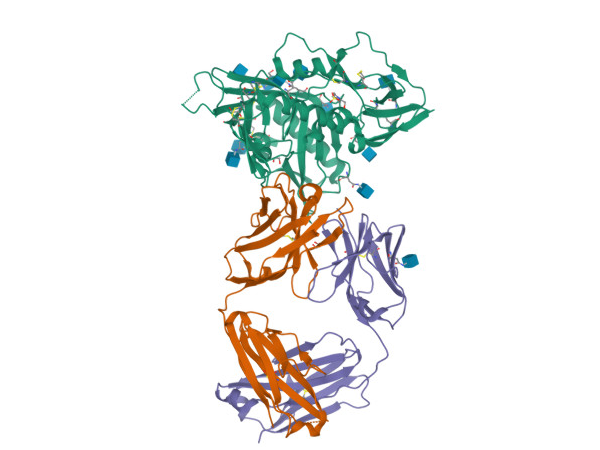
Drug structure
Scale-up and manufacturing prospects
LEN is commercially manufactured. Production scale up and manufacturing requirements for therapeutic mAbs are primarily related to formulation stability, pharmacokinetic suitability and maintenance of quality attributes. The industrial manufacture of high-concentration broadly neutralising antibody (bNAb) formulations for parenteral administration can introduce production challenges regarding aggregation propensity and formulation viscosity. Exploratory process optimisations such as bNAb co-formulation and multi-specific Ab composition have the potential to reduce overall manufacturing costs
Equipment for injectable: Stainless steel pharmaceutical reactors, glass-lined reactors, rotary evaporator (rotovap), flash chromatography columns, stainless steel autoclave, cooling bath, silica gel chromatography columns, vacuum distillation apparatus, simulated moving bed chromatography system, Chiralpak columns. Industrial bioreactor vessel with a production volume capacity of between 5-25kL. Continuous disc stack centrifuges for bioreactor harvesting with subsequent membrane and depth filtration for supernatant clarification.
Storage of injectable lenacapavir in borosilicate vials is contraindicated due to issues with chemical compatibility. Instead, it is recommended that vials are made from aluminosilicate glass. Biological activity of bNAbs is highly dependant on their chemical, conformational and structural stability. Reduced glycosylation of bNAbs during manufacture and chemical degradation processes such as deamidation can result in increased aggregation, loss of activity and diminished solubility. Degradation may occur at any stage throughout the manufacturing process.
Proton nuclear magnetic resonance (1H NMR), High-performance liquid chromatography (HPLC), Ultra-Performance Liquid Chromatography (UPLC). Formulation characterisation for single-entity bNAb production include capillary isoelectric focusing and ion-exchange chromatography for identification of post-translational modifications, subvisible particle quantitation, thermal DSC, size-exclusion chromatography for measurement of concentration dependent aggregation rates and capillary electrophoresis for antibody fragmentation and clipping.
Excipients & delivery device(s)
Not provided
Not provided
Not provided
Not provided
Safety, Efficacy and Evidence Summary
Not provided
Not provided
Not provided
Not provided
Lenacapavir, zinlirvimab and teropavimab combination and dosage form for treatment of HIV
Provided are methods for administering long-acting anti-HIV broadly neutralizing antibodies twice annually, e.g., Q6M, Q24W, Q25W or Q26W.
WO2024044477
Combination, Dosing Regimen, Method of Treatment
Gilead Sciences
Not provided
August 11, 2043
Granted: TW Pending: AU, CA, CN, EP, JP, LR, US