Drug name
Last update: Aug 2026Insulin icodec
Developer(s)
Drug information
Insulin icodec
Awiqli
Biotherapeutic
Insulin
Not provided
Insulin icodec is an ultra long-acting basal insulin analogue. It is a re-engineered version of the ultra long-acting oral basal insulin OI338, with several modifications introduced to significantly extend the half-life. These modifications - which cause increased serum albumin binding and attenuated insulin receptor affinity - result in a mean half-life of approximately 196 hours, allowing for once-weekly administration.
Insulin icodec was approved by Health Canada, EMA, Japan, Australia and Switzerland in 2024 for the treatment of adults living with type 1 or 2 diabetes mellitus. It has also been approved in Chine but only for the T2D indication. In July 2024, the US FDA rejected the approval of insulin icodec, citing concerns regarding manufacturing aspects and the indication being sought for type 1 diabetes.
AWIQLI 700 units/1 ml, 1500 units/1.5 ml, & 2100 units/3 mL is approved by several stringent regulatory authorities for management of type 2 diabetes mellitus (and for some, also type 1 diabetes).
Therapeutic area(s)
- Diabetes
- Treatment
Administration route
Subcutaneous
Associated long-acting platforms
Solution
Use of drug
- Administered by a community health worker
- Administered by a nurse
- Administered by a specialty health worker
- Self-administered
- Weekly
Dosage
700 units/1mL; 1050 units/1.5mL & 2100 units/3mL
700 units per SC administration
For Type 1 Diabetes Mellitus—insulin icodec + bolus insulin combination therapy. For Type 2 Diabetes Mellitus —initial dose is 70 units, monotherapy, or combination therapy with sulfonylurea/GLP-1 agonist. For patients transitioning to Awiqli once-weekly insulin, both T1DM & T2DM—the recommended dose depends on their previous total daily dose of once- or twice-daily basal insulin. The dosage regimen is as follows: If the previous daily dose was 10 units, give 110 units of Awiqli in week 1 and 110 units in week 2. If the previous daily dose was 11 units, give 70 units of Awiqli in week 1 and 120 units in week 2. If the previous daily dose was 12 units, give 80 units of Awiqli in week 1 and 130 units in week 2. If the previous daily dose was 14 units, give 90 units of Awiqli in week 1.
Not provided
The prefilled injection has a dose range of 10-700 units/injection (increase the dose by 10 units) No proprietary device is required to deliver insulin icodec. It is administered subcutaneously using a pre-filled pen injector, which is similar in design and technique to those used for other insulins. The pen contains a high-concentration formulation of 700 units/mL, ensuring that the injection volume remains comparable to once-daily basal insulin injections
Related entries
Not provided
Additional information
Developer(s)

Novo Nordisk
Novo Nordisk is a global healthcare company specializing in diabetes care. Founded in Denmark in 1923, it is renowned for its leadership in insulin production and diabetes treatments. Novo Nordisk's product portfolio includes insulin analogs, GLP-1 receptor agonists, and other pharmaceuticals for managing diabetes and other chronic conditions.
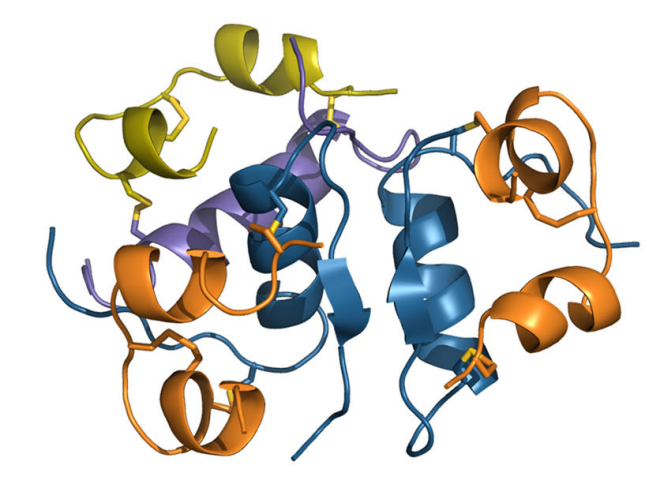
Drug structure
Scale-up and manufacturing prospects
In 2024, Novo Nordisk has invested 4.1 billion to expand the manufacturing capacity and increase the supply of AWQLI. It has five strategic production sites located in Denmark, the USA, France, Brazil, and China.
Peptide synthesizers, mixers, pH meters, and sterile filtration units. No proprietary device is required to deliver insulin icodec. It is administered subcutaneously using a pre-filled pen injector, which is similar in design and technique to those used for other insulins.
Manufacturing of Insulin icodec (Schedule D) follows ICH G7 guidelines. The manufacturing process includes: 1. Insulin icodec (Awiqli) is made using recombinant DNA technology in S. cerevisiae. 2. Drug substance steps: cell expansion, fermentation, recovery, concentration, and purification (incl. enzymatic/chemical steps). 3. Drug product: solution prep, mixing, pH/volume adjust, sterile filtration, aseptic fill into cartridges. 4. Final: capped, inspected, assembled, labelled, stored at 2–8°C. 5. Processes & controls are validated and acceptable.
1. High-Performance Liquid Chromatography (HPLC) 2. Mass Spectrometry (MS) and LC-MS (Liquid Chromatography-Mass Spectrometry) 3. Insulin Assay Kits or Immunoassays
Excipients & delivery device(s)
Not provided
Not provided
Not provided
Pen
Safety, Efficacy and Evidence Summary
Not provided
Not provided
Not provided
Not provided