access-principles-1access-principles-2access-principles-3backcarrierdevelopmentease_of_administrationexportimplantableinjectablenon-implantablenon_carriernon_injectableother_featuresprintroute_of_administrationtherapeutic_areatype_of_tech

Drug information

Drug's link(s)

Not provided

Generic name

Glecaprevir Pibrentasvir LAI

Brand names

Not provided

Compound type

Small molecule

Drug class/category

antivirals

Summary

Not provided

Approval status

Unknown

Regulatory authorities

Unknown

Therapeutic area(s)

  • HCV
Use case(s)
  • Treatment

Administration route

Subcutaneous, Intramuscular, Route of administration of the injectable formulation is being determined in the clinical program

Associated long-acting platforms

Aqueous drug particle suspension

Use of drug

Ease of administration
  • Administered by a community health worker
  • Administered by a nurse
  • Administered by a specialty health worker
  • To be determined
Frequency of administration
  • Other/Variable/Unknown : To be determined based on clinical development
  • Once
User acceptance

To be determined

Dosage

Available dose and strength

Not provided

Maximum dose

Not provided

Recommended dosing regimen

Not provided

Additional comments

Not provided

Dosage link(s)

Not provided

Formulations

Compare
Related formulations

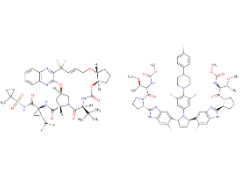
Glecaprevir (G)
Pibrentasvir (P)

Associated technologies

Not provided

Comment & Information

Not provided

Developer(s)

Tandem Nano
Originator
United Kingdom

Tandem Nano

Drug structure

Scale-up and manufacturing prospects

Scale-up prospects

Not provided

Tentative equipment list for manufacturing

Not provided

Manufacturing

Not provided

Specific analytical instrument required for characterization of formulation

Not provided

Excipients

Proprietary excipients used

No proprietary excipient used

Novel excipients or existing excipients at a concentration above Inactive Ingredient Database (IID) for the specified route of administration

No novel excipient or existing excipient used

Residual solvents used

No residual solvent used

Delivery device(s)

No delivery device

Description

long acting injectable liquid formulations comprising an aqueous dispersion of microparticles of glecaprevir and/or pibrentasvir stabilised by a first excipient and a second excipient.

Brief description

The present invention relates to long acting injectable liquid formulations comprising an aqueous dispersion of microparticles of glecaprevir and/or pibrentasvir stabilised by a first excipient and a second excipient. The present invention also relates to solid compositions which may be used as a precursor for the long acting injectable formulations, aqueous dispersions, microneedle arrays, implantable rods, and pharmaceutical compositions, methods of producing such long acting injectable formulations, and medical uses for such formulations and methods of treatment using such formulations.

Representative patent

WO2023052776

Category

Formulation

Patent holder

University of Liverpool

Exclusivity

Not provided

Expiration date

September 29, 2042

Status

Pending in EP, IN, US and CN

Publications

There are no publication

Additional documents

No documents were uploaded

Collaborate for development

Consider on a case by case basis, collaborating on developing long acting products with potential significant public health impact, especially for low- and middle-income countries (LMICs), utilising the referred to long-acting technology

Share technical information for match-making assessment

Provide necessary technical information to a potential partner, under confidentiality agreement, to enable preliminary assessment of whether specific medicines of public health importance in LMICs might be compatible with the referred to long-acting technology to achieve a public health benefit

Work with MPP to expand access in LMICs

In the event that a product using the referred to long-acting technology is successfully developed, the technology IP holder(s) will work with the Medicines Patent Pool towards putting in place the most appropriate strategy for timely and affordable access in low and middle-income countries, including through licensing