Drug name
Last update: Oct 2026Bictegravir-PLGA nanoformulation
Developer(s)
Drug information
Bictegravir
Bictegravir PLGA nanoformulation
Small molecule
Second-generation Integrase Strand Transfer Inhibitors (INSTI)
Not provided
Bictegravir (BIC), an HIV‑1 integrase strand transfer inhibitor, was successfully formulated into <200 nm poly(lactic‑co‑glycolic acid) (PLGA) nanoparticles using an o/w emulsion–solvent evaporation technique. The formulation achieved an encapsulation efficiency of 47.9 ± 6.9% and exhibited a stable negative surface charge (zeta potential approximately −23 mV). In TZM‑bl cell assays, nanoencapsulation markedly enhanced antiviral potency, reducing the EC50 from 0.604 µM for free BIC to 0.0038 µM, while increasing the CC50 to 820.4 µM, resulting in a selectivity index of ~ 215,900; Cmax -888.54 pmole. The nanoparticles demonstrated sustained intracellular retention in PBMCs for up to 28 days. Following single preclinical SC dose, BIC had sustained plasma and tissue drug levels for >30 days.
Not approved for clinical use yet.
Not approved for clinical use yet.
Therapeutic area(s)
- HIV
- Treatment
Administration route
Subcutaneous
Associated long-acting platforms
Polymer-based particles
Use of drug
- Administered by a community health worker
- Administered by a nurse
- Administered by a specialty health worker
Not provided
Dosage
0.0002225 µM– 44.5 µM (preclinical doses)
44.5 µM
Not applicable for preclinical studies
Not provided
Not provided
Not provided
Additional information
Developer(s)

Creighton University
Creighton University, founded in 1878 in Omaha by the Creighton family, is a Jesuit institution known for academic excellence, healthcare education, and service. It supports research in drug discovery and medical innovation, with strong science and pharmacy programs. Its modern campuses, labs, libraries, and clinical facilities help drive learning and community impact.
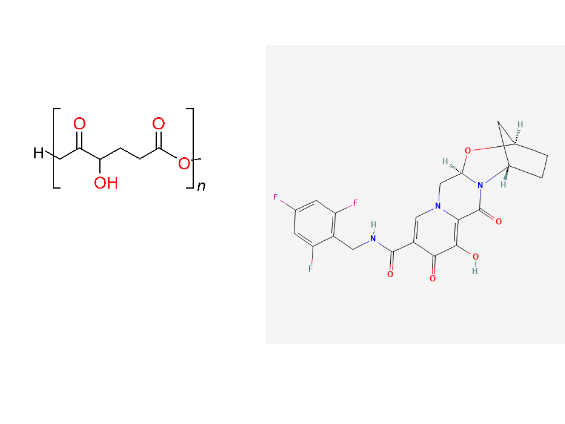
Drug structure
Scale-up and manufacturing prospects
Not known
1. High‑shear emulsification 2. Nano‑emulsification 3. Biosafety handling 4. Solvent evaporation 5. Drying 6. Temperature control 7. Centrifugation (release testing) 8. Probe sonicator 9. Orbital shaker
Oil‑in‑water (O/W) emulsion–solvent evaporation methodology:- i) 5 mL DCM containing PLGA, Poloxamer 407 and BIC (10:10:2 w:w:w) added dropwise to 20 mL of 1 % PVA solution under high‑speed continuous stirring. iii) Mixing PLGA (75:25 lactide:glycolide; MW 4000–15000), luronic F127 (stabilizer), polyvinyl alcohol aqueous phase, dichloromethane organic phase iv) Dissolve BIC to form solution v) Form homogeneous phase of solution vi) Emulsification process: Emulsify solution to form o/w emulsion with PLGA mixture v) Evaporate o/w emulsion to form encapsulated BIC.
1. Dynamic light scattering (DLS) 2. ZetaPlus Zeta Potential Analyzer 3. Hitachi S‑4700 field‑emission Scanning Electron Microscope (SEM) 4. High performance liquid chromatography (HPLC) 5. Liquid chromatography-Mass Spectrometry (LCMS)
Excipients & delivery device(s)
Not provided
(i) PLGA (ii) Poloxamer 407
Not provided
No delivery device
Safety, Efficacy and Evidence Summary
Not provided
Not provided
Not provided
Not provided
Encapsuled gel composition of hydrophillic antiretroviral drugs in nanocarriers
An encapsulated hydrophilic antiretroviral drug including a biodegradable polymeric nanoparticle and a process for fabricating biodegradable polymeric nanoparticles to encapsulate hydrophilic antiretroviral drugs are described. In an implementation, an encapsulated hydrophilic antiretroviral drug including a biodegradable polymeric nanoparticle includes a hydrophilic antiretroviral drug; and a biodegradable polymer polymeric nanoparticle that encapsulates the hydrophilic antiretroviral drug to form a nano-sized encapsulated hydrophilic antiretroviral drug.
WO2014039185
Formulation
Creighton University
Not provided
July 31, 2033
Granted in US only
Nanoparticles comprising combinations of antiviral agents and methods of delivery
Provided herein are nanoparticles and methods for using nanoparticles. The nanoparticles include at least three antiretroviral agents. When introduced to cells the nanoparticles cause an increase in the intracellular concentration of the antiretroviral agents to a level that is at least the IC50 against HIV-I or HIV-2. This concentration may be maintained for at least 21 days after the cells are contacted with the nanoparticle. When administered to a subject the nanoparticles cause the concentration of the antiretroviral agents to increase to at least 100 ng/ml in the serum of the subject, at least 0.5 μg/gram tissue in an organ of the subject, or a combination thereof. Such a concentration may be maintained for at least 21 days after the administration.
WO2010068899
Formulation
Creighton University
Not provided
December 11, 2029
Granted in US only