Drug name
Last update: Aug 2026Bictegravir LA
Drug information
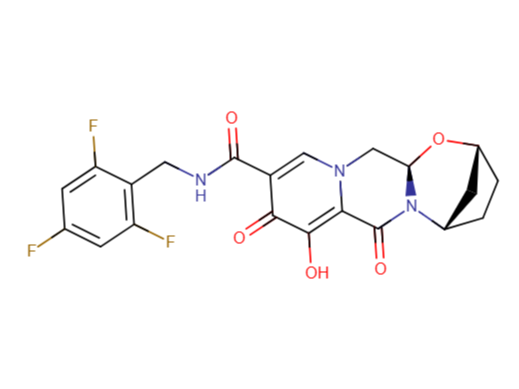
Bictegravir
Not provided
Small molecule
integrase strand transfer inhibitor (INSTI)
Not provided
Bictegravir (BIC) is an integrase strand transfer inhibitor that is combined with emtricitabine and tenofovir alafenamide into a once-per-day, short-acting oral tablet (Biktarvy) that can be taken as a complete regimen for HIV-1 treatment. CAB-LA is a similar integrase inhibitor that has already shown commercial success as an effective, single-agent, long-acting (LA) injectable medicine for HIV pre-exposure prophylaxis. Investigational preclinical formulations of LA injectable BIC include: (i) subcutaneous solid drug nanoparticles (SDN) from CELT at the University of Liverpool, (ii) intramuscular prodrug SDN from University of Nebraska, (iii) Poly (lactic-co-glycolic acid) loaded BIC nanoparticles from Creighton University and (iv) dissolving microneedles from Queen’s University Belfast.
Unknown
Unknown
Therapeutic area(s)
- HIV
- Pre-Exposure Prophylaxis (PrEP)
- Treatment
Administration route
Subcutaneous, Intramuscular, Transdermal
Associated long-acting platforms
Polymer-based particles, Aqueous drug particle suspension, Polymeric implant
Use of drug
- Administered by a community health worker
- Administered by a nurse
- Administered by a specialty health worker
- To be determined
Not provided
Dosage
Not provided
Not provided
Not provided
Not provided
Not provided
Not provided
Related entries
Not provided
Additional information
Developer(s)

Centre of Excellence for Long-acting Therapeutics
The Centre of Excellence for Long-acting Therapeutics (CELT) is a cross-faculty research initiative combining world leading expertise in pharmacology and materials chemistry and working with international partners to disseminate research findings in long-acting medicine and change the global landscape of drug administration.

University of Nebraska Medical Center
The University of Nebraska Medical Center (UNMC) is a renowned public academic health science center located in Omaha, Nebraska. Established in 1881, UNMC is a leading institution in fields such as cancer research, infectious diseases, and rural health. The university is dedicated to advancing health care through innovative research, education, and patient care.

Creighton University
Creighton University, founded in 1878, is a private university in Omaha, Nebraska. It is classified within "R2: Doctoral Universities – High research activity". With nine schools and colleges, Creighton offers a wide range of academic programs, including a renowned health sciences division. The university is dedicated to Jesuit values, emphasizing intellectual achievement and service to others.

Queen’s University Belfast
Queen's University Belfast, established in 1845, is a leading public research university in Northern Ireland and a member of the Russell Group. It offers a wide range of undergraduate and postgraduate programs across three faculties: Arts, Humanities & Social Sciences; Engineering & Physical Sciences; and Medicine, Health & Life Sciences.

University of Liverpool
Drug structure
Scale-up and manufacturing prospects
LA injectable BIC is currently in preclinical development and therefore potential scale-up and manufacturing prospects for the candidate formulations have not yet been fully evaluated.
Not provided
Manufacturing considerations will differ depending on the specific preclinical formulation. The SDN formulation developed by researchers from CELT at the University of Liverpool was manufactured using emulsion-templated freeze-drying (ETFD) prior to formation of a solid format using vacuum compression moulding (VCM). The intramuscular prodrug SDN from University of Nebraska Medical Centre used dimeric (MXBIC) and monomeric (M2BIC) BIC prodrugs synthesized by esterification reactions and converted into aqueous surfactant stabilized solid drug nanosuspensions by high-pressure homogenization.
For the CELT SDN Formulation: BIC concentrations were quantified in plasma using validated LC-MS/MS and the injection site was terminally harvested for histopathological analysis. Results: ETFD yielded solids consisting of 70% BIC by weight, with subsequent dispersion in water yielding BIC particles with hydrodynamic diameters (Dz) between 700-850 nm, as determined by dynamic light scattering.
Excipients & delivery device(s)
Not provided
Not provided
Not provided
Not provided
Safety, Efficacy and Evidence Summary
Not provided
Not provided
Not provided
Not provided
There are either no relevant patents or these were not yet submitted to LAPaL