Drug name
Last update: Oct 2026VH-310 (VH-4367310; cabotegravir stearate; XVIR-110)
Developer(s)
Drug information
Not provided
VH-310 (VH-4367310; XV-110; cabotegravir prodrug; cabotegravir stereate)
investigational - VH-310 (previously XV-110) is an ultra-long-acting prodrug of cabotegravir expected to provide dosing intervals of once-every-six-months or longer.
Small molecule
INSTI (Integrase Strand Transfer Inhibitor) — Prodrug of cabotegravir (integrase strand transfer inhibitor (INSTI))
Active / In Development (Phase 1/2/3)
VH-310 (previously XV-110) is an ultra-long-acting prodrug of the HIV-1 integrase strand transfer inhibitor (INSTI) cabotegravir (CAB). Based on pharmacokinetic modelling, VH-310 is expected to provide dosing intervals of once-every-six-months or longer in humans. VH-310 is formulated as a nanocrystalline intramuscular long-acting injectable suspension. VH-310 forms macrophage-distributed and local depots with an apparent protracted elimination half-life resulting in "flip-flop" plasma pharmacokinetics. In preclinical studies, VH-310 showed sustained CAB exposures and a favourable injection site reaction profile.
VH-310 is currently in preclinical development and is not yet approved.
VH-310 is currently in a Phase 1 clinical study.
Therapeutic area(s)
- HIV
- Pre-Exposure Prophylaxis (PrEP)
- Treatment
Administration route
Intramuscular, Subcutaneous,
Associated long-acting platforms
Aqueous drug particle suspension, Nanocrystal Suspension
Use of drug
- Administered by a community health worker
- Administered by a nurse
- Administered by a specialty health worker
- Self-administered
- To be determined
- Every 6 months
- Yearly
- Other/Variable/Unknown : To be determined
Dosage
40 mg/kg; 75 mg/kg (Preclinical Tested doses)
75 mg/kg
VH-310 is formulated as a nanocrystalline intramuscular long-acting injectable suspension (XVIR-110) that has the potential to be dosed once or twice yearly in humans based on pharmacokinetic modelling. Preliminary preclinical data indicates once or twice yearly administration. 40 mg/kg or 75 mg/kg SC Single dose in preclinical studies.
The estimated elimination half-life of CAB from VH-310 is ~120 days (~17 weeks or ~4 months) and provided mean CAB concentrations greater than 10x & 4x the PB-IC90 for more than 6 months & 1 year.
Related entries
Main compound
Cabotegravir (CAB)
Related compounds
VH-310 (VH-4367310; cabotegravir stearate; XVIR-110)
Additional information
Developer(s)

Exavir Therapeutics
Exavir Therapeutics is a biopharmaceutical company focused on developing ultra-long-acting therapeutics for chronic viral infections and CNS disorders. Headquartered in San Francisco, CA, they utilize prodrug nano-formulation technology to extend the half-life of drugs. Their current research focus primarily targets HIV, with the goal of improving treatment adherence and patient outcomes.

ViiV Healthcare
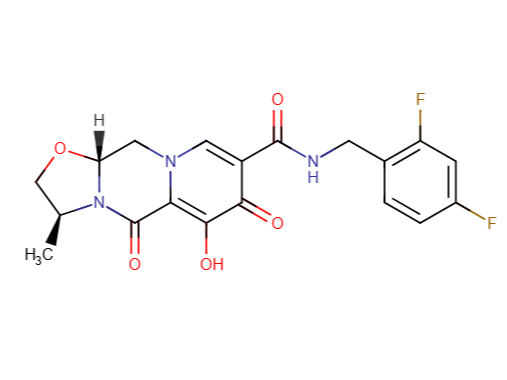
Drug structure
Scale-up and manufacturing prospects
VH4367310 (VH-310), a cabotegravir (CAB) prodrug is currently in preclinical development, therefore detailed manufacturing and scale-up prospects are not currently available. One formulation (XVIR-110) is a nanocrystalline cabotegravir prodrug that achieves and maintains sustained cabotegravir exposures which support its ongoing development as a potential ultra-long-acting INSTI for HIV PrEP and in-combination for treatment.
Currently unknown
Currently unknown
Currently unknown
Excipients & delivery device(s)
Not provided
Not provided
Not provided
No delivery device
Safety, Efficacy and Evidence Summary
Not provided
Not provided
Not provided
Not provided
Crystalline form of cabotegravir stearate
Crystalline form of cabotegravir stearate with high polymorphic purity and specific characterisation. Method of making said crystalline form and method of use for treatment of HIV
WO2025128496
Salt/crystalline form
ViiV (licensed from Exavir)
License agreement with Exavir
December 10, 2044
National phase not entered yet, 30 months deadline on 12 June 2026
Compositions of cabotegravir stearate
Compositions of cabotegravir stearate formulated with poloxamer P338 and a stabilizer selected from the group consisting of sodium carboxymethylcellulose (NaCMC), polyvinylpyrrolidone (PVP), polyethylene glycol 3350 and polyethylene glycol 4000. Method of treatment and dosing regimen to treat HIV
WO2025128498
Formulation, Method of treatment, Dosing Regimen
ViiV (licensed from Exavir)
License agreement with Exavir
December 10, 2044
National phase not entered yet, 30 months deadline on 12 June 2026
Crystalline forms of cabotegravir stearate
Crystalline forms of cabotegravir stearate, mixture of crystalline forms, and methods of using the same in the treatment of viral infections including HIV
WO2024196661
Crystalline forms
Exavir Therapeutics, Inc.
Not provided
March 13, 2044
Not yet in National Phase, entry deadline on the 17.09.2025
Compositions containing a crystalline form of cabotegravir stearate and a cryoprotectant
Pharmaceutical compositions containing a crystalline form of cabotegravir stearate and a cryoprotectant, method using of injecting intramuscularly said composition to treat HIV infection, and process for preparation of said composition as a suspension
WO2024196662
Composition
Exavir Therapeutics, Inc.
Not provided
March 13, 2044
Not yet in National Phase, entry deadline on the 17.09.2025
Cabotegravir stearate nanoparticle and use to treat HIV
Prodrug compound of cabotegravir and other integrase inhibitors, crystalline nanoparticle of said prodrug, and use thereof to treat HIV
WO2020086555
Compound
Board of the Regents of the University of Nebraska
Not provided
October 22, 2039
Granted: CN, US, MX, EP (BE, CH, CY, DE, ES, FI, FR, GB, HU, IE, IT, LI, LU, MC, MT, NL, RO), SA, EA (AM, AZ, BY, KG, KZ, RU, TJ, TM) Pending: AU, BR, CA, EG, HK, ID, IL, JP, KR, MY, NZ, PH, SG Not in force: AT, BG, CZ, DK, EE, GR, HR, IS, LT, LV, NO, PT, RS, SE, SI, SK, SM, TR, IN, , KH, MA, MD, TN, BA, ME