Drug name
Last update: Jul 2026Depulfavirine nanosphere LAI
Developer(s)
Drug information
Depulfavirine; VM-1500A-LAI
Depulfavirine
Small molecule
Diphenylether Non-nucleoside reverse transcriptase Allosteric inhibitor
Depulfavirine (VM1500A) is a second-generation allosteric non-nucleoside reverse transcriptase inhibitor (NNRTI). Its prodrug, elsulfavirine (ESV), has been authorised for the treatment of HIV-1 infection in several Eurasian countries as a once-daily oral regimen and has demonstrated favourable antiviral efficacy. Depulfavirine is currently under evaluation in Phase II/III clinical trials (NCT05204394) conducted in Russia. Pharmacokinetic studies indicate that depulfavirine exhibits a prolonged elimination half-life of approximately 5.4–7.4 days. Furthermore, crystalline or polycrystalline nanoparticle formulations (200–900 nm) have been developed for long-acting injectable delivery. In vitro studies have shown potent antiviral activity, with IC₅₀ values for VM1500A against wild-type HIV-1
Under clinical investigation and not approved yet
Under clinical investigation and not approved yet
Therapeutic area(s)
- HIV
- Treatment
Administration route
Intramuscular
Associated long-acting platforms
nanosphere
Use of drug
- Administered by a community health worker
- Administered by a nurse
- Administered by a specialty health worker
- Monthly
Dosage
600 mg; 900 mg IM
900 mg IM
1. Depulfavirine [VM-1500A-LAI] 600mg IM Q4W with the oral-lead 2 NRTIs daily. 2. Depulfavirine [VM-1500A-LAI] 900mg IM Q4W with the oral-lead 2 NRTIs daily
Not provided
Not provided
Related entries
Not provided
Additional information
Developer(s)

Viriom
Viriom Inc. is a commercial-stage biotechnology firm that focuses on creating and marketing high-efficacy, reasonably priced treatments for cancer and infectious disorders. Viriom Inc. was founded in 2009 as a spin-out of the Russian R&D group ChemRar High Tech Center. Viriom was created especially to create HIV/AIDS-specific medications. It launched by licensing Hoffmann-La Roche drugs.
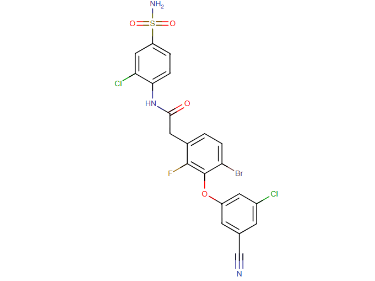
Drug structure
Scale-up and manufacturing prospects
Not provided
1. Rotary jar mill (U.S. Stoneware 700 Series Jar Mill) 2. Grinding jars (milling jars) 3. Zirconia grinding media (Zircon Sand) - 0.5 mm YTZ® Zirconia grinding and dispersion media 4. Refrigerated storage 5. Filtration apparatus 6. Particle size analyzer (Malvern Zetasizer Nano ZS)
Manufacturing process and considerations: 1. Aqueous solution containing poloxamer + saccharide 2. Add Crystalline Depulfavirine in the aqueous phase 3. Wet Nanomelling with zirconia for 24 h at ~104 rpm 3. Settling: 16–20 h at 2–8 °C 4. Lyophilisation of nanosuspension forming stable dry nanospore cake 5. Filtration to remove grinding media 5. Freeze drying and reconstitution
1. HPLC–MS/MS System
Excipients & delivery device(s)
Not provided
1. Poloxamer P338 2. Mannitol or saccharose 3. Phosphate buffered saline (PBS), water for injection
Not provided
No delivery device
Safety, Efficacy and Evidence Summary
Not provided
Not provided
Not provided
Not provided
PHARMACEUTICAL NANOSUSPENSION FOR THE THERAPY OF HIV INFECTION
The present invention relates to a pharmaceutical composition (nanosuspension) for a long-acting injectable (LAI) drug for the long-term maintenance therapy of HIV/AIDS. A pharmaceutical nanosuspension for use as an injectable drug for the long-term maintenance therapy of HIV infection is claimed, comprising a composition that contains, as an active ingredient, a compound of general formula 1 in crystalline or polycrystalline form, in which R is C2H5CON-Na+, NH2.
EP3643304A1
Not provided
VIRIOM INC
Not provided
February 14, 2038
Anticipated expiration
Substituted 3,4,12,12a-Tetrahydro-1H-[1,4]Oxazino[3,4-c]Pyrido[2,1-f][1,2,4]Triazine-6,8-dione, Pharmaceutical Composition, Method for the Production and Use Thereof
Substituted 3,4,12,12a-tetrahydro-1H-[1,4]-oxazino[3,4-c]pyrido[2,1-f][1,2,4]triazine-6,8-dione of general formula 1, its stereoisomer, their prodrug, pharmaceutically acceptable salt, solvate, hydrate, and a crystalline or polycrystalline form thereofwhere:R1 is diphenylmethyl, bis(4-fluorophenyl)methyl, (3,4-difluorophenyl)(phenyl)methyl, (3,4-difluorophenyl)(2-methylsulfanylphenyl)methyl;R2 is hydrogen or a {[(C1-C3alkyl)oxycarbonyl]-oxy}methoxy and stereoisomers thereof.
US20240383919A1
Not provided
Viriom Inc
Not provided
Not provided
Pending