Technology name
Last update: Oct 2026Poloxamer-poly(acrylic acid)-based thermoresponsive LAI technology
Sponsor(s)
Not specified
Type of technology
Polymer-based particles
Administration route
Intramuscular
Development state and regulatory approval
Drugs for treatment of tuberculosis
Pre-clinical
Not provided
Description
The SnPPIX thermoresponsive injectable formulation (SnPPIX-TIF) is an advanced drug delivery platform for managing tuberculosis: 1) Pharmacology: It delivers tin protoporphyrin IX, an immunomodulating host-directed therapy that activates host defenses rather than directly targeting the pathogen. 2) Formulation: The microparticulate poloxamer-poly(acrylic acid) carrier is liquid at room temperature for easy injection but forms a localized solid gel at body temperature. 3) Kinetics: It vastly improves the drug's half-life and overall absorption, allowing for once-weekly dose adminstration
Developer(s)

National Institute of Allergy and Infectious Diseases (NIAID)
The National Institute of Allergy and Infectious Diseases (NIAID) is a major component of the U.S. National Institutes of Health (NIH). It is primarily responsible for conducting and funding research to understand, treat, and prevent infectious, immunologic, and allergic diseases. Approximately $6.5 to $6.6 billion, which goes toward internal (intramural) labs and external research grants.
Technology highlight
The SnPPIX thermoresponsive injectable formulation (SnPPIX-TIF) is a cutting-edge platform engineered for tuberculosis management. The technology relies on a microparticulate poloxamer-poly(acrylic acid) polymeric carrier that is liquid at room temperature, ensuring rapid and effortless syringeability. Following intramuscular administration, it undergoes an immediate phase transition at body temperature, forming a localized solid gel depot. This depot strategically delivers tin protoporphyrin IX (SnPPIX), a potent host-directed therapy that boosts immune defenses instead of directly attacking the pathogen, circumventing drug resistance. By significantly improving pharmacokinetic profiles and sustaining drug release, SnPPIX-TIF enables convenient, safe and effective weekly dosing regimen.
Illustration(s)
Technology main components
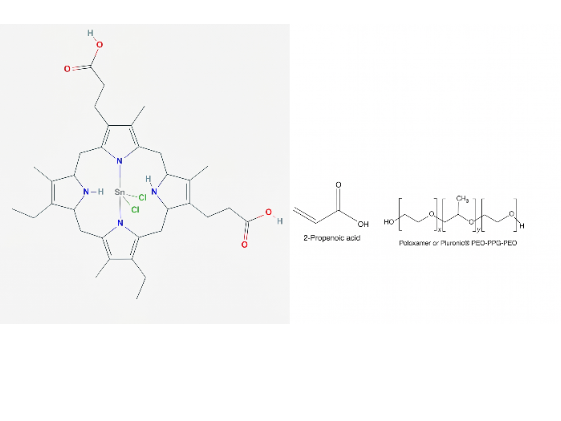
The main components of the SnPPIX thermoresponsive injectable formulation (SnPPIX-TIF) include: 1) Tin Protoporphyrin IX (SnPPIX): The active therapeutic agent that functions as an immunomodulatory, host-directed therapy. 2) Poloxamer: A temperature-sensitive polymer that enables the formulation to remain liquid at room temperature and transition into a gel at body temperature. 3) Poly(acrylic acid): A polymer integrated with the poloxamer to form the structural microparticulate carrier matrix that encapsulates the drug and controls its release.
Not provided
Safety, Efficacy and Evidence Summary
Histopathological evaluation revealed no TEAE safety concerns in preclinical animal studies.
1) Mean bacterial colony-forming unit (CFU) loads in the IM SnPPIX-TIF-treated cohort were 5.8 logs. This was significantly lower (p< 0.0001) than the average values recorded for untreated infected animals (7.2 logs) and placebo-TIF treated animals (7.4 logs).
Preclinical histopathological evaluations identified no treatment-related safety concerns. Furthermore, once-weekly intramuscular administration of the SnPPIX-TIF formulation demonstrated antimicrobial efficacy comparable to that of daily intramuscular injections of the aqueous SnPPIX formulation (SnPPIX-WBS), achieving a 6.0-log reduction in bacterial burden. Overall, treatment with SnPPIX-TIF reduced pulmonary bacterial loads by more than 1 log, supporting its potential as a less frequent dosing strategy without compromising therapeutic efficacy.
Not provided
APIs compatibility profile
Tin Protoporphyrin IX is currently being evaluated using a thermoresponsive injectable delivery platform. Based on available preclinical evidence, this platform may have broader applicability for the delivery of other small-molecule therapeutics, including candidates targeting HIV and tuberculosis. Further research is warranted to assess the feasibility, safety, and efficacy of incorporating these agents into the platform.
Not provided
Not provided
50-75 wt%
1 single API :
Min: -1 Max: 5
Scale-up and manufacturing prospects
Not provided
1) ULTRA-TURRAX Tube Drive Control Disperser (IKA Works, Inc., Wilmington, NC, USA) 2) 0.22 µm Whatman cellulose acetate membrane syringe filter (Cytiva, MA, USA) 3) Biosafety Cabinet 4) Refrigerator
The thermoresponsive injectable formulation can be manufactured using a scalable cold-process method, whereby poloxamer 407 and sodium polyacrylate are dissolved under controlled low-temperature conditions prior to direct incorporation of the active pharmaceutical ingredient. Critical quality attributes include polymer concentration, gelation temperature, viscosity, syringeability, injectability, particle size distribution, and drug content uniformity. Sterile manufacturing and aseptic filtration are essential for parenteral administration. Process controls should ensure batch-to-batch consist
1) Differential Scanning Calorimetry (DSC) 2) Rotational rheometers 3) High-Performance Liquid Chromatography (HPLC) or UPLC 4) Dynamic Light Scattering (DLS) 5) UV-Vis spectrophotometry
Excipients & delivery device(s)
No proprietary excipient used
1) Poloxamer 2) Poly(acrylic acid)
Not provided
Not provided
Additional features
- Biodegradable
The encapsulation of the drug within the thermoresponsive polymeric carrier notably delays and improves in vivo drug release and absorption. The prolonged release profile significantly enhances overall bioavailability over 24 hours compared to conventional water-based solutions, demonstrating a higher AUC0-24 (575.10 - 38.51 mcg h/mL), maximum plasma concentration (Cmax=46.50-11.80 mcg/mL), time to peak concentration (tmax=1 h), and an extended half-life (t1/2=2.77 h).
This technology is intended to be adminstered by intramuscular route (IM) through 25G hypodermic needle equipped with a 1 mL syringe.
Not provided
Not provided
Therapeutic area(s)
- TB
- Treatment
Potential associated API(s)
- Drugs for treatment of tuberculosis
Use of technology
- Administered by a community health worker
- Administered by a nurse
- Administered by a specialty health worker
Weekly
Targeted user groups
- Adults
- Older Adults
- All
Unspecified
Unspecified
Unspecified
Not provided
Drugs for treatment of tuberculosis
Heme oxygenase-1 inhibitor
Pre-clinical
Not provided
Tuberculosis
Not provided
Once weekly
Not provided
There are either no relevant patents or these were not yet submitted to LAPaL
Partnerships

All sponsors
No sponsor indicated