Drug name
Last update: Aug 2026Nirsevimab
Developer(s)
Drug information
Not provided
Nirsevimab
Beyfortus
Biotherapeutic
Not provided
Not provided
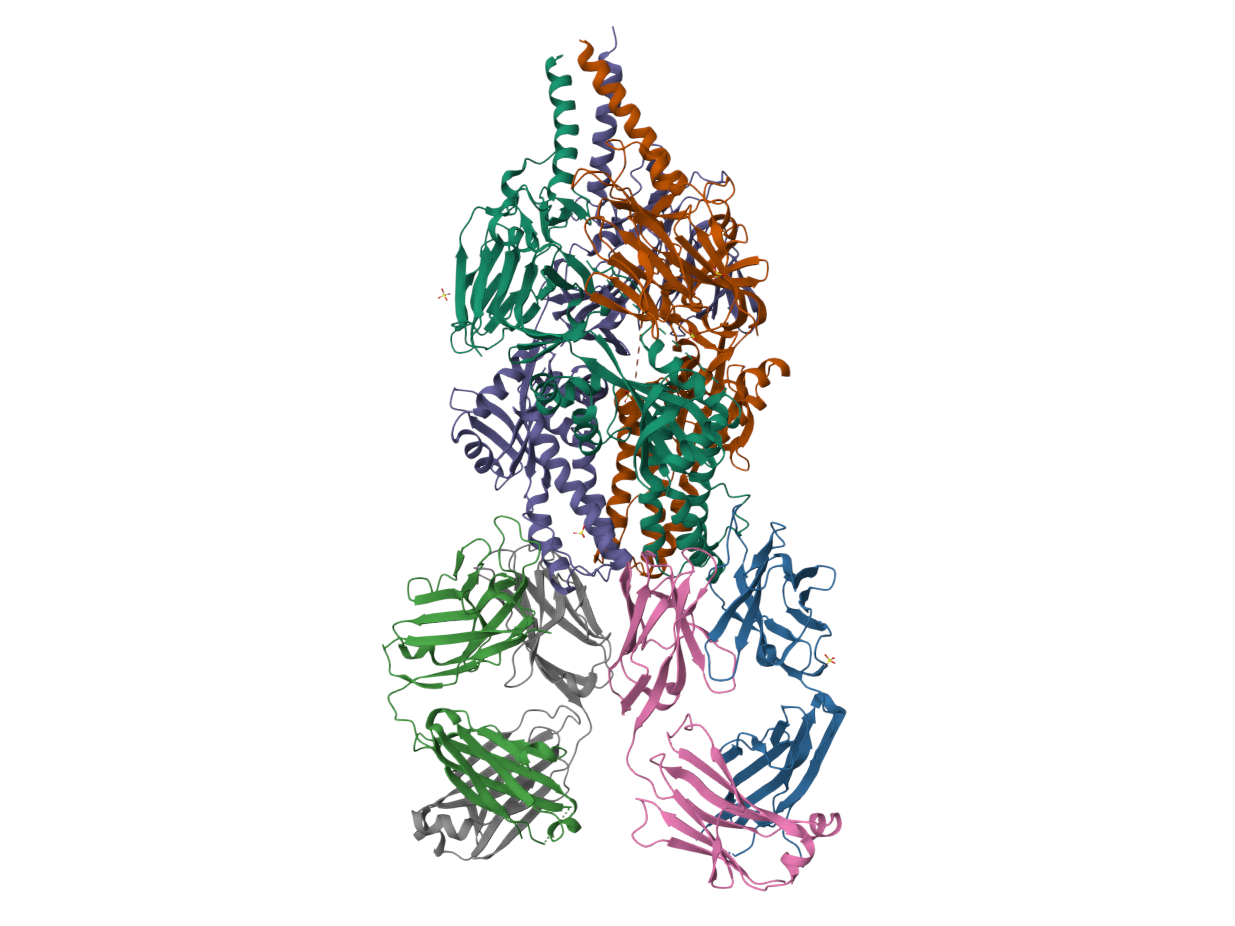
Nirsevimab (MEDI8897) is a recombinant human IgG1 kappa monoclonal antibody used for the treatment of Respiratory Syncytial Virus (RSV), which is a major cause of acute lower respiratory infection and hospitalisation in young children and infants. Nirsevimab acts to block viral entry into the host cell by targeting the RSV fusion (F) protein and binding to a highly conserved epitope located within the F1 and F2 subunits. Nirsevimab neutralises RSV-A and -B strains with >50-fold greater efficacy than palivizumab and possesses an extended half-life (68.7±10.9 days) through the introduction of a triple amino acid substitution (YTE) in the Fc region. Given its favourable safety profile, nirsevimab may provide a cost-effective option for RSV prophylaxis that supports once-per-season IM dosing.
Beyfortus (nirsevimab-alip) (100 mg/mL), available in 0.5 mL and 1 mL extended-release single-dose intramuscular injections, has been approved by several regulatory authorities for the prevention of lower respiratory tract disease caused by Respiratory Syncytial Virus (RSV) in neonates and infants during their initial RSV season and for children up to 24 months of age. Real world data from a number of countries have confirmed and even surpassed the outstanding efficacy data generated during the clinical development of this monoclonal antibody.
Beyfortus has received Fast Track Designation from the USFDA and European Marketing Authorisation from EMA. It was first approved by EMA and the UK in the year 2022 followed by other countries. Beyfortus has now been launched in more than 20 countries. Many more countries are expected to implement all-infant protection in the future.
Therapeutic area(s)
- Respiratory syncytial virus (RSV)
- Prevention
Administration route
Intramuscular
Associated long-acting platforms
Monoclonal antibodies and antibody drug conjugates
Use of drug
- Administered by a nurse
- Administered by a specialty health worker
- Administered by a community health worker
- Once
Dosage
Solution for injection in pre-filled syringes with 50 mg in 0.5 ml and 100 mg in 1 ml (100 mg/ml)
The recommended dose is a single dose of 200 mg, administered as two intramuscular injections (2 x 100 mg)
The recommended dose for infants weighing less than 5 kg is a single dose of 50 mg. For infants weighing 5 kg or more, the recommended single dose is 100 ml
For toddlers who remain vulnerable to severe RSV disease after the first immunisation with Beyfortus, the paediatrician will recommend a further dose in the second RSV season.
Related entries
Not provided
Additional information
Developer(s)
AstraZeneca
AstraZeneca plc (AZ), is a British-Swedish multinational biopharmaceutical company headquartered in Cambridge, UK. Their product portfolio targets a diverse array of pathologies, including oncology, cardiovascular diseases, gastrointestinal conditions, infectious agents and neurological disorders. Notably, they partnered with Oxford University to develop the ChAdOx1 nCoV-19 vaccine.

Sanofi
Sanofi S.A. is a leading French multinational pharmaceutical and healthcare company headquartered in Paris, France. Established in 1973, Sanofi researches, develops, manufactures and markets of a broad portfolio of pharmaceutical products encompassing several therapeutic areas, including: diabetes, internal medicine, cardiovascular disease, neurology, oncology, thrombosis and vaccines.
Drug structure
Scale-up and manufacturing prospects
General manufacturing requirements and production scale-up for therapeutic monoclonal antibody (mAb) products is primarily focused on pharmacokinetic suitability, formulation stability and the overall maintenance of product quality. Industrial bioprocessing steps can also potentially introduce additional challenges regarding mAb formulation viscosity and aggregation propensity.
Industrial bioreactor vessel with a production volume capacity of between 5-25kL. Continuous disc stack centrifuges for bioreactor harvesting with subsequent membrane and depth filtration for supernatant clarification. Recombinant protein-A chromatography or other suitable affinity capture apparatus followed by two chromatographic polishing steps such as cation- and anion-exchange. Ultrafiltration membrane system to concentrate and formulate the final product.
monoclonal antibodies are highly dependent on their structural, chemical and conformational stability for biological activity. Chemical degradation of mAbs during manufacture can lead to the generation of product variants and complex impurity profiles resulting from a wide range of processes, including: N-linked glycosylation, isomerisation, fragmentation, deamidation, oxidation and C-terminal lysine clipping. Additionally prior to packaging, the final product requires close monitoring for the presence of residual contaminants such as endotoxins and pro-inflammatory peptidoglycans.
Formulation characterisation steps for therapeutic mAb products include (but are not limited to): (1) Identification of post-translational modifications using ion-exchange chromatography and capillary isoelectric focusing, (2) Measurement of concentration dependent aggregation rates via thermal differential scanning calorimetry, sub-visible particle quantitation and size-exclusion chromatography, and (3) Antibody clipping and fragmentation detection by capillary electrophoresis.
Excipients & delivery device(s)
No proprietary excipient used
No novel excipient or existing excipient used
No residual solvent used
No delivery device
Safety, Efficacy and Evidence Summary
Not provided
Not provided
Not provided
Not provided