
|
Developed by 

|
Supported by 


|
POZ™ polymer LAI
Developer(s)

|
Serina Therapeutics Originator
https://www.serinatx.com/
United States of America Serina Therapeutics is a clinical-stage biotechnology company that develops next-generation polymer science to optimize drug delivery. Founded in 2006 and headquartered in Huntsville, Alabama, the company primarily targets neurological diseases, central nervous system (CNS) indications, and pain management. It has a proprietary polymer platform technology which is under clincial investigations. |
Sponsor(s)
|
No sponsor indicated |
Partnerships

|
Enable Injections, Inc. https://enableinjections.com/ |
Technology information
Type of technology
Polymer-based particles, Monoclonal antibodies and antibody drug conjugates
Administration route
Subcutaneous
Development state and regulatory approval
apomorphine
Not provided
Under clinical investigation
Description
The POZ platform technology is based on poly(2-oxazoline), a water-soluble, low-viscosity polymer designed to enable the sustained delivery of drugs with narrow therapeutic indices. Although initially developed for small-molecule applications, the platform is adaptable to a broad range of substrates, including proteins, lipid nanoparticles, and antibody–drug conjugates (ADCs). The release kinetics of the API can be modulated through deliberate structural modifications of the POZ polymer, allowing fine control over drug release rates. This results in a near-liner PK profile of the API.
Technology highlight
1) Non-immunogenic 2) Simple one pot synthesis of the POZ polymer 3) Higher API loading capacity 4) Customizable PK profiling by modulating the polymer characteristics
Technology main components
POZ is connected to API via pendant groups and a degradable linker. Components of POZ drug conjugate includes: 1) Poly 2-oxazoline (POZ) polymer backbone 2) API (small molecules, proteins and peptides) 3) Linker (eg: 3‑propionate, carboxylate ester, carbonate ester, carbamate, amid, disulfide, peptides) 4) Pendant groups (eg: R, X) - i) hydrophobic pendant group ii) hydrophilic pendant group 5) Solvents / vehicles (Water, saline, oils) 6) Solid carriers (Gum acacia, gelatin, starch paste, talc, keratin, colloidal silica, urea 7) Functional excipients (formulation aids)- Stabilizers, Thickening agents, Lubricating agents, Flavoring agents
Information on the raw materials sourcing, availability and anticipated price
Not available
Delivery device(s)
Not provided
APIs compatibility profile
API desired features
Water-soluble molecules
Water-insoluble molecules
Small molecules
API list includes, but is not limited to, a therapeutic agent (such as but not limited to a drug), a diagnostic agent, and an organic small molecule. Further API can be hydrophobic in nature. Typically, a hydrophilic APIs with one or more oxygen, nitrogen, sulfur, and/or phosphorous atoms and/or one or more polar covalent bonds can also be encorporated into POZ conjugated complex. Compounds such as apomorphine, buprenorphine, rotigotine, dexanabinol, cannabidiol, tetrahydrocannabinol, cannabigerol, and other dopamine agonists are the first choice for POZ technology.
Additional solubility data
Not provided
Additional stability data
Not provided
API loading: Maximum drug quantity to be loaded
75-90 wt%
API co-administration
1 single API :
LogP
Min: 0.5 Max: 8
Scale-up and manufacturing prospects
Scale-up prospects
The main synthesis and development of the proprietary POZ polymers occur at their Huntsville, Alabama laboratory, United States of America.
Tentative equipment list for manufacturing
1. Standard organic synthesis reactors (flasks/reactors) 2. Magnetic/overhead stirrers 3. Temperature-controlled reaction baths 4. Dropping funnels / dosing pumps 5. pH adjustment setup (pH meter)
Manufacturing
1. POZ polymer synthesis: Initiator (e.g., HOTf or alkyl initiator); organic solvent (e.g., chlorobenzene) ~80 °C 2. Introduction of functional (pendant) groups 3. Polymer termination 4. Drug–linker synthesis 5. Conjugation (key step): Click chemistry (Cu(I)-catalyzed azide–alkyne cycloaddition) 6. Purification
Specific analytical instrument required for characterization of formulation
1. GPC (Gel permeation chromatography) → MW, PDI 2. ¹H NMR (Nuclear Magnetic Chromatography) → drug loading, structure 3. HPLC/LC-MS (High Permeation Liquid Chromatography - Mass Spectrometry)
Clinical trials
SER-214 Ia
Identifier
NCT02579473
Link
https://clinicaltrials.gov/study/NCT02579473
Phase
Phase I
Status
Unknown status
Sponsor
Serina Therapeutics
More details
SER-214 is a poly (2-ethyl-2oxazoline)(POZ) polymer conjugate of rotigotine, a potent dopamine agonist that has high affinity for the subclass of dopamine receptors in the brain that mediate dopamine signaling. SER-214 will be administered subcutaneously once a week via a standard 1 mL insulin syringe to determine the safety, tolerability and pharmacokinetic (PK) profile of released rotigotine and POZ-conjugate. Subjects in this study are eligible if they have early, stable or untreated Parkinson's disease and are still experiencing motor fluctuations.
Purpose
A Study of Weekly Subcutaneous Injections of SER-214 in Subjects With Parkinson's Disease (PD), to Determine the Safety, Tolerability and Pharmacokinetic (PK) Profile of SER-214
Interventions
Intervention 1
Countries
Sites / Institutions
Not provided
Trials dates
Anticipated Start Date
Not provided
Actual Start Date
2016-01-01
Anticipated Date of Last Follow-up
2023-04-10
Estimated Primary Completion Date
2023-12-31
Estimated Completion Date
2023-12-31
Actual Primary Completion Date
Not provided
Actual Completion Date
Not provided
Studied populations
Age Cohort
- Adults
- Older Adults
Genders
- All
Accepts pregnant individuals
Unspecified
Accepts lactating individuals
Unspecified
Accepts healthy individuals
No
Comments about the studied populations
Inclusion Criteria: 1. Female or male subjects 40-80 years of age inclusive 2. A diagnosis of idiopathic Parkinson's disease (PD) consistent with UK brain bank criteria 3. De novo PD patients and those on a stable regimen of anti-Parkinson's drugs for at least 4weeks prior to screening including anticholingerics, amantadine, MAO-B inhibitors, COMT inhibitors or levodopa, but not dopamine agonists 4. Free of clinically significant motor complications as determined by the investigator 5. Ability to complete up to four weeks of dosing once per week with two weeks of terminal "wash-out" PK 6. Ability to return to the clinic for blood sampling, clinical and laboratory assessment on scheduled days, based upon cohort 7. Mini Mental State Exam (MMSE) \> 26 8. Women of child-bearing potential (WOC
Health status
Not provided
Study type
Interventional (clinical trial)
Enrollment
20
Allocation
Not provided
Intervention model
Parallel Assignment
Intervention model description
Not provided
Masking
Open label
Masking description
Not provided
Frequency of administration
Studied LA-formulation(s)
Studied route(s) of administration
Use case
Treatment
Indication(s)
Mental Health Disorders (incl. schizophrenia, bipolar disorders, Schiz. Aff. Dis.)
Key resources
SER-252-1b
Identifier
NCT07422675
Link
https://clinicaltrials.gov/study/NCT07422675
Phase
Phase I
Status
Recruiting
Sponsor
Serina Therapeutics
More details
This is a randomized, placebo-controlled, single ascending dose (SAD) study of SER-252 in participants with Parkinson's Disease (PD) and motor fluctuations.
Purpose
SAD Study in Patients With Parkinson's Disease and Motor Fluctuations
Interventions
Intervention 1
Intervention 2
Countries
Sites / Institutions
Not provided
Trials dates
Anticipated Start Date
Not provided
Actual Start Date
2026-02-01
Anticipated Date of Last Follow-up
2026-06-03
Estimated Primary Completion Date
2027-01-31
Estimated Completion Date
2027-01-31
Actual Primary Completion Date
Not provided
Actual Completion Date
Not provided
Studied populations
Age Cohort
- Adults
- Older Adults
Genders
- All
Accepts pregnant individuals
Unspecified
Accepts lactating individuals
Unspecified
Accepts healthy individuals
No
Comments about the studied populations
Inclusion criteria 1. Female or male participants 40-80 years of age, inclusive, at the time of screening 2. Diagnosis of idiopathic Parkinson's disease consistent with UK Brain Bank and MDS Research Criteria; must include bradykinesia with sequence effect, motor asymmetry if no rest tremor, and a reliable, visible response to levodopa 3. On a stable regimen of anti-Parkinsonian medication for at least 4 weeks prior to Screening; MAOBIs must be stable for at least 12 weeks prior to Screening 4. Routine early-morning OFF, corroborated by investigator interview at Screening 5. Presence of a total daily OFF time duration of ≥2 hours during the waking day based on participant self-assessment and Investigator's judgment 6. \*Hoehn and Yahr scale ≤ 3 in the ON state during screening (\*part of
Health status
Not provided
Study type
Interventional (clinical trial)
Enrollment
40
Allocation
Randomized
Intervention model
Parallel Assignment
Intervention model description
Not provided
Masking
Double-blind masking
Masking description
Not provided
Frequency of administration
Not provided
Studied LA-formulation(s)
Not provided
Studied route(s) of administration
Not provided
Use case
Not provided
Indication(s)
Mental Health Disorders (incl. schizophrenia, bipolar disorders, Schiz. Aff. Dis.)
Key resources
Excipients
Proprietary excipients used
Not provided
Novel excipients or existing excipients at a concentration above Inactive Ingredients Database (IID) for the specified route of administration
Not provided
Residual solvents used
Not provided
Additional features
Other features of the technology
- Biodegradable
Release properties
API release occurs via slow hydrolysis of the POZ–drug linker. The release rate is governed by: (i) polymer conformation, where a compact structure reduces water/enzyme access and prolongs t½, while a loose structure accelerates release; (ii) polymer molecular weight, with >20 kDa increasing steric shielding and t½, and <20 kDa enabling faster hydrolysis; and (iii) linker structure, where steric and electronic properties modulate hydrolytic stability and thus drug release kinetics.
Injectability
Yes. POZ platform can be adminstered through subcutaneous and intramuscular routes
Stability
The stability of the POZ polymer in the human plasma is approximately 55 hours (more exposed systems) upto 87 hours (more shielded systems).
Storage conditions and cold-chain related features
No stability and storage studies have been conducted yet.
Safety, Efficacy and Evidence Summary
Safety
No safety data has been reported yet.
Efficacy
Not provided
Evidence Summary
Not provided
Potential application(s)
Therapeutic area(s)
Use case(s)
Use of technology
Ease of administration
- Self-administered
- To be determined
- Administered by a community health worker
- Administered by a nurse
- Administered by a specialty health worker
Frequency of administration
Weekly
User acceptance
Targeted user groups
Age Cohort- Adults
- All
Pregnant individuals
Unspecified
Lactating individuals
Unspecified
Healthy individuals
Unspecified
Comment
Not provided
Potential associated API(s)
apomorphine
Class(es)
Dopamine agonists
Development stage
Not provided
Clinical trial(s)
Not provided
Foreseen/approved indication(s)
Parkinson’s Disease
Foreseen user group
Adults (40-80 years of age) with idiopathic Parkinson's disease
Foreseen duration between application(s)
Once weekly
Applications to Stringent Regulatory Authorities (SRA) / regulatory approvals
Under clinical investigation
SER-270
Class(es)
VMAT2 inhibitor
Development stage
Not provided
Clinical trial(s)
Not provided
Foreseen/approved indication(s)
Tardive Dyskinesia & Huntington’s Chorea
Foreseen user group
Not provided
Foreseen duration between application(s)
Once weekly
Applications to Stringent Regulatory Authorities (SRA) / regulatory approvals
Under clinical investigation
Monoclonal antibodies and antibody drug conjugates
Class(es)
Antibody drug conjugates
Development stage
Pre-clinical
Clinical trial(s)
Not provided
Foreseen/approved indication(s)
Cancer therapy
Foreseen user group
Not provided
Foreseen duration between application(s)
Not provided
Applications to Stringent Regulatory Authorities (SRA) / regulatory approvals
Not provided
small interfering RNAs (siRNAs), C-FNP (Chemosensitizing siRNA), T-FNP (Immune-modulating siRNA), microRNAs
Class(es)
RNA therapeutics
Development stage
Pre-clinical
Clinical trial(s)
Not provided
Foreseen/approved indication(s)
Gene therapy, antinfectious diseases, cancer-immunotherapy
Foreseen user group
Not provided
Foreseen duration between application(s)
Not provided
Applications to Stringent Regulatory Authorities (SRA) / regulatory approvals
Not provided
Patent info
Description
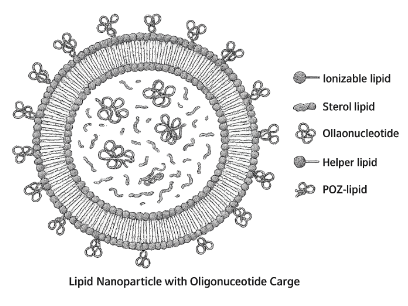
Polyoxazoline-lipid conjugates and lipid nanoparticles and pharmaceutical compositions including same
Brief description
POZ - lipid conjugates and lipid nanoparticles ( LNPs ) including POZ - lipid conjugates used to facilitate delivery of an encapsulated payload . LNPs including POZ - lipid conjugates and a nucleic acid payload such as , but not limited to, mRNA or modified mRNA are disclosed . Such LNPs have no immunogenicity or reduced immunogenicity as compared to a coorresponding LNP containing a PEG-lipid. pared to a corresponding LNP containing a PEG - lipid
Representative patent
US20220249695A1
Category
Composition
Patent holder
Serina Therapeutics Inc
Exclusivity
Not provided
Expiration date
May 23, 2042
Status
Active
Description
Subcutaneous delivery of poly(oxazoline) polymer conjugates
Brief description
The present disclosure provides polymer conjugates comprising a polymer and an agent, the agent linked to the polymer via a linking group containing a hydrolyzable moiety
Representative patent
US11224595B2
Category
Composition
Patent holder
Serina Therapeutics Inc
Exclusivity
Not provided
Expiration date
June 18, 2032
Status
Active
Supporting material
Publications
There are no publication
Additional documents
No documents were uploaded
Useful links
There are no additional links
Additional information
Illustrations
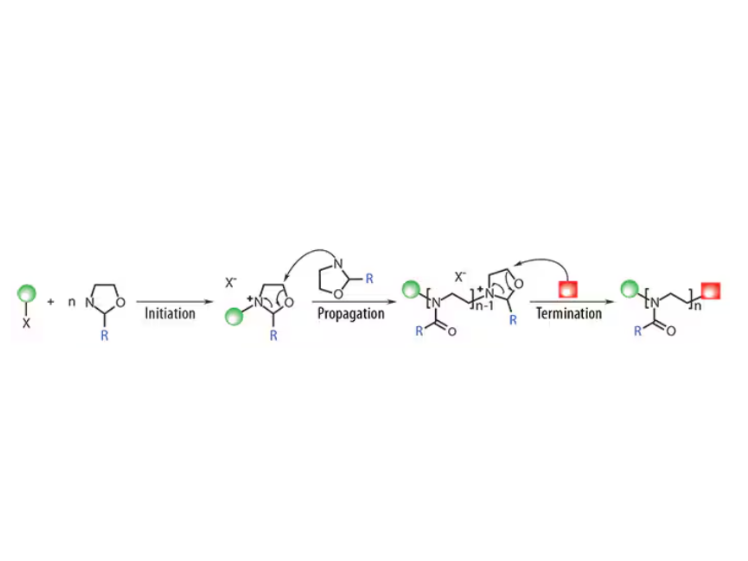
Living Cationic Ring-opening Polymerization of 2-oxazolines. Both alpha and omega termini can be functionalized by the selection of initiator (tosylate in the scheme) and terminating agent.
https://www.sigmaaldrich.com/GB/en/technical-documents/technical-article/materials-science-and-engineering/drug-delivery/poly-2-oxazoline?srsltid=AfmBOooOUrBO6YzFM_G672gT76YmhKQUnk_vud7ikcdrrsaEGJfR8hef
POZ - lipid conjugates with Olgonucleotide carge structure (adapted)
https://patentimages.storage.googleapis.com/77/9a/ea/3fa43960fd50b6/US20220249695A1.pdf