
|
Developed by 

|
Supported by 


|
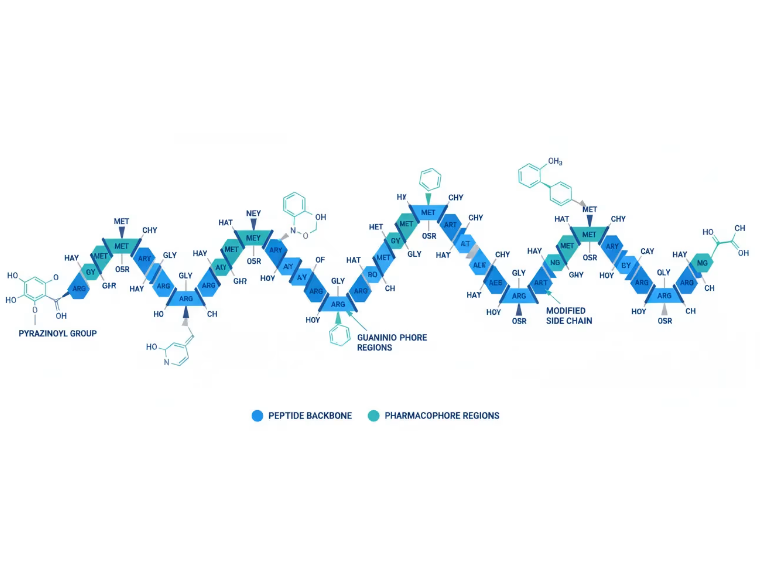
HALO Technology
Developer(s)
|
Metsera Originator
http://metsera.com/
United States of America Metsera is a recent (2022) biotechnology startup that rapidly grew due to its innovative obesity drug pipeline. Within just a few years, it progressed from early development to IPO and major acquisition by Pfizer, highlighting the high strategic importance of obesity therapeutics in the pharmaceutical industry. In October 2025, merging of Metsera with Pfizer was completed. |

|
Pfizer Originator
https://www.pfizer.com/
United States of America Pfizer is a global biopharmaceutical company headquartered in New York, USA, and is one of the world’s leading developers of innovative medicines and vaccines. Founded in 1849, Pfizer focuses on key therapeutic areas such as oncology, vaccines, internal medicine, and inflammation, with the goal of improving health and extending life worldwide. |
Sponsor(s)
|
No sponsor indicated |
Partnerships
|
No partner indicated |
Technology information
Type of technology
peptide lipidation technology
Administration route
Subcutaneous, Oral
Development state and regulatory approval
Glucagon-like peptide-1 (GLP-1) analogues and associated (GLP-1)
Phase III
Not provided
Description
The HALO (Half-life Augmented Ligand Oligomer) is a peptide lipidation–based drug delivery technology designed to extend the PK of peptide therapeutics, particularly glucagon-like peptide‑1 (GLP‑1) analogues. This approach involves the covalent conjugation of lipid moieties to peptide backbones, a process commonly referred to as peptide lipidation. The resulting modified peptides exhibit prolonged systemic exposure due to reduced clearance and enhanced stability, enabling extended dosing intervals. In addition, the sustained pharmacokinetic profile minimizes peak-to-trough fluctuations.
Technology highlight
1. Enhances plasma protein binding, particularly to albumin, thereby increasing systemic retention. 2. Reduces renal clearance, contributing to prolonged circulation time. 3. Improves resistance to enzymatic degradation, including proteolytic cleavage. 4. Enables the development of ultra‑long‑acting peptide therapeutics with extended pharmacokinetic and pharmacodynamic profiles. 5. HALO utilizes proprietary oligonucleotide sequence which reduces renal clearance.
Technology main components
1) Proprietary Oligonucelotide carrier 2) GLP-1 peptide 2) Proprietary Linker (spacer region) 3) Lipid moiety (fatty acid chain) 4) Stabilizing amino acids
Information on the raw materials sourcing, availability and anticipated price
Not provided
Delivery device(s)
No delivery device
APIs compatibility profile
API desired features
Proteins
GLP-1 peptide analogues, NuSH (Nutrient-Stimulated Hormone) analog peptides and other analogues used in the treatment of Overweight and obesity are the targeted molecules for HALO peptide lipidated complex.
Additional solubility data
Not provided
Additional stability data
Not provided
API loading: Maximum drug quantity to be loaded
75-90 wt%
API co-administration
1 single API :
LogP
Not provided
Scale-up and manufacturing prospects
Scale-up prospects
MET-097 (PF-08653944) is planned to be scaled and manufactured by Pfizer, Inc at their Andover, Massachusetts (mammalian cell platform) and Kalamazoo, Michigan (sterile injectables) sites in the United States of America.
Tentative equipment list for manufacturing
Not provided
Manufacturing
Not provided
Specific analytical instrument required for characterization of formulation
Not provided
Clinical trials
C6491016
Identifier
NCT07400679
Link
https://clinicaltrials.gov/study/NCT07400679
Phase
Phase I
Status
Not provided
Sponsor
Pfizer
More details
This study is being done to learn how the study medicine affects the body and how safe it is for people who take it. The researchers will look at a number of health tests, including blood tests such as calcitonin, amylase, and lipase, because similar medicines have sometimes caused changes in these tests. This study is seeking participants who are: * Adults who are obese or overweight with weight-related health conditions, and * Meet health and other checks assessed by the study doctor. The study team will give a single dose of the study treatment at the clinic to the participants. At each study visit, blood samples will be collected, vital signs will be checked, and the study team will ask about any reactions or health changes. Vital signs are basic measurements that show how well the
Purpose
A Study to Learn How the Study Medicine Called PF-08653944 is Taken up Into the Blood in Adults With Overweight or Obesity
Interventions
Intervention 1
Countries
Sites / Institutions
Not provided
Trials dates
Anticipated Start Date
Not provided
Actual Start Date
2026-02-04
Anticipated Date of Last Follow-up
2026-05-14
Estimated Primary Completion Date
2026-09-18
Estimated Completion Date
2026-09-18
Actual Primary Completion Date
Not provided
Actual Completion Date
Not provided
Studied populations
Age Cohort
- Adults
- Older Adults
Genders
- All
Accepts pregnant individuals
Unspecified
Accepts lactating individuals
Unspecified
Accepts healthy individuals
Yes
Comments about the studied populations
Key Inclusion Criteria: * Participants 18 years of age or older at Screening who are overtly healthy as determined by medical evaluation including medical history, physical examination, laboratory tests, and ECGs. * BMI of 27-45 kg/m2 ; and a total body weight \>50 kg (110 lb). * For Japanese participants only: BMI of 20-45 kg/m2 and a total body weight \>50 kg (110 lb) and must have 4 biological Japanese grandparents who were born in Japan. Key Exclusion Criteria: * Pregnant or breastfeeding women, or those planning pregnancy during the study. * Clinically significant medical conditions including hematologic, renal, endocrine, pulmonary, gastrointestinal (including pancreatitis, gallbladder disease, clinically relevant gastric emptying disorders), cardiovascular, hepatic, psychiatric,
Health status
Not provided
Study type
Interventional (clinical trial)
Enrollment
54
Allocation
Randomized
Intervention model
Parallel Assignment
Intervention model description
Not provided
Masking
Open label
Masking description
Not provided
Frequency of administration
Studied LA-formulation(s)
Studied route(s) of administration
Use case
Treatment
Key resources
C6491009
Identifier
NCT07519135
Link
https://clinicaltrials.gov/study/NCT07519135
Phase
Phase I
Status
Recruiting
Sponsor
Pfizer
More details
This study is being done to learn more about an investigational medicine called PF-08653944. The goal is to understand how the body handles the medicine and to check its safety after a single dose. The study includes adults with normal liver function and adults who have mild, moderate, or severe liver problems. By comparing these groups, researchers want to understand whether liver function changes how the medicine behaves in the body. People who join the study will receive one injection of the study medicine. They will stay at the study clinic for a short time and return for follow-up visits so doctors can do blood tests, physical exams, and safety checks. This study is not expected to provide direct medical benefit to participants. The information collected will help researchers devel
Purpose
A Study to Learn About the Medicine Called PF-08653944 in People With and Without Reduced Liver Function
Interventions
Intervention 1
Countries
Sites / Institutions
Not provided
Trials dates
Anticipated Start Date
Not provided
Actual Start Date
2026-04-15
Anticipated Date of Last Follow-up
2026-04-20
Estimated Primary Completion Date
2027-07-09
Estimated Completion Date
2027-07-09
Actual Primary Completion Date
Not provided
Actual Completion Date
Not provided
Studied populations
Age Cohort
- Adults
- Older Adults
Genders
- All
Accepts pregnant individuals
Unspecified
Accepts lactating individuals
Unspecified
Accepts healthy individuals
Yes
Comments about the studied populations
Inclusion Criteria: * Adults 18 to 75 years of age, male or female. * BMI ≥21 kg/m² and body weight \>50 kg at screening. * Group 1 (without hepatic impairment): * No known or suspected hepatic impairment. * Normal liver function tests (ALT, AST, bilirubin, albumin, PT within normal limits, with protocol-specified exceptions such as Gilbert's syndrome). * Groups 2-4 (with hepatic impairment): * Stable hepatic impairment classified as Child-Pugh Class A (mild), B (moderate), or C (severe). * No clinically significant worsening of hepatic status within 28 days prior to screening. * Women of childbearing potential must not be pregnant or breastfeeding and must agree to use highly effective contraception. Exclusion Criteria: * Clinically significant medical or psychiatric conditio
Health status
Study type
Interventional (clinical trial)
Enrollment
26
Allocation
Not provided
Intervention model
Parallel Assignment
Intervention model description
Not provided
Masking
Open label
Masking description
Not provided
Frequency of administration
Studied LA-formulation(s)
Studied route(s) of administration
Use case
Treatment
Key resources
C6491013
Identifier
NCT07595549
Link
https://clinicaltrials.gov/study/NCT07595549
Phase
Phase III
Status
Recruiting
Sponsor
Pfizer
More details
The purpose of this clinical study is to learn about the effects and safety of berobenatide (PF-08653944). This may help people with overweight or obesity lose weight. People in this study may also have type 2 diabetes. About 950 adults will be in this study. Berobenatide will be compared to a placebo. A placebo does not have any medicine in it but looks just like the medicine being studied. Berobenatide or placebo is given by a shot under the skin in the belly area. The objective of the study is to compare the experiences of people receiving berobenatide to those of the people who do not to assess if the study medicine is effective and safe. People will take part in this study for about 20 months. During this time, they will have about 15 study visits at the site. They will also have 2
Purpose
A Study to Learn About the Study Medicine Called Berobenatide (PF-08653944) in People With Overweight or Obesity
Interventions
Intervention 1
Intervention 2
Countries
Sites / Institutions
Not provided
Trials dates
Anticipated Start Date
2026-06-30
Actual Start Date
2026-06-10
Anticipated Date of Last Follow-up
2026-09-25
Estimated Primary Completion Date
2028-05-04
Estimated Completion Date
2028-06-21
Actual Primary Completion Date
Not provided
Actual Completion Date
Not provided
Studied populations
Age Cohort
- Adults
- Older Adults
Genders
- All
Accepts pregnant individuals
Unspecified
Accepts lactating individuals
Unspecified
Accepts healthy individuals
No
Comments about the studied populations
Inclusion Criteria: * Aged ≥18 years. * BMI of: ≥30 kg/m2 or ≥27.0 kg/m2 to \<30.0 kg/m2 and must have at least 1 of the following weight-related co-morbidities: hypertension, dyslipidemia, obstructive sleep apnea, cardiovascular disease, or T2D. Exclusion Criteria: * Have a self-reported body weight change greater than 5% within 90 days prior to Screening. * Diagnosis of type 1 diabetes or any other form of diabetes other than T2D. * History of acute or chronic pancreatitis. * Personal or family history of medullary thyroid carcinoma (MTC) or multiple endocrine neoplasia type 2 (MEN-2).
Health status
Not provided
Study type
Interventional (clinical trial)
Enrollment
954
Allocation
Randomized
Intervention model
Parallel Assignment
Intervention model description
Not provided
Masking
Double-blind masking
Masking description
Not provided
Frequency of administration
Studied LA-formulation(s)
Studied route(s) of administration
Use case
Treatment
Key resources
SOLIS-1
Identifier
NCT07575932
Link
https://clinicaltrials.gov/study/NCT07575932
Phase
Phase II
Status
Recruiting
Sponsor
Pfizer
More details
This study is being done to learn about the safety and effects of the study drugs, PF-08653945 and PF-08653944, when given alone or together for weight loss, compared to a placebo (a dummy drug that has no active ingredient in it).
Purpose
A Study of PF-08653945 and PF-08653944 in Adults With Overweight or Obesity (SOLIS-1)
Interventions
Intervention 1
Intervention 2
Intervention 3
Countries
Sites / Institutions
Not provided
Trials dates
Anticipated Start Date
Not provided
Actual Start Date
2026-05-11
Anticipated Date of Last Follow-up
2026-06-09
Estimated Primary Completion Date
2027-08-04
Estimated Completion Date
2028-01-05
Actual Primary Completion Date
Not provided
Actual Completion Date
Not provided
Studied populations
Age Cohort
- Adults
- Older Adults
Genders
- All
Accepts pregnant individuals
Unspecified
Accepts lactating individuals
Unspecified
Accepts healthy individuals
No
Comments about the studied populations
Inclusion Criteria: Eligible participants for this study include: * adults aged 18 years or older with * obesity (BMI of 30.0 kg/m2 to 50.0 kg/m2) or with * overweight (BMI of 27.0 kg/m2 to \<30.0 kg/m2) who also have at least 1 prespecified weight-related comorbidity (hypertension, dyslipidemia, cardiovascular disease, or obstructive sleep apnea), at the screening visit. Exclusion Criteria: Participants who are not eligible include those with diabetes mellitus, a body weight change of \>5% or use of weight loss medications in the 12 weeks prior to screening, a history of or plan for surgical treatment for obesity, and those who are unable or unwilling to comply with contraceptive requirements or are pregnant or lactating.
Health status
Study type
Interventional (clinical trial)
Enrollment
872
Allocation
Randomized
Intervention model
Parallel Assignment
Intervention model description
Not provided
Masking
Double-blind masking
Masking description
Not provided
Frequency of administration
Not provided
Studied LA-formulation(s)
Studied route(s) of administration
Use case
Treatment
Key resources
C6491008
Identifier
NCT07400653
Link
https://clinicaltrials.gov/study/NCT07400653
Phase
Phase III
Status
Active, not recruiting
Sponsor
Pfizer
More details
The purpose of this clinical study is to learn about the safety and effects of the study medicine to help adults with obesity or overweight and type 2 diabetes lose weight. Being overweight or obese means carrying too much body weight. Type 2 diabetes is a condition where there is too much sugar in the blood. The study medicine is given by a shot under the skin in the belly area. The participants will be trained to do this at home once every week. About 660 out of 1000 adults will also receive the study medicine and about 330 out of 1000 adults will receive placebo. A placebo does not have any medicine in it but looks just like the medicine being studied. The investigators will compare the experiences of people receiving the study medicine to those of the people who do not. This will hel
Purpose
A Study to Learn About the Study Medicine (PF-08653944) in People With Obesity or Overweight and Type 2 Diabetes (T2D)
Interventions
Intervention 1
Intervention 2
Countries
Sites / Institutions
Not provided
Trials dates
Anticipated Start Date
Not provided
Actual Start Date
2026-02-24
Anticipated Date of Last Follow-up
2026-09-24
Estimated Primary Completion Date
2027-10-12
Estimated Completion Date
2028-05-16
Actual Primary Completion Date
Not provided
Actual Completion Date
Not provided
Studied populations
Age Cohort
- Adults
- Older Adults
Genders
- All
Accepts pregnant individuals
Unspecified
Accepts lactating individuals
Unspecified
Accepts healthy individuals
No
Comments about the studied populations
Inclusion Criteria: * Provision of signed and dated informed consent form (ICF) * Male or female adults, aged ≥18 years * Have a BMI at Screening of ≥27.0 kg/m2 * Have T2DM for at least 6 months before Screening based on participant reported history or documentation of the disease diagnostic criteria * Have HbA1c value between ≥6.5% (48 mmol/mol) and ≤10.0% (86.0 mmol/mol) at Screening with stable therapy for at least 90 days prior to Screening/Visit 1. T2DM may be treated with: --Diet and exercise alone or in combination with: Any oral antidiabetic therapy per local labeling EXCEPT DPP-4 inhibitors. Participant may NOT be on GLP-1 agonists or insulin * Participants must be motivated and willing to: * Self-inject study medication (or be aided by caregiver if needed), * Perform fin
Health status
Study type
Interventional (clinical trial)
Enrollment
1078
Allocation
Randomized
Intervention model
Parallel Assignment
Intervention model description
Not provided
Masking
Double-blind masking
Masking description
Not provided
Frequency of administration
Not provided
Studied LA-formulation(s)
Studied route(s) of administration
Use case
Treatment
Key resources
C6491010
Identifier
NCT07508241
Link
https://clinicaltrials.gov/study/NCT07508241
Phase
Phase I
Status
Recruiting
Sponsor
Pfizer
More details
This study looks at how a study medicine called PF-08653944 affects how quickly the stomach empties food after eating. It is being done in adults who are overweight or have obesity. Participants will receive the study medicine for a short period, and doctors will measure how the medicine moves through the stomach and monitor safety. The goal is to better understand how this medicine works in the body and to check for any side effects. The information from this study may help researchers plan future studies of this medicine.
Purpose
A Study to Learn About the Effect of Study Medicine Called PF-08653944 on How Quickly the Stomach Empties Its Content in Healthy Adults With Overweight or Obesity
Interventions
Intervention 1
Intervention 2
Countries
Sites / Institutions
Not provided
Trials dates
Anticipated Start Date
Not provided
Actual Start Date
2026-03-31
Anticipated Date of Last Follow-up
2026-04-20
Estimated Primary Completion Date
2027-01-27
Estimated Completion Date
2027-01-27
Actual Primary Completion Date
Not provided
Actual Completion Date
Not provided
Studied populations
Age Cohort
- Adults
- Older Adults
Genders
- All
Accepts pregnant individuals
Unspecified
Accepts lactating individuals
Unspecified
Accepts healthy individuals
Yes
Comments about the studied populations
Inclusion Criteria: * Adults ≥18 years at screening, male or female, generally healthy as determined by medical history, physical examination, laboratory tests, and ECG. * Body mass index (BMI) 27-45 kg/m² and body weight \>50 kg (110 lb). * Participants with overweight or obesity Exclusion Criteria: * History or presence of clinically significant medical conditions, including but not limited to: --Cardiovascular, hepatic, renal, pulmonary, endocrine, hematologic, neurologic, gastrointestinal (including pancreatitis or gallbladder disease), or significant psychiatric disorders. * Any form of diabetes, HbA1c ≥6.5%, or fasting plasma glucose ≥126 mg/dL. * Prior exposure to a GLP-1 receptor agonist within 90 days before first dose, or prior participation in a study with PF-08653944.
Health status
Study type
Interventional (clinical trial)
Enrollment
20
Allocation
Not provided
Intervention model
Parallel Assignment
Intervention model description
Not provided
Masking
Open label
Masking description
Not provided
Frequency of administration
Not provided
Studied LA-formulation(s)
Studied route(s) of administration
Use case
Treatment
Key resources
VESPER-4
Identifier
NCT07311850
Link
https://clinicaltrials.gov/study/NCT07311850
Phase
Phase III
Status
Active, not recruiting
Sponsor
Pfizer
More details
This study investigates the efficacy and safety of once weekly injectable MET097 in adult participants with obesity or overweight with weight-related comorbidities excluding T2D. This trial will last for a duration of 84 weeks. The primary endpoint will be assessed after 64 weeks of treatment with the secondary at 84 weeks.
Purpose
Efficacy and Safety of MET097 Once-Weekly in People With Overweight or Obesity
Interventions
Intervention 1
Intervention 2
Countries
Sites / Institutions
Not provided
Trials dates
Anticipated Start Date
Not provided
Actual Start Date
2025-12-19
Anticipated Date of Last Follow-up
2026-09-23
Estimated Primary Completion Date
2027-09-21
Estimated Completion Date
2028-04-25
Actual Primary Completion Date
Not provided
Actual Completion Date
Not provided
Studied populations
Age Cohort
- Adults
- Older Adults
Genders
- All
Accepts pregnant individuals
Unspecified
Accepts lactating individuals
Unspecified
Accepts healthy individuals
No
Comments about the studied populations
Inclusion Criteria: * BMI ≥ 30 kg/m2 or BMI ≥ 27.0 kg/m2 to \<30.0 kg/m2 and presence of at least 1 of the following weight- related comorbidities: Hypertension, dyslipidemia, obstructive sleep apnea, or cardiovascular disease) Exclusion Criteria: * Have any form of diabetes * Have a self-reported body weight change \> 5 kg (11 pounds) within 3 months prior to Screening * Personal or family history of medullary thyroid carcinoma (MTC) or multiple endocrine neoplasia syndrome type 2 (MEN-2) * History of chronic pancreatitis or presence of acute pancreatitis within the past 180 days prior to the Screening visit; or active/current, symptomatic gallbladder disease
Health status
Study type
Interventional (clinical trial)
Enrollment
3578
Allocation
Randomized
Intervention model
Parallel Assignment
Intervention model description
Not provided
Masking
Double-blind masking
Masking description
Not provided
Frequency of administration
Not provided
Studied LA-formulation(s)
Studied route(s) of administration
Use case
Treatment
Key resources
MET233-24-101
Identifier
NCT07022977
Link
https://clinicaltrials.gov/study/NCT07022977
Phase
Phase I
Status
Completed
Sponsor
Pfizer
More details
The goal of this clinical trial is to assess the safety, tolerability, pharmacokinetics, and pharmacodynamics of once-weekly subcutaneous injections of MET233 in otherwise healthy adults with overweight or obesity. This study will be conducted in four parts: * Part A will evaluate single ascending doses of MET233 or placebo. * Part B will evaluate multiple ascending doses, with participants receiving five once-weekly doses of MET233 or placebo. * Part C will evaluate once-weekly dosing of MET233 or placebo for 12 weeks, followed by a single higher, potential monthly dose. * Part D will evaluate a longer dosing schedule, in which participants will receive twelve once-weekly doses, followed by three monthly doses of MET233 or placebo. Participants in this part will be followed for 14 weeks
Purpose
A Study of MET233 in Individuals With Obesity or Overweight
Interventions
Intervention 1
Intervention 2
Countries
Sites / Institutions
Not provided
Trials dates
Anticipated Start Date
Not provided
Actual Start Date
2024-11-06
Anticipated Date of Last Follow-up
2026-05-21
Estimated Primary Completion Date
Not provided
Estimated Completion Date
Not provided
Actual Primary Completion Date
2026-04-21
Actual Completion Date
2026-04-21
Studied populations
Age Cohort
- Adults
- Older Adults
Genders
- All
Accepts pregnant individuals
Unspecified
Accepts lactating individuals
Unspecified
Accepts healthy individuals
Yes
Comments about the studied populations
Inclusion Criteria: * Adult (≥18 to ≤70 years) male and female participants with obesity or overweight (BMI 27.0 kg/m2 to 38.0 kg/m2, inclusive) but otherwise healthy. Exclusion Criteria: * Female who is lactating or who is pregnant according to the pregnancy test at the Screening visit or prior to the first study drug administration * Seated blood pressure higher than 160/95 mmHg at the Screening visit * Elevated resting pulse greater than 100 beats per minute at Screening visit * Presence of clinically significant ECG abnormalities * Diagnosis of diabetes (type 1 or type 2) * Participation in a weight loss program with or without pharmacotherapy during the 3 months prior to study administration * Obesity induced by endocrinologic disorders (e.g., Cushing's syndrome) or diagnosed monog
Health status
Not provided
Study type
Interventional (clinical trial)
Enrollment
144
Allocation
Randomized
Intervention model
Sequential assignment
Intervention model description
Not provided
Masking
Quadruple-blind masking
Masking description
Not provided
Frequency of administration
Not provided
Studied LA-formulation(s)
Not provided
Studied route(s) of administration
Not provided
Use case
Not provided
Key resources
Excipients
Proprietary excipients used
No proprietary excipient used
Novel excipients or existing excipients at a concentration above Inactive Ingredients Database (IID) for the specified route of administration
No novel excipient or existing excipient used
Residual solvents used
No residual solvent used
Additional features
Other features of the technology
Not provided
Release properties
Based on preclinical studies, pharmacokinetic analysis revealed that MET-097 has a mean time to peak concentration of approximately 18 days, with predictable, dose-proportional plasma levels and minimal variability. The accumulation ratio after five weekly doses was approximately three, and a two-fold dose increase resulted in a predictable rise in drug exposure.
Injectability
HALO™ technology–based therapeutics are administered via subcutaneous injection using a 23‑ to 25‑gauge needle, consistent with standard clinical practice for injectable peptide therapeutics.
Stability
Not provided
Storage conditions and cold-chain related features
Not provided
Safety, Efficacy and Evidence Summary
Safety
No AE-related discontinuations occurred. Common GI AEs (nausea/vomiting) were mostly mild and within the first few weeks of dosing. By day 36 post-treatment, MET097 caused dose-dependent clinically meaningful weight loss, which was maintained through day 85, 8 wks after the last dose.
Efficacy
Not provided
Evidence Summary
Not provided
Potential application(s)
Therapeutic area(s)
Use case(s)
Use of technology
Ease of administration
- Administered by a community health worker
- Administered by a nurse
- Administered by a specialty health worker
- Self-administered
Frequency of administration
Weekly, Monthly
User acceptance
Targeted user groups
Age Cohort- Adults
- Older Adults
- All
Pregnant individuals
Unspecified
Lactating individuals
Unspecified
Healthy individuals
Unspecified
Comment
Not provided
Potential associated API(s)
Glucagon-like peptide-1 (GLP-1) analogues and associated (GLP-1)
Class(es)
Anti-obesity agent
Development stage
Phase III
Clinical trial(s)
Foreseen/approved indication(s)
Obesity and over-weight management
Foreseen user group
Male or female adults, aged ≥18 years with BMI ≥27.0 kg/m2
Foreseen duration between application(s)
Once monthly; Once weekly
Applications to Stringent Regulatory Authorities (SRA) / regulatory approvals
Not provided
Glucagon-like peptide-1 (GLP-1) analogues and associated (GLP-1)
Class(es)
Anti-Obesity Agent
Development stage
Phase I
Clinical trial(s)
Not provided
Foreseen/approved indication(s)
Not provided
Foreseen user group
Not provided
Foreseen duration between application(s)
Not provided
Applications to Stringent Regulatory Authorities (SRA) / regulatory approvals
Not provided
Glucagon-like peptide-1 (GLP-1) analogues and associated (GLP-1)
Class(es)
Anti-Obesity Agent
Development stage
Pre-clinical
Clinical trial(s)
Not provided
Foreseen/approved indication(s)
Not provided
Foreseen user group
Not provided
Foreseen duration between application(s)
Not provided
Applications to Stringent Regulatory Authorities (SRA) / regulatory approvals
Not provided
MET-233i
Class(es)
Amylin Analog - Ultra-Long-Acting Amylin Receptor Agonist
Development stage
Phase I
Clinical trial(s)
Not provided
Foreseen/approved indication(s)
Obesity or Overweight
Foreseen user group
Not provided
Foreseen duration between application(s)
Once monthly
Applications to Stringent Regulatory Authorities (SRA) / regulatory approvals
Not approved yet
Patent info
There are either no relevant patents or these were not yet submitted to LAPaL
Supporting material
Publications
<p>CHARLOTTE HINDS, JAMES S. MINNION, GEORGIA ZOUMPOULIDOU; 794-P: MET-097: Preclinical Characterization of a Potent and Ultra-Long-Acting GLP-1 Receptor Agonist. <em>Diabetes</em> 20 June 2025; 74 (Supplement_1): 794–P. <a target="_blank" rel="noopener noreferrer" href="https://doi.org/10.2337/db25-794-P">https://doi.org/10.2337/db25-794-P</a></p>
Introduction and Objective: MET-097 is a potent, fully Gs protein biased glucagon-like peptide-1 receptor agonist (GLP-1RA) currently in phase 2 development for overweight and obesity. Using HALO™ technology, MET-097 was engineered for sustained half-life (t1/2) to potentially allow less frequent dosing. Here we describe the pharmacology of MET-097 in preclinical species in comparison to other NuSH therapies.
Methods: The pharmacokinetics of MET-097 were determined after single and repeat subcutaneous (SC) administration to rats and pigs. The impact of MET-097 on weight was measured in DIO mice over 22 d and compared to equimolar doses of semaglutide, tirzepatide, and other multi-agonists.
Results: The t1/2 of MET-097 was determined to be 24 h in rats and 99 h in pigs, both longer than the t1/2of semaglutide (7.2 h and 46.1 h, literature values). Daily SC administration led to body weight loss that was significantly greater for MET-097 than for semaglutide and tirzepatide (all P values <0.001). At one-third the dose in DIO mice, MET-097 was equally effective as semaglutide and tirzepatide for body weight loss.
Conclusion: Preclinical characterization of MET-097 suggests best-in-class efficacy and an ultra-long t1/2 for MET-097. The long t1/2 of MET-097 may unlock versatile dosing options and scalability advantages due to superior weight loss per mg of peptide.
Additional documents
No documents were uploaded
Additional information
Illustrations
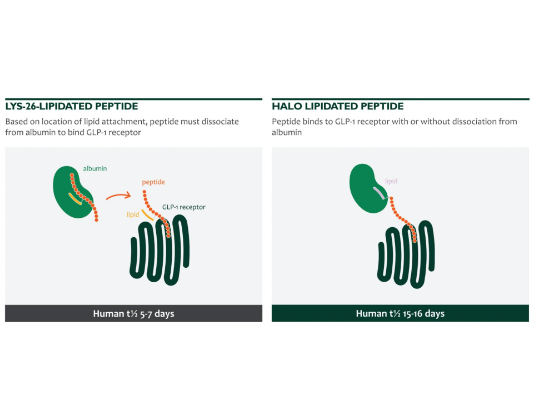
Comparison of LYS-26 lapidated conjugate Vs HALO platform lipidation
https://www.sec.gov/Archives/edgar/data/2040807/000095017025044778/mtsr-20241231.htm
Structure of HALO platform based drug conjugate - Berobenatide
https://www.peptideprotocolwiki.com/blog/comparisons/met-097i-vs-zovaglutide