Clinical trials
HVTN 206/HPTN 114
Identifier
NCT06812494
Link
https://clinicaltrials.gov/study/NCT06812494
Phase
Phase II
Status
Active, not recruiting
Sponsor
National Institute of Allergy and Infectious Diseases (NIAID)
More details
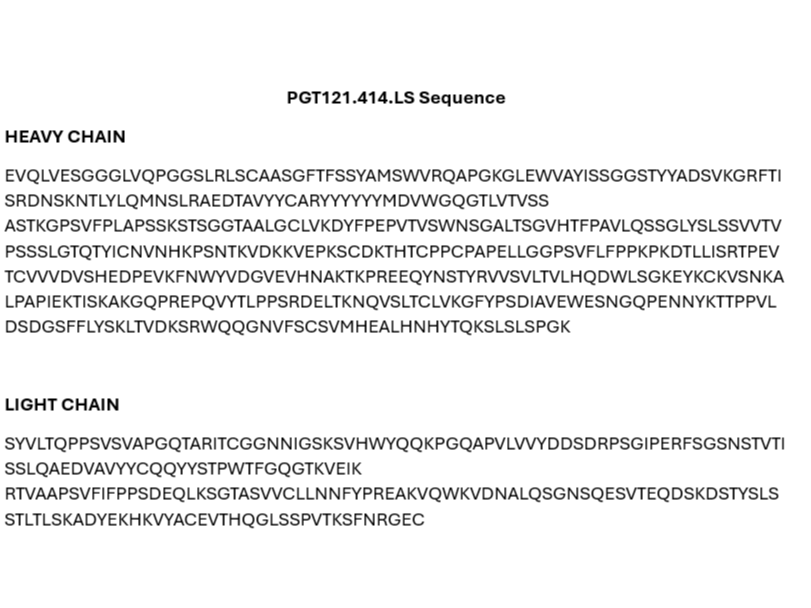
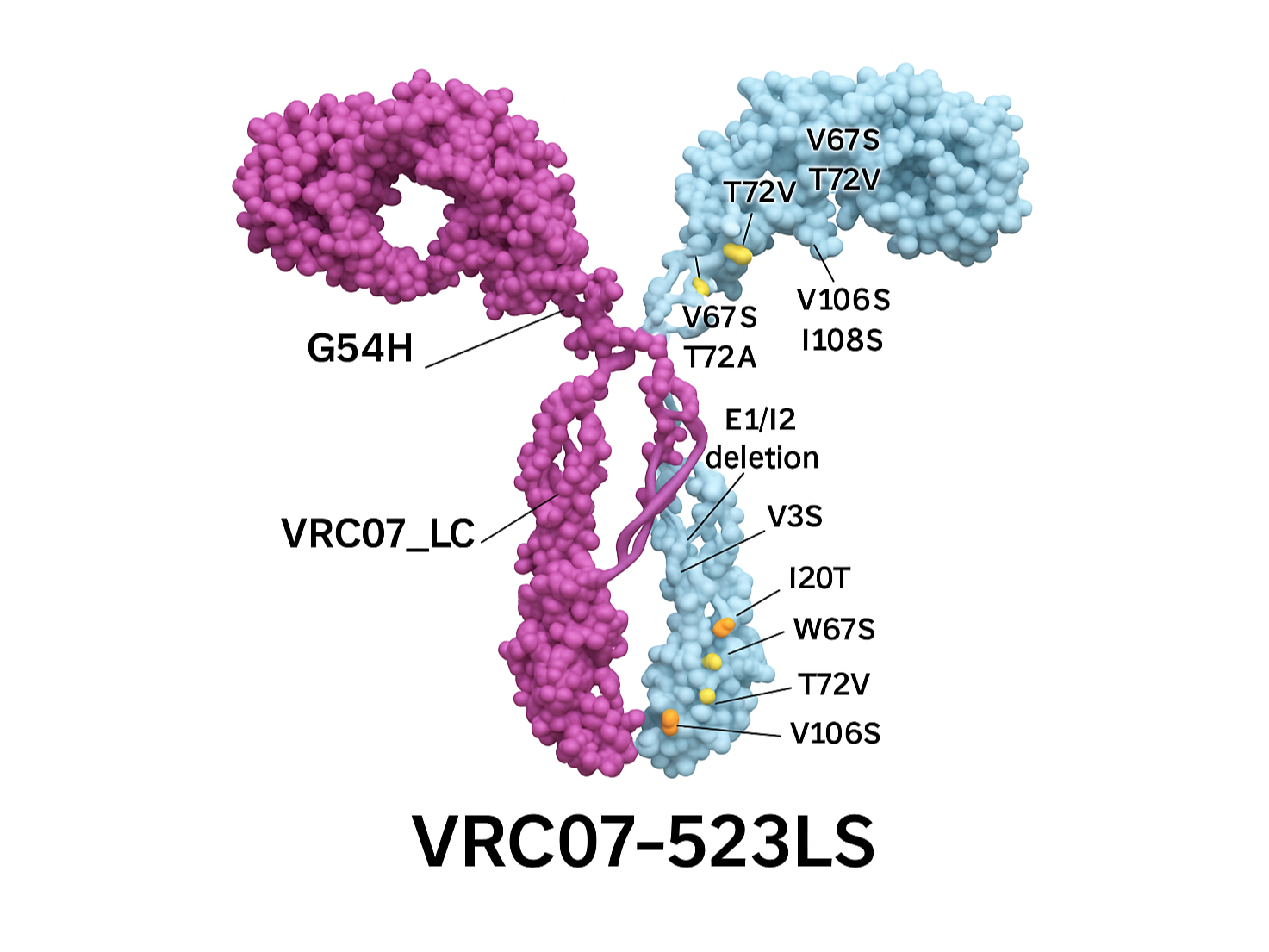
HVTN 206/HPTN 114 is a randomized, double blind, controlled, phase 2 clinical trial to evaluate the safety, tolerability, pharmacokinetics, and neutralization of VRC07-523LS, PGT121.414.LS, and PGDM1400LS broadly neutralizing monoclonal antibodies given intravenously in adult participants without HIV.
The hypothesis of the study is that the combination of VRC07-523LS and PGT121.414.LS and PGDM1400LS antibodies when administered via the intravenous (IV) route will be safe and tolerable in adult participants without HIV.
The study aims to enroll 200 participants across multiple sites with an estimated total duration of participation of eighteen (18) months.
Purpose
A Study of VRC07-523LS, PGT121.414.LS, and PGDM1400LS Broadly Neutralizing Monoclonal Antibodies Given Intravenously in Adult Participants Without HIV
Interventions
Intervention 1
PGDM1400LS
Dosage: 400 mg or 1,600 mg IV at Month 0 and Month 6
Intervention 2
VRC07-523LS
Dosage: 400 mg or 3,200 mg IV at Month 0 and Month 6
Intervention 3
PGT121.414.LS
Dosage: 400 mg or 1,600 mg IV at Month 0 and Month 6
Intervention 4
VRC07-523LS 3200mg
Countries
United States of America
Brazil
Peru
South Africa
Sites / Institutions
Not provided
Trials dates
Anticipated Start Date
Not provided
Actual Start Date
2025-03-07
Anticipated Date of Last Follow-up
2026-08-19
Estimated Primary Completion Date
2027-01-15
Estimated Completion Date
2027-09-15
Actual Primary Completion Date
Not provided
Actual Completion Date
Not provided
Studied populations
Age Cohort
Genders
Accepts pregnant individuals
Unspecified
Accepts lactating individuals
Unspecified
Accepts healthy individuals
Yes
Comments about the studied
populations
Inclusion Criteria:
* Participants need to be between 18 and 65 years old.
* Participants must have access to a participating clinical research site and be willing to follow the study schedule.
* Participants should understand the study details and be willing to give informed consent.
* Participants must agree not to join any other clinical trials until they finish this study.
* Participants must be willing to receive HIV test results.
* Participants should be open to discussing HIV prevention.
* Clinic staff should assess participants as having a low risk of getting HIV, and participants must commit to avoiding high-risk behaviors during the study.
* Hemoglobin: Participant meets minimum levels depending on gender and hormone therapy status.
* White Blood Cells (WBC): Should be within th
Health status
Negative to
: HIV
Other health status: Participants aged 18 to 65 years without HIV, assessed by clinic staff as having a low risk of acquiring HIV and committing to avoid higher-risk behaviours during the study
Study type
Interventional (clinical trial)
Enrollment
200
Allocation
Randomized
Intervention model
Parallel Assignment
Intervention
model description
Not provided
Masking
Double-blind masking
Masking description
Not provided
Frequency of administration
Every 6 months
Studied LA-formulation(s)
Injectable
Studied route(s) of administration
Intravenous
Use case
Prevention, PrEP
Indication(s)
HIV
Key resources
Not provided
HVTN 136/HPTN 092
Identifier
NCT04212091
Link
https://clinicaltrials.gov/study/NCT04212091
Phase
Phase I
Status
Completed
Sponsor
National Institute of Allergy and Infectious Diseases (NIAID)
More details
The purpose of this study is to evaluate the safety, tolerability, pharmacokinetics, and antiviral activity of the monoclonal antibody PGT121.414.LS administered alone and in combination with VRC07-523LS via intravenous or subcutaneous infusions in healthy, HIV-uninfected adult participants.
Purpose
Evaluating the Safety, Tolerability, Pharmacokinetics, and Antiviral Activity of the Monoclonal Antibody PGT121.414.LS Administered Alone and in Combination With VRC07-523LS Via Intravenous or Subcuta
Interventions
Intervention 1
PGT121.414.LS (3 mg/kg; 103 mg/kg; 30 mg/kg) IV
Intervention 2
PGT121.414.LS + VRC07-523LS (20 mg/kg each) IV sequentially
Intervention 3
PGT121.414.LS (5 mg/kg) SQ
Intervention 4
PGT121.414.LS + VRC07-523LS (5 mg/kg each) SQ sequentially
Countries
United States of America
Sites / Institutions
Not provided
Trials dates
Anticipated Start Date
Not provided
Actual Start Date
2020-11-10
Anticipated Date of Last Follow-up
2024-12-10
Estimated Primary Completion Date
Not provided
Estimated Completion Date
Not provided
Actual Primary Completion Date
2023-01-18
Actual Completion Date
2023-01-18
Studied populations
Age Cohort
Genders
Accepts pregnant individuals
Unspecified
Accepts lactating individuals
Unspecified
Accepts healthy individuals
Yes
Comments about the studied
populations
Inclusion Criteria:
General and Demographic Criteria
* Age of 18 to 50 years
* Access to a participating Clinical Research Site (CRS) and willingness to be followed for the planned duration of the study
* Ability and willingness to provide informed consent
* Assessment of understanding: volunteer demonstrates understanding of this study and completes a questionnaire prior to first study product administration with verbal demonstration of understanding of all questionnaire items answered incorrectly
* Agrees not to enroll in another study of an investigational research agent until completion of the last required protocol clinic visit
* Good general health as shown by medical history, physical exam, and screening laboratory tests
HIV-Related Criteria:
* Willingness to receive HIV test re
Health status
Not provided
Study type
Interventional (clinical trial)
Enrollment
33
Allocation
Randomized
Intervention model
Sequential assignment
Intervention
model description
Not provided
Masking
Open label
Masking description
Not provided
Frequency of administration
Every 4 months
Studied LA-formulation(s)
Injectable
Studied route(s) of administration
Subcutaneous
Intravenous
Use case
Treatment
Indication(s)
HIV
Key resources
Not provided
HVTN 141/HPTN 105
Identifier
NCT07390955
Link
https://clinicaltrials.gov/study/NCT07390955
Phase
Phase I
Status
Recruiting
Sponsor
National Institute of Allergy and Infectious Diseases (NIAID)
More details
This study is testing a lab-made antibody called ePGT121v1-LS that targets a specific part of HIV. Researchers will give it by vein (IV) and under the skin (SC), both on its own and together with two other antibodies, VRC07-523LS and PGDM1400LS, which target different parts of the virus. They will assess safety and side effects, determine the right dose, study how the body processes the drug (pharmacokinetics or PK), and measure how well it neutralizes HIV in the blood (serum neutralizing activity). The expectation is that ePGT121v1-LS, whether given alone or with PGDM1400LS and VRC07-523LS, by IV or SC, will be safe in generally healthy adults and that the antibodies will not interfere with each other when used together.
Purpose
A Study of Safety and Drug Levels of ePGT121v1-LS, PGDM1400LS, and VRC07-523LS in Adult Participants Without HIV-1
Interventions
Intervention 1
ePGT121v1-LS (SC) +PGDM1400LS (SC)+VRC07-523LS (SC)
Dosage: ePGT121v1-LS 125 mg + PGDM1400LS 100 mg + VRC07-523LS 100 mg SC, sequentially in this order, at week 0 and week 12 (Group 8)
Intervention 2
ePGT121v1-LS (IV) +PGDM1400LS (IV)+VRC07-523LS (IV)
Dosage: 5 mg/kg each, 20 mg/kg each or 40 mg/kg each, sequentially in this order, at week 0 and week 24 (Groups 4-6)
Intervention 5
Dosage: ePGT121v1-LS 125 mg + PGDM1400LS 100 mg + VRC07-523LS 100 mg SC, sequentially in this order, at week 0 and week 12 (Group 8)
Countries
United States of America
Peru
Sites / Institutions
Not provided
Trials dates
Anticipated Start Date
Not provided
Actual Start Date
2026-03-19
Anticipated Date of Last Follow-up
2026-08-31
Estimated Primary Completion Date
2027-08-30
Estimated Completion Date
2027-08-30
Actual Primary Completion Date
Not provided
Actual Completion Date
Not provided
Studied populations
Age Cohort
Genders
Accepts pregnant individuals
No
Accepts lactating individuals
No
Accepts healthy individuals
Yes
Comments about the studied
populations
Inclusion Criteria:
1. Age 18 to 55 years.
2. Can visit a participating clinic and is willing to stay in the study for its full duration.
3. Understands the study and is able and willing to give informed consent.
4. Agrees not to join another experimental study until the final required clinic visit.
5. In good overall health based on medical history, physical exam, and screening lab tests.
6. Willing to receive HIV test results.
7. Willing to discuss personal risk of getting HIV and to have HIV prevention counseling.
8. Judged by clinic staff to have a low risk of getting HIV and agrees to avoid higher risk behaviors through the last clinic visit.
9. Hemoglobin levels:
* Women: at least 11.0 g/dL
* Men: at least 13.0 g/dL
10. White blood cell count between 2,500 and 12,000 cells/mm
Health status
Negative to
: HIV
Other health status: Age 18 to 55 years, HIV-negative, in good general health, judged to have a low risk of acquiring HIV. Weight 35 to 115 kg. Excludes pregnancy or breastfeeding and prior receipt of HIV monoclonal Ab
Study type
Interventional (clinical trial)
Enrollment
83
Allocation
Non-randomized
Intervention model
Sequential assignment
Intervention
model description
Not provided
Masking
Open label
Masking description
Not provided
Frequency of administration
Every 3 months
Every 6 months
Studied LA-formulation(s)
Injectable
Studied route(s) of administration
Subcutaneous
Intravenous
Use case
Prevention, PrEP, Treatment
Indication(s)
HIV
Key resources
Not provided
SAMBA II- CAPRISA 012B
Identifier
PACTR202003767867253
Link
https://pubmed.ncbi.nlm.nih.gov/33243815/
Phase
Phase I
Status
Completed
Sponsor
EDCTP, SAMRC
More details
A Phase I Dose-Escalation Study of the Safety, Tolerability and Pharmacokinetics of a Human Monoclonal Antibody, CAP256V2LS (VRC-HIVMAB0102-00-AB) administered intravenously to HIV-negative and HIV-positive women or subcutaneously alone and in combination with VRC07- 523LS and /or PGT121 to HIV-negative women in South Africa. CAPRISA 012B, described here, is a phase I trial that evaluates the safety and PK of CAP256V2LS. Based on these phase I studies, a bnAb combination will be selected and evaluated in a larger CAPRISA 012C phase II trial. This trial will determine the extended safety and efficacy in preventing HIV infection in young women.Last updated September 14, 2022
https://avac.org/trial/caprisa-012b-samba-trial-ii/
Purpose
A Phase I Dose-Escalation Study of the Safety, Tolerability and PK of CAP256V2LS (VRC-HIVMAB0102-00-AB) alone and in combination with VRC07- 523LS and /or PGT121 to HIV-negative women
Interventions
Intervention 1
Dose escalation of IV administration of CAP256V2LS 5 mg/kg -20mg/kg IV one dose
Intervention 2
Group 2 Dose escalation of SC administration of CAP256V2LS 5 -20mg/kg SC one dose one dose 16 weeks apart 24 weeks apart CAP256V2LS hyaluronidase
Intervention 3
Group 3 Dose escalation of the two antibody combinations 10-20mg/kg SC one dose CAP256V2LS+PGT121+VRC07-523.LS; hyaluronidase placebo
Intervention 4
Group 4 Three antibody combination 20mg/kg SC+5mg/kg SC+20mg/kg SC one dose CAP256V2LS+PGT121+VRC07-523.LS; hyaluronidase placebo
Countries
South Africa
Sites / Institutions
Not provided
Trials dates
Anticipated Start Date
Not provided
Actual Start Date
2020-04-01
Anticipated Date of Last Follow-up
Not provided
Estimated Primary Completion Date
Not provided
Estimated Completion Date
Not provided
Actual Primary Completion Date
Not provided
Actual Completion Date
2022-12-31
Studied populations
Age Cohort
Genders
Unspecified
Accepts pregnant individuals
Unspecified
Accepts lactating individuals
Unspecified
Accepts healthy individuals
Unspecified
Comments about the studied
populations
Not provided
Health status
Not provided
Study type
Interventional (clinical trial)
Enrollment
Not provided
Allocation
Randomized
Intervention model
Parallel Assignment
Intervention
model description
Not provided
Masking
Single blind masking
Masking description
Not provided
Frequency of administration
Not provided
Studied LA-formulation(s)
Injectable
Studied route(s) of administration
Intravenous
Subcutaneous
Use case
PrEP
Indication(s)
HIV
Key resources
|
Type
|
Title |
Content |
Link |
|
Publication
|
Assessing the safety and pharmacokinetics of the anti-HIV monoclonal antibody CAP256V2LS alone and in combination with VRC07-523LS and PGT121 in South African women: study protocol for the first-in-human CAPRISA 012B phase I clinical trial
|
Introduction: New HIV prevention strategies are urgently required. The discovery of broadly neutralising antibodies (bNAbs) has provided the opportunity to evaluate passive immunisation as a potential prevention strategy and facilitate vaccine development. Since 2014, several bNAbs have been isolated from a clade C-infected South African donor, CAPRISA 256. One particular bNAb, CAP256-VRC26.25, was found to be extremely potent, with good coverage against clade C viruses, the dominant HIV clade in sub-Saharan Africa. Challenge studies in non-human primates demonstrated that this antibody was fully protective even at extremely low doses. This bNAb was subsequently structurally engineered and the clinical variant is now referred to as CAP256V2LS.Methods and analysis: CAPRISA 012B is the second of three trials in the CAPRISA 012 bNAb trial programme. It is a first-in-human, phase I study to assess the safety and pharmacokinetics of CAP256V2LS. The study is divided into four groups. Group 1 is a dose escalation of CAP256V2LS administered intravenously to HIV-negative and HIV-positive women. Group 2 is a dose escalation of CAP256V2LS administered subcutaneously (SC), with and without the dispersing agent recombinant human hyaluronidase (rHuPH20) as single or repeat doses in HIV-negative women. Groups 3 and 4 are randomised placebo controlled to assess two (CAP256V2LS+VRC07-523LS; CAP256V2LS+PGT121) and three (CAP256V2LS+VRC07-523LS+PGT121) bNAb combinations administered SC to HIV-negative women. Safety will be assessed by the frequency of reactogenicity and adverse events related to the study product. Pharmacokinetic disposition of CAP256V2LS alone and in combination with VRC07-523LS and PGT121 will be assessed via dose subgroups and route of administration.Ethics and dissemination: The University of KwaZulu-Natal Biomedical Research Ethics Committee (BREC) and the South African Health Products Regulatory Authority (SAHPRA) have granted regulatory approval (trial reference numbers: BREC00000857/2019 and SAHPRA 20200123). Trial results will be disseminated through conference presentations, peer-reviewed publications and the clinical trial registry.
|
https://pubmed.ncbi.nlm.nih.gov/33243815/
|
A5389
Identifier
NCT06987318
Link
https://clinicaltrials.gov/study/NCT06987318
Phase
Phase I
Status
Not yet recruiting
Sponsor
National Institute of Allergy and Infectious Diseases (NIAID)
More details
The purpose of this study is to evaluate the safety, tolerability, and efficacy of combination broadly neutralizing antibodies (bNAbs), to induce HIV-1 control during analytic treatment interruption (ATI).
Purpose
A Study to Evaluate the Safety and Antiviral Activity of Two Human Monoclonal Antibodies (VRC07-523LS and PGT121.414.LS) During Analytic Treatment Interruption in Participants Living With HIV Who Init
Interventions
Intervention 1
VRC07-523LS
Intervention 2
PGT121.414.LS
Countries
United States of America
Brazil
Peru
Sites / Institutions
Not provided
Trials dates
Anticipated Start Date
2026-12-01
Actual Start Date
Not provided
Anticipated Date of Last Follow-up
2026-06-12
Estimated Primary Completion Date
2027-08-29
Estimated Completion Date
2028-05-07
Actual Primary Completion Date
Not provided
Actual Completion Date
Not provided
Studied populations
Age Cohort
Genders
Accepts pregnant individuals
Unspecified
Accepts lactating individuals
Unspecified
Accepts healthy individuals
No
Comments about the studied
populations
Inclusion Criteria:
* Ability and willingness of participant to provide informed consent.
* Initiation of combination ART within 90 days of acute HIV diagnosis as defined by any of the criteria listed below:
* A negative HIV Ab or HIV Ag/Ab Combination Assay and a detectable HIV-1 RNA (qualitative or quantitative) or a subsequently positive Western blot (WB) or equivalent HIV-1 confirmatory assay (e.g. Geenius assay) if no positive HIV-1 RNA test was available.
* A positive HIV Ab or HIV Ag/Ab Combination Assay or p24 antigen test and a negative or indeterminate HIV confirmatory/differentiating test with a detectable HIV-1 RNA (qualitative or quantitative).
* A positive HIV Ab or HIV-1 RNA or p24 antigen and positive WB or Geenius HIV-1/HIV-2 Supplemental Assay that is negative for
Health status
Not provided
Study type
Interventional (clinical trial)
Enrollment
40
Allocation
Not provided
Intervention model
Sequential assignment
Intervention
model description
Not provided
Masking
Open label
Masking description
Not provided
Frequency of administration
Every 3 months
Once
Studied LA-formulation(s)
Injectable
Studied route(s) of administration
Intravenous
Use case
Treatment
Indication(s)
HIV
Key resources
Not provided
Tatelo plus - IMPAACT 2042
Identifier
NCT06508749
Link
https://clinicaltrials.gov/study/NCT06508749
Phase
Phase I/II
Status
Active, not recruiting
Sponsor
National Institute of Allergy and Infectious Diseases (NIAID)
More details
The purpose of this study is to advance pediatric HIV treatment and cure research by evaluating the impact of a combination of three anti-HIV-1 broadly neutralizing antibodies (bNAbs) or analytic treatment interruption (ATI) on viral reservoir, immune function, and maintenance of HIV suppression in early-treated children.
Purpose
The Tatelo Plus Study
Interventions
Intervention 1
PGDM1400LS
Intervention 2
VRC07-523LS
Intervention 3
PGT121.414.LS
Intervention 4
ART Regimen prior to enrolling in Step 1a
Intervention 5
ART Regimen prior to enrolling in Step 1b
Countries
Botswana
Sites / Institutions
Not provided
Trials dates
Anticipated Start Date
Not provided
Actual Start Date
2024-11-11
Anticipated Date of Last Follow-up
2026-09-09
Estimated Primary Completion Date
2027-09-03
Estimated Completion Date
2028-02-18
Actual Primary Completion Date
Not provided
Actual Completion Date
Not provided
Studied populations
Age Cohort
-
Neonates (0 to 28 days)
-
Infants (0 to 12 months)
-
Children
-
Adults
Genders
Accepts pregnant individuals
Unspecified
Accepts lactating individuals
Unspecified
Accepts healthy individuals
No
Comments about the studied
populations
Inclusion Criteria, Step 1
* Previously enrolled in the EIT/Tatelo, or Moso Cohort Study
* Receiving prescribed ART for at least 24 weeks prior to study entry as determined by the site investigator based on participant/parent/guardian report and available medical records
* 24 weeks to 12 years of age at enrollment, inclusive
* If entering Step 1a: HIV-1 RNA \<40 copies/mL for at least 24 weeks prior to entry, including documented suppression to \<40 copies/mL within 30 days of Step 1 entry
* If entering Step 1b: HIV-1 RNA \<200 copies/mL for at least 24 weeks prior to entry, including documented suppression to \<40 copies/mL within 30 days of Step 1 entry.
* Normal temperature (\<37.4°C axillary, or \<38°C non-axillary) and no signs or symptoms of acute illness at entry as determined by t
Health status
Positive to
: HIV
Study type
Interventional (clinical trial)
Enrollment
41
Allocation
Non-randomized
Intervention model
Parallel Assignment
Intervention
model description
Not provided
Masking
Open label
Masking description
Not provided
Frequency of administration
Once
Studied LA-formulation(s)
Injectable
Studied route(s) of administration
Intravenous
Use case
Treatment
Indication(s)
HIV
Key resources
Not provided
HVTN 140/HPTN 101
Identifier
NCT05184452
Link
https://clinicaltrials.gov/study/NCT05184452
Phase
Phase I
Status
Completed
Sponsor
National Institute of Allergy and Infectious Diseases (NIAID)
More details
Part A:
The purpose of this part of the study is to understand how the body's immune system responds to a new lab-made antibody against HIV. The study is looking to see if the way the antibody is given affects the immune response. The study will also look at whether the antibody is safe to give to people and does not make them too uncomfortable.
Part B:
The purpose of this part of the study is to understand how the body's immune system responds to lab-made antibodies against HIV when they are given in combination at different doses. The study also wants to see if the way the antibodies are given affects the immune response.
Purpose
A Clinical Trial to Evaluate the Safety, Tolerability, and Pharmacokinetics of PGDM1400LS Alone and in Combination With VRC07-523LS and PGT121.414.LS in Healthy, HIV-uninfected Adult Participants
Interventions
Intervention 1
PGDM1400LS alone (Part A)
Dosage: Single dose: 5 mg/kg IV (group 1), 20 mg/kg IV (group 2), 20 mg/kg SC (group 3), 40 mg/kg IV (group 4), 40 mg/kg SC (group 5); 3 participants per group
Intervention 2
PGDM1400LS + VRC07-523LS + PGT121.414.LS, IV (Part B)
Dosage: 20 mg/kg each IV (T6); 1.4 g each fixed dose IV (T8); 40 mg/kg each IV (T10); two doses four months apart; 16 per group
Intervention 3
PGDM1400LS + VRC07-523LS + PGT121.414.LS, SC (Part B)
Dosage: 20 mg/kg each SC (T7); 1.4 g each fixed dose SC (T9); two doses four months apart; 16 per group
Countries
United States of America
Kenya
South Africa
Zimbabwe
Sites / Institutions
Not provided
Trials dates
Anticipated Start Date
Not provided
Actual Start Date
2021-11-15
Anticipated Date of Last Follow-up
2025-01-16
Estimated Primary Completion Date
Not provided
Estimated Completion Date
Not provided
Actual Primary Completion Date
2023-07-19
Actual Completion Date
2023-07-19
Studied populations
Age Cohort
Genders
Accepts pregnant individuals
Unspecified
Accepts lactating individuals
Unspecified
Accepts healthy individuals
Yes
Comments about the studied
populations
Inclusion Criteria:
1. Age of 18 through 50 years
2. Access to a participating CRS and willingness to be followed for the planned duration of the study
3. Ability and willingness to provide informed consent
4. Assessment of understanding: volunteer demonstrates understanding of this study and completes a questionnaire prior to first study product administration with verbal demonstration of understanding of all questionnaire items answered incorrectly
5. Agrees not to enroll in another study of an investigational research agent until completion of the last required protocol clinic visit.
6. Good general health as shown by medical history, physical exam, and screening laboratory tests
7. Willingness to receive HIV test results
8. Willingness to discuss HIV infection risks and amenable to HI
Health status
Negative to
: HIV
Other health status: Adults without HIV aged 18 to 50 years in good general health. Part A median age 27 years (range 24-47). Part B median age 25.5 years, 50.5% assigned female sex at birth.
Study type
Interventional (clinical trial)
Enrollment
95
Allocation
Randomized
Intervention model
Parallel Assignment
Intervention
model description
Not provided
Masking
Open label
Masking description
Not provided
Frequency of administration
Every 4 months
Studied LA-formulation(s)
Injectable
Studied route(s) of administration
Subcutaneous
Intravenous
Use case
Prevention
Indication(s)
HIV
Key resources
Not provided
Supporting material
Publications
Assessing the safety and pharmacokinetics of the anti-HIV monoclonal antibody CAP256V2LS alone and in combination with VRC07-523LS and PGT121 in South African women: study protocol for the first-in-human CAPRISA 012B phase I clinical trial
Sharana Mahomed — BMJ open — 2020-11-26
Link:
https://pubmed.ncbi.nlm.nih.gov/33243815/
Introduction: New HIV prevention strategies are urgently required. The discovery of broadly neutralising antibodies (bNAbs) has provided the opportunity to evaluate passive immunisation as a potential prevention strategy and facilitate vaccine development. Since 2014, several bNAbs have been isolated from a clade C-infected South African donor, CAPRISA 256. One particular bNAb, CAP256-VRC26.25, was found to be extremely potent, with good coverage against clade C viruses, the dominant HIV clade in sub-Saharan Africa. Challenge studies in non-human primates demonstrated that this antibody was fully protective even at extremely low doses. This bNAb was subsequently structurally engineered and the clinical variant is now referred to as CAP256V2LS.
Methods and analysis: CAPRISA 012B is the second of three trials in the CAPRISA 012 bNAb trial programme. It is a first-in-human, phase I study to assess the safety and pharmacokinetics of CAP256V2LS. The study is divided into four groups. Group 1 is a dose escalation of CAP256V2LS administered intravenously to HIV-negative and HIV-positive women. Group 2 is a dose escalation of CAP256V2LS administered subcutaneously (SC), with and without the dispersing agent recombinant human hyaluronidase (rHuPH20) as single or repeat doses in HIV-negative women. Groups 3 and 4 are randomised placebo controlled to assess two (CAP256V2LS+VRC07-523LS; CAP256V2LS+PGT121) and three (CAP256V2LS+VRC07-523LS+PGT121) bNAb combinations administered SC to HIV-negative women. Safety will be assessed by the frequency of reactogenicity and adverse events related to the study product. Pharmacokinetic disposition of CAP256V2LS alone and in combination with VRC07-523LS and PGT121 will be assessed via dose subgroups and route of administration.
Ethics and dissemination: The University of KwaZulu-Natal Biomedical Research Ethics Committee (BREC) and the South African Health Products Regulatory Authority (SAHPRA) have granted regulatory approval (trial reference numbers: BREC00000857/2019 and SAHPRA 20200123). Trial results will be disseminated through conference presentations, peer-reviewed publications and the clinical trial registry.
Edupuganti, S., Hurt, C. B., Stephenson, K. E., Huang, Y., Paez, C. A., Yu, C., Yen, C., Hanscom, B., He, Z., Miner, M. D., Gamble, T., Heptinstall, J., Seaton, K. E., Domin, E., Lin, B. C., McKee, K., Doria-Rose, N., Regenold, S., Spiegel, H., Anderson, M., … HVTN 136/HPTN 092 Study Team (2025). Safety, tolerability, pharmacokinetics, and neutralisation activities of the anti-HIV-1 monoclonal antibody PGT121.414.LS administered alone and in combination with VRC07-523LS in adults without HIV in the USA (HVTN 136/HPTN 092): a first-in-human, open-label, randomised controlled phase 1 trial. The lancet. HIV, 12(1), e13–e25. https://doi.org/10.1016/S2352-3018(24)00247-9
Link:
https://doi.org/10.1016/S2352-3018(24)00247-9
Background: Multiple broadly neutralising monoclonal antibodies (mAbs) are in development for HIV-1 prevention. The aim of this trial was to test the PGT121.414.LS and VRC07-523LS mAbs for safety and pharmacokinetics in adults.
Methods: In this first-in-human phase 1 trial (HVTN 136/HPTN 092), adults without HIV were enrolled at six university-affiliated clinical research sites in the USA. Part A evaluated escalating single intravenous doses or subcutaneous infusion of PGT121.414.LS, in four groups: 3 mg/kg intravenous (treatment group 1; n=3), 10 mg/kg intravenous (treatment group 2; n=4), 30 mg/kg intravenous (treatment group 3; n=3), and 5 mg/kg subcutaneous (treatment group 4; n=3). Part B evaluated repeated sequential intravenous administrations of 20 mg/kg PGT121.414.LS plus 20 mg/kg VRC07-523LS (treatment group 5; n=10) and sequential subcutaneous administrations of 5 mg/kg PGT121.414.LS plus 5 mg/kg VRC07-523LS (treatment group 6; n=10) on days 0, 112, and 224. Participants in treatment groups 1 and 2 were enrolled sequentially, with participants enrolled and randomly assigned to treatment groups 3 and 4 after a review of safety data. Participants in treatment groups 5 and 6 were randomly assigned in blocks after a review of safety data from treatment groups 1-4. The primary endpoints were safety and tolerability of mAbs, serum concentrations and pharmacokinetics of mAbs, and serum neutralising activity, assessed in participants who received all scheduled product administrations. Serum concentrations of each mAb were measured via a multiplex assay, and neutralisation activity against multiple HIV viruses was measured via the TZM-bl assay. Serum concentrations were estimated via an open, two-compartment model with first-order elimination from the central compartment. This study was registered with ClinicalTrials.gov (NCT04212091) and has been completed.
Findings: Between Nov 10, 2020, and Oct 5, 2021, we enrolled 33 participants without HIV: median age was 31 years (range 22-48); 19 were assigned female sex at birth and 11 were assigned male sex at birth. Three participants and four participants were sequentially assigned to treatment groups 1 and 2, respectively, and, after safety review, six participants were randomly assigned to treatment groups 3 (n=3) and 4 (n=3); after safety review, 20 participants were randomly assigned to treatment groups 5 (n=10) and 6 (n=10). Intravenous and subcutaneous infusions were safe and well tolerated, without serious adverse events or dose-limiting toxicities. Dose escalation of PGT121.414.LS from 3 mg/kg to 30 mg/kg (intravenous) resulted in a dose-proportional increase in serum concentration of PGT121.414.LS, whether administered alone or in combination with VRC07-523LS. The estimated elimination half-life of PGT121.414.LS was 71 days (95% CI 66-75), three times that of its parental form, PGT121. The estimated subcutaneous (vs intravenous) bioavailability of PGT121.414.LS was 86·1% (95% CI 64·0-95·5). Neutralisation activities were greater in the higher-dose and dual combination intravenous groups than in the subcutaneous administration groups.
Interpretation: These findings support further evaluation of PGT121.414.LS in combination with other mAbs for HIV-1 prevention.
Additional documents
No documents were uploaded
Useful links
There are no additional links