
access-principles-1access-principles-2access-principles-3backcarrierdevelopmentease_of_administrationexportimplantableinjectablenon-implantablenon_carriernon_injectableother_featuresprintroute_of_administrationtherapeutic_areatype_of_tech
Developed by

MPP logo
UOL CELT logo
Supported by

Unitaid logo
Leap logo
Coefficient Giving logo

MK-8591B (islatravir + ulonivirine)


Developer(s)

Merck & Co., Inc.

Originator
https://www.merck.com/research/product-pipeline/

United States


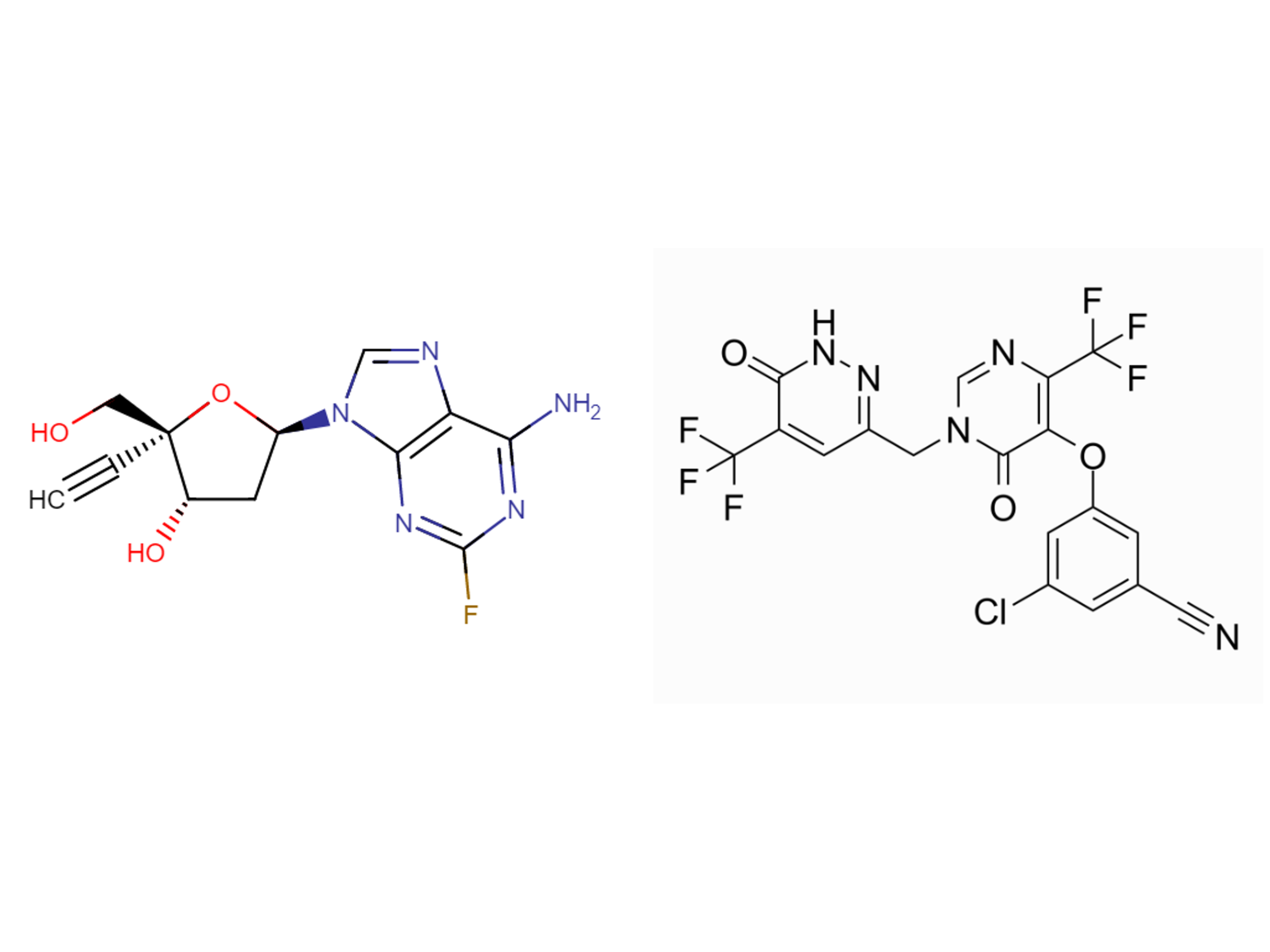
Drug structure

islatravir and ulonivirine

islatravir and ulonivirine


Drug information

Associated long-acting platforms

Oral solid form

Administration route

Oral

Therapeutic area(s)

HIV

Use case(s)

Treatment

Use of drug

Ease of administration

Self-administered

Frequency of administration

Not provided

User acceptance

Not provided

Dosage

Available dose and strength

Not provided

Maximum dose

Not provided

Recommended dosing regimen

Not provided

Additional comments

Not provided

Dosage link(s)

Not provided


Drug information

Drug's link(s)

Not provided

Generic name

Not provided

Brand name

Not provided

Compound type

Small molecule

Drug class/category

NRTTI+NNRTI

Summary

Not provided

Approval status

Unknown

Regulatory authorities

Unknown

Delivery device(s)

No delivery device


Scale-up and manufacturing prospects

Scale-up prospects

Not provided

Tentative equipment list for manufacturing

Not provided

Manufacturing

Not provided

Specific analytical instrument required for characterization of formulation

Not provided


Clinical trials

8591-013

Identifier

NCT04564547

Link

https://clinicaltrials.gov/study/NCT04564547

Phase

Phase II

Status

Completed

Sponsor

Merck Sharp & Dohme LLC

More details

This is a randomized, controlled, double-blind, study to evaluate the safety and tolerability of islatravir (ISL) + ulonivirine based on review of the accumulated safety data, in adult participants with human immunodeficiency virus type 1 (HIV-1) who have been virologically suppressed for ≥6 months on bictegravir/emtricitabine/tenofovir alafenamide (BIC/FTC/TAF) once-daily.

Purpose

Dose Ranging, Switch Study of Islatravir (ISL) and Ulonivirine (MK-8507) Once-Weekly in Virologically-Suppressed Adults With Human Immunodeficiency Virus Type 1 (HIV-1) [MK-8591-013]

Interventions

Intervention 1

ISL+ULO
Dosage: 20mg+100mg QW

Intervention 2

ISL+ULO
Dosage: 20mg+200mg QW

Intervention 3

ISL+ULO
Dosage: 20mg+400mg QW

Intervention 4

BIC/FTC/TAF
Dosage: 50 mg/200 mg/25 mg QD

Countries

United States of America
France
Switzerland

Sites / Institutions

Not provided

Trials dates

Anticipated Start Date
Not provided

Actual Start Date
2021-03-09

Anticipated Date of Last Follow-up
2025-02-10

Estimated Primary Completion Date
Not provided

Estimated Completion Date
Not provided

Actual Primary Completion Date
2025-01-30

Actual Completion Date
2025-01-30

Studied populations

Age Cohort

Genders

Accepts pregnant individuals
No

Accepts lactating individuals
No

Accepts healthy individuals
No

Comments about the studied populations

Inclusion Criteria: * Is HIV-1 positive with plasma HIV-1 RNA \<50 copies/mL at screening * Has been virologically suppressed on BIC/FTC/TAF for ≥6 months * Has a screening CD4+ T-cell count \>200 cells/mm\^3 (completed by the central laboratory) * Is male or female, at least 18 years of age, at the time of signing the informed consent * female participant is eligible to participate if she is not pregnant or breastfeeding, and at least one of the following conditions applies: * Is not a woman of childbearing potential (WOCBP) * Is a WOCBP and using a contraceptive method that is highly effective (with a failure rate of \<1% per year), or be abstinent from heterosexual intercourse as their preferred and usual lifestyle (abstinent on a long term and persistent basis) Exclusion Criteria: *

Health status

Positive to : HIV
Negative to : HBV, HCV
Other health status: Virologically supressed individuals

Study type

Interventional (clinical trial)

Enrollment

161

Allocation

Randomized

Intervention model

Parallel Assignment

Intervention model description

Not provided

Masking

Triple-blind masking

Masking description

Not provided

Frequency of administration

Weekly

Studied LA-formulation(s)

Tablet

Studied route(s) of administration

Oral

Use case

Treatment

Key resources

Type Title Content Link
Link Protocol Plain Language Summary https://trialstransparency.merckclinicaltrials.com/Upload/1115_D1_PPLS_2024-511041-19_for%20pub_01May2024_V1-0_MK-8591-013-04.pdf

8591B-060

Identifier

NCT06891066

Link

https://clinicaltrials.gov/study/NCT06891066

Phase

Phase II

Status

Active, not recruiting

Sponsor

Merck Sharp & Dohme LLC

More details

Investigators are trying to find better treatments for people with HIV-1. In this clinical study, investigators want to see how well a new treatment called ISL+ULO, taken once a week, works compared to an existing treatment called BIC/FTC/TAF, which is taken every day. Investigators will check how many people still have a high level of the virus in their blood after 24 weeks. The investigators also want to understand if the new treatment, MK-8591B, is safe and how well people can handle it.

Purpose

A Study of Islatravir (ISL) and Ulonivirine (ULO) Once Weekly (QW) in Virologically Suppressed Adults With Human Immunodeficiency Virus Type 1 (HIV-1) (MK-8591B-060)

Interventions

Intervention 1

ISL+ULO weekly
Dosage: 2mg (2x1mg capsules)+200mg (2x100mg tablets)

Intervention 2

ISL+ULO weekly (switched from B/F/TAF)
Dosage: 2mg (2x1mg capsules)+200mg (2x100mg tablets)

Intervention 3

BIC/FTC/TAF daily
Dosage: BIC 50mg oral tablet/FTC 200mg oral tablet/TAF 25 mg oral tablet

Countries

United States of America
Puerto Rico
Australia
Switzerland

Sites / Institutions

Not provided

Trials dates

Anticipated Start Date
Not provided

Actual Start Date
2025-04-14

Anticipated Date of Last Follow-up
2025-10-14

Estimated Primary Completion Date
2027-08-10

Estimated Completion Date
2031-09-30

Actual Primary Completion Date
Not provided

Actual Completion Date
Not provided

Studied populations

Age Cohort

Genders

Accepts pregnant individuals
Unspecified

Accepts lactating individuals
Unspecified

Accepts healthy individuals
No

Comments about the studied populations

Inclusion: The main inclusion criteria include but are not limited to the following: - Has been receiving Bictegravir/Emtricitabine/Tenofovir alafenamide (BIC/FTC/TAF) therapy with documented viral suppression \[Human immunodeficiency virus type 1 (HIV-1) ribonucleic acid (RNA) \<50 copies/mL\] for ≥6 months prior to providing documented informed consent and has no history of prior virologic treatment failure on any past or current regimen. Exclusion: The main exclusion criteria include but are not limited to the following: * Has Human immunodeficiency virus type 2 (HIV-2) infection. * Has a diagnosis of an active Acquired immune deficiency syndrome (AIDS)-defining opportunistic infection. * Has active hepatitis C virus (HCV) coinfection. * Has hepatitis B virus (HBV) coinfection. * H

Health status

Positive to : HIV
Negative to : HBV, HCV

Study type

Interventional (clinical trial)

Enrollment

150

Allocation

Randomized

Intervention model

Parallel Assignment

Intervention model description

Not provided

Masking

Open label

Masking description

Not provided

Frequency of administration

Weekly

Studied LA-formulation(s)

Tablet

Studied route(s) of administration

Oral

Use case

Treatment

Key resources

Type Title Content Link
Link IAS 2025: Once-weekly oral ART with ulonivirine plus islatravir: 24-week phase 2 results https://i-base.info/htb/51965
Link Ulonivirine Shows Promise for Weekly Oral HIV Treatment - POZ - July 2025 https://www.poz.com/article/ulonivirine-shows-promise-weekly-oral-hiv-treatment

8591B-062

Identifier

NCT07266831

Link

https://clinicaltrials.gov/study/NCT07266831

Phase

Phase II/III

Status

Recruiting

Sponsor

Merck Sharp & Dohme LLC

More details

Researchers are looking for new ways to treat HIV-1 (Human Immunodeficiency Virus Type 1). The usual (standard) treatment for HIV-1 is antiretroviral therapy (ART), which includes taking medicines to lower the amount of HIV-1 in the body. Standard ART helps people live longer, but people must take up to 3 medicines up to twice a day. Standard ART may also cause other health problems. Researchers want to know if a study ART works as well as a standard ART to treat HIV-1. The study ART combines 2 medicines, islatravir and ulonivirine, and is taken once a week. The goals of this study are to learn: 1) If the study ART works as well as a standard ART to treat HIV-1, and 2) About the safety of the study ART and if people tolerate it compared to a standard ART.

Purpose

A Clinical Study of Islatravir and Ulonivirine for People With HIV-1 Who Have Not Been Treated Before (MK-8591B-062)

Interventions

Intervention 1

ISL/ULO FDC
Dosage: 2mg/200mg QW

Intervention 2

BIC/FTC/TAF
Dosage: 50/200/25 mg oral tablet QD

Intervention 3

Placebo to ISL/ULO

Intervention 4

Placebo for BIC/FTC/TAF

Intervention 5

ISL + ULO
Dosage: 2x1mg QW+ 2x100mg QW

Countries

United States of America

Sites / Institutions

Not provided

Trials dates

Anticipated Start Date
Not provided

Actual Start Date
2025-12-18

Anticipated Date of Last Follow-up
2026-01-16

Estimated Primary Completion Date
2029-10-05

Estimated Completion Date
2030-04-25

Actual Primary Completion Date
Not provided

Actual Completion Date
Not provided

Studied populations

Age Cohort

Genders

Accepts pregnant individuals
Unspecified

Accepts lactating individuals
Unspecified

Accepts healthy individuals
No

Comments about the studied populations

Inclusion Criteria: * Phase 2: Is human immunodeficiency virus type 1 (HIV-1) positive with Plasma HIV-1 ribonucleic acid (RNA) ≥500 and ≤100,000 copies/mL. * Phase 3: Is HIV-1 positive with Plasma HIV-1 RNA ≥500 copies/mL. * Phase 2: Has cluster of differentiation 4-positive (CD4+) T-cell count ≥200 cells/mm\^3. * Is naïve to antiretroviral therapy (ART), defined as having received no prior therapy with any antiretroviral agent following a diagnosis of HIV 1 infection. Exclusion Criteria: * Has human immunodeficiency virus type 2 (HIV-2) infection. * Has a diagnosis of an active acquired immune deficiency syndrome (AIDS)-defining opportunistic infection. * Has active hepatitis C virus (HCV) or active hepatitis B virus (HBV) infection. * Has a history of malignancy ≤5 years prior to pro

Health status

Positive to : HIV
Negative to : HBV, HCV

Study type

Interventional (clinical trial)

Enrollment

570

Allocation

Randomized

Intervention model

Parallel Assignment

Intervention model description

Primary purpose: TREATMENT Allocation: RANDOMIZED Intervention Model: PARALLEL

Masking

Double-blind masking

Masking description

Masking: DOUBLE (PARTICIPANT) Masking Description: Phase 2: no masking Phase 3: Participant, Sponsor, and Investigator are masked

Frequency of administration

Weekly

Studied LA-formulation(s)

Tablet

Studied route(s) of administration

Oral

Use case

Treatment

Key resources

Not provided

Excipients

Proprietary excipients used

Not provided

Novel excipients or existing excipients at a concentration above Inactive Ingredients Database (IID) for the specified route of administration

Not provided

Residual solvents used

Not provided


Patent info

Formulation patent families

Patent informations
Patent description Representative patent Categories Patent holder Licence with MPP Patent source
Islatravir for the treatment or prophylaxis of HIV (dosing regimen less frequent than once-daily)
Expiry date: 2037-02-10
The present invention is directed to methods for inhibition of HIV reverse transcriptase, treatment of infection by HIV, prophylaxis of infection by HIV, and the treatment, prophylaxis and/or delay in the onset or progression of AIDS or ARC by administering a compound of structural Formula (I) or a pharmaceutically acceptable salt or co-crystal thereof, wherein X is -F or -Cl, less frequently than once daily.
WO2017139519 Use MERCK SHARP & DOHME [US] No
Patent status
Patent status/countries Low, Low- middle and upper-middle High income
Granted Türkiye, North Macedonia, Albania, Bosnia and Herzegovina, Montenegro, Serbia, Moldova, Republic of, Morocco, Dominican Republic, Belarus, Kazakhstan, Azerbaijan, Armenia, Mexico, South Africa, Georgia, Iran (Islamic Republic of), Ukraine, Malaysia, Botswana, Ghana, Kenya, Namibia, Tunisia, Jordan Belgium, Germany, France, Luxembourg, Netherlands, Switzerland, United Kingdom, Sweden, Italy, Austria, Liechtenstein, Greece, Spain, Denmark, Portugal, Ireland, Finland, Cyprus, Bulgaria, Czechia, Estonia, Slovakia, Hungary, Poland, Iceland, Malta, Norway, Croatia, Romania, Latvia, Lithuania, Slovenia, Australia, Canada, Russian Federation, Japan, Korea, Republic of, Taiwan, Province of China, United States of America, New Zealand
Filed China, El Salvador, Georgia, Nicaragua Lithuania, Korea, Republic of, Singapore, Taiwan, Province of China, United States of America, Hong Kong, Israel
Not in force Argentina, China, Turkmenistan, Tajikistan, Kyrgyzstan, Philippines, World Intellectual Property Organization (WIPO), Gambia (the), Lesotho, Malawi, Mozambique, Sierra Leone, Liberia, Rwanda, Sao Tome and Principe, Sudan, Eswatini, Tanzania, United Republic of, Uganda, Zambia, Zimbabwe, Brazil Monaco, San Marino, Chile, Japan, Korea, Republic of, World Intellectual Property Organization (WIPO)
Patent informations
Patent description Representative patent Categories Patent holder Licence with MPP Patent source
Ulonivirine compound and analogues
Expiry date: 2033-10-07
Compounds of Formula (I) are HIV reverse transcriptase inhibitors, wherein R1, R2, RE, L, M and Z are defined herein. The compounds of Formula (I) and their pharmaceutically acceptable salts are useful in the inhibition of HIV reverse transcriptase, the prophylaxis and treatment of infection by HIV and in the prophylaxis, delay in the onset or progression, and treatment of AIDS. The compounds and their salts can be employed as ingredients in pharmaceutical compositions, optionally in combination with other antivirals, immunomodulators, antibiotics or vaccines.
WO2014058747 Compound Arrington, Kenneth, L, Burgey, Christopher, Gilfillan, Robert, Han, Yongxin, Lei, Zhiyu, Li, Chun Sing, Li, Yaozong, Luo, Yunfu, Merck Sharp & Dohme Corp, Patel, Mehul, Xu, Jiayi No
Patent status
Patent status/countries Low, Low- middle and upper-middle High income
Granted Argentina, Brazil, China, Colombia, Belarus, Azerbaijan, Armenia, Kazakhstan, Albania, Serbia, Bosnia and Herzegovina, Montenegro, Türkiye, North Macedonia, Georgia, Jordan, Morocco, Moldova, Republic of, Mexico, Malaysia, Nicaragua, Peru, Philippines, Tunisia, Ukraine, South Africa, Honduras, India, Indonesia, Lebanon, Mongolia, Saint Lucia, Thailand, Viet Nam, Namibia, Ghana, Botswana, Kenya Australia, Canada, Chile, Russian Federation, Liechtenstein, Italy, Norway, Malta, Denmark, Belgium, United Kingdom, Greece, Netherlands, Hungary, Croatia, Switzerland, Spain, Slovenia, Austria, Romania, Iceland, Cyprus, Finland, France, Bulgaria, Slovakia, Poland, Latvia, Ireland, Estonia, Germany, Luxembourg, Portugal, Czechia, Lithuania, Sweden, Hong Kong, Israel, Japan, Korea, Republic of, New Zealand, Singapore, Taiwan, Province of China, United States of America, Falkland Islands (Malvinas), Gibraltar, Macao, Panama, Saint Helena, Ascension and Tristan da Cunha, Trinidad and Tobago, Virgin Islands (British)
Filed Dominican Republic, Ecuador, Guatemala, Algeria, Belize, Egypt, Fiji, Grenada, Iran (Islamic Republic of), Jamaica, Pakistan, El Salvador, Sri Lanka, Venezuela (Bolivarian Republic of) Costa Rica, Portugal, Anguilla, Barbados, Bermuda, Brunei Darussalam, Cayman Islands, Guyana, Guernsey, Jersey, Seychelles, Turks and Caicos Islands, Kuwait, United Arab Emirates, Bahrain, Saudi Arabia, Oman, Qatar
Not in force World Intellectual Property Organization (WIPO), Tajikistan, Turkmenistan, Kyrgyzstan, Peru, Sierra Leone, Eswatini, Liberia, Mozambique, Uganda, Zambia, Zimbabwe, Tanzania, United Republic of, Malawi, Rwanda, Sudan, Lesotho, Gambia (the) World Intellectual Property Organization (WIPO), San Marino, Monaco
Patent informations
Patent description Representative patent Categories Patent holder Licence with MPP Patent source
Islatravir compound and use for treating HIV
Expiry date: 2025-03-24
A compound which has excellent anti-HIV activity, is effective also against polypharmacy-resistant HIV strains having resistance to two or more anti-HIV drugs, especially AZT, DDI, DDC, D4T, 3TC, etc., is lowly cytotoxic, and has resistance to deactivation by adenosine deaminase. It is a 4'-C-substituted 2-haloadenosine derivative represented by the following formula [I], [II], or [III]. Also provided is a medicinal composition comprising the derivative and a pharmaceutically acceptable support. [Chemical formula 1] (In the formulae, X represents halogeno; R<1> represents ethynyl or cyano; and R<2> represents hydrogen or the atoms of a residue of phosphoric acid or a derivative thereof.)
WO2005090349 Compound Yamasa Corporation No
Patent status
Patent status/countries Low, Low- middle and upper-middle High income
Granted United States of America
Filed
Not in force Türkiye, North Macedonia, Albania, Bosnia and Herzegovina, Serbia, World Intellectual Property Organization (WIPO), Mexico Belgium, Germany, France, Luxembourg, Netherlands, Switzerland, United Kingdom, Sweden, Italy, Austria, Liechtenstein, Greece, Spain, Denmark, Monaco, Portugal, Ireland, Finland, Cyprus, Bulgaria, Czechia, Estonia, Slovakia, Hungary, Poland, Iceland, Croatia, Romania, Latvia, Lithuania, Slovenia, Canada, Japan, United States of America, World Intellectual Property Organization (WIPO)

Supporting material

Publications

Matthews RP, Patel M, Liu W, Liu Y, Rondón JC, Vargo RC, Stoch SA, Iwamoto M.2025.

Pharmacokinetics of islatravir in participants with moderate hepatic impairment.

Antimicrob Agents Chemother69:e01553-24.https://doi.org/10.1128/aac.01553-24

Islatravir (ISL) is a nucleoside reverse transcriptase translocation inhibitor in development for the treatment of HIV-1 infection. People living with HIV are at risk of liver disease. ISL is metabolized by adenosine deaminase (ADA), which is expressed in the liver; thus, ISL pharmacokinetics (PK) may be affected by hepatic impairment. This study evaluated the effect of moderate hepatic impairment on ISL PK. This nonrandomized, open-label, phase 1 study (MK-8591-030) evaluated the effects of a single oral dose of ISL 60 mg in HIV-seronegative adults with moderate hepatic insufficiency (n = 6) and matched healthy adult participants (n = 6). Blood samples for plasma ISL and 4′-ethynyl-2-fluoro-2′deoxyinosine (M4) and peripheral blood mononuclear cell (PBMC) ISL-triphosphate (ISL-TP) were collected at multiple time points through 672 h, and safety was monitored throughout. Modest decreases in maximum measured concentration (Cmax) and area under the concentration-time curve (AUC) of plasma ISL and AUC of PBMC ISL-TP were observed in participants with moderate hepatic impairment versus matched healthy participants, while ISL-TP Cmax was relatively unchanged. In contrast, plasma M4 was modestly increased in the moderate hepatic impairment group, suggesting that hepatic impairment may result in increased metabolism of ISL to M4 via ADA. The clinical relevance of the overall modest changes in M4, ISL, and ISL-TP levels with moderate hepatic impairment will be contextualized once exposure response data from ongoing clinical studies are available to elucidate the thresholds for clinical efficiency. A single oral dose of ISL 60 mg was generally well tolerated in both groups.

Schürmann D, Jackson Rudd D, Schaeffer A, et al. Single Oral Doses of MK-8507, a Novel Non-Nucleoside Reverse Transcriptase Inhibitor, Suppress HIV-1 RNA for a Week. J Acquir Immune Defic Syndr. 2022;89(2):191-198. doi:10.1097/QAI.0000000000002834

Background: MK-8507 is a novel HIV-1 non-nucleoside reverse transcriptase inhibitor being developed for treatment of HIV-1 infection. MK-8507 has high antiviral potency in vitro and pharmacokinetic (PK) properties that support once-weekly dosing.

Setting: A phase 1, open-label, proof-of-concept study was conducted in treatment-naive adults with HIV-1 infection to assess monotherapy antiviral activity.

Methods: In 3 sequential panels, participants aged 18-60 years with baseline plasma HIV-1 RNA ≥10,000 copies/mL and CD4+ T-cell count >200/mm3 received a single oral dose of 40, 80, or 600 mg MK-8507 in the fasted state. Participants were assessed for HIV-1 RNA for at least 7 days, PKs for 14 days, and safety and tolerability for 21 days postdose.

Results: A total of 18 participants were enrolled (6 per panel). The mean 7-day postdose HIV-1 RNA reduction ranged from ∼1.2 to ∼1.5 log10 copies/mL across the doses assessed. One patient had a viral rebound associated with emergence of an F227C reverse transcriptase variant (per chain-termination method sequencing) 14 days postdose; this variant was found in a second participant by ultra-deep sequencing as an emerging minority variant. MK-8507 PKs were generally dose-proportional and similar to observations in participants without HIV-1 infection in prior studies; mean MK-8507 half life was 56-69 hours in this study. MK-8507 was generally well tolerated at all doses.

Conclusions: The robust antiviral activity, PK, and tolerability of MK-8507 support its continued development as part of a complete once weekly oral regimen for HIV-1 treatment; combination therapy could mitigate the emergence of resistance-associated variants.

Ankrom W, Jackson Rudd D, Schaeffer A, et al. Pharmacokinetic and Safety Profile of the Novel HIV Nonnucleoside Reverse Transcriptase Inhibitor MK-8507 in Adults without HIVAntimicrob Agents Chemother. 2021;65(12):e0093521. doi:10.1128/AAC.00935-21

MK-8507 is a novel HIV-1 nonnucleoside reverse transcriptase inhibitor in clinical development with potential for once-weekly oral administration for the treatment of HIV-1 infection. Two randomized, double-blind, placebo-controlled phase 1 studies in adults without HIV-1 evaluated the safety, tolerability, and pharmacokinetics of single and multiple doses of MK-8507; drug interaction with midazolam (a cytochrome P450 3A4 substrate) and food effect were also assessed. In study 1, 16 participants received oral ascending single doses of MK-8507 (2 to 400 mg) or placebo in an alternating fashion. In study 2, 24 participants received ascending single doses of MK-8507 (400 to 1,200 mg) or placebo and multiple doses (once weekly for 3 weeks) of MK-8507 (100 to 400 mg) or placebo. MK-8507 pharmacokinetics were approximately dose proportional at 2 to 1,200 mg. MK-8507 had a time to maximum concentration of 2 to 7 h and a mean terminal half-life of ∼58 to 84 h. MK-8507 doses of ≥100 mg achieved a plasma concentration at 168 h postdose (7 days) associated with antiviral efficacy. A high-fat meal had no clinically meaningful effect on MK-8507 pharmacokinetics, and MK-8507 400 mg once weekly had no clinically meaningful effect on midazolam pharmacokinetics. Single and multiple doses of MK-8507 were generally well tolerated. No trends with dose and no clinically meaningful changes were observed in vital signs, electrocardiograms, and laboratory safety tests. The pharmacokinetics and safety data are supportive of once-weekly oral administration and support further clinical investigation of MK-8507 for the treatment of HIV-1 infection.

Gillespie G, Jackson Rudd D, Zhang S, et al. Fluoride Pharmacokinetics in Urine and Plasma Following Multiple Doses of MK-8507, an Investigational, Oral, Once-Weekly Nonnucleoside Reverse Transcriptase Inhibitor. J Clin Pharmacol. 2022;62(2):199-205. doi:10.1002/jcph.1957

MK-8507 is an investigational HIV-1 nonnucleoside reverse transcriptase inhibitor being developed for the treatment of HIV-1 infection. MK-8507 contains 2 trifluoromethyl groups that may result in fluoride release through metabolism, but the extent of MK-8507-related fluoride release in humans has yet to be determined. This double-blind, placebo-controlled, 2-period, parallel-group, multiple-dose trial in healthy participants without HIV-1 who were administered a fluoride-restricted diet and once-weekly doses of MK-8507 aimed to estimate the relationship between MK-8507 dose and fluoride exposure. A total of 15 adult male and 3 adult female (of non-childbearing potential) participants were randomized to receive MK-8507 200 mg (n = 6), MK-8507 800 mg (n = 6), or placebo (n = 6). Change from baseline in mean daily fluoride excretion averaged over 7 days following the administration of MK-8507 200 mg resulted in a net mean increase of 19.8 μmol (90% confidence interval, 12.2-27.4) relative to placebo and did not exceed 57 μmol, a threshold related to the mean difference between the daily reference dose set by the US Environmental Protection Agency and the average dietary fluoride intake in the United States. However, daily urinary fluoride excretion exceeded the threshold following administration of 800 mg MK-8507 (75.1 μmol [90% confidence interval, 67.5-82.7]). Assuming a linear relationship between MK-8507 dose and estimated mean daily fluoride released at steady-state, data interpolation suggests that the US Environmental Protection Agency reference dose for fluoride would not be exceeded in most patients when administering MK-8507 at doses currently under clinical investigation (≤400 mg once weekly).

Additional documents

Useful links


Access principles

Collaborate for development

Consider on a case by case basis, collaborating on developing long acting products with potential significant public health impact, especially for low- and middle-income countries (LMICs), utilising the referred to long-acting technology

Not provided

Share technical information for match-making assessment

Provide necessary technical information to a potential partner, under confidentiality agreement, to enable preliminary assessment of whether specific medicines of public health importance in LMICs might be compatible with the referred to long-acting technology to achieve a public health benefit

Not provided

Work with MPP to expand access in LMICs

In the event that a product using the referred to long-acting technology is successfully developed, the technology IP holder(s) will work with the Medicines Patent Pool towards putting in place the most appropriate strategy for timely and affordable access in low and middle-income countries, including through licensing

Not provided


Comment & Information

Not provided