access-principles-1access-principles-2access-principles-3backcarrierdevelopmentease_of_administrationexportimplantableinjectablenon-implantablenon_carriernon_injectableother_featuresprintroute_of_administrationtherapeutic_areatype_of_tech
Developed by

MPP logo
UOL CELT logo
Supported by

Unitaid logo
Leap logo
Coefficient Giving logo
https://pmc.ncbi.nlm.nih.gov/articles/PMC8096769/pdf/13346_2020_Article_851.pdf

Delamanid Lipid-Based Nanoparticle Formulation


Developer(s)

Monash University

Originator
https://www.monash.edu/

Australia

Monash University is a public research university based in Melbourne, Australia which was established in 1958. It has grown into Australia's largest higher education institution. The Drug Delivery, Disposition and Dynamics (D4) is one of the core research themes within the world-renowned Monash Institute of Pharmaceutical Sciences (MIPS) at Monash University.


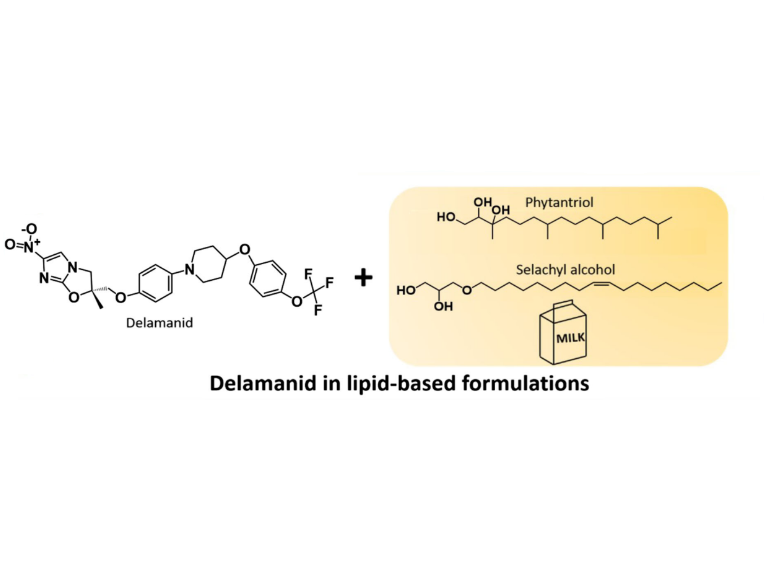
Drug structure

Schematic diagram of Delamanid with PHY and SLY

Schematic diagram of Delamanid with PHY and SLY

https://pmc.ncbi.nlm.nih.gov/articles/PMC8096769/pdf/13346_2020_Article_851.pdf


Drug information

Associated long-acting platforms

PHY and SA digestible lipid nanoparticles

Administration route

Oral

Therapeutic area(s)

TB

Use case(s)

Treatment

Use of drug

Ease of administration

Self-administered

Frequency of administration

Once

User acceptance

The published preclinical literature does not appear to specifically investigate safety endpoints for the PHY and SLY formulations of delamanid, limiting the available evidence for formulation-specific safety assessment.

Dosage

Available dose and strength

Strength: 10 mg/kg PO

Maximum dose

10 mg/kg PO

Recommended dosing regimen

Not provided

Additional comments

Lipid dose incorporated in Delamanid formulations: 1) Phytantriol (PHY): 0.14 ± 0.01 mg/g lipid 2) Selachyl alcohol (SA/SLY): 0.41 ± 0.03 mg/g lipid


Drug information

Drug's link(s)

https://go.drugbank.com/drugs/DB11637

Generic name

Delamanid

Brand name

Delamanid

Compound type

Small molecule

Drug class/category

Bicyclic nitroimidazole

Summary

Delamanid sustained release lipid formulation (oral) based on Phytantriol (PHY) and Selachyl alcohol (SA) to achieve sustained oral absorption. In rats, a 10 mg/kg oral dose of delamanid formulated in PHY or SA significantly prolonged absorption, with Tmax values of 27 and 20 h, respectively, compared with 3.4 h for aqueous suspension and 6.5 h for milk. Relative bioavailability increased to 556% (PHY) and 645% (SA), indicating enhanced exposure and sustained drug release. The effect was attributed to prolonged gastric retention and persistent self-assembled lipid structures. No safety concerns were identified in this preclinical study, although comprehensive toxicological and clinical evaluations remain necessary before translation to human use.

Approval status

Under preclinical investigation

Regulatory authorities

Under preclinical investigation

Safety

The published preclinical literature does not appear to specifically investigate safety endpoints for the PHY and SLY formulations of delamanid, limiting the available evidence for formulation-specific safety assessment.

Efficacy

No published evidence on efficacy is currently available. However, a study by Ramirez et al. (2020) reported the pharmacokinetic profile of the PHY and SLY formulations. The median time to maximum plasma concentration (Tmax) was 27 hours for the PHY formulation and 20 hours for the SLY formulation. Compared with the reference formulation, delamanid exposure increased 5.56-fold and 6.45-fold with the PHY and SLY formulations, respectively.

Evidence Summary

Non-digestible lipid based formulations, particularly selachyl alcohol (SLY) and phytantriol (PHY), substantially increased delamanid exposure and prolonged drug absorption. These findings provide proof-of-concept evidence supporting the potential of sustained oral delivery systems to reduce dosing frequency and improve treatment adherence in patients with multidrug-resistant tuberculosis (MDR-TB).

Delivery device(s)

Not provided


Scale-up and manufacturing prospects

Scale-up prospects

Not provided

Tentative equipment list for manufacturing

Analytical balance, vortex mixer, temperature-controlled incubator (37°C), and sample vials

Manufacturing

The PHY and SLY (selachyl alcohol) formulations were prepared by dispersing delamanid in bulk lipid vehicles at a drug-to-lipid ratio of 1:10 (w/w), followed by equilibration at 37°C for 24 h before administration. Upon hydration in gastrointestinal fluids, phytantriol and selachyl alcohol self-assembled into inverse bicontinuous cubic and inverse hexagonal liquid-crystalline structures, respectively, enabling sustained drug release and prolonged absorption.

Specific analytical instrument required for characterization of formulation

Small-angle X-ray scattering (SAXS), and HPLC with UV detection


Clinical trials

Not provided

Excipients

Proprietary excipients used

Not provided

Novel excipients or existing excipients at a concentration above Inactive Ingredients Database (IID) for the specified route of administration

1) Phytantriol (PHY), 3,7,11,15-tetramethylhexadecane-1,2,3-triol (lipid vehicle) 2) Selachyl alcohol (SA), 1-O-octadec-9-enyl glycerol (lipid vehicle)

Residual solvents used

Not provided


Patent info

Description

Liquid crystal composition and method of use

Brief description

The present invention provides a method, system and composition for controlled compound delivery, the composition comprising a liquid crystal carrier and a compound to be delivered. An external stimulus can be applied to control transition of the liquid crystal from a first phase having a first capacity for retention of the compound to a second phase having a second capacity for retention of the compound. The 'capacity for retention1 is the ability of the liquid crystalline matrix to reduce the apparent diffusion rate of the compound within the matrix to less than that in bulk solvent coexisting with the carrier, such as excess water, bodily fluid or other polar liquid. Thus, the transition from a first phase to a second phase can provide controlled release, on-demand delivery of the compound.

Representative patent

WO2011050388A1

Category

Not provided

Patent holder

Monash University

Exclusivity

Not provided

Expiration date

December 30, 2012

Status

Ceased


Supporting material

Publications

Pham, A. C., Hong, L., Montagnat, O., Nowell, C. J., Nguyen, T. H., & Boyd, B. J. (2016). In Vivo Formation of Cubic Phase in Situ after Oral Administration of Cubic Phase Precursor Formulation Provides Long Duration Gastric Retention and Absorption for Poorly Water-Soluble Drugs. Molecular pharmaceutics, 13(1), 280–286. https://doi.org/10.1021/acs.molpharmaceut.5b00784

Anna C. Pham — ACS Publications — 2015-12-15

Summary: Pham et al. (2016) demonstrated that an oral lipid precursor formulation comprising phytantriol and tributyrin (85:15, w/w) formed liquid-crystalline structures in vivo, resulting in prolonged gastric retention and sustained absorption of cinnarizine in rats. Cinnarizine was administered orally at 2.1 mg/kg in 300 mg of lipid formulation. The study provided proof-of-concept that self-assembling lipid systems can enhance the duration of drug exposure and may support the development of extended-release oral formulations for poorly water-soluble drugs.

Lipid-based liquid crystalline systems based on the combination of digestible and nondigestible lipids have been proposed as potential sustained release delivery systems for oral delivery of poorly water-soluble drugs. The potential for cubic phase liquid crystal formation to induce dramatically extended gastric retention in vivo has been shown previously to strongly influence the resulting pharmacokinetics of incorporated drug. In vitro studies showing the in situ formation of cubic phase from a disordered precursor comprising a mixture of digestible and nondigestible lipids under enzymatic digestion have also recently been reported. Combining both concepts, here we show the potential for such systems to form in vivo, increasing gastric retention, and providing a sustained release effect for a model poorly water-soluble drug cinnarizine. A mixture of phytantriol and tributyrin at an 85:15 mass ratio, shown previously to form cubic phase under the influence of digestion, induced a similar pharmacokinetic profile to that in the absence of tributyrin, but completely different from tributyrin alone. The gastric retention of the formulation, assessed using micro-X-ray CT imaging, was also consistent with the pharmacokinetic behavior, where phytantriol alone and with 15% tributyrin was greater than that of tributyrin in the absence of phytantriol. Thus, the concept of precursor lipid systems that form cubic phase in situ during digestion in vivo has been demonstrated and opens new opportunities for sustained release of poorly water-soluble drugs.

Ramirez G, Pham AC, Clulow AJ, Salim M, Hawley A, Boyd BJ. Sustained absorption of delamanid from lipid-based formulations as a path to reduced frequency of administration. Drug Deliv Transl Res. 2021;11(3):1236-1244. doi:10.1007/s13346-020-00851-z

Gisela Ramirez — Drug Delivery and Translational Research

Summary: The study demonstrated that incorporating delamanid into the non-digestible lipids phytantriol and selachyl alcohol markedly prolonged drug absorption in rats compared with an aqueous suspension. The formulations produced substantially higher systemic exposure, with relative bioavailability reaching 556% and 645%, respectively. However, the work was primarily a pharmacokinetic proof-of-concept, and the authors noted that formal preclinical and clinical safety studies of these formulations remained to be conducted.

Delamanid is a poorly water-soluble drug currently being used for the treatment of tuberculosis. The high frequency of dosing leads to poor adherence for patients who live in lower economic and nomadic populations. Non-digestible self-assembling lipids as a formulation approach for poorly water-soluble drugs have previously been shown to extend the window of absorption through gastric retention. We hypothesise that this approach could lead to the reduction of dosing frequency for delamanid and thereby has potential to improve adherence. Formulations of delamanid were prepared in selachyl alcohol and phytantriol as non-digestible self-assembling lipid vehicles, and their behaviour was compared with reconstituted milk powder, as a digestible lipid-based formulation, and an aqueous suspension. The self-assembly of selachyl alcohol and phytantriol in aqueous media in the presence of delamanid was studied using small angle X-ray scattering and produced the inverse hexagonal (H2) and inverse bicontinuous cubic (V2) liquid crystal structures, respectively. The times at which maximum delamanid levels in plasma were observed (Tmax) after oral administration of the phytantriol, selachyl alcohol and reconstituted milk powder formulations of delamanid to rats were 27 ± 3, 20 ± 4 and 6.5 ± 1.0 h, respectively, compared with the aqueous suspension formulation with a Tmax of 3.4 ± 1 h, which confirms the hypothesis of an extended duration of absorption after administration in non-digestible self-assembling lipids. The digestion products of the triglycerides in the milk formulation increased the solubilisation of delamanid in the gastrointestinal tract, leading to an increase in exposure compared with the aqueous suspension formulation but did not significantly extend Tmax. Overall, the non-digestible nanostructured lipid formulations extended the duration of absorption of delamanid well beyond that from milk or suspension formulations.

Additional documents

No documents were uploaded

Useful links

There are no additional links


Additional information

Not provided