
access-principles-1access-principles-2access-principles-3backcarrierdevelopmentease_of_administrationexportimplantableinjectablenon-implantablenon_carriernon_injectableother_featuresprintroute_of_administrationtherapeutic_areatype_of_tech
Developed by

MPP logo
UOL CELT logo
Supported by

Unitaid logo
Leap logo
Coefficient Giving logo
https://pureadmin.qub.ac.uk/ws/files/692767915/Wang2026b.pdf

Dapivirine Subdermal Implant


Developer(s)

Queen's University Belfast

Originator
https://www.qub.ac.uk/

United Kingdom

Queen's University Belfast (QUB) is a historic public research institution located in the heart of Belfast, Northern Ireland. Founded in 1845, it is a member of the elite Russell Group of research-intensive universities and was recently named the UK University of the Year 2026 by the Good University Guide. The university is globally celebrated for its architectural beauty, most


Drug structure

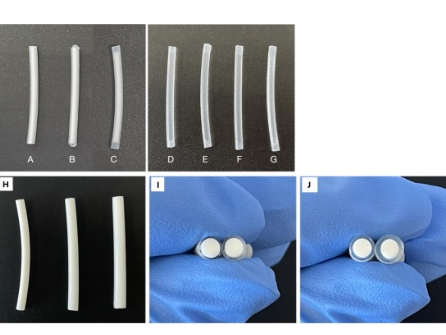
(A–G) Reservoir-type DPV implants  (A) solid DDU-4320 core and no end sealing; (B) solid DDU-4320 core with end sealing. (C–G) Implants having liquid Kolliphor®

(A–G) Reservoir-type DPV implants (A) solid DDU-4320 core and no end sealing; (B) solid DDU-4320 core with end sealing. (C–G) Implants having liquid Kolliphor®

https://pureadmin.qub.ac.uk/ws/files/692767915/Wang2026b.pdf
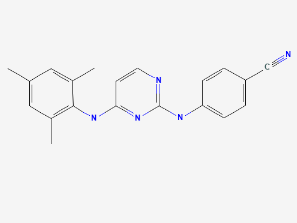
Structure of Dapivirine (DPV)

Structure of Dapivirine (DPV)

https://pubchem.ncbi.nlm.nih.gov/substance/135129476#section=2D-Structure
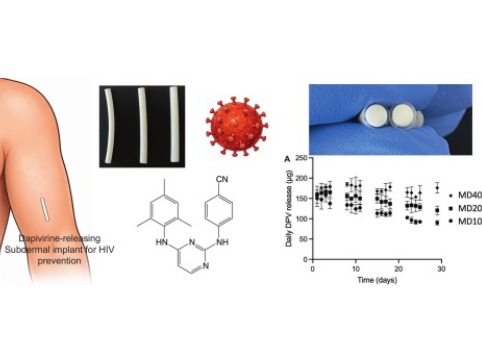
Schematic graphical representation of DPV subdermal implant and the plasma concentration-time curve

Schematic graphical representation of DPV subdermal implant and the plasma concentration-time curve

https://pureadmin.qub.ac.uk/ws/files/692767915/Wang2026b.pdf
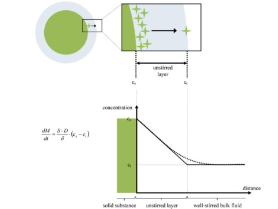
Schematic of the DPV release mechanism from reservoir-type implants

Schematic of the DPV release mechanism from reservoir-type implants

https://pureadmin.qub.ac.uk/ws/files/692767915/Wang2026b.pdf


Drug information

Associated long-acting platforms

Polymeric implant

Administration route

Transdermal

Therapeutic area(s)

HIV

Use case(s)

Pre-Exposure Prophylaxis (PrEP)
Prevention

Use of drug

Ease of administration

Administered by a community health worker
Administered by a nurse
Administered by a specialty health worker

Frequency of administration

Yearly

User acceptance

Not provided

Dosage

Available dose and strength

Dose: 72-91 mg dapivirine per implant

Maximum dose

91 mg per implant

Recommended dosing regimen

No clinical dosing regimen has been established yet

Format

Not provided

Additional comments

Not provided


Drug information

Drug's link(s)

https://go.drugbank.com/drugs/DB08639

Generic name

Dapivirine (DPV) subdermal implant

Brand name

Dapivirine subdermal implant

Compound type

Small molecule

Drug class/category

NNRTI (Non-Nucleoside Reverse Transcriptase Inhibitor)

Lifecycle status

Preclinical / IND

Summary

DPV implant is a silicone-based subdermal implant designed to provide sustained systemic delivery of DPV over extended periods. DPV prevents HIV replication by inhibiting reverse transcriptase. Unlike the approved vaginal ring, the implant delivers the drug systemically, requiring distribution to genital tissues to achieve protective concentrations. The implant exhibits near zero-order release kinetics, providing consistent drug exposure with minimal fluctuation. Initial reservoir implants released approximately 5-20 µg/day for more than 246-330 days, with modelling suggesting potential multi-year activity. Formulation optimisation significantly increased release rates. Liquid-core and dip-coated reservoir designs achieved 19.5-41 µg/day, while matrix implants reached up to 185 µg/day. Enhanced release was driven by reduced membrane thickness and improved DPV solubility within the formulation. Key strengths include ultra-long-acting delivery, tunable release profiles, established silicone implant technology, and the potential to improve adherence compared with daily oral PrEP.

Approval status

Under preclinical investigation

Regulatory authorities

Under preclinical investigation

Safety

No human safety, tolerability, TEAE, SAE, or injection-site reaction data were reported yet

Efficacy

No direct efficacy data were reported, but the release rate studies show that the implant achieved sustained, near zero-order dapivirine release for 246-330 days, with optimised designs delivering up to 185 μg/day.

Evidence Summary

Clinical safety and efficacy of DPV subdermal implant remain unconfirmed and require evaluation in preclinical and human studies.

Delivery device(s)

Not provided


Scale-up and manufacturing prospects

Scale-up prospects

Not provided

Tentative equipment list for manufacturing

Not provided

Manufacturing

Dapivirine implants were manufactured by dispersing DPV in silicone elastomer, filling medical-grade silicone tubing to form a drug reservoir, curing the formulation, and sealing the implant ends. Optimised designs incorporated Kolliphor® EL liquid cores or dip-coated silicone membranes to enhance release. Quality testing included dimensional analysis, drug loading verification, DSC characterisation, and long-term in vitro release studies. Materials needed: 1) Micronised DPV 2) Translucent platinum-cured silicone elastomer tubing 3) Polyvinyl chloride tubing 4) Kolliphor® EL 5) Tween® 80

Specific analytical instrument required for characterization of formulation

Waters Alliance e2695 High-performance liquid chromatography (HPLC) system coupled with a 2489 UV/Visible detector


Clinical trials

Not provided

Excipients

Proprietary excipients used

Not provided

Novel excipients or existing excipients at a concentration above Inactive Ingredients Database (IID) for the specified route of administration

Kolliphor EL (Cremophor EL)

Residual solvents used

Not provided


Patent info

There are either no relevant patents or these were not yet submitted to LAPaL


Supporting material

Publications

Wang S, Murtadha RZ, Malcolm RK. Subdermal implants for HIV prevention with increased dapivirine release rates. J Control Release. 2026;373:700-711. doi:10.1016/j.jconrel.2026.08.040.

Siqi Wang — International Journal of Pharmaceutics — 2026-05-19

Dapivirine (DPV) is an antiretroviral drug used for prevention of sexually acquired HIV infection in the form of a monthly matrix-type silicone elastomer vaginal ring. As part of efforts to develop longer acting antiretroviral products for HIV pre-exposure prophylaxis (PrEP), we previously reported reservoir-type DPV-releasing silicone elastomer subdermal implants. These early prototypes were constrained by relatively low DPV daily release rates (7–14 µg/day), which are likely too low to prevent sexual transmission of HIV. Here, we report in vitro formulation development of next-generation implant formulations as part of efforts to increase DPV release rates. Three strategies were evaluated—(i) reservoir-type implants fabricated from medical-grade silicone tubing comprising a core containing DPV solubilised in a liquid polyethoxylated castor oil (Kolliphor® EL), (ii) dip-coated reservoir rods, comprising a matrix-type silicone core and a relatively thin (∼0.33–0.66 mm) drug-free, silicone elastomer, rate-controlling membrane applied by dip coating, and (iii) simple matrix-type silicone elastomer rods. Replacing the conventional silicone elastomer core of the implants with Kolliphor® EL increased DPV solubility and enhanced steady-state flux ∼1.5-fold. Dip-coated implants provided mean daily release rates of 19–41 µg/day. Matrix-type implants lacking a rate-controlling membrane delivered up to 185 µg/day. While these release rates represent a substantial improvement over first-generation devices, it remains uncertain whether they would produce systemic concentrations sufficient for HIV prevention, given dapivirine’s relatively low potency and the absence of a local delivery advantage with subdermal administration. Nonetheless, the findings are useful in demonstrating the feasibility of designing silicone-based implants, illustrating how core composition, membrane geometry, and release conditions influence DPV release from silicone subdermal implants, and providing a basis for future in vivo pharmacokinetic and preclinical evaluation.

Wang S, Murtadha RZ, Malcolm RK. Formulation development of a dapivirine-releasing subdermal implant for HIV prevention. International Journal of Pharmaceutics. 2026;629:123409. doi:10.1016/j.ijpharm.2026.122409

Siqi Wang — International Journal of Pharmaceutics — 2025-12-19

There have been several significant advances in recent years around long-acting strategies for HIV pre-exposure prophylaxis, including DapiRing® (a 1-month dapivirine (DPV)-releasing vaginal ring), Apretude® (a cabotegravir intramuscular injection administered every two months), and Yeztugo® (a twice-yearly lenacapavir injection). With the goal of developing new drug delivery devices that can extend antiretroviral release for 12 months or longer, we report here our preliminary efforts to design a subdermal implant releasing the antiretroviral drug DPV. These reservoir-type rod implants (length 40 mm, cross-sectional diameters 2.5, 3.2, 3.5 or 4.0 mm) comprised a silicone elastomer core containing solid crystalline DPV (loading 10, 20 or 40 % w/w) and an open-ended non-medicated rate-controlling silicone elastomer membrane (thickness 0.5, 0.8 or 1.0 mm). DPV in vitro release rates could be modulated by adjusting the membrane thickness. Continuous in vitro DPV release ∼12 μg/day was demonstrated over 330 days, with sufficient residual drug content (∼87 mg/∼95 %) to extend release for at least 5 years. In particular, the study highlights the challenges in designing subdermal implants providing sufficient DPV release to maintain systemic/vaginal concentrations at protective levels.

Additional documents

No documents were uploaded

Useful links

There are no additional links


Additional information

Not provided