
|
Developed by 

|
Supported by 


|
VRC07-523LS (mAb) (TMB-380)
Developer(s)
|
Vaccine Research Center, National Institute of Allergy and Infectious Diseases (NIAID) Originator
https://www.niaid.nih.gov/
United States of America The National Institute of Allergy and Infectious Diseases (NIAID) is a key institute within the National Institutes of Health (NIH) dedicated to advancing research on infectious, immunologic, and allergic diseases. Established over 60 years ago, NIAID conducts both basic and applied research aimed at improving understanding, diagnosis, treatment, and prevention of these diseases. |

|
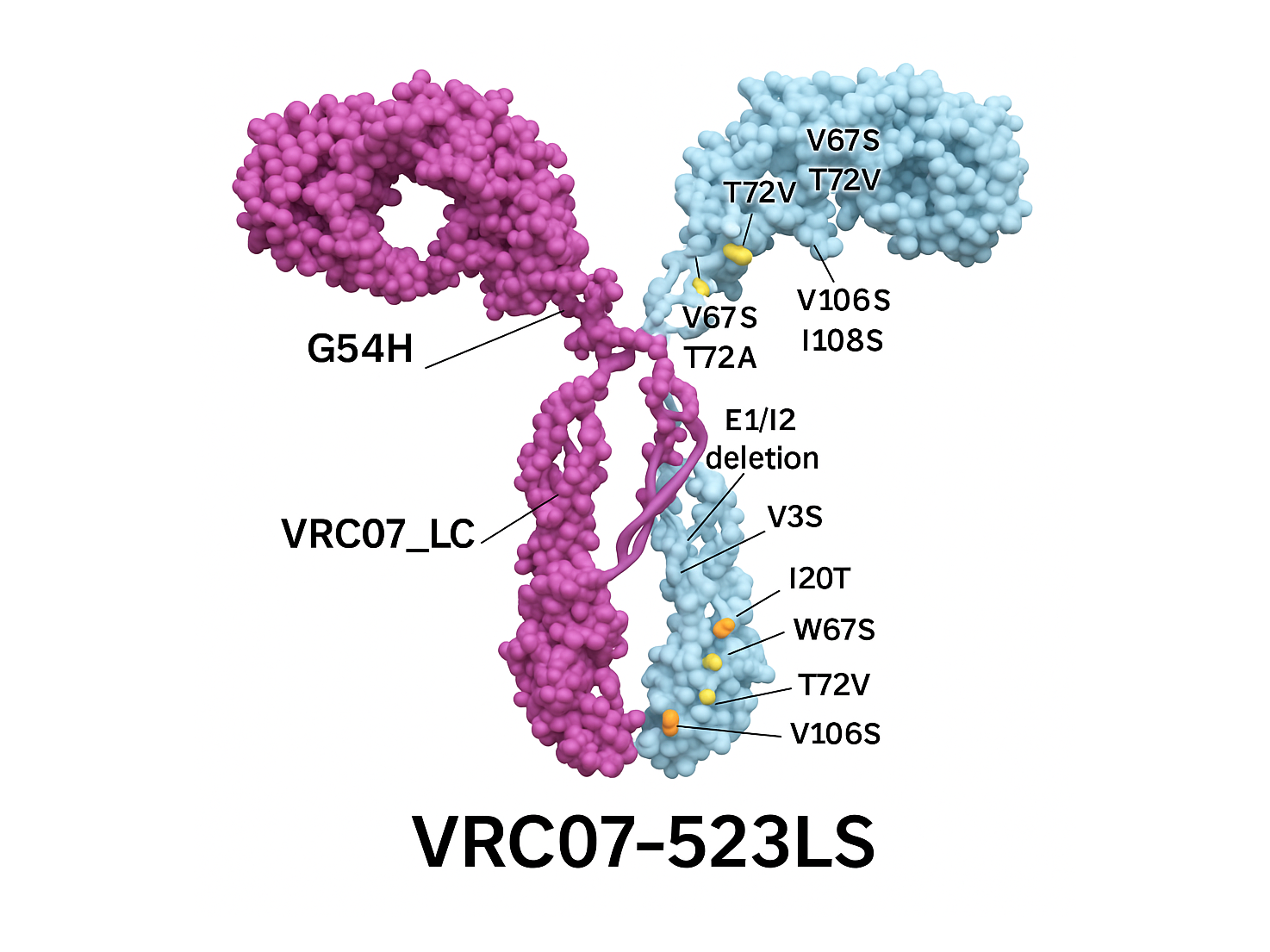
Drug structure
3D structural illustration of VRC07-523LS
Rudicell, R. S., Kwon, Y. D., Ko, S. Y., Pegu, A., Louder, M. K., Georgiev, I. S., Wu, X., Zhu, J., Boyington, J. C., Chen, X., Shi, W., Yang, Z. Y., Doria-Rose, N. A., McKee, K., O'Dell, S., Schmidt,
Drug information
Associated long-acting platforms
Monoclonal antibodies and antibody drug conjugates
Administration route
Intravenous, Subcutaneous, Intramuscular
Therapeutic area(s)
Use case(s)
Use of drug
Ease of administration
Frequency of administration
User acceptance
To be determined. In CAPRISA 012A (with PGT121), 86.7% of African women found two to three subcutaneous administrations per year acceptable for HIV prevention. Generally safe and well tolerated across phase 1 studies.
Dosage
Available dose and strength
Investigational: weight-based 5 to 40 mg/kg (5 mg/kg; 20mg/kg; 40mg/kg) IV or SC; fixed doses 400 mg to 3,200 mg IV; 1.2 g SC (CAPRISA 012C); 2,400, 3,200 and 4,800 mg IV (TaiMed programme).
Maximum dose
40 mg/kg IV (phase 1); 4,800 mg IV fixed dose (as TMB-380)
Recommended dosing regimen
No approved regimen. Examples: with CAB-LA (ACTG A5357); 1.2 g SC every 6 months with CAP256V2LS (CAPRISA 012C part B); 4,800 mg IV every 8 weeks with TMB-365 4,800 mg IV. ; VRC07-523LS 20 mg/kg IV Q12W- 3 doses ; VRC07-523LS 5 mg/kg SC Q12W- 3 doses
Additional comments
Not provided
Dosage link(s)
Not provided
Drug information
Drug's link(s)
Generic name
Brand name
Compound type
Drug class/category
Lifecycle status
Summary
Approval status
Regulatory authorities
Safety
Efficacy
Evidence Summary
Delivery device(s)
No delivery device
Scale-up and manufacturing prospects
Scale-up prospects
Not provided
Tentative equipment list for manufacturing
Bioreactors, incubators, filtration units, lyophilizers, and formulation vessels.
Manufacturing
VRC07-5LS is a monoclonal antibody, and its production involves several key steps: VRC07-523LS is produced in a Chinese Hamster Ovary (CHO) DG44 cell line. Further information is not disclosed yet.
Specific analytical instrument required for characterization of formulation
1. Bio-Plex Instrument (Bio-Rad) 2. Beckman Biomek Automation Platform 3. Surface-Plasmon-Resonance-(SPR)-Systeme 4. Dynamic Light Scattering, 5. Differential Scanning Calorimetry 6. Circular dichroism and isothermal chemical denaturation
Clinical trials
IAVI T003
Identifier
NCT03721510
Link
https://clinicaltrials.gov/study/NCT03721510
Phase
Phase I/II
Status
Completed
Sponsor
International AIDS Vaccine Initiative
More details
This is a Phase 1/2a open label study to evaluate the safety, tolerability, pharmacokinetics and anti-viral activity of PGT121, VRC07-523LS and PGDM1400 for HIV prevention and therapy.
Purpose
A Phase 1/2a Study of PGT121, VRC07-523LS and PGDM1400 Monoclonal Antibodies in HIV-uninfected and HIV-infected Adults
Interventions
Intervention 1
Intervention 2
Countries
Sites / Institutions
Not provided
Trials dates
Anticipated Start Date
Not provided
Actual Start Date
2018-12-03
Anticipated Date of Last Follow-up
2022-05-06
Estimated Primary Completion Date
Not provided
Estimated Completion Date
Not provided
Actual Primary Completion Date
2021-10-25
Actual Completion Date
2022-05-02
Studied populations
Age Cohort
- Adults
- Older Adults
Genders
- All
Accepts pregnant individuals
Unspecified
Accepts lactating individuals
Unspecified
Accepts healthy individuals
Yes
Comments about the studied populations
1. Willing to comply with the requirements of the protocol and available for follow-up for the planned duration of the study. 2. In the opinion of the Principal Investigator or designee and based on Assessment of Informed Consent Understanding results, has understood the information provided and potential impact and/or risks linked to IV infusion and participation in the trial; written informed consent will be obtained from the volunteer before any study-related procedures are performed. 3. All volunteers born female engaging in sexual activity that could lead to pregnancy must commit to use an effective method of contraception from the day of the first IV infusion of investigational product until 6 months following the final investigational product administration 4. All sexually active vo
Health status
Not provided
Study type
Interventional (clinical trial)
Enrollment
19
Allocation
Not provided
Intervention model
Parallel Assignment
Intervention model description
Not provided
Masking
Open label
Masking description
Not provided
Frequency of administration
Studied LA-formulation(s)
Studied route(s) of administration
Use case
Treatment
Key resources
170030
Identifier
NCT03015181
Link
https://clinicaltrials.gov/study/NCT03015181
Phase
Phase I
Status
Completed
Sponsor
National Institute of Allergy and Infectious Diseases (NIAID)
More details
Background: Human immunodeficiency virus (HIV) is a global health threat. The body uses antibodies to fight infection. VRC07-523LS is an antibody directed against HIV. It may be used to prevent mother-to-child transmission of HIV. It may also prevent sexual transmission of HIV and treat HIV-1 infected people. Objective: To test the safety, tolerability, dose, and pharmacokinetics of VRC07-523LS in healthy adults. Eligibility: Healthy people ages 18-50 Design: Participants will be screened with: Medical history Physical exam Blood and urine tests Participants will be assigned to 1 of 7 groups: Groups 1-5 will get the drug at 1 visit and then be observed for 24 weeks. Groups 6 and 7 will get the drug at 1 visit every 12 weeks, for a total of 3 doses over 48 weeks. Participants
Purpose
VRC 605: Safety and Pharmacokinetics of a Human Monoclonal Antibody, VRC-HIVMAB075-00-AB (VRC07-523LS), Administered Intravenously or Subcutaneously to Healthy Adults
Interventions
Intervention 1
Countries
Sites / Institutions
Not provided
Trials dates
Anticipated Start Date
Not provided
Actual Start Date
2017-02-21
Anticipated Date of Last Follow-up
2020-10-21
Estimated Primary Completion Date
Not provided
Estimated Completion Date
Not provided
Actual Primary Completion Date
2018-07-10
Actual Completion Date
2018-07-10
Studied populations
Age Cohort
- Adults
Genders
- All
Accepts pregnant individuals
Unspecified
Accepts lactating individuals
Unspecified
Accepts healthy individuals
No
Comments about the studied populations
* INCLUSION CRITERIA: A volunteer must meet all of the following criteria: * Able and willing to complete the informed consent process. * 18 to 50 years of age. * Based on history and examination, must be in good general health and without history of any of the conditions listed in the exclusion criteria. * Willing to have blood samples collected, stored indefinitely, and used for research purposes. * Able to provide proof of identity to the satisfaction of the study clinician completing the enrollment process. * Willing to adhere to reduced risk sexual behavior during study participation. * Screening laboratory values within 84 days prior to enrollment must meet the following criteria: * White Blood Cell (WBC) 2,500-12,000/mm\^3. * WBC differential either within institutional norma
Health status
Not provided
Study type
Interventional (clinical trial)
Enrollment
26
Allocation
Not provided
Intervention model
Sequential assignment
Intervention model description
Not provided
Masking
Open label
Masking description
Not provided
Frequency of administration
Studied LA-formulation(s)
Studied route(s) of administration
Use case
Treatment
Key resources
IMPAACT 2037
Identifier
NCT06517693
Link
https://clinicaltrials.gov/study/NCT06517693
Phase
Phase I
Status
Recruiting
Sponsor
National Institute of Allergy and Infectious Diseases (NIAID)
More details
The purpose of this study is to evaluate the safety and pharmacokinetics (PK) of the potent, broadly neutralizing anti-HIV monoclonal antibodies (mAb) PGT121.414.LS alone and in combination with VRC07-523LS soon after birth in infants exposed to HIV-1.
Purpose
Safety and Pharmacokinetics Study of PGT121.414.LS Alone and in Combination With VRC07-523LS in Infants Exposed to HIV-1
Interventions
Intervention 1
Intervention 2
Countries
Sites / Institutions
Not provided
Trials dates
Anticipated Start Date
2025-06-01
Actual Start Date
2026-01-05
Anticipated Date of Last Follow-up
2026-08-24
Estimated Primary Completion Date
2027-12-31
Estimated Completion Date
2028-06-30
Actual Primary Completion Date
Not provided
Actual Completion Date
Not provided
Studied populations
Age Cohort
- Children
Genders
- All
Accepts pregnant individuals
Unspecified
Accepts lactating individuals
Unspecified
Accepts healthy individuals
Yes
Comments about the studied populations
Inclusion Criteria: * Birthing parent is of legal age or circumstance to provide independent informed consent and is willing and able to provide written informed consent for themselves and permission for their infant's participation in this study. * Birthing parent has confirmed HIV-1 infection based on positive test results from two samples collected from two separate blood collection tubes. * Infant was singleton or twin. * Infant's gestational age at birth was at least 36 weeks. * At birth, infant's weight was at least 2 kg. * At entry, infant is less than 72 hours of age and is anticipated to receive study product within 72 hours after birth. * At screening, infant has the following laboratory test results: * Hemoglobin, normal or grade 1 (≥13 g/dL or ≥8.05 mmol/L) * Platelets, n
Health status
Not provided
Study type
Interventional (clinical trial)
Enrollment
48
Allocation
Not provided
Intervention model
Sequential assignment
Intervention model description
Not provided
Masking
Open label
Masking description
Not provided
Frequency of administration
Studied LA-formulation(s)
Studied route(s) of administration
Use case
Treatment
Key resources
HVTN 206/HPTN 114
Identifier
NCT06812494
Link
https://clinicaltrials.gov/study/NCT06812494
Phase
Phase II
Status
Active, not recruiting
Sponsor
National Institute of Allergy and Infectious Diseases (NIAID)
More details
HVTN 206/HPTN 114 is a randomized, double blind, controlled, phase 2 clinical trial to evaluate the safety, tolerability, pharmacokinetics, and neutralization of VRC07-523LS, PGT121.414.LS, and PGDM1400LS broadly neutralizing monoclonal antibodies given intravenously in adult participants without HIV. The hypothesis of the study is that the combination of VRC07-523LS and PGT121.414.LS and PGDM1400LS antibodies when administered via the intravenous (IV) route will be safe and tolerable in adult participants without HIV. The study aims to enroll 200 participants across multiple sites with an estimated total duration of participation of eighteen (18) months.
Purpose
A Study of VRC07-523LS, PGT121.414.LS, and PGDM1400LS Broadly Neutralizing Monoclonal Antibodies Given Intravenously in Adult Participants Without HIV
Interventions
Intervention 1
Intervention 2
Intervention 3
Intervention 4
Intervention 5
Countries
Sites / Institutions
Not provided
Trials dates
Anticipated Start Date
Not provided
Actual Start Date
2025-03-07
Anticipated Date of Last Follow-up
2026-08-19
Estimated Primary Completion Date
2027-01-15
Estimated Completion Date
2027-09-15
Actual Primary Completion Date
Not provided
Actual Completion Date
Not provided
Studied populations
Age Cohort
- Adults
- Older Adults
Genders
- All
Accepts pregnant individuals
Unspecified
Accepts lactating individuals
Unspecified
Accepts healthy individuals
Yes
Comments about the studied populations
Inclusion Criteria: * Participants need to be between 18 and 65 years old. * Participants must have access to a participating clinical research site and be willing to follow the study schedule. * Participants should understand the study details and be willing to give informed consent. * Participants must agree not to join any other clinical trials until they finish this study. * Participants must be willing to receive HIV test results. * Participants should be open to discussing HIV prevention. * Clinic staff should assess participants as having a low risk of getting HIV, and participants must commit to avoiding high-risk behaviors during the study. * Hemoglobin: Participant meets minimum levels depending on gender and hormone therapy status. * White Blood Cells (WBC): Should be within th
Health status
Not provided
Study type
Interventional (clinical trial)
Enrollment
200
Allocation
Randomized
Intervention model
Parallel Assignment
Intervention model description
Not provided
Masking
Double-blind masking
Masking description
Not provided
Frequency of administration
Studied LA-formulation(s)
Studied route(s) of administration
Use case
Treatment
Key resources
18-1217
Identifier
NCT03803605
Link
https://clinicaltrials.gov/study/NCT03803605
Phase
Phase I
Status
Completed
Sponsor
University of North Carolina, Chapel Hill
More details
Adult participants (18-64 years old) with HIV-1 Infection on ART with a CD4 T cell count ≥ 350 cells/mm3 and viral suppression for ≥ 24 months will be enrolled on this study. Participants will receive two series of combination therapy consisting of one (1) intravenous (IV) dose of VRC-HIVMAB075-00-AB (VRC07-523LS) followed by 10 oral (PO) doses of Vorinostat (VOR) taken every 72 hours. Each series will last approximately 1 month and the two series will be separated by at least one month. Combination ART is maintained throughout the study. Participants will be on this study for approximately 28 weeks (or about 7 months). The purpose of this study is to: * Evaluate the safety of two series of a VRC07-523LS infusion followed by multiple oral doses of VOR * Determine if combining VRC07-523LS
Purpose
Study to Assess Safety and Activity of Combination Therapy of VRC07-523LS and Vorinostat on HIV-infected Persons
Interventions
Intervention 1
Intervention 2
Countries
Sites / Institutions
Not provided
Trials dates
Anticipated Start Date
Not provided
Actual Start Date
2019-02-12
Anticipated Date of Last Follow-up
2021-11-04
Estimated Primary Completion Date
Not provided
Estimated Completion Date
Not provided
Actual Primary Completion Date
2021-01-28
Actual Completion Date
2021-01-28
Studied populations
Age Cohort
- Adults
Genders
- All
Accepts pregnant individuals
Unspecified
Accepts lactating individuals
Unspecified
Accepts healthy individuals
No
Comments about the studied populations
Inclusion Criteria: 1. ≥ 18 years and \< 65 years of age 2. Ability and willingness of participant to give written informed consent. Note: Due to the lack of foreseeable benefit to study participants, mentally incompetent participants will not be enrolled. 3. HIV infection documented by any licensed rapid HIV test or HIV enzyme or chemiluminescence immunoassay (E/CIA) test kit at any time prior to study entry and confirmed by a licensed Western blot or a second antibody test by a method other than the initial rapid HIV and/or E/CIA, or by HIV-1 antigen, plasma HIV-1 RNA viral assay. A reactive initial rapid test should be confirmed by either another type of rapid assay or an E/CIA that is based on a different antigen preparation and/or different test principle (e.g., indirect versus c
Health status
Not provided
Study type
Interventional (clinical trial)
Enrollment
15
Allocation
Not provided
Intervention model
Single group assignment
Intervention model description
Not provided
Masking
Open label
Masking description
Not provided
Frequency of administration
Studied LA-formulation(s)
Studied route(s) of administration
Use case
Treatment
Key resources
VRC07-523LS
Identifier
NCT03735849
Link
https://clinicaltrials.gov/study/NCT03735849
Phase
Phase I
Status
Completed
Sponsor
National Institute of Allergy and Infectious Diseases (NIAID)
More details
The purpose of this study is to evaluate the safety and pharmacokinetics of a human monoclonal antibody (VRC07-523LS) in the sera and mucosae of healthy, HIV-uninfected adults.
Purpose
Evaluating the Safety and Pharmacokinetics of VRC07-523LS in the Sera and Mucosae of Healthy, HIV-Uninfected Adult Participants
Interventions
Intervention 1
Countries
Sites / Institutions
Not provided
Trials dates
Anticipated Start Date
Not provided
Actual Start Date
2019-01-18
Anticipated Date of Last Follow-up
2025-05-23
Estimated Primary Completion Date
Not provided
Estimated Completion Date
Not provided
Actual Primary Completion Date
2020-12-21
Actual Completion Date
2020-12-21
Studied populations
Age Cohort
- Adults
Genders
- All
Accepts pregnant individuals
Unspecified
Accepts lactating individuals
Unspecified
Accepts healthy individuals
Yes
Comments about the studied populations
Inclusion Criteria: General and Demographic Criteria * Age of 18 to 50 years * Access to a participating HIV Vaccine Trials Network (HVTN) clinical research site (CRS) and willingness to be followed for the planned duration of the study * Ability and willingness to provide informed consent * Assessment of understanding: volunteer demonstrates understanding of this study and completes a questionnaire prior to first study product administration with verbal demonstration of understanding of all questionnaire items answered incorrectly * Agrees not to enroll in another study of an investigational research agent until completion of the last required protocol clinic visit * Good general health as shown by medical history, physical exam, and screening laboratory tests HIV-Related Criteria: *
Health status
Not provided
Study type
Interventional (clinical trial)
Enrollment
28
Allocation
Randomized
Intervention model
Parallel Assignment
Intervention model description
Not provided
Masking
Open label
Masking description
Not provided
Frequency of administration
Studied LA-formulation(s)
Studied route(s) of administration
Use case
Treatment
Key resources
HVTN 127/HPTN 087
Identifier
NCT03387150
Link
https://clinicaltrials.gov/study/NCT03387150
Phase
Phase I
Status
Completed
Sponsor
National Institute of Allergy and Infectious Diseases (NIAID)
More details
The purpose of this study is to evaluate the safety, tolerability, and serum concentrations of a human monoclonal antibody, VRC-HIVMAB075-00-AB (VRC07-523LS), administered in multiple doses and routes to healthy, HIV-uninfected adults.
Purpose
Evaluating the Safety and Serum Concentrations of a Human Monoclonal Antibody, VRC-HIVMAB075-00-AB (VRC07-523LS), Administered in Multiple Doses and Routes to Healthy, HIV-uninfected Adults
Interventions
Intervention 1
Intervention 2
Countries
Sites / Institutions
Not provided
Trials dates
Anticipated Start Date
Not provided
Actual Start Date
2018-02-28
Anticipated Date of Last Follow-up
2023-04-03
Estimated Primary Completion Date
Not provided
Estimated Completion Date
Not provided
Actual Primary Completion Date
2020-12-07
Actual Completion Date
2020-12-07
Studied populations
Age Cohort
- Adults
Genders
- All
Accepts pregnant individuals
Unspecified
Accepts lactating individuals
Unspecified
Accepts healthy individuals
Yes
Comments about the studied populations
Inclusion Criteria: General and Demographic Criteria * Age of 18 to 50 years * Access to a participating clinical research site (CRS) and willingness to be followed for the planned duration of the study * Ability and willingness to provide informed consent * Assessment of understanding: volunteer demonstrates understanding of this study and completes a questionnaire prior to first study product administration with verbal demonstration of understanding of all questionnaire items answered incorrectly * Agrees not to enroll in another study of an investigational research agent until completion of the last required protocol clinic visit * Good general health as shown by medical history, physical exam, and screening laboratory tests HIV-Related Criteria: * Willingness to receive HIV test re
Health status
Not provided
Study type
Interventional (clinical trial)
Enrollment
124
Allocation
Randomized
Intervention model
Parallel Assignment
Intervention model description
Not provided
Masking
Open label
Masking description
Not provided
Frequency of administration
Studied LA-formulation(s)
Studied route(s) of administration
Use case
Treatment
Key resources
AAAU5207
Identifier
NCT05890963
Link
https://clinicaltrials.gov/study/NCT05890963
Phase
Phase I
Status
Active, not recruiting
Sponsor
David Ho
More details
This is an open-label phase 1b clinical trial enrolling people living with HIV (PLWH) who are antiretroviral therapy (ART)-naïve or have not been on ART for \> 24 weeks. This study will enroll PLWH to assess the safety, tolerability, and antiviral effect of bispecific and long-acting bNAbs, alone and in combination. The study will be conducted as a single center study at National Institute for Medical Research-Mbeya Medical Research Center (NIMR-MMRC) in Mbeya, Tanzania. 20 PLWH will be sequentially enrolled into one of 5 arms, each arm comprised of 4 participants. Sequential enrollment will occur in the following order: * Arm 1 will receive standard daily oral ART. * Arm 2 will receive a single dose of 10E8.4/iMab 600mg intravenous injection (IV). * Arm 3 will receive a single dose of 1
Purpose
10E8.4/iMab Bispecific Antibody and VRC07-523LS Monoclonal Antibody in HIV-infected Adults
Interventions
Intervention 1
Intervention 2
Intervention 3
Countries
Sites / Institutions
Not provided
Trials dates
Anticipated Start Date
Not provided
Actual Start Date
2023-11-28
Anticipated Date of Last Follow-up
2026-05-29
Estimated Primary Completion Date
2026-04-01
Estimated Completion Date
2027-05-01
Actual Primary Completion Date
2026-04-14
Actual Completion Date
Not provided
Studied populations
Age Cohort
- Adults
Genders
- All
Accepts pregnant individuals
Unspecified
Accepts lactating individuals
Unspecified
Accepts healthy individuals
No
Comments about the studied populations
Inclusion Criteria: 1. Able to read and write in Kiswahili and/or English 2. Able and willing to provide written informed consent 3. Passes Test of Understanding (TOU) 4. Aged 18-50 years, inclusive 5. Antiretroviral Therapy (ART)-naïve or no ART for \> 24 weeks at the time of screening 6. HIV RNA 1,000-100,000 copies/mL 7. CD4 ≥ 500 cells/mm3 8. Laboratory criteria at screening within protocol-specified limits for blood, chemistry and urinalysis 9. Willing and able to participate in study visits and procedures for up to 50 weeks 10. Willing and able to begin ART as directed during the study 11. Willing and able to use barrier protection during sex with partners without HIV or partners with unknown HIV status throughout Step 1 and until viral suppression \<200 copies/mL is confirmed in St
Health status
Not provided
Study type
Interventional (clinical trial)
Enrollment
20
Allocation
Not provided
Intervention model
Sequential assignment
Intervention model description
Not provided
Masking
Open label
Masking description
Not provided
Frequency of administration
Studied LA-formulation(s)
Studied route(s) of administration
Use case
Treatment
Key resources
IAVI T002
Identifier
NCT03205917
Link
https://clinicaltrials.gov/study/NCT03205917
Phase
Phase I
Status
Completed
Sponsor
International AIDS Vaccine Initiative
More details
This is a Phase 1 study to evaluate the safety, tolerability, pharmacokinetics and anti-viral efficacy of the PGDM1400 and PGT121 and VRC07-523LS mAbs for HIV prevention and therapy.
Purpose
A Clinical Trial of PGDM1400 and PGT121 and VRC07-523LS Monoclonal Antibodies in HIV-infected and HIV-uninfected Adults
Interventions
Intervention 1
Intervention 2
Intervention 3
Intervention 4
Intervention 5
Countries
Sites / Institutions
Not provided
Trials dates
Anticipated Start Date
Not provided
Actual Start Date
2017-10-23
Anticipated Date of Last Follow-up
2020-09-11
Estimated Primary Completion Date
Not provided
Estimated Completion Date
Not provided
Actual Primary Completion Date
2020-04-20
Actual Completion Date
2020-04-20
Studied populations
Age Cohort
- Adults
- Older Adults
Genders
- All
Accepts pregnant individuals
Unspecified
Accepts lactating individuals
Unspecified
Accepts healthy individuals
Yes
Comments about the studied populations
Groups 1 and 2 Inclusion Criteria: * HIV-uninfected males or females age 18-50 years old * Willing to maintain low risk behavior for HIV infection Groups 1 and 2 Exclusion Criteria: • Confirmed HIV-infection, pregnancy or lactation, significant acute or chronic disease and clinically significant laboratory abnormalities Group 3 Inclusion Criteria: * HIV-infected males or females age 18-65 years old * Not on antiretroviral therapy with HIV-1 RNA plasma level between 1,000 and 100,000 copies/ml, CD4 cell count ≥ 300 cells/uL Group 3 Exclusion Criteria: • Significant acute or chronic medical condition other than HIV infection, and clinically significant laboratory abnormalities
Health status
Not provided
Study type
Interventional (clinical trial)
Enrollment
29
Allocation
Randomized
Intervention model
Parallel Assignment
Intervention model description
Not provided
Masking
Double-blind masking
Masking description
Not provided
Frequency of administration
Studied LA-formulation(s)
Studied route(s) of administration
Use case
Treatment
Key resources
GS-US-382-5445
Identifier
NCT05281510
Link
https://clinicaltrials.gov/study/NCT05281510
Phase
Phase II
Status
Completed
Sponsor
Gilead Sciences
More details
The goals of this clinical study are to learn more about the study drugs, VRC07-523LS, CAP256V2LS, and vesatolimod (VES) and how safe it is in women that have HIV and are on antiretroviral therapy (ART).
Purpose
Study of VRC07-523LS, CAP256V2LS, and Vesatolimod, in Early Antiretroviral-treated HIV-1 Clade C-infected Women
Interventions
Intervention 1
Intervention 2
Intervention 3
Countries
Sites / Institutions
Not provided
Trials dates
Anticipated Start Date
Not provided
Actual Start Date
2022-06-09
Anticipated Date of Last Follow-up
2025-12-24
Estimated Primary Completion Date
Not provided
Estimated Completion Date
Not provided
Actual Primary Completion Date
2025-01-16
Actual Completion Date
2025-01-16
Studied populations
Age Cohort
- Adults
- Older Adults
Genders
- Female
Accepts pregnant individuals
Unspecified
Accepts lactating individuals
Unspecified
Accepts healthy individuals
No
Comments about the studied populations
Key Inclusion Criteria: * Age ≥ 18 years * Females recruited from the Females Rising through Education, Support, and Health (FRESH) acute human immunodeficiency virus (HIV) infection cohort. * Plasma human immunodeficiency -1 (HIV-1) ribonucleic acid (RNA) levels \< 50 copies/mL at the screening visit. * On antiretroviral (ART) regimen for ≥ 12 consecutive months prior to the screening visit. * Have all the following laboratory values at the screening visit: * Hemoglobin ≥ 10.0 g/dL * White blood cells ≥ 2500 cells/μL * Platelets ≥ 125,000/mL * Absolute neutrophil counts ≥ 1000 cells/μL * Cluster of differentiation (CD)4+ T cell count ≥ 500 cells/μL * Alanine aminotransferase (ALT), aspartate aminotransferase (AST), and bilirubin ≤ 2 × upper limit of normal (ULN) * Creatini
Health status
Not provided
Study type
Interventional (clinical trial)
Enrollment
20
Allocation
Not provided
Intervention model
Single group assignment
Intervention model description
Not provided
Masking
Open label
Masking description
Not provided
Frequency of administration
Studied LA-formulation(s)
Studied route(s) of administration
Use case
Treatment
Key resources
HVTN 130/HPTN 089
Identifier
NCT03928821
Link
https://clinicaltrials.gov/study/NCT03928821
Phase
Phase I
Status
Completed
Sponsor
National Institute of Allergy and Infectious Diseases (NIAID)
More details
The purpose of this study is to evaluate the safety, tolerability, pharmacokinetics, and antiviral activity of combinations of monoclonal antibodies PGT121, PGDM1400, 10-1074, and VRC07-523LS administered via intravenous infusion in healthy, HIV-uninfected adults.
Purpose
Evaluating the Safety, Tolerability, Pharmacokinetics, and Antiviral Activity of Combinations of Monoclonal Antibodies PGT121, PGDM1400, 10-1074, and VRC07-523LS Administered Via Intravenous Infusion
Interventions
Intervention 1
Intervention 2
Intervention 3
Intervention 4
Countries
Sites / Institutions
Not provided
Trials dates
Anticipated Start Date
Not provided
Actual Start Date
2019-07-17
Anticipated Date of Last Follow-up
2022-06-15
Estimated Primary Completion Date
Not provided
Estimated Completion Date
Not provided
Actual Primary Completion Date
2021-03-25
Actual Completion Date
2021-03-25
Studied populations
Age Cohort
- Adults
Genders
- All
Accepts pregnant individuals
Unspecified
Accepts lactating individuals
Unspecified
Accepts healthy individuals
Yes
Comments about the studied populations
Inclusion Criteria: General and Demographic Criteria * Age of 18 to 50 years * Access to a participating clinical research site (CRS) and willingness to be followed for the planned duration of the study * Ability and willingness to provide informed consent * Assessment of understanding: volunteer demonstrates understanding of this study and completes a questionnaire prior to first study product administration with verbal demonstration of understanding of all questionnaire items answered incorrectly * Agrees not to enroll in another study of an investigational research agent until completion of the last required protocol clinic visit * Good general health as shown by medical history, physical exam, and screening laboratory tests HIV-Related Criteria: * Willingness to receive HIV test re
Health status
Not provided
Study type
Interventional (clinical trial)
Enrollment
27
Allocation
Randomized
Intervention model
Parallel Assignment
Intervention model description
Not provided
Masking
Open label
Masking description
Not provided
Frequency of administration
Studied LA-formulation(s)
Studied route(s) of administration
Use case
Treatment
Key resources
160147
Identifier
NCT02840474
Link
https://clinicaltrials.gov/study/NCT02840474
Phase
Phase I
Status
Completed
Sponsor
National Institute of Allergy and Infectious Diseases (NIAID)
More details
Background: The human body uses antibodies as one way to help fight infection. VRC01LS and VRC07-523LS are antibodies directed against the HIV virus. Researchers want to see if they are safe and well tolerated. In Part A of the study, the researchers studied VRC01LS. Part A of the study was completed in 2017. In Part B, the researchers studied VRC07-523LS. Depending on which antibody received, researchers studied the amount of VRC01LS or VRC07-523LS in the body and how it changes over time. They evaluated the effect of antibodies on CD4+ (Cluster of Differentiation 4) lymphocyte count and HIV viral load, and checked to see if people who get VRC01LS or VRC07-523LS develop an immune response to it. Objective: To see if VRC01LS and VRC07-523LS are safe and well tolerated. Eligibility: Ad
Purpose
Phase 1, Open-label, Single Dose Study to Examine Safety, Tolerability, Pharmacokinetics and Virologic Impact of VRC01LS or VRC07-523LS in HIV-infected Viremic Adults
Interventions
Intervention 1
Intervention 2
Countries
Sites / Institutions
Not provided
Trials dates
Anticipated Start Date
Not provided
Actual Start Date
2017-04-24
Anticipated Date of Last Follow-up
2025-01-28
Estimated Primary Completion Date
Not provided
Estimated Completion Date
Not provided
Actual Primary Completion Date
2020-01-15
Actual Completion Date
2020-01-15
Studied populations
Age Cohort
- Adults
- Older Adults
Genders
- All
Accepts pregnant individuals
Unspecified
Accepts lactating individuals
Unspecified
Accepts healthy individuals
No
Comments about the studied populations
INCLUSION CRITERIA: A participant must meet all of the following criteria: 1. Able and willing to complete the informed consent process. 2. 18-70 years old 3. Available for clinic visits for 48 weeks after study product administration. 4. HIV-1 infected and clinically stable. \[Note: Documented HIV-1 infection by HIV enzyme immunoassay (EIA) performed by a Clinical Laboratory Improvement Amendments (CLIA) certified outside lab within 28 days of enrollment is acceptable.\] 5. At least one plasma viral load \>=500 copies/mL within 28 days of enrollment. A plasma viral load within 28 days and closest to the day of enrollment, that is detectable but not greater than 100,000 copies/mL. \[Note: outside laboratory results will be acceptable\]. 6. A CD4+ count \>=350 cells/microliter (mcL) on 2
Health status
Not provided
Study type
Interventional (clinical trial)
Enrollment
16
Allocation
Not provided
Intervention model
Single group assignment
Intervention model description
Not provided
Masking
Open label
Masking description
Not provided
Frequency of administration
Studied LA-formulation(s)
Studied route(s) of administration
Use case
Treatment
Key resources
ACHIEV
Identifier
NCT06484335
Link
https://clinicaltrials.gov/study/NCT06484335
Phase
Phase I
Status
Recruiting
Sponsor
Henry M. Jackson Foundation for the Advancement of Military Medicine
More details
This is a phase I, randomized, double-blind, placebo-controlled clinical trial to investigate the safety of VRC07-523LS and PGDM1400LS in combination with ChAdOx1.tHIVconsv1, ChAdOx1.HIVconsv62 prime, MVA.tHIVconsv4 and A244d11gp120/ALFQ vaccination, and the impact on viral load setpoint during analytic treatment interruption (ATI) in people living with human immunodeficiency virus-1 (HIV-1, PLWH) who have initiated or will initiate antiretroviral therapy (ART) during acute HIV-1 infection (AHI).
Purpose
RV630 - Approach to Control HIV With Immune Enhancement and Vaccination (ACHIEV
Interventions
Intervention 1
Intervention 2
Intervention 3
Intervention 4
Intervention 5
Countries
Sites / Institutions
Not provided
Trials dates
Anticipated Start Date
2025-05-01
Actual Start Date
2025-03-27
Anticipated Date of Last Follow-up
2026-09-03
Estimated Primary Completion Date
2029-07-17
Estimated Completion Date
2029-07-17
Actual Primary Completion Date
Not provided
Actual Completion Date
Not provided
Studied populations
Age Cohort
- Adults
Genders
- All
Accepts pregnant individuals
Unspecified
Accepts lactating individuals
Unspecified
Accepts healthy individuals
No
Comments about the studied populations
Inclusion/Exclusion Step 1 Inclusion Criteria (Groups 1 and 2 only) Participants are eligible to be included in the protocol Step 1 only if all of the following criteria are met: 1. Thai National 2. Age ≥18 and ≤60 years of age 3. Can read and write Thai 4. Able and willing to provide written informed consent 5. Confirmed HIV-1 infection (nucleic acid testing \[NAT\] and/or HIV-1 serology positive with confirmatory quantitative HIV-1 viral load) and started ART during acute infection 6. Uninterrupted treatment with ART (no interruption of ART for ≥7 consecutive days or longer) since ART initiation, for ≥ 48 weeks. 7. Currently on integrase inhibitor-based ART regimen (excluding long-acting injectable regimens) and no recent (≤8 weeks prior to screening) changes to ART regimen. a. The
Health status
Not provided
Study type
Interventional (clinical trial)
Enrollment
48
Allocation
Randomized
Intervention model
Parallel Assignment
Intervention model description
Not provided
Masking
Triple-blind masking
Masking description
Not provided
Frequency of administration
Studied LA-formulation(s)
Studied route(s) of administration
Use case
Treatment
Key resources
ACTG A5357
Identifier
NCT03739996
Link
https://clinicaltrials.gov/study/NCT03739996
Phase
Phase II
Status
Completed
Sponsor
National Institute of Allergy and Infectious Diseases (NIAID)
More details
The purpose of this study was to assess the safety, tolerability, antiviral activity, and pharmacokinetics of long-acting cabotegravir (CAB LA) plus the broadly neutralizing monoclonal antibody VRC-HIVMAB075-00-AB (VRC07-523LS), in adults living with HIV-1 with suppressed plasma viremia.
Purpose
Long-Acting Cabotegravir Plus VRC-HIVMAB075-00-AB (VRC07-523LS) for Viral Suppression in Adults Living With HIV-1
Interventions
Intervention 1
Intervention 2
Intervention 3
Intervention 4
Intervention 5
Countries
Sites / Institutions
Not provided
Trials dates
Anticipated Start Date
Not provided
Actual Start Date
2019-12-31
Anticipated Date of Last Follow-up
2025-05-07
Estimated Primary Completion Date
Not provided
Estimated Completion Date
Not provided
Actual Primary Completion Date
2024-04-29
Actual Completion Date
2024-04-29
Studied populations
Age Cohort
- Adults
- Older Adults
Genders
- All
Accepts pregnant individuals
Unspecified
Accepts lactating individuals
Unspecified
Accepts healthy individuals
No
Comments about the studied populations
Step 1 Inclusion Criteria: * Individual with HIV-1 * On a three-drug ART regimen for at least 8 weeks that includes a boosted protease inhibitor (PI), a nonnuceloside reverse transcriptase inhibitor (NNRTI), or an integrase inhibitor (INSTI) plus two nuclesodie reverse transcriptase inhibitors (NRTI) with no history of switch due to virologic failure. * CD4+ cell count greater than or equal to 350 cells/mm\^3 * Virally suppressed (\< 50 copies/mL) within 2 years prior to study entry * Susceptibility to VRC07-523LS based on IC50 less than or equal to 0.25 ug/mL and a Maximum Percent Inhibition \> 98% using the Monogram PhenoSense Assay * Certain laboratory values obtained within 60 days prior to study entry and in an acceptable range * For participants of child-bearing potential: * A ne
Health status
Not provided
Study type
Interventional (clinical trial)
Enrollment
75
Allocation
Not provided
Intervention model
Single group assignment
Intervention model description
Not provided
Masking
Open label
Masking description
Not provided
Frequency of administration
Studied LA-formulation(s)
Studied route(s) of administration
Use case
Treatment
Key resources
IPCAVD014/HTX1004
Identifier
NCT04983030
Link
https://clinicaltrials.gov/study/NCT04983030
Phase
Phase I/II
Status
Completed
Sponsor
Boris Juelg, MD PhD
More details
A multicenter, randomized, parallel-group, placebo-controlled, double-blind, Phase 1/2a clinical study to investigate the safety, tolerability, immunogenicity and exploratory efficacy of a vaccine regimen consisting of an Ad26.Mos4.HIV prime and a boost with Modified Vaccinia Ankara (MVA)-BN-HIV in combination with broadly neutralizing antibodies (bNAb) PGT121, PGDM1400, and VRC07-523LS in human immunodeficiency virus type 1 (HIV-1)-infected study participants on suppressive anti-retroviral therapy (ART).
Purpose
Safety, Immunogenicity, Efficacy of Ad26.Mos4.HIV, MVA-BN-HIV and PGT121, PGDM1400, and VRC07-523LS in HIV-1-Infected Adults
Interventions
Intervention 1
Intervention 2
Intervention 3
Intervention 4
Intervention 5
Countries
Sites / Institutions
Not provided
Trials dates
Anticipated Start Date
Not provided
Actual Start Date
2022-04-01
Anticipated Date of Last Follow-up
2026-05-27
Estimated Primary Completion Date
2026-02-28
Estimated Completion Date
2026-04-30
Actual Primary Completion Date
2026-02-23
Actual Completion Date
2026-02-23
Studied populations
Age Cohort
- Adults
- Older Adults
Genders
- All
Accepts pregnant individuals
Unspecified
Accepts lactating individuals
Unspecified
Accepts healthy individuals
No
Comments about the studied populations
Inclusion Criteria: 1. Each potential study participant must pass the Test of Understanding (TOU), indicating that he or she understands the purpose of, and procedures required for the study, after reading the informed consent and after the investigator or designee has provided detailed information on the study and has answered the potential study participant's questions. Each study participant must subsequently sign the ICF, indicating that he or she is willing to participate in the study. 2. Each study participant must be willing and able to adhere to the prohibitions and restrictions specified in this protocol. 3. Study participants are ≥18 to ≤70 years old on the day of signing the ICF. 4. Each study participant must have documented HIV-1 infection. 5. Must be on suppressive ART for a
Health status
Not provided
Study type
Interventional (clinical trial)
Enrollment
28
Allocation
Randomized
Intervention model
Parallel Assignment
Intervention model description
Not provided
Masking
Double-blind masking
Masking description
Not provided
Frequency of administration
Studied LA-formulation(s)
Studied route(s) of administration
Use case
Treatment
Key resources
HVTN 140/HPTN 101
Identifier
NCT05184452
Link
https://clinicaltrials.gov/study/NCT05184452
Phase
Phase I
Status
Completed
Sponsor
National Institute of Allergy and Infectious Diseases (NIAID)
More details
Part A: The purpose of this part of the study is to understand how the body's immune system responds to a new lab-made antibody against HIV. The study is looking to see if the way the antibody is given affects the immune response. The study will also look at whether the antibody is safe to give to people and does not make them too uncomfortable. Part B: The purpose of this part of the study is to understand how the body's immune system responds to lab-made antibodies against HIV when they are given in combination at different doses. The study also wants to see if the way the antibodies are given affects the immune response.
Purpose
A Clinical Trial to Evaluate the Safety, Tolerability, and Pharmacokinetics of PGDM1400LS Alone and in Combination With VRC07-523LS and PGT121.414.LS in Healthy, HIV-uninfected Adult Participants
Interventions
Intervention 1
Intervention 2
Intervention 3
Intervention 4
Intervention 5
Countries
Sites / Institutions
Not provided
Trials dates
Anticipated Start Date
Not provided
Actual Start Date
2021-11-15
Anticipated Date of Last Follow-up
2025-01-16
Estimated Primary Completion Date
Not provided
Estimated Completion Date
Not provided
Actual Primary Completion Date
2023-07-19
Actual Completion Date
2023-07-19
Studied populations
Age Cohort
- Adults
Genders
- All
Accepts pregnant individuals
Unspecified
Accepts lactating individuals
Unspecified
Accepts healthy individuals
Yes
Comments about the studied populations
Inclusion Criteria: 1. Age of 18 through 50 years 2. Access to a participating CRS and willingness to be followed for the planned duration of the study 3. Ability and willingness to provide informed consent 4. Assessment of understanding: volunteer demonstrates understanding of this study and completes a questionnaire prior to first study product administration with verbal demonstration of understanding of all questionnaire items answered incorrectly 5. Agrees not to enroll in another study of an investigational research agent until completion of the last required protocol clinic visit. 6. Good general health as shown by medical history, physical exam, and screening laboratory tests 7. Willingness to receive HIV test results 8. Willingness to discuss HIV infection risks and amenable to HI
Health status
Not provided
Study type
Interventional (clinical trial)
Enrollment
95
Allocation
Randomized
Intervention model
Sequential assignment
Intervention model description
Not provided
Masking
Open label
Masking description
Not provided
Frequency of administration
Studied LA-formulation(s)
Studied route(s) of administration
Use case
Treatment
Key resources
RV582
Identifier
NCT05769569
Link
https://clinicaltrials.gov/study/NCT05769569
Phase
Phase I
Status
Withdrawn
Sponsor
Henry M. Jackson Foundation for the Advancement of Military Medicine
More details
This is a phase I, randomized, open-label trial to investigate the safety of VRC07-523LS, PGDM1400LS and N-803 in combination with Ad26.Mos4.HIV, MVA-Bavarian Nordic (BN)-HIV and A244d11gp120/ALFQ vaccination, and the impact on time to sustained viral rebound of ≥1000 copies/mL for 4 consecutive weeks during analytic treatment interruption (ATI) in people living with human immunodeficiency virus-1 (HIV-1, PLWH) who initiated antiretroviral therapy (ART) during acute HIV-1 infection (AHI).
Purpose
Safety and Efficacy of Neutralizing Antibodies and Vaccination for Induction of HIV Remission
Interventions
Intervention 1
Intervention 2
Intervention 3
Intervention 4
Intervention 5
Countries
Sites / Institutions
Not provided
Trials dates
Anticipated Start Date
2023-09-01
Actual Start Date
Not provided
Anticipated Date of Last Follow-up
2024-05-02
Estimated Primary Completion Date
2025-07-01
Estimated Completion Date
2025-07-01
Actual Primary Completion Date
Not provided
Actual Completion Date
Not provided
Studied populations
Age Cohort
- Adults
Genders
- All
Accepts pregnant individuals
Unspecified
Accepts lactating individuals
Unspecified
Accepts healthy individuals
Yes
Comments about the studied populations
Step 1 Inclusion Criteria Participants are eligible to be included in the protocol Step 1 only if all of the following criteria are met: 1. Thai National 2. Age ≥18 and ≤50 years of age 3. Can read and write Thai or English 4. Able and willing to provide written informed consent 5. Participant of the RV254 study 6. Confirmed HIV-1 infection (nucleic acid testing \[NAT\] and/or HIV serology positive with confirmatory quantitative HIV viral load) and started ART during acute infection (Fiebig stage I-V) 7. Uninterrupted treatment with ART (no interruption of ART for ≥7 consecutive days or longer) since ART initiation, for ≥ 48 weeks. 8. Currently on integrase inhibitor-based ART regimen (excluding long-acting injectable regimens) and no recent (≤8 weeks prior to screening) changes to ART r
Health status
Not provided
Study type
Interventional (clinical trial)
Enrollment
Not provided
Allocation
Randomized
Intervention model
Parallel Assignment
Intervention model description
Not provided
Masking
Open label
Masking description
Not provided
Frequency of administration
Studied LA-formulation(s)
Studied route(s) of administration
Use case
Treatment
Key resources
HVTN 136/HPTN 092
Identifier
NCT04212091
Link
https://clinicaltrials.gov/study/NCT04212091
Phase
Phase I
Status
Completed
Sponsor
National Institute of Allergy and Infectious Diseases (NIAID)
More details
The purpose of this study is to evaluate the safety, tolerability, pharmacokinetics, and antiviral activity of the monoclonal antibody PGT121.414.LS administered alone and in combination with VRC07-523LS via intravenous or subcutaneous infusions in healthy, HIV-uninfected adult participants.
Purpose
Evaluating the Safety, Tolerability, Pharmacokinetics, and Antiviral Activity of the Monoclonal Antibody PGT121.414.LS Administered Alone and in Combination With VRC07-523LS Via Intravenous or Subcuta
Interventions
Intervention 1
Intervention 2
Intervention 3
Intervention 4
Countries
Sites / Institutions
Not provided
Trials dates
Anticipated Start Date
Not provided
Actual Start Date
2020-11-10
Anticipated Date of Last Follow-up
2024-12-10
Estimated Primary Completion Date
Not provided
Estimated Completion Date
Not provided
Actual Primary Completion Date
2023-01-18
Actual Completion Date
2023-01-18
Studied populations
Age Cohort
- Adults
Genders
- All
Accepts pregnant individuals
Unspecified
Accepts lactating individuals
Unspecified
Accepts healthy individuals
Yes
Comments about the studied populations
Inclusion Criteria: General and Demographic Criteria * Age of 18 to 50 years * Access to a participating Clinical Research Site (CRS) and willingness to be followed for the planned duration of the study * Ability and willingness to provide informed consent * Assessment of understanding: volunteer demonstrates understanding of this study and completes a questionnaire prior to first study product administration with verbal demonstration of understanding of all questionnaire items answered incorrectly * Agrees not to enroll in another study of an investigational research agent until completion of the last required protocol clinic visit * Good general health as shown by medical history, physical exam, and screening laboratory tests HIV-Related Criteria: * Willingness to receive HIV test re
Health status
Not provided
Study type
Interventional (clinical trial)
Enrollment
33
Allocation
Randomized
Intervention model
Sequential assignment
Intervention model description
Not provided
Masking
Open label
Masking description
Not provided
Frequency of administration
Studied LA-formulation(s)
Studied route(s) of administration
Use case
Treatment
Key resources
180113
Identifier
NCT03565315
Link
https://clinicaltrials.gov/study/NCT03565315
Phase
Phase I
Status
Terminated
Sponsor
National Institute of Allergy and Infectious Diseases (NIAID)
More details
Background: Human immunodeficiency virus (HIV) infection is a serious disease. There is no cure or vaccine to prevent infection. Using antibodies might be a good way to treat or prevent HIV. Antibodies are naturally made by the body to fight germs. Researchers want to test if two antibodies made artificially in a lab can help to prevent HIV infection. The antibodies are 10E8VLS and VRC07-523LS. Objective: To see if 10E8VLS and VRC07-523LS are safe and well-tolerated and how long they stay in the blood. Eligibility: Healthy adults ages 18-60 Design: Volunteers were screened in another protocol. Participants were enrolled in 1 of 4 groups: Group 1 participants were enrolled to receive 1 dose of 10E8VLS. Group 2 participants were enrolled to receive 3 doses of 10E8VLS. Group 3 part
Purpose
Phase I Study to Evaluate a Human Monoclonal Antibody (MAb) 10E8VLS Administered Alone or Concurrently With MAb VRC07-523LS Via Subcutaneous Injection in Healthy Adults
Interventions
Intervention 1
Intervention 2
Countries
Sites / Institutions
Not provided
Trials dates
Anticipated Start Date
Not provided
Actual Start Date
2018-07-10
Anticipated Date of Last Follow-up
2020-12-08
Estimated Primary Completion Date
Not provided
Estimated Completion Date
Not provided
Actual Primary Completion Date
2019-03-04
Actual Completion Date
2019-03-04
Studied populations
Age Cohort
- Adults
Genders
- All
Accepts pregnant individuals
Unspecified
Accepts lactating individuals
Unspecified
Accepts healthy individuals
Yes
Comments about the studied populations
* INCLUSION CRITERIA: 1. Willing and able to complete the informed consent process. 2. 18 to 60 years of age. 3. Based on history and examination, in good general health and without history of any of the conditions listed in the exclusion criteria. 4. Willing to have blood samples collected, stored indefinitely, and used for research purposes. 5. Able to provide proof of identity to the satisfaction of the study clinician completing the enrollment process. 6. Screening laboratory criteria within 84 days prior to enrollment must meet the following criteria: * White blood cell count (WBC): 2,500-12,000/mm\^3. * WBC differential: Within institutional normal range or accompanied by the Principal Investigator (PI) or designee approval. * Platelets: 125,000 - 400,000/mm\^3. * Hemogl
Health status
Not provided
Study type
Interventional (clinical trial)
Enrollment
9
Allocation
Not provided
Intervention model
Sequential assignment
Intervention model description
Not provided
Masking
Open label
Masking description
Not provided
Frequency of administration
Studied LA-formulation(s)
Studied route(s) of administration
Use case
Treatment
Key resources
ACTG A5386
Identifier
NCT04340596
Link
https://clinicaltrials.gov/study/NCT04340596
Phase
Phase I
Status
Active, not recruiting
Sponsor
National Institute of Allergy and Infectious Diseases (NIAID)
More details
The purpose of this study is to evaluate the safety, tolerability, and efficacy of N-803, an IL-15 superagonist, with or without combination broadly neutralizing antibodies (bNAbs), to induce HIV-1 control during analytic treatment interruption (ATI).
Purpose
Safety, Tolerability, and Efficacy of IL-15 Superagonist (N-803) With and Without Combination Broadly Neutralizing Antibodies to Induce HIV-1 Control During Analytic Treatment Interruption
Interventions
Intervention 1
Intervention 2
Intervention 3
Countries
Sites / Institutions
Not provided
Trials dates
Anticipated Start Date
Not provided
Actual Start Date
2021-05-21
Anticipated Date of Last Follow-up
2026-08-24
Estimated Primary Completion Date
2026-06-30
Estimated Completion Date
2026-12-30
Actual Primary Completion Date
2026-05-07
Actual Completion Date
Not provided
Studied populations
Age Cohort
- Adults
- Older Adults
Genders
- All
Accepts pregnant individuals
Unspecified
Accepts lactating individuals
Unspecified
Accepts healthy individuals
No
Comments about the studied populations
Inclusion Criteria * HIV-1 infection * On ART for at least 96 weeks prior to randomization * On ART regimen containing an integrase inhibitor and two nucleoside reverse transcriptase inhibitors (NRTIs) or dolutegravir/lamivudine for at least 6 weeks prior to randomization. * CD4 cell count \>450 cells/mm\^3 within 90 days prior to randomization * CD4 cell count nadir ≥200 cells/mm\^3. * Plasma HIV-1 RNA levels of \<50 copies/mL for at least 96 weeks prior to randomization * Select laboratory results within 90 days of randomization * IC90 to 10-1074 of ≤1.5 mcg/mL, 10-1074 maximum percent inhibition (MPI) ≥98%, and IC80 to VRC07-523LS of ≤1 mcg/mL on the Monogram PhenoSense assay. * QTcF interval ≤440 msec within 90 days prior to randomization. * For cisgender women and transgender men of
Health status
Not provided
Study type
Interventional (clinical trial)
Enrollment
118
Allocation
Randomized
Intervention model
Parallel Assignment
Intervention model description
Not provided
Masking
Open label
Masking description
Not provided
Frequency of administration
Studied LA-formulation(s)
Studied route(s) of administration
Use case
Treatment
Key resources
IMPAACT P1112
Identifier
NCT02256631
Link
https://clinicaltrials.gov/study/NCT02256631
Phase
Phase I
Status
Completed
Sponsor
National Institute of Allergy and Infectious Diseases (NIAID)
More details
The purpose of this study was to assess the safety and pharmacokinetics (PK) of three monoclonal antibodies, VRC01, VRC01LS, and VRC07-523LS, in HIV-exposed infants who are at increased risk of mother-to-child HIV transmission.
Purpose
Evaluating the Safety and Pharmacokinetics of VRC01, VRC01LS, and VRC07-523LS, Potent Anti-HIV Neutralizing Monoclonal Antibodies, in HIV-1-Exposed Infants
Interventions
Intervention 1
Intervention 2
Intervention 3
Countries
Sites / Institutions
Not provided
Trials dates
Anticipated Start Date
Not provided
Actual Start Date
2015-06-30
Anticipated Date of Last Follow-up
2023-01-12
Estimated Primary Completion Date
Not provided
Estimated Completion Date
Not provided
Actual Primary Completion Date
2020-06-17
Actual Completion Date
2021-12-16
Studied populations
Age Cohort
- Children
Genders
- All
Accepts pregnant individuals
Unspecified
Accepts lactating individuals
Unspecified
Accepts healthy individuals
No
Comments about the studied populations
Maternal Inclusion Criteria: * HIV infection * Greater than or equal to 18 years of age * Able and willing to provide signed informed consent for herself and her infant Maternal Exclusion Criteria: * Prior participation in any HIV-1 vaccine trial * Receipt of any other active or passive HIV immunotherapy or investigational product during this pregnancy. (Note that administration of Food and Drug Administration \[FDA\]-approved antiretroviral (ARV) drugs when used to treat disease or prevent mother-to-child transmission were not considered investigational.) * Documented or suspected serious medical illness or immediate life-threatening condition (other than HIV infection) in the mother that may have interfered with the ability to complete study requirements, as judged by the examining cl
Health status
Not provided
Study type
Interventional (clinical trial)
Enrollment
83
Allocation
Not provided
Intervention model
Parallel Assignment
Intervention model description
Not provided
Masking
Open label
Masking description
Not provided
Frequency of administration
Not provided
Studied LA-formulation(s)
Studied route(s) of administration
Use case
Treatment
Key resources
Tatelo plus - IMPAACT 2042
Identifier
NCT06508749
Link
https://clinicaltrials.gov/study/NCT06508749
Phase
Phase I/II
Status
Active, not recruiting
Sponsor
National Institute of Allergy and Infectious Diseases (NIAID)
More details
The purpose of this study is to advance pediatric HIV treatment and cure research by evaluating the impact of a combination of three anti-HIV-1 broadly neutralizing antibodies (bNAbs) or analytic treatment interruption (ATI) on viral reservoir, immune function, and maintenance of HIV suppression in early-treated children.
Purpose
The Tatelo Plus Study
Interventions
Intervention 1
Intervention 2
Intervention 3
Intervention 4
Intervention 5
Countries
Sites / Institutions
Not provided
Trials dates
Anticipated Start Date
Not provided
Actual Start Date
2024-11-11
Anticipated Date of Last Follow-up
2026-09-09
Estimated Primary Completion Date
2027-09-03
Estimated Completion Date
2028-02-18
Actual Primary Completion Date
Not provided
Actual Completion Date
Not provided
Studied populations
Age Cohort
- Children
- Adults
Genders
- All
Accepts pregnant individuals
Unspecified
Accepts lactating individuals
Unspecified
Accepts healthy individuals
No
Comments about the studied populations
Inclusion Criteria, Step 1 * Previously enrolled in the EIT/Tatelo, or Moso Cohort Study * Receiving prescribed ART for at least 24 weeks prior to study entry as determined by the site investigator based on participant/parent/guardian report and available medical records * 24 weeks to 12 years of age at enrollment, inclusive * If entering Step 1a: HIV-1 RNA \<40 copies/mL for at least 24 weeks prior to entry, including documented suppression to \<40 copies/mL within 30 days of Step 1 entry * If entering Step 1b: HIV-1 RNA \<200 copies/mL for at least 24 weeks prior to entry, including documented suppression to \<40 copies/mL within 30 days of Step 1 entry. * Normal temperature (\<37.4°C axillary, or \<38°C non-axillary) and no signs or symptoms of acute illness at entry as determined by t
Health status
Not provided
Study type
Interventional (clinical trial)
Enrollment
41
Allocation
Not provided
Intervention model
Parallel Assignment
Intervention model description
Not provided
Masking
Open label
Masking description
Not provided
Frequency of administration
Studied LA-formulation(s)
Studied route(s) of administration
Use case
Treatment
Key resources
STUDY00007810
Identifier
NCT04144335
Link
https://clinicaltrials.gov/study/NCT04144335
Phase
Phase I/II
Status
Withdrawn
Sponsor
University of Minnesota
More details
To assess the safety of combination immune therapy in HIV-infected participants whose HIV is controlled with ART, by determining the incidence and severity of adverse events.
Purpose
N-803 Combined With the Broadly Neutralizing Antibodies Plus or Minus haNK Cells for HIV
Interventions
Intervention 1
Intervention 2
Countries
Sites / Institutions
Not provided
Trials dates
Anticipated Start Date
2020-01-01
Actual Start Date
Not provided
Anticipated Date of Last Follow-up
2020-10-21
Estimated Primary Completion Date
2020-12-31
Estimated Completion Date
2020-12-31
Actual Primary Completion Date
Not provided
Actual Completion Date
Not provided
Studied populations
Age Cohort
- Adults
- Older Adults
Genders
- All
Accepts pregnant individuals
Unspecified
Accepts lactating individuals
Unspecified
Accepts healthy individuals
No
Comments about the studied populations
Inclusion Criteria: * HIV-1 infection * On continuous antiretroviral therapy for \> 12 months without any interruptions of greater than 14 consecutive days in the last 12 months * Screening plasma HIV RNA levels \< 20 copies/mL on all available determinations in past 12 months (isolated single values ≥ 20 but \< 200 copies/mL will be allowed if they were preceded and followed by viral load determinations \< 20 copies/mL) * Screening CD4+ T-cell count ≥ 400 cells/mm3 Exclusion Criteria: * Pregnant, breastfeeding, or unwilling to practice birth control during participation in the study * Active or recent malignancy requiring systemic chemotherapy or surgery in the preceding 36 months or for whom such therapies are expected in the subsequent 12 months; minor surgical removal of localized s
Health status
Not provided
Study type
Interventional (clinical trial)
Enrollment
Not provided
Allocation
Randomized
Intervention model
Sequential assignment
Intervention model description
Not provided
Masking
Open label
Masking description
Not provided
Frequency of administration
Studied LA-formulation(s)
Studied route(s) of administration
Use case
Treatment
Key resources
IMPAACT P1115
Identifier
NCT02140255
Link
https://clinicaltrials.gov/study/NCT02140255
Phase
Phase I/II
Status
Recruiting
Sponsor
National Institute of Allergy and Infectious Diseases (NIAID)
More details
The study will explore the effects of early intensive antiretroviral therapy (ART) with or without a broadly neutralizing antibody (bNAb) on achieving HIV remission (HIV RNA below the limit of detection of the assay) among infants living with HIV.
Purpose
Very Early Intensive Treatment of Infants Living With HIV to Achieve HIV Remission
Interventions
Intervention 1
Intervention 2
Intervention 3
Intervention 4
Intervention 5
Countries
Sites / Institutions
Not provided
Trials dates
Anticipated Start Date
Not provided
Actual Start Date
2015-01-23
Anticipated Date of Last Follow-up
2025-04-03
Estimated Primary Completion Date
2028-01-31
Estimated Completion Date
2031-12-31
Actual Primary Completion Date
Not provided
Actual Completion Date
Not provided
Studied populations
Age Cohort
- Children
Genders
- All
Accepts pregnant individuals
Unspecified
Accepts lactating individuals
Unspecified
Accepts healthy individuals
No
Comments about the studied populations
Maternal Inclusion Criteria 1. Presumed or confirmed maternal HIV infection: * Mothers will be eligible to enroll with EITHER: * Presumed HIV infection defined as at least one positive rapid HIV antibody-based test result from a sample collected in the peripartum period. Presumed infection must be confirmed within 10 business days of enrollment OR * Confirmed HIV infection defined as positive results from two samples collected at different timepoints 2. Willing and able to provide written informed consent for participation of herself and her infant. The mother must be of legal age or circumstance to provide independent informed consent as determined by site standard operating procedures (SOPs) and consistent with IRB/EC policies and procedures. Otherwise, informed consent m
Health status
Not provided
Study type
Interventional (clinical trial)
Enrollment
1120
Allocation
Not provided
Intervention model
Sequential assignment
Intervention model description
Not provided
Masking
Open label
Masking description
Not provided
Frequency of administration
Studied LA-formulation(s)
Studied route(s) of administration
Use case
Treatment
Key resources
A5388
Identifier
NCT05719441
Link
https://clinicaltrials.gov/study/NCT05719441
Phase
Phase II
Status
Suspended
Sponsor
National Institute of Allergy and Infectious Diseases (NIAID)
More details
A5388 is a phase II, two-arm, randomized, double-blind, placebo-controlled study that will enroll 48 antiretroviral therapy (ART)-naïve adults with acute HIV infection (AHI) in order to determine whether: * Administration of combination HIV-specific broadly neutralizing antibody (bNAb) therapy in addition to ART during acute HIV infection (AHI) will be safe. * Participants who receive combination bNAb therapy in addition to ART during AHI will be more likely to demonstrate a delay in time to HIV-1 RNA ≥1,000 copies/mL for 4 consecutive weeks compared to participants who receive placebo plus ART. * Participants who receive combination bNAb therapy in addition to ART during AHI will demonstrate lower viral reservoirs and enhanced HIV-specific immunity compared to participants who receive pl
Purpose
A Clinical Trial of Combination HIV-Specific Broadly Neutralizing Monoclonal Antibodies Combined With ART Initiation During Acute HIV Infection to Induce HIV Remission
Interventions
Intervention 1
Intervention 2
Intervention 3
Intervention 4
Countries
Sites / Institutions
Not provided
Trials dates
Anticipated Start Date
Not provided
Actual Start Date
2024-08-19
Anticipated Date of Last Follow-up
2025-04-17
Estimated Primary Completion Date
2028-04-06
Estimated Completion Date
2028-09-06
Actual Primary Completion Date
Not provided
Actual Completion Date
Not provided
Studied populations
Age Cohort
- Adults
- Older Adults
Genders
- All
Accepts pregnant individuals
Unspecified
Accepts lactating individuals
Unspecified
Accepts healthy individuals
No
Comments about the studied populations
Inclusion Criteria: Step 1: 1. Appropriate documentation from medical records of diagnosis of AHI prior to enrollment that includes one of the following: 1. A detectable HIV-1 RNA within 28 days prior to study entry AND a non-reactive HIV-1 antibody within 7 days prior to entry; OR 2. A detectable HIV-1 RNA or a reactive HIV-1 antibody within 28 days prior to study entry AND a negative/indeterminate Western Blot (WB) or negative/indeterminate Geenius HIV-1/HIV-2 Supplemental Assay within 7 days prior to entry; OR 3. A documented non-reactive HIV-1 antibody or negative HIV-1 RNA within 90 days prior to study entry AND a documented reactive HIV-1 antibody or positive WB that is negative for p31 band or a positive Geenius HIV-1/HIV-2 Supplemental Assay that is negative for p31 ban
Health status
Not provided
Study type
Interventional (clinical trial)
Enrollment
48
Allocation
Randomized
Intervention model
Parallel Assignment
Intervention model description
Not provided
Masking
Double-blind masking
Masking description
Not provided
Frequency of administration
Studied LA-formulation(s)
Studied route(s) of administration
Use case
Treatment
Key resources
18-26957
Identifier
NCT04357821
Link
https://clinicaltrials.gov/study/NCT04357821
Phase
Phase I/II
Status
Completed
Sponsor
University of California, San Francisco
More details
Combination approaches will almost certainly be required to generate durable control of HIV in the absence of antiretroviral therapy (a "remission"). In this study, 20 individuals will receive a combination regimen administered during ART and then undergo an analytic treatment interruption (ATI).
Purpose
Combinatorial Therapy to Induce an HIV Remission
Interventions
Intervention 1
Countries
Sites / Institutions
Not provided
Trials dates
Anticipated Start Date
Not provided
Actual Start Date
2020-08-01
Anticipated Date of Last Follow-up
2026-08-06
Estimated Primary Completion Date
2025-12-01
Estimated Completion Date
2025-12-01
Actual Primary Completion Date
2024-01-29
Actual Completion Date
2025-06-12
Studied populations
Age Cohort
- Adults
- Older Adults
Genders
- All
Accepts pregnant individuals
Unspecified
Accepts lactating individuals
Unspecified
Accepts healthy individuals
No
Comments about the studied populations
Key Inclusion Criteria 1. Willing and able to provide written informed consent. 2. Age ≤67 years at the time of enrollment for those who started treatment during early infection and \<65 years for those who started treatment during chronic infection. 3. Documented HIV-1 infection. 4. On continuous antiretroviral therapy for at least 12 months without any interruptions of greater than 14 consecutive days within the last 1 year, and on a stable regimen that does not include an non-nucleoside reverse transcriptase inhibitor (NNRTI) for at least 4 weeks, without plans to modify ART during the study period. 5. Screening plasma HIV RNA levels below the level of quantification on all available determinations in past 24 months. 6. Screening CD4+ T-cell count ≥ 500 cells/mm3. Key Exclusion Criter
Health status
Not provided
Study type
Interventional (clinical trial)
Enrollment
11
Allocation
Not provided
Intervention model
Single group assignment
Intervention model description
Not provided
Masking
Open label
Masking description
Not provided
Frequency of administration
Studied LA-formulation(s)
Studied route(s) of administration
Use case
Treatment
Key resources
HVTN 141/HPTN 105
Identifier
NCT07390955
Link
https://clinicaltrials.gov/study/NCT07390955
Phase
Phase I
Status
Active, not recruiting
Sponsor
National Institute of Allergy and Infectious Diseases (NIAID)
More details
This study is testing a lab-made antibody called ePGT121v1-LS that targets a specific part of HIV. Researchers will give it by vein (IV) and under the skin (SC), both on its own and together with two other antibodies, VRC07-523LS and PGDM1400LS, which target different parts of the virus. They will assess safety and side effects, determine the right dose, study how the body processes the drug (pharmacokinetics or PK), and measure how well it neutralizes HIV in the blood (serum neutralizing activity). The expectation is that ePGT121v1-LS, whether given alone or with PGDM1400LS and VRC07-523LS, by IV or SC, will be safe in generally healthy adults and that the antibodies will not interfere with each other when used together. Approximately 83 volunteers in overall good health and without HIV-
Purpose
A Study of Safety and Drug Levels of ePGT121v1-LS, PGDM1400LS, and VRC07-523LS in Adult Participants Without HIV-1
Interventions
Intervention 1
Intervention 2
Intervention 3
Intervention 5
Countries
Sites / Institutions
Not provided
Trials dates
Anticipated Start Date
Not provided
Actual Start Date
2026-03-19
Anticipated Date of Last Follow-up
2026-08-31
Estimated Primary Completion Date
2027-08-30
Estimated Completion Date
2027-08-30
Actual Primary Completion Date
Not provided
Actual Completion Date
Not provided
Studied populations
Age Cohort
- Adults
Genders
- All
Accepts pregnant individuals
No
Accepts lactating individuals
No
Accepts healthy individuals
Yes
Comments about the studied populations
Inclusion Criteria: 1. Age 18 to 55 years. 2. Can visit a participating clinic and is willing to stay in the study for its full duration. 3. Understands the study and is able and willing to give informed consent. 4. Agrees not to join another experimental study until the final required clinic visit. 5. In good overall health based on medical history, physical exam, and screening lab tests. 6. Willing to receive HIV test results. 7. Willing to discuss personal risk of getting HIV and to have HIV prevention counseling. 8. Judged by clinic staff to have a low risk of getting HIV and agrees to avoid higher risk behaviors through the last clinic visit. 9. Hemoglobin levels: * Women: at least 11.0 g/dL * Men: at least 13.0 g/dL 10. White blood cell count between 2,500 and 12,000 cells/mm
Health status
Study type
Interventional (clinical trial)
Enrollment
83
Allocation
Non-randomized
Intervention model
Sequential assignment
Intervention model description
Not provided
Masking
Open label
Masking description
Not provided
Frequency of administration
Studied LA-formulation(s)
Studied route(s) of administration
Use case
Treatment
Key resources
VISTA
Identifier
NCT07215468
Link
https://clinicaltrials.gov/study/NCT07215468
Phase
Phase II
Status
Active, not recruiting
Sponsor
TaiMed Biologics Inc.
More details
TMB-365 is a monoclonal antibody that binds to the CD4 receptor. TMB-380, aka VRC07-523LS is a monoclonal antibody that binds to HIV. Both interfere with HIV entry. This study is designed to test the combination of the antibodies as maintenance therapy in HIV infected suppressed individuals discontinuing oral cART for 48 weeks. Researchers will compare TMB-365/TMB-380 given IV every 8 weeks to continuation of daily oral cART to see if TMB-365/TMB-380 can also maintain viral suppression. Participants will: 1. Receive TMB-365/TMB-380 infusion or take oral cART as scheduled for 48 weeks 2. Visit the clinic as schedule for checkups and tests
Purpose
HIV-1 Virologic Suppression With TMB-365 and TMB-380 Antibodies Study
Interventions
Intervention 1
Intervention 2
Intervention 3
Countries
Sites / Institutions
Not provided
Trials dates
Anticipated Start Date
Not provided
Actual Start Date
2025-12-16
Anticipated Date of Last Follow-up
2026-08-05
Estimated Primary Completion Date
2027-05-01
Estimated Completion Date
2027-05-01
Actual Primary Completion Date
Not provided
Actual Completion Date
Not provided
Studied populations
Age Cohort
- Adults
- Older Adults
Genders
- All
Accepts pregnant individuals
Unspecified
Accepts lactating individuals
Unspecified
Accepts healthy individuals
No
Comments about the studied populations
Inclusion Criteria: 1. At least 18 years of age on the day of Screening. 2. Asymptomatic HIV-1 infection, documented by any licensed rapid HIV test or HIV enzyme or chemiluminescence immunoassay (E/CIA) test kit at any time prior to study entry and confirmed by Geenius™ or a second antibody test by a method other than the initial rapid HIV and/or E/CIA test, or by HIV-1 antigen, plasma HIV-1 RNA viral load at or prior to screening. 3. On continuous suppressive cART for at least 6 months prior to Screening with one documented HIV-1 RNA level \<50 copies/mL within 6 months of Screening. Continuous cART is defined as no interruptions greater than 3 consecutive days. cART is defined as a DHHS recommended regimen. Study participants should be on a stable oral regimen for at least 3 months prio
Health status
Not provided
Study type
Interventional (clinical trial)
Enrollment
88
Allocation
Randomized
Intervention model
Parallel Assignment
Intervention model description
Not provided
Masking
Open label
Masking description
Not provided
Frequency of administration
Studied LA-formulation(s)
Studied route(s) of administration
Use case
Treatment
Key resources
CAPRISA 012C
Identifier
NCT07810062
Link
https://clinicaltrials.gov/study/NCT07810062
Phase
Phase II
Status
Completed
Sponsor
Centre for Infectious Disease Research in Zambia
More details
A double blinded, Randomized, Placebo- controlled phase II trial to assess extended safety and tolerability of subcutaneous CAP256V2LS and VRC07-523LS in HIV- negative women
Purpose
A Phase II Trial to Assess Extended Safety and Tolerability of Subcutaneous CAP256V2LS and VRC07-523LS in HIV- Negative Women
Interventions
Intervention 1
Countries
Sites / Institutions
Not provided
Trials dates
Anticipated Start Date
Not provided
Actual Start Date
2023-08-28
Anticipated Date of Last Follow-up
2026-09-08
Estimated Primary Completion Date
Not provided
Estimated Completion Date
Not provided
Actual Primary Completion Date
2024-06-30
Actual Completion Date
2025-06-30
Studied populations
Age Cohort
- Adults
Genders
- Female
- Cisgender female
Accepts pregnant individuals
Unspecified
Accepts lactating individuals
Unspecified
Accepts healthy individuals
Yes
Comments about the studied populations
Inclusion Criteria: * 18 to 30 years of age Persons born Female (assigned female sex at birth) and identifying as female.Able and willing to complete the informed consent process * Able to understand the information provided including the potential impact and/or risks linked to SC administration of the study product, willing to comply with protocol procedures, has access to the clinical research site and is available for follow-up for the study duration * Based on clinical assessment, participant must be in good general health as per opinion of the Principal Investigator (PI) or designee * Haemoglobin \> 10g/dl * Creatinine ≤ 1.25 x ULN * ALT \< 1.25 x ULN * HIV negative * Negative β-HCG (human chorionic gonadotropin) pregnancy test on day of enrolment * If of reproductive potential, has
Health status
Not provided
Study type
Interventional (clinical trial)
Enrollment
990
Allocation
Randomized
Intervention model
Single group assignment
Intervention model description
Not provided
Masking
Single blind masking
Masking description
Not provided
Frequency of administration
Studied LA-formulation(s)
Studied route(s) of administration
Use case
PrEP
Key resources
| Type | Title | Content | Link |
|---|---|---|---|
| Link | Safety and preliminary efficacy of 6-monthly subcutaneous CAP256V2LS plus VRC07-523LS for HIV prevention in African women: results of the CAPRISA 012C phase 2 randomised controlled trial | https://programme.aids2026.org/Abstract/Abstract/?abstractid=12779 | |
| Link | Safety and virological outcomes of CAP256V2LS and VRC07-523LS administered at ART initiation with analytical treatment interruption: preliminary results from the NeutART HIV cure trial | https://programme.aids2026.org/Abstract/DesktopAbstractDetail/?abstractid=11262 | |
| Publication | Safety and pharmacokinetics of escalating doses of neutralising monoclonal antibody CAP256V2LS administered with and without VRC07-523LS in HIV-negative women in South Africa (CAPRISA 012B): a phase 1, dose-escalation, randomised controlled trial | Background: Young women in sub-Saharan Africa continue to bear a high burden of HIV infection. Combination anti-HIV monoclonal antibodies are a potential HIV prevention technology that could overcome adherence challenges of daily oral pre-exposure prophylaxis. In this phase 1 clinical trial we aimed to determine the safety and pharmacokinetic profile of the broadly neutralising monoclonal antibody CAP256V2LS. Methods: CAPRISA 012B, a first-in-human dose-escalation phase 1 trial evaluated the safety, pharmacokinetics, and neutralisation activity of CAP256V2LS alone and in combination with VRC07-523LS in young HIV-negative women in Durban, South Africa. Groups 1 and 2 were open label with CAP256V2LS administered at 5 mg/kg and 10 mg/kg intravenously and 5 mg/kg, 10 mg/kg, and 20 mg/kg subcutaneously. In group 3, participants were randomly allocated to receive a combination of CAP256V2LS and VRC07-523LS at 10 mg/kg and 20 mg/kg subcutaneously comixed with ENHANZE, a recombinant human hyaluronidase. Once safety was established in the first three participants, dose escalation took place sequentially following review of safety data. Primary endpoints were the proportion of participants with mild, moderate, and severe reactogenicity or adverse events, graded as per the Division of AIDS toxicity grading. The trial is registered on the Pan African Clinical Trial Registry, PACTR202003767867253, and is recruiting. Findings: From July 13, 2020, to Jan 13, 2021, 42 HIV-negative women, aged 18-45 years, were enrolled. All 42 participants, eight with intravenous and 34 with subcutaneous administration, completed the trial. There were no serious adverse events or dose-limiting toxicities. Most commonly reported symptoms following intravenous administration were headaches in seven (88%) and nausea in four (50%) participants. Commonly reported symptoms following subcutaneous administration were headache in 31 (91%), chills in 25 (74%), and malaise or fatigue in 19 (56%) participants. Adverse events included transient lymphocytopenia in eight (19%), proteinuria in nine (21%), elevated aspartate aminotransferase in ten (24%), and alanine aminotransferase in five (12%) participants. Interpretation: CAP256V2LS administered alone and in combination with VRC07-523LS was safe with favourable pharmacokinetics and neutralisation activity, supporting further assessment in larger clinical studies. | |
| Publication | Cervicovaginal microbiome diversity was not associated with mucosal pharmacokinetics of systemically delivered HIV broadly neutralizing antibodies | Broadly neutralizing antibodies (bNAbs) are a promising HIV prevention strategy due to their potent antiviral activity and potential for long-acting protection. While the vaginal microbiome can influence mucosal immunity and the efficacy of topical interventions, its effect on the pharmacokinetics of systemically administered bNAbs remains unclear. Forty-two women were included in a retrospective analysis of the CAPRISA 012B clinical trial evaluating passive immunization for HIV prevention. Vaginal microbiota were profiled using 16 S rRNA gene sequencing and classified into three community state types (CSTs): CST I (Lactobacillus crispatus-dominated), CST III (Lactobacillus iners-dominated), and CST IV (diverse, non-Lactobacillus-dominated). Mucosal concentrations of CAP256V2LS were measured from Soft-cup® cervicovaginal fluid using the Meso Scale Discovery (MSD) platform with electrochemiluminescence (ECL) detection. Longitudinal analyses assessed CST stability, transitions, and associations with mucosal antibody pharmacokinetics. Lactobacillus-dominated CSTs were most frequent (CST I, 5.3%; CST III, 57.9%), whereas BV-associated CST IV subtypes were less common (CST IV-A, 2.6%; CST IV-B, 34.2%). Lactobacillus-dominated communities were generally stable, while high-diversity CST IV communities were more dynamic, with transitions toward Lactobacillus-dominated states observed over time. Despite these microbial shifts, mucosal bNAb kinetic patterns appeared broadly similar across CSTs. Within the limits of this exploratory analysis, we did not observe clear evidence of an association between CST composition and the timing or magnitude of mucosal bNAb accumulation. These observations were descriptive and not derived from inferential statistical or pharmacokinetic modelling analyses. In this exploratory sub-analysis, cervicovaginal microbiome composition was not clearly associated with differences in mucosal concentrations of systemically administered bNAbs. These findings suggest that systemic bNAb delivery may achieve measurable genital tract exposure across diverse vaginal microbial communities; however, larger studies incorporating inferential pharmacokinetic and immunological analyses are needed to confirm these observations and exclude subtle microbiome-associated effects. |
SAMBA II- CAPRISA 012B
Identifier
PACTR202003767867253
Link
https://pubmed.ncbi.nlm.nih.gov/33243815/
Phase
Phase I
Status
Completed
Sponsor
EDCTP, SAMRC
More details
A Phase I Dose-Escalation Study of the Safety, Tolerability and Pharmacokinetics of a Human Monoclonal Antibody, CAP256V2LS (VRC-HIVMAB0102-00-AB) administered intravenously to HIV-negative and HIV-positive women or subcutaneously alone and in combination with VRC07- 523LS and /or PGT121 to HIV-negative women in South Africa. CAPRISA 012B, described here, is a phase I trial that evaluates the safety and PK of CAP256V2LS. Based on these phase I studies, a bnAb combination will be selected and evaluated in a larger CAPRISA 012C phase II trial. This trial will determine the extended safety and efficacy in preventing HIV infection in young women.Last updated September 14, 2022 https://avac.org/trial/caprisa-012b-samba-trial-ii/
Purpose
A Phase I Dose-Escalation Study of the Safety, Tolerability and PK of CAP256V2LS (VRC-HIVMAB0102-00-AB) alone and in combination with VRC07- 523LS and /or PGT121 to HIV-negative women
Interventions
Intervention 1
Intervention 2
Intervention 3
Intervention 4
Countries
Sites / Institutions
Not provided
Trials dates
Anticipated Start Date
Not provided
Actual Start Date
2020-04-01
Anticipated Date of Last Follow-up
Not provided
Estimated Primary Completion Date
Not provided
Estimated Completion Date
Not provided
Actual Primary Completion Date
Not provided
Actual Completion Date
2022-12-31
Studied populations
Age Cohort
- Adults
Genders
Unspecified
Accepts pregnant individuals
Unspecified
Accepts lactating individuals
Unspecified
Accepts healthy individuals
Unspecified
Comments about the studied populations
Not provided
Health status
Not provided
Study type
Interventional (clinical trial)
Enrollment
Not provided
Allocation
Randomized
Intervention model
Parallel Assignment
Intervention model description
Not provided
Masking
Single blind masking
Masking description
Not provided
Frequency of administration
Not provided
Studied LA-formulation(s)
Studied route(s) of administration
Use case
PrEP
Key resources
| Type | Title | Content | Link |
|---|---|---|---|
| Publication | Assessing the safety and pharmacokinetics of the anti-HIV monoclonal antibody CAP256V2LS alone and in combination with VRC07-523LS and PGT121 in South African women: study protocol for the first-in-human CAPRISA 012B phase I clinical trial | Introduction: New HIV prevention strategies are urgently required. The discovery of broadly neutralising antibodies (bNAbs) has provided the opportunity to evaluate passive immunisation as a potential prevention strategy and facilitate vaccine development. Since 2014, several bNAbs have been isolated from a clade C-infected South African donor, CAPRISA 256. One particular bNAb, CAP256-VRC26.25, was found to be extremely potent, with good coverage against clade C viruses, the dominant HIV clade in sub-Saharan Africa. Challenge studies in non-human primates demonstrated that this antibody was fully protective even at extremely low doses. This bNAb was subsequently structurally engineered and the clinical variant is now referred to as CAP256V2LS.Methods and analysis: CAPRISA 012B is the second of three trials in the CAPRISA 012 bNAb trial programme. It is a first-in-human, phase I study to assess the safety and pharmacokinetics of CAP256V2LS. The study is divided into four groups. Group 1 is a dose escalation of CAP256V2LS administered intravenously to HIV-negative and HIV-positive women. Group 2 is a dose escalation of CAP256V2LS administered subcutaneously (SC), with and without the dispersing agent recombinant human hyaluronidase (rHuPH20) as single or repeat doses in HIV-negative women. Groups 3 and 4 are randomised placebo controlled to assess two (CAP256V2LS+VRC07-523LS; CAP256V2LS+PGT121) and three (CAP256V2LS+VRC07-523LS+PGT121) bNAb combinations administered SC to HIV-negative women. Safety will be assessed by the frequency of reactogenicity and adverse events related to the study product. Pharmacokinetic disposition of CAP256V2LS alone and in combination with VRC07-523LS and PGT121 will be assessed via dose subgroups and route of administration.Ethics and dissemination: The University of KwaZulu-Natal Biomedical Research Ethics Committee (BREC) and the South African Health Products Regulatory Authority (SAHPRA) have granted regulatory approval (trial reference numbers: BREC00000857/2019 and SAHPRA 20200123). Trial results will be disseminated through conference presentations, peer-reviewed publications and the clinical trial registry. |
ENABLE 2
Identifier
NCT07655141
Link
https://clinicaltrials.gov/study/NCT07655141
Phase
Phase I/II
Status
Not yet recruiting
Sponsor
Hospital Universitario 12 de Octubre
More details
The goal of this clinical trial is to learn if subcutaneous ePGT121v1-LS and VRC07-523-LS added to standard antiretroviral therapy (ART) is safe and helps improve HIV viral suppression in infants living with HIV in Mozambique and Cameroon. The study will also learn how the body processes ePGT121v1-LS and VRC07-523-LS and whether caregivers and health workers find this treatment approach acceptable. The main questions it aims to answer are: * Are ePGT121v1-LS and and VRC07-523-LS safe and well tolerated in infants living with HIV? * Does adding ePGT121v1-LS and VRC07-523-LS to standard ART increase the number of infants who achieve HIV viral suppression by week 48? * How long does it take participants receiving ePGT121v1-LS and VRC07-523-LS to achieve viral suppression compared with stand
Purpose
Early Neutralizing Antibodies in Infants Living With HIV to Enhance Their Life (2)
Interventions
Intervention 1
Intervention 2
Intervention 3
Countries
Not provided
Sites / Institutions
Not provided
Trials dates
Anticipated Start Date
2027-01-01
Actual Start Date
Not provided
Anticipated Date of Last Follow-up
2026-08-19
Estimated Primary Completion Date
2029-07-01
Estimated Completion Date
2029-12-31
Actual Primary Completion Date
Not provided
Actual Completion Date
Not provided
Studied populations
Age Cohort
- Neonates (0 to 28 days)
- Infants (0 to 12 months)
- Children
Genders
- All
Accepts pregnant individuals
Unspecified
Accepts lactating individuals
Unspecified
Accepts healthy individuals
No
Comments about the studied populations
Inclusion Criteria: * Infants from 1 to 365 days old at the time of enrolment. * Living with HIV-1, diagnosed with an approved assay detecting HIV nucleic acids in blood. * Weight \> 2.5 kg at enrolment. * ART-naïve or ≤ 30 days of triple ART at screening (not including prophylaxis in HIV-exposed). * Clinically stable and can be managed as outpatient (participants identified in-hospital can start the trial at their first routine visit). * Parent or legal guardian able to provide Informed consent (IC). Exclusion Criteria: * Participation in other concurrent research studies that, in the opinion of the principal investigator and central team, would interfere with the objectives of this study. * Previous receipt of bNAbs against HIV. * Serious Adverse Reactions (SARs) to the investigationa
Health status
Not provided
Study type
Interventional (clinical trial)
Enrollment
73
Allocation
Randomized
Intervention model
Parallel Assignment
Intervention model description
Not provided
Masking
Quadruple-blind masking
Masking description
Not provided
Frequency of administration
Studied LA-formulation(s)
Studied route(s) of administration
Use case
Treatment
Key resources
A5389
Identifier
NCT06987318
Link
https://clinicaltrials.gov/study/NCT06987318
Phase
Phase I
Status
Not yet recruiting
Sponsor
National Institute of Allergy and Infectious Diseases (NIAID)
More details
The purpose of this study is to evaluate the safety, tolerability, and efficacy of combination broadly neutralizing antibodies (bNAbs), to induce HIV-1 control during analytic treatment interruption (ATI).
Purpose
A Study to Evaluate the Safety and Antiviral Activity of Two Human Monoclonal Antibodies (VRC07-523LS and PGT121.414.LS) During Analytic Treatment Interruption in Participants Living With HIV Who Init
Interventions
Intervention 1
Intervention 2
Countries
Sites / Institutions
Not provided
Trials dates
Anticipated Start Date
2026-12-01
Actual Start Date
Not provided
Anticipated Date of Last Follow-up
2026-06-12
Estimated Primary Completion Date
2027-08-29
Estimated Completion Date
2028-05-07
Actual Primary Completion Date
Not provided
Actual Completion Date
Not provided
Studied populations
Age Cohort
- Adults
- Older Adults
Genders
- All
Accepts pregnant individuals
Unspecified
Accepts lactating individuals
Unspecified
Accepts healthy individuals
No
Comments about the studied populations
Inclusion Criteria: * Ability and willingness of participant to provide informed consent. * Initiation of combination ART within 90 days of acute HIV diagnosis as defined by any of the criteria listed below: * A negative HIV Ab or HIV Ag/Ab Combination Assay and a detectable HIV-1 RNA (qualitative or quantitative) or a subsequently positive Western blot (WB) or equivalent HIV-1 confirmatory assay (e.g. Geenius assay) if no positive HIV-1 RNA test was available. * A positive HIV Ab or HIV Ag/Ab Combination Assay or p24 antigen test and a negative or indeterminate HIV confirmatory/differentiating test with a detectable HIV-1 RNA (qualitative or quantitative). * A positive HIV Ab or HIV-1 RNA or p24 antigen and positive WB or Geenius HIV-1/HIV-2 Supplemental Assay that is negative for
Health status
Not provided
Study type
Interventional (clinical trial)
Enrollment
40
Allocation
Not provided
Intervention model
Sequential assignment
Intervention model description
Not provided
Masking
Open label
Masking description
Not provided
Frequency of administration
Studied LA-formulation(s)
Studied route(s) of administration
Use case
Treatment
Key resources
Excipients
Proprietary excipients used
No proprietary excipient used
Novel excipients or existing excipients at a concentration above Inactive Ingredients Database (IID) for the specified route of administration
No novel excipient or existing excipient used
Residual solvents used
No residual solvent used
Patent info
Description
VRC07-523LS antibody
Brief description
Antibodies and antigen binding fragments that specifically bind to HIV-1 Env and neutralize HIV-1 are disclosed. Nucleic acids encoding these antibodies, vectors and host cells are also provided. Methods for detecting HIV-1 using these antibodies are disclosed. In addition, the use of these antibodies, antigen binding fragment, nucleic acids and vectors to prevent and/or treat an HIV-1 infection is disclosed.
Representative patent
WO2019165122
Category
Compound
Patent holder
The United States of America
Exclusivity
Not provided
Expiration date
February 21, 2039
Status
Granted: US Pending: AU, CA, CN, EP, IN
Supporting material
Publications
Andile Mtshali — Sci. Rep. — 2026-06-01
Broadly neutralizing antibodies (bNAbs) are a promising HIV prevention strategy due to their potent antiviral activity and potential for long-acting protection. While the vaginal microbiome can influence mucosal immunity and the efficacy of topical interventions, its effect on the pharmacokinetics of systemically administered bNAbs remains unclear. Forty-two women were included in a retrospective analysis of the CAPRISA 012B clinical trial evaluating passive immunization for HIV prevention. Vaginal microbiota were profiled using 16 S rRNA gene sequencing and classified into three community state types (CSTs): CST I (Lactobacillus crispatus-dominated), CST III (Lactobacillus iners-dominated), and CST IV (diverse, non-Lactobacillus-dominated). Mucosal concentrations of CAP256V2LS were measured from Soft-cup® cervicovaginal fluid using the Meso Scale Discovery (MSD) platform with electrochemiluminescence (ECL) detection. Longitudinal analyses assessed CST stability, transitions, and associations with mucosal antibody pharmacokinetics. Lactobacillus-dominated CSTs were most frequent (CST I, 5.3%; CST III, 57.9%), whereas BV-associated CST IV subtypes were less common (CST IV-A, 2.6%; CST IV-B, 34.2%). Lactobacillus-dominated communities were generally stable, while high-diversity CST IV communities were more dynamic, with transitions toward Lactobacillus-dominated states observed over time. Despite these microbial shifts, mucosal bNAb kinetic patterns appeared broadly similar across CSTs. Within the limits of this exploratory analysis, we did not observe clear evidence of an association between CST composition and the timing or magnitude of mucosal bNAb accumulation. These observations were descriptive and not derived from inferential statistical or pharmacokinetic modelling analyses. In this exploratory sub-analysis, cervicovaginal microbiome composition was not clearly associated with differences in mucosal concentrations of systemically administered bNAbs. These findings suggest that systemic bNAb delivery may achieve measurable genital tract exposure across diverse vaginal microbial communities; however, larger studies incorporating inferential pharmacokinetic and immunological analyses are needed to confirm these observations and exclude subtle microbiome-associated effects.
Sharana Mahomed — The Lancet HIV — 2023-04-01
Background: Young women in sub-Saharan Africa continue to bear a high burden of HIV infection. Combination anti-HIV monoclonal antibodies are a potential HIV prevention technology that could overcome adherence challenges of daily oral pre-exposure prophylaxis. In this phase 1 clinical trial we aimed to determine the safety and pharmacokinetic profile of the broadly neutralising monoclonal antibody CAP256V2LS. Methods: CAPRISA 012B, a first-in-human dose-escalation phase 1 trial evaluated the safety, pharmacokinetics, and neutralisation activity of CAP256V2LS alone and in combination with VRC07-523LS in young HIV-negative women in Durban, South Africa. Groups 1 and 2 were open label with CAP256V2LS administered at 5 mg/kg and 10 mg/kg intravenously and 5 mg/kg, 10 mg/kg, and 20 mg/kg subcutaneously. In group 3, participants were randomly allocated to receive a combination of CAP256V2LS and VRC07-523LS at 10 mg/kg and 20 mg/kg subcutaneously comixed with ENHANZE, a recombinant human hyaluronidase. Once safety was established in the first three participants, dose escalation took place sequentially following review of safety data. Primary endpoints were the proportion of participants with mild, moderate, and severe reactogenicity or adverse events, graded as per the Division of AIDS toxicity grading. The trial is registered on the Pan African Clinical Trial Registry, PACTR202003767867253, and is recruiting. Findings: From July 13, 2020, to Jan 13, 2021, 42 HIV-negative women, aged 18-45 years, were enrolled. All 42 participants, eight with intravenous and 34 with subcutaneous administration, completed the trial. There were no serious adverse events or dose-limiting toxicities. Most commonly reported symptoms following intravenous administration were headaches in seven (88%) and nausea in four (50%) participants. Commonly reported symptoms following subcutaneous administration were headache in 31 (91%), chills in 25 (74%), and malaise or fatigue in 19 (56%) participants. Adverse events included transient lymphocytopenia in eight (19%), proteinuria in nine (21%), elevated aspartate aminotransferase in ten (24%), and alanine aminotransferase in five (12%) participants. Interpretation: CAP256V2LS administered alone and in combination with VRC07-523LS was safe with favourable pharmacokinetics and neutralisation activity, supporting further assessment in larger clinical studies.
Sharana Mahomed — BMJ open — 2020-11-26
Introduction: New HIV prevention strategies are urgently required. The discovery of broadly neutralising antibodies (bNAbs) has provided the opportunity to evaluate passive immunisation as a potential prevention strategy and facilitate vaccine development. Since 2014, several bNAbs have been isolated from a clade C-infected South African donor, CAPRISA 256. One particular bNAb, CAP256-VRC26.25, was found to be extremely potent, with good coverage against clade C viruses, the dominant HIV clade in sub-Saharan Africa. Challenge studies in non-human primates demonstrated that this antibody was fully protective even at extremely low doses. This bNAb was subsequently structurally engineered and the clinical variant is now referred to as CAP256V2LS.
Methods and analysis: CAPRISA 012B is the second of three trials in the CAPRISA 012 bNAb trial programme. It is a first-in-human, phase I study to assess the safety and pharmacokinetics of CAP256V2LS. The study is divided into four groups. Group 1 is a dose escalation of CAP256V2LS administered intravenously to HIV-negative and HIV-positive women. Group 2 is a dose escalation of CAP256V2LS administered subcutaneously (SC), with and without the dispersing agent recombinant human hyaluronidase (rHuPH20) as single or repeat doses in HIV-negative women. Groups 3 and 4 are randomised placebo controlled to assess two (CAP256V2LS+VRC07-523LS; CAP256V2LS+PGT121) and three (CAP256V2LS+VRC07-523LS+PGT121) bNAb combinations administered SC to HIV-negative women. Safety will be assessed by the frequency of reactogenicity and adverse events related to the study product. Pharmacokinetic disposition of CAP256V2LS alone and in combination with VRC07-523LS and PGT121 will be assessed via dose subgroups and route of administration.
Ethics and dissemination: The University of KwaZulu-Natal Biomedical Research Ethics Committee (BREC) and the South African Health Products Regulatory Authority (SAHPRA) have granted regulatory approval (trial reference numbers: BREC00000857/2019 and SAHPRA 20200123). Trial results will be disseminated through conference presentations, peer-reviewed publications and the clinical trial registry.
Mahomed, S., Garrett, N., Capparelli, E. V., Osman, F., Harkoo, I., Yende-Zuma, N., Gengiah, T. N., Archary, D., Samsunder, N., Baxter, C., Mkhize, N. N., Modise, T., Carlton, K., McDermott, A., Moore, P. L., Karim, Q. A., Barouch, D. H., Fast, P. E., Mascola, J. R., Ledgerwood, J. E., … Abdool Karim, S. S. (2022). Safety and Pharmacokinetics of Monoclonal Antibodies VRC07-523LS and PGT121 Administered Subcutaneously for Human Immunodeficiency Virus Prevention. The Journal of infectious diseases, 226(3), 510–520. https://doi.org/10.1093/infdis/jiac041
Abstract
Background: Effective, long-acting prevention approaches are needed to reduce human immunodeficiency virus (HIV) incidence. We evaluated the safety and pharmacokinetics of VRC07-523LS and PGT121 administered subcutaneously alone and in combination as passive immunization for young women in South Africa.
Methods: CAPRISA 012A was a randomized, double-blinded, placebo-controlled, dose-escalation phase 1 trial. We enrolled 45 HIV-negative women into 9 groups and assessed safety, tolerability, pharmacokinetics, neutralization activity, and antidrug antibody levels. Pharmacokinetic modeling was conducted to predict steady-state concentrations for 12- and 24-weekly dosing intervals.
Results: VRC07-523LS and PGT121, administered subcutaneously, were safe and well tolerated. Most common reactogenicity events were injection site tenderness and headaches. Nine product-related adverse events were mild and transient. Median VRC07-523LS concentrations after 20 mg/kg doses were 9.65 μg/mL and 3.86 μg/mL at 16 and 24 weeks. The median week 8 concentration after the 10 mg/kg PGT121 dose was 8.26 μg/mL. Modeling of PGT121 at 20 mg/kg showed median concentrations of 1.37 μg/mL and 0.22 μg/mL at 16 and 24 weeks. Half-lives of VRC07-523LS and PGT121 were 29 and 20 days. Both antibodies retained neutralizing activity postadministration and no antidrug antibodies were detected.
Conclusions: Subcutaneous administration of VRC07-523LS in combination with optimized versions of PGT121 or other antibodies should be further assessed for HIV prevention.
Gaudinski, M. R., Houser, K. V., Doria-Rose, N. A., Chen, G. L., Rothwell, R. S. S., Berkowitz, N., Costner, P., Holman, L. A., Gordon, I. J., Hendel, C. S., Kaltovich, F., Conan-Cibotti, M., Gomez Lorenzo, M., Carter, C., Sitar, S., Carlton, K., Gall, J., Laurencot, C., Lin, B. C., Bailer, R. T., … VRC 605 study team (2019). Safety and pharmacokinetics of broadly neutralising human monoclonal antibody VRC07-523LS in healthy adults: a phase 1 dose-escalation clinical trial. The lancet. HIV, 6(10), e667–e679. https://doi.org/10.1016/S2352-3018(19)30181-X
Abstract
Background:
Human monoclonal antibodies that potently and broadly neutralize HIV-1 (bnMAbs) are under development to prevent and treat HIV-1 infection. We performed a phase 1 clinical trial to determine the safety, tolerability, and pharmacokinetic profile of the bnMAb VRC07–523LS, an engineered variant of VRC01 that targets the CD4 binding-site of the HIV-1 Env protein.
Methods:
This phase 1, open-label, dose-escalation clinical trial was done at the National Institutes of Health Clinical Center in Bethesda, MD, USA. Individuals were recruited from the greater Washington, DC, area by IRB-approved written and electronic media. We enrolled healthy, HIV-1-negative adults aged 18–50 years. Inclusion criteria were good general health, measured through clinical laboratory tests, medical history, and physical examination. Participants self-selected into one of seven open groups during enrollment without randomization. Four groups received a single intravenous dose of 1, 5, 20, or 40 mg/kg of VRC07–523LS, and one group received a single 5 mg/kg subcutaneous dose. Two groups received three doses of either 20 mg/kg intravenous VRC07–523LS, or 5 mg/kg subcutaneous VRC07–523LS at 12-week intervals. The primary outcome was the safety and tolerability of VRC07–523LS, assessed by dose, route, and number of administrations. This study is registered with ClinicalTrials.gov, NCT03015181.
Findings:
Between Feb 21, 2017, and September 13, 2017, we enrolled 26 participants, including 11 (42%) men and 15 (58%) women. Two (8%) participants withdrew from the study early: one participant in group 1 enrolled in the study but never received VRC07–523LS, and one participant in group 6 chose to withdraw after a single administration. One (4%) participant in group 7 received only one of the three scheduled administrations. 17 participants received intravenous administrations and 8 participants received subcutaneous administrations. Local and systemic reactogenicity were mild to moderate when reported. The most commonly reported symptoms following IV administration included malaise or myalgia in three participants (18%) and headache or chills in two participants (12%). Following SC administration, the most commonly reported symptoms included pain and tenderness in four participants (50%) and malaise or headache in three participants (38%). No serious adverse events or dose-limiting toxicities occurred.
Interpretations:
We found VRC07–523LS to be safe and well tolerated. These qualities make VRC07–523LS a strong and practical candidate for inclusion in HIV-1 prevention and therapeutic strategies. The results from this trial also indicate that an HIV-1 bnMAb engineered to improve pharmacokinetic properties and neutralization activity can be safe for clinical use.
Additional documents
No documents were uploaded