
|
Developed by 

|
Supported by 

|
survodutide
Developer(s)

|
Boehringer Ingelheim Originator
https://www.boehringer-ingelheim.com/science-innovation/human-health-innovation/clinical-pipeline/cardiovascular-renal-metabolic
|
Drug structure
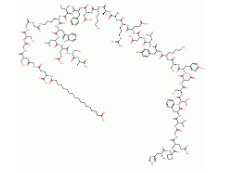
Chemical structure of Survodutide
Excenen https://www.excenen.com/survodutide.html
Chemical structure of Survodutide
https://www.pharmacompass.com/chemistry-chemical-name/survodutide
Drug information
Associated long-acting platforms
Albumin-binding peptide conjugate, Peptide lipidation (C18 fatty diacid acylation enabling reversible albumin binding)
Administration route
Subcutaneous
Therapeutic area(s)
Use case(s)
Use of drug
Ease of administration
Frequency of administration
User acceptance
Dosage
Available dose and strength
0.3 mg, 0.6 mg, 1.2 mg, 2.4 mg, 3.6 mg, 4.8 mg, 6 mg. Maintenance doses in Phase III: 3.6 mg and 6.0 mg once weekly. Phase II tested 0.3 to 6.0 mg once weekly (and 1.2 and 1.8 mg twice weekly in
Maximum dose
6.0 mg
Recommended dosing regimen
Once weekly (QW) subcutaneous injection (investigational), escalated to a maintenance dose of 3.6 mg or 6.0 mg.
Additional comments
Phase III (SYNCHRONIZE-1 and -2) uptitrated participants to 3.6 mg or 6.0 mg with limited dose flexibility permitted; SYNCHRONIZE-MASLD and LIVERAGE use up to 6.0 mg. Phase II showed most GI events and discontinuations occurred during rapid dose escalation, and the authors suggested slower escalation could reduce them. Boehringer is testing more flexible titration in SYNCHRONIZE-START. The full Phase III escalation schedule (starting dose and step intervals) is described in the trial design papers and should be confirmed there. The labelled regimen will be determined at regulatory review.
Dosage link(s)
Not provided
Drug information
Drug's link(s)
Not provided
Generic name
Brand name
Compound type
Drug class/category
Lifecycle status
Summary
Approval status
Regulatory authorities
Safety
Efficacy
Evidence Summary
Delivery device(s)
Pre-filled syringe/pen-like injector to be confirmed.
Scale-up and manufacturing prospects
Scale-up prospects
As a 29-residue lipidated peptide with one non-proteinogenic amino acid (Ac4c) and a long linker, survodutide requires specialised peptide API synthesis and purification capacity.
Tentative equipment list for manufacturing
Not provided
Manufacturing
Synthetic acylated peptide. Manufacturing process, formulation composition and container closure have not been publicly disclosed.
Specific analytical instrument required for characterization of formulation
Not provided
Clinical trials
SYNCHRONIZE-1
Identifier
NCT06066515
Link
https://clinicaltrials.gov/study/NCT06066515
Phase
Phase III
Status
Completed
Sponsor
Boehringer Ingelheim
More details
This study is open to adults who are at least 18 years old and have * a body mass index (BMI) of 30 kg/m² or more, or * a BMI of 27 kg/m² or more and at least one health problem related to their weight. People with type 2 diabetes cannot take part in this study. Only people who have previously not managed to lose weight by changing their diet can participate. The purpose of this study is to find out whether a medicine called survodutide (BI 456906) helps people living with overweight or obesity to lose weight. Participants are divided into 3 groups by chance, like drawing names from a hat. 2 groups get different doses of survodutide and 1 group gets placebo. Placebo looks like survodutide but does not contain any medicine. Every participant has a 2 in 3 chance of getting survodutide. Pa
Purpose
A Study to Test Whether Survodutide (BI 456906) Helps People Living With Overweight or Obesity Who do Not Have Diabetes to Lose Weight
Interventions
Intervention 1
Intervention 2
Countries
Sites / Institutions
Not provided
Trials dates
Anticipated Start Date
Not provided
Actual Start Date
2023-11-25
Anticipated Date of Last Follow-up
2026-03-11
Estimated Primary Completion Date
Not provided
Estimated Completion Date
Not provided
Actual Primary Completion Date
2025-12-02
Actual Completion Date
2026-02-20
Studied populations
Age Cohort
- Adults
- Older Adults
Genders
- All
Accepts pregnant individuals
Unspecified
Accepts lactating individuals
Unspecified
Accepts healthy individuals
No
Comments about the studied populations
Inclusion Criteria: 1. Male or female, age ≥18 years at the time of signing informed consent, and at least the legal age of consent in countries where it is \>18 years 2. Body mass index (BMI) ≥30 kg/m\^2 at screening, OR BMI ≥27 kg/m\^2 with the presence of at least one of the obesity-related complications (treated or untreated) e.g,: * Hypertension (defined as repeated, i.e. at least 3 measurements in resting condition, systolic blood pressure (SBP) values of ≥140 millimetre of mercury (mmHg) and/or diastolic blood pressure (DBP) values of ≥90 mmHg in the absence of anti-hypertensive treatment, or intake of at least 1 anti-hypertensive drug to maintain a normotensive blood pressure) * Dyslipidaemia (defined as at least 1 lipid-lowering treatment required to maintain normal blood
Health status
Not provided
Study type
Interventional (clinical trial)
Enrollment
726
Allocation
Randomized
Intervention model
Parallel Assignment
Intervention model description
Not provided
Masking
Quadruple-blind masking
Masking description
Not provided
Frequency of administration
Not provided
Studied LA-formulation(s)
Not provided
Studied route(s) of administration
Not provided
Use case
Not provided
Key resources
SYNCHRONIZE-2
Identifier
NCT06066528
Link
https://clinicaltrials.gov/study/NCT06066528
Phase
Phase III
Status
Completed
Sponsor
Boehringer Ingelheim
More details
This study is open to adults who are at least 18 years old and have a body mass index of 27 kg/m² or more. People can take part if they have type 2 diabetes and if they are currently being treated only with diet and exercise or with specific diabetes medications. Only people who have previously not managed to lose weight by changing their diet can participate. The purpose of this study is to find out whether a medicine called survodutide (BI 456906) helps people living with overweight or obesity who also have diabetes to lose weight. Participants are divided into 3 groups by chance, like drawing names from a hat. 2 groups get different doses of survodutide and 1 group gets placebo. Placebo looks like survodutide but does not contain any medicine. Every participant has a 2 in 3 chance of
Purpose
A Study to Test Whether Survodutide (BI 456906) Helps People Living With Overweight or Obesity Who Also Have Diabetes to Lose Weight
Interventions
Intervention 1
Intervention 2
Countries
Sites / Institutions
Not provided
Trials dates
Anticipated Start Date
Not provided
Actual Start Date
2023-11-27
Anticipated Date of Last Follow-up
2026-08-05
Estimated Primary Completion Date
Not provided
Estimated Completion Date
Not provided
Actual Primary Completion Date
2025-12-12
Actual Completion Date
2026-04-01
Studied populations
Age Cohort
- Adults
- Older Adults
Genders
- All
Accepts pregnant individuals
Unspecified
Accepts lactating individuals
Unspecified
Accepts healthy individuals
No
Comments about the studied populations
Inclusion Criteria: 1. Male or female, age ≥18 years at the time of signing informed consent, and at least the legal age of consent in countries where it is \>18 years. 2. Body mass index (BMI) ≥27 kg/m\^2 at screening. 3. Diagnosed with Type 2 diabetes mellitus (T2DM) (defined as Glycosylated haemoglobin A1c (HbA1c) ≥6.5% \[≥48 mmol/mol\]) at least 180 days prior to screening. 4. HbA1c ≥6.5% (≥48 mmol/mol) and \<10% (\<86 mmol/mol) as measured by the central laboratory at screening. 5. Currently treated for T2DM with either diet and exercise alone or stable treatment (for at least 3 months prior to screening) per treatment guidelines. 6. History of at least one self-reported unsuccessful dietary effort to lose body weight Further inclusion criteria apply. Exclusion Criteria: 1. Body we
Health status
Not provided
Study type
Interventional (clinical trial)
Enrollment
755
Allocation
Randomized
Intervention model
Parallel Assignment
Intervention model description
Not provided
Masking
Quadruple-blind masking
Masking description
Not provided
Frequency of administration
Studied LA-formulation(s)
Studied route(s) of administration
Use case
Treatment
Key resources
SYNCHRONIZE - CVOT
Identifier
NCT06077864
Link
https://clinicaltrials.gov/study/NCT06077864
Phase
Phase III
Status
Completed
Sponsor
Boehringer Ingelheim
More details
This study is open to adults who are at least 18 years old and have a body mass index (BMI) of 27 kg/m2 or more. People can take part if they have cardiovascular or chronic kidney disease. People who have at least 2 health problems related to their weight or risks of cardiovascular disease can participate. Participants must have previously tried to lose weight by changing their diet. The purpose of this study is to find out whether people with overweight or obesity who take a medicine called survodutide (BI 456906) are less or more likely to develop serious cardiovascular problems. It also aims to find out whether health parameters like blood pressure improve. Overweight and obesity are linked to cardiovascular disease. Survodutide is a medicine that is developed to help people with obesi
Purpose
A Study to Test the Effect of Survodutide (BI 456906) on Cardiovascular Safety in People With Overweight or Obesity (SYNCHRONIZE™ - CVOT)
Interventions
Intervention 1
Intervention 2
Countries
Sites / Institutions
Not provided
Trials dates
Anticipated Start Date
Not provided
Actual Start Date
2023-11-20
Anticipated Date of Last Follow-up
2026-09-29
Estimated Primary Completion Date
Not provided
Estimated Completion Date
Not provided
Actual Primary Completion Date
2026-06-01
Actual Completion Date
2026-06-30
Studied populations
Age Cohort
- Adults
- Older Adults
Genders
- All
Accepts pregnant individuals
Unspecified
Accepts lactating individuals
Unspecified
Accepts healthy individuals
No
Comments about the studied populations
Inclusion Criteria: 1. Male or female, age ≥18 years at the time of signing informed consent, and at least the legal age of consent in countries where it is \>18 years. 2. Body mass index (BMI) ≥27 kg/m2 at screening with established cardiovascular disease (CVD) and/or at least 2 weight-related complications or risk factors for CVD OR BMI ≥30 kg/m2 at screening with established CVD or chronic kidney disease (CKD), and/or at least 2 weight-related complications or risk factors for CVD. Further inclusion criteria apply. Exclusion criteria: 1. Previous treatment with glucagon-like peptide-1 receptor (GLP-1R) agonists within 3 months before screening. 2. Type 1 diabetes. 3. Less than 3 months between the last dose of GLP-1R agonists and GLP-1R agonist/insulin/glucose-dependent insulinotrop
Health status
Not provided
Study type
Interventional (clinical trial)
Enrollment
5531
Allocation
Randomized
Intervention model
Parallel Assignment
Intervention model description
Not provided
Masking
Quadruple-blind masking
Masking description
Not provided
Frequency of administration
Studied LA-formulation(s)
Studied route(s) of administration
Use case
Treatment
Key resources
SYNCHRONIZE-JP
Identifier
NCT06176365
Link
https://clinicaltrials.gov/study/NCT06176365
Phase
Phase III
Status
Completed
Sponsor
Boehringer Ingelheim
More details
This study is open to adults who are at least 18 years old and have * a body mass index (BMI) of 35 kg/m² or more and at least one health problem related to their weight, or * a BMI of 27 kg/m² or more and at least two health problems related to their weight. People who have either type 2 diabetes, high blood pressure, or increased blood lipids can take part in this study. Only people who have previously not managed to lose weight by changing their diet can participate. The purpose of this study is to find out whether a medicine called survodutide (BI 456906) helps people living with obesity disease to lose weight. Participants are divided into 3 groups by chance, like drawing names from a hat. 2 groups get different doses of survodutide and 1 group gets placebo. Placebo looks like surv
Purpose
A Study to Test Whether Survodutide Helps Japanese People Living With Obesity Disease
Interventions
Intervention 1
Intervention 2
Countries
Sites / Institutions
Not provided
Trials dates
Anticipated Start Date
Not provided
Actual Start Date
2024-01-16
Anticipated Date of Last Follow-up
2026-04-23
Estimated Primary Completion Date
Not provided
Estimated Completion Date
Not provided
Actual Primary Completion Date
2025-12-03
Actual Completion Date
2025-12-03
Studied populations
Age Cohort
- Adults
- Older Adults
Genders
- All
Accepts pregnant individuals
Unspecified
Accepts lactating individuals
Unspecified
Accepts healthy individuals
No
Comments about the studied populations
Inclusion criteria: 1. Male or female, age ≥18 years at the time of signing informed consent 2. Body Mass Index (BMI) * ≥35 kg/m² at screening with the presence of at least one obesity-related comorbidities (treated or untreated) according to the Japan Society for the Study of Obesity (JASSO) guideline OR * BMI ≥27 kg/m² at screening with the presence of at least two obesity-related comorbidities (treated or untreated) according to the JASSO guideline For all trial patients, at least one co-morbidity should be the following (i)-(iii). i. Type 2 diabetes mellitus (T2DM) * Diagnosed with T2DM (defined as Glycosylated haemoglobin A1c (HbA1c) ≥6.5% \[≥48 mmol/mol\]) at least 180 days prior to screening * HbA1c ≥6.5% (48 mmol/mol) and \<10% (86 mmol/mol) as measured by t
Health status
Not provided
Study type
Interventional (clinical trial)
Enrollment
274
Allocation
Randomized
Intervention model
Parallel Assignment
Intervention model description
Not provided
Masking
Quadruple-blind masking
Masking description
Not provided
Frequency of administration
Studied LA-formulation(s)
Studied route(s) of administration
Use case
Treatment
Key resources
SYNCHRONIZE-CN
Identifier
NCT06214741
Link
https://clinicaltrials.gov/study/NCT06214741
Phase
Phase III
Status
Completed
Sponsor
Boehringer Ingelheim
More details
This study in China is open to adults who are at least 18 years old who are living with overweight or obesity. People with a body mass index (BMI) of 28 kg/m\^2 or higher or 24 kg/m\^2 or higher with at least 1 weight related problem can join the study. The main purpose of this study is to find out whether a medicine called survodutide helps people with overweight or obesity. 2 different doses of survodutide are tested in this study. Participants are put into 3 groups by chance. Each participant has an equal chance of being in each group. 2 groups get different doses of survodutide. 1 group gets placebo. Participants get survodutide or placebo as injections under the skin once a week for about 19 months. Placebo injections look like survodutide injections but do not contain any medicine.
Purpose
A Study to Test Whether Survodutide (BI 456906) Helps Chinese People Living With Overweight or Obesity to Lose Weight
Interventions
Intervention 1
Intervention 2
Countries
Sites / Institutions
Not provided
Trials dates
Anticipated Start Date
Not provided
Actual Start Date
2024-02-06
Anticipated Date of Last Follow-up
2026-04-22
Estimated Primary Completion Date
Not provided
Estimated Completion Date
Not provided
Actual Primary Completion Date
2025-07-29
Actual Completion Date
2026-01-28
Studied populations
Age Cohort
- Adults
- Older Adults
Genders
- All
Accepts pregnant individuals
Unspecified
Accepts lactating individuals
Unspecified
Accepts healthy individuals
No
Comments about the studied populations
Inclusion Criteria: 1. Male or female, age ≥18 years at the time of signing informed consent. 2. Body mass index (BMI) ≥28 kg/m\^2 at screening, OR BMI ≥24 kg/m\^2 at screening with the presence of at least one of the following weight-related complications: * Hypertension (defined as repeated, i.e. at least 3 measurements in resting condition, systolic blood pressure (SBP) values of ≥140 mmHg and/or diastolic blood pressure (DBP) values of ≥90 mmHg in the absence of anti-hypertensive treatment, or intake of at least 1 anti-hypertensive drug to maintain a normotensive blood pressure) * Dyslipidaemia (defined as at least 1 lipid-lowering treatment required to maintain normal blood lipid levels, or low density lipoprotein (LDL) cholesterol ≥160 mg/dL (≥4.1 mmol/L), or triglycerides ≥1
Health status
Not provided
Study type
Interventional (clinical trial)
Enrollment
307
Allocation
Randomized
Intervention model
Parallel Assignment
Intervention model description
Not provided
Masking
Quadruple-blind masking
Masking description
Not provided
Frequency of administration
Studied LA-formulation(s)
Studied route(s) of administration
Use case
Treatment
Key resources
SYNCHRONIZE-MASLD
Identifier
NCT06309992
Link
https://clinicaltrials.gov/study/NCT06309992
Phase
Phase III
Status
Completed
Sponsor
Boehringer Ingelheim
More details
This study is open to adults who are at least 18 years old and have * presumed or confirmed NASH together with overweight or obesity and * a body mass index (BMI) of 30 kg/m² or more, or * a BMI of 27 kg/m² and at least one weight-related health problem. People with a history of other chronic liver diseases cannot take part in this study. The purpose of this study is to find out whether a medicine called survodutide helps people living with obesity or overweight and a confirmed or presumed liver disease called nonalcoholic steatohepatitis (NASH) to have less liver fat and to lose weight. Participants are put into 2 groups randomly, which means by chance. 1 group gets different doses of survodutide and 1 group gets placebo. Placebo looks like survodutide but does not contain any medicine
Purpose
A Study to Test Whether Survodutide Helps People Living With Obesity or Overweight and With a Confirmed or Presumed Liver Disease Called Non-alcoholic Steatohepatitis (NASH) to Reduce Liver Fat and to
Interventions
Intervention 1
Intervention 2
Countries
Sites / Institutions
Not provided
Trials dates
Anticipated Start Date
Not provided
Actual Start Date
2024-04-02
Anticipated Date of Last Follow-up
2026-04-24
Estimated Primary Completion Date
Not provided
Estimated Completion Date
Not provided
Actual Primary Completion Date
2025-10-09
Actual Completion Date
2025-12-02
Studied populations
Age Cohort
- Adults
- Older Adults
Genders
- All
Accepts pregnant individuals
Unspecified
Accepts lactating individuals
Unspecified
Accepts healthy individuals
No
Comments about the studied populations
Key inclusion criteria: * Age ≥18 years at the time of signing informed consent, and at least the legal age of consent in countries where it is \>18 years * BMI ≥30 kg/m², OR BMI ≥27 kg/m² and at least one of the following weight-related comorbidities at screening: * Hypertension (defined as repeated, i.e. at least 3 measurements in resting condition, Systolic Blood Pressure (SBP) values of ≥140 mmHg and/or Diastolic Blood Pressure (DBP) values of ≥90 mmHg in the absence of anti-hypertensive treatment, or intake of at least 1 antihypertensive drug to maintain a normotensive blood pressure) * Dyslipidaemia (defined as at least 1 lipid-lowering treatment required to maintain normal blood lipid levels, or lowdensity lipoprotein (LDL) cholesterol ≥160 mg/dL (≥4.1 mmol/L) or triglycerides
Health status
Not provided
Study type
Interventional (clinical trial)
Enrollment
218
Allocation
Randomized
Intervention model
Parallel Assignment
Intervention model description
Not provided
Masking
Quadruple-blind masking
Masking description
Not provided
Frequency of administration
Studied LA-formulation(s)
Studied route(s) of administration
Use case
Treatment
Key resources
1404-0115
Identifier
NCT07754461
Link
https://clinicaltrials.gov/study/NCT07754461
Phase
Phase III
Status
Recruiting
Sponsor
Boehringer Ingelheim
More details
This study aims to find out whether a study medicine called survodutide helps people control their blood sugar. Adults who live with type 2 diabetes and with a body mass index (BMI) of 23 kg/m2 or higher can join. The study has 3 parts. In each part the study compares survodutide with placebo. Survodutide is being developed to treat several health problems including type 2 diabetes. Placebo looks like survodutide but does not contain any medicine. Depending on a person's diabetes treatment, a person will be assigned either to * Part A: healthy eating and physical activity * Part B: diabetes tablets (no injection of insulin) * Part C: injection of insulin (with or without diabetes tablets) Participants are randomly put into 1 of 3 groups, which means the group is chosen by chance. Two g
Purpose
A Study to Test Whether Survodutide Helps People With Type 2 Diabetes Control Their Blood Sugar
Interventions
Intervention 1
Intervention 2
Countries
Sites / Institutions
Not provided
Trials dates
Anticipated Start Date
Not provided
Actual Start Date
2026-08-24
Anticipated Date of Last Follow-up
2026-09-29
Estimated Primary Completion Date
2028-01-17
Estimated Completion Date
2028-05-01
Actual Primary Completion Date
Not provided
Actual Completion Date
Not provided
Studied populations
Age Cohort
- Adults
- Older Adults
Genders
- All
Accepts pregnant individuals
Unspecified
Accepts lactating individuals
Unspecified
Accepts healthy individuals
No
Comments about the studied populations
Inclusion criteria: 1. Male or female, age ≥18 years at the time of signing informed consent, and at least the legal age of consent in countries where it is \>18 years 2. Diagnosed with type 2 diabetes mellitus (T2D) (e.g. American diabetes association (ADA)/European association for the study of diabetes (EASD) guidelines) and must meet requirements for one of background therapy parts A, B or C: 1. Part A: Naïve to insulin therapy and have not used oral or injectable anti-hyperglycaemic (diabetes) medication for at least 90 days prior to screening (Visit 1) and glycosylated haemoglobin A1c (HbA1c) ≥7.0 (≥53 mmol/mol) and \<9.5% (\<80 mmol/mol) as measured by the central laboratory at screening (Visit 1); 2. Part B: Treated with stable dose of oral antidiabetic medication (OAD) for
Health status
Not provided
Study type
Interventional (clinical trial)
Enrollment
600
Allocation
Randomized
Intervention model
Parallel Assignment
Intervention model description
Not provided
Masking
Quadruple-blind masking
Masking description
Not provided
Frequency of administration
Studied LA-formulation(s)
Studied route(s) of administration
Use case
Treatment
Key resources
SYNCHRONIZE-START
Identifier
NCT07855900
Link
https://clinicaltrials.gov/study/NCT07855900
Phase
Phase III
Status
Not yet recruiting
Sponsor
Boehringer Ingelheim
More details
This study is open to adults with overweight or obesity. People can join the study if they have a body mass index (BMI) of 30 kg/m² or more, or a BMI of 27 kg/m² or more with at least one weight- related health problem. Participants must not have diabetes, and they must have tried to lose weight by dieting at least once in the past without success. The purpose of this study is to find out whether a medicine called survodutide helps people with overweight or obesity lose weight. This study has 2 groups. The groups differ based on their starting dose and whether they have used similar weight-loss medicines before. Participants are put into one of the 2 groups, but everyone in the study receives the study medicine, survodutide. Participants take the medicine as an injection under the skin on
Purpose
SYNCHRONIZE®-START- A Study to Test Whether Survodutide Helps People Living With Overweight or Obesity Who do Not Have Diabetes to Lose Weight
Interventions
Intervention 1
Countries
Sites / Institutions
Not provided
Trials dates
Anticipated Start Date
2026-11-07
Actual Start Date
Not provided
Anticipated Date of Last Follow-up
2026-09-29
Estimated Primary Completion Date
2028-06-25
Estimated Completion Date
2028-06-25
Actual Primary Completion Date
Not provided
Actual Completion Date
Not provided
Studied populations
Age Cohort
- Adults
- Older Adults
Genders
- All
Accepts pregnant individuals
Unspecified
Accepts lactating individuals
Unspecified
Accepts healthy individuals
No
Comments about the studied populations
Inclusion criteria: 1. Male or female, age ≥18 years at the time of signing informed consent, and at least the legal age of consent in countries where it is \>18 years 2. History of at least one self-reported unsuccessful dietary effort to lose body weight 3. Signed and dated written informed consent in accordance with International Council for Harmonisation-Good Clinical Practice (ICH-GCP) and local legislation prior to admission to the trial. Persons must be capable of giving informed consent independently 4. Women of childbearing potential (WOCBP) must be ready and able to use highly effective methods of birth control as provided in the protocol Further inclusion criteria apply. Exclusion criteria: 1. Body weight change (self-reported) \>2.5% during run-in period before screening 2.
Health status
Not provided
Study type
Interventional (clinical trial)
Enrollment
350
Allocation
Not provided
Intervention model
Parallel Assignment
Intervention model description
Not provided
Masking
Open label
Masking description
Not provided
Frequency of administration
Studied LA-formulation(s)
Studied route(s) of administration
Use case
Treatment
Key resources
SYNCHRONIZE-HERA
Identifier
NCT07850050
Link
https://clinicaltrials.gov/study/NCT07850050
Phase
Phase III
Status
Not yet recruiting
Sponsor
Boehringer Ingelheim
More details
This study is open to women up to 65 years of age who are living with overweight or obesity and are going through or have finished menopause. People can join this study if they have a Body Mass Index (BMI) of 30 kg/m² or more, or if their BMI is 27 kg/m² or more and they have one or more weight related health problems. Participants must also have tried to lose weight by dieting at least once in the past without success. People with pre-existing diabetes cannot take part in this study. The purpose of this study is to find out whether a medicine called survodutide helps women with overweight or obesity lose weight. Participants are put into 2 groups randomly, which means by chance. Participants have a 1 in 2 chance of receiving survodutide. One group gets survodutide as an injection under t
Purpose
SYNCHRONIZE®-HERA: A Study to Test Whether Survodutide Helps Women Who Are Living With Overweight or Obesity and Are Going Through or Have Finished Menopause, to Lose Weight
Interventions
Intervention 1
Intervention 2
Countries
Sites / Institutions
Not provided
Trials dates
Anticipated Start Date
2026-10-31
Actual Start Date
Not provided
Anticipated Date of Last Follow-up
2026-09-25
Estimated Primary Completion Date
2028-07-26
Estimated Completion Date
2028-07-26
Actual Primary Completion Date
Not provided
Actual Completion Date
Not provided
Studied populations
Age Cohort
- Adults
- Older Adults
Genders
- Female
Accepts pregnant individuals
Unspecified
Accepts lactating individuals
Unspecified
Accepts healthy individuals
No
Comments about the studied populations
Inclusion criteria: 1. Signed and dated written informed consent in accordance with International Conference of Harmonisation-Good Clinical Practice (ICH-GCP) and local legislation prior to admission to the trial 2. Female (sex assigned at birth) with age \>18 years at the time of screening 3. History of at least one self-reported unsuccessful dietary effort to lose body weight 4. Women of Childbearing Potential (WOCBP) must be ready and able to use at least an acceptable effective contraceptive method of birth control Further inclusion criteria apply. Exclusion criteria: 1. Type 1 Diabetes Mellitus (T1DM) or Type 2 Diabetes Mellitus (T2DM) 2. Glycosylated Haemoglobin A1c (HbA1c) ≥6.5% (≥48 mmol/mol) as measured by the central laboratory at screening (Visit 1) 3. Treatment with any medi
Health status
Not provided
Study type
Interventional (clinical trial)
Enrollment
600
Allocation
Randomized
Intervention model
Parallel Assignment
Intervention model description
Not provided
Masking
Quadruple-blind masking
Masking description
Not provided
Frequency of administration
Studied LA-formulation(s)
Studied route(s) of administration
Use case
Treatment
Key resources
ELEVATE-LIVER
Identifier
NCT07850063
Link
https://clinicaltrials.gov/study/NCT07850063
Phase
Phase III
Status
Not yet recruiting
Sponsor
Boehringer Ingelheim
More details
This study is for adults aged 18 years and older who have a type of fatty liver disease called metabolic dysfunction-associated steatotic liver disease (MASLD). People can take part if their body mass index (BMI) is 27 kg/m² or higher, and they have certain heart and blood vessel risk factors. The purpose of this study is to find out how a medicine called survodutide affects heart structure and function in people with MASLD. Participants are put into 2 groups randomly, which means by chance. One group gets survodutide as an injection under the skin of the abdomen once a week. The other group gets placebo as an injection once a week. Placebo looks like survodutide but does not contain any medicine. The first injection is given at the study site. Later injections are usually given by the pa
Purpose
ELEVATE-LIVER: A Study to Test Whether Survodutide Helps Improve Heart Structure and Function in People With Overweight or Obesity and Fatty Liver Disease
Interventions
Intervention 1
Intervention 2
Countries
Sites / Institutions
Not provided
Trials dates
Anticipated Start Date
2026-10-23
Actual Start Date
Not provided
Anticipated Date of Last Follow-up
2026-09-25
Estimated Primary Completion Date
2029-04-29
Estimated Completion Date
2029-04-29
Actual Primary Completion Date
Not provided
Actual Completion Date
Not provided
Studied populations
Age Cohort
- Adults
- Older Adults
Genders
- All
Accepts pregnant individuals
Unspecified
Accepts lactating individuals
Unspecified
Accepts healthy individuals
No
Comments about the studied populations
Key inclusion criteria: 1. Age ≥18 years at the time of signing informed consent, and at least the legal age of consent in countries where it is \>18 years 2. Signed and dated written informed consent in accordance with international council for harmonisation - good clinical practice (ICH-GCP) and local legislation prior to admission to the trial 3. Body mass index (BMI) ≥27 kg/m² 4. Hepatic steatosis established by imaging (ultrasound or cross sectional), transient elastography, or liver biopsy Further inclusion criteria apply. Key exclusion criteria: 1. Medications for obesity within 3 months before screening 2. Known or suspected hypersensitivity to the investigational medicinal product (IMP) or related products 3. Established diagnosis of heart failure or a known history of heart fa
Health status
Not provided
Study type
Interventional (clinical trial)
Enrollment
600
Allocation
Randomized
Intervention model
Parallel Assignment
Intervention model description
Not provided
Masking
Quadruple-blind masking
Masking description
Not provided
Frequency of administration
Studied LA-formulation(s)
Studied route(s) of administration
Use case
Treatment
Key resources
LIVERAGE
Identifier
NCT06632444
Link
https://clinicaltrials.gov/study/NCT06632444
Phase
Phase III
Status
Recruiting
Sponsor
Boehringer Ingelheim
More details
This study is open to adults who are at least 18 years old living with obesity and have: * a confirmed liver disease called non-alcoholic steatohepatitis (NASH)/metabolic associated steatohepatitis (MASH) and * moderate or advanced liver fibrosis People with a history of acute or chronic liver diseases other than MASH or chronic alcohol intake cannot take part in this study. The purpose of this study is to find out whether a medicine called survodutide helps people with MASH and moderate or advanced liver fibrosis improve their liver function. This study has 2 parts. The purpose of the first part of this study is to find out the effect of survodutide on MASH and liver fibrosis. The purpose of the second part is to find out how safe and effective survodutide is in improving liver functio
Purpose
LIVERAGE™: A Study to Test Whether Survodutide Helps People With a Liver Disease Called NASH/MASH Who Have Moderate or Advanced Liver Fibrosis
Interventions
Intervention 1
Intervention 2
Countries
Sites / Institutions
Not provided
Trials dates
Anticipated Start Date
Not provided
Actual Start Date
2024-10-14
Anticipated Date of Last Follow-up
2026-09-30
Estimated Primary Completion Date
2031-12-27
Estimated Completion Date
2031-12-27
Actual Primary Completion Date
Not provided
Actual Completion Date
Not provided
Studied populations
Age Cohort
- Adults
- Older Adults
Genders
- All
Accepts pregnant individuals
Unspecified
Accepts lactating individuals
Unspecified
Accepts healthy individuals
No
Comments about the studied populations
Inclusion criteria: 1. Male or female participants ≥18 years (or who are of legal age in countries where that is greater than 18 years) of age at time of consent 2. Diagnosis of MASH (non-alcoholic fatty liver disease (NAFLD)) activity score \[NAS\] ≥4 3. Stable body weight defined as less than 5% self-reported change in body weight 3 months prior to the screening or during the period between the historical biopsy and randomisation, if a historical biopsy is used 4. Be willing to maintain a stable diet and physical activity levels throughout the entire trial Further inclusion criteria apply Exclusion criteria: 1. Any of the following liver laboratory test abnormalities at screening: * Serum AST and/or alanine aminotransferase (ALT) elevation ≥5x upper limit of normal (ULN) * Plat
Health status
Not provided
Study type
Interventional (clinical trial)
Enrollment
1800
Allocation
Randomized
Intervention model
Parallel Assignment
Intervention model description
Not provided
Masking
Double-blind masking
Masking description
Not provided
Frequency of administration
Studied LA-formulation(s)
Studied route(s) of administration
Use case
Treatment
Key resources
LIVERAGE-Cirrhosis
Identifier
NCT06632457
Link
https://clinicaltrials.gov/study/NCT06632457
Phase
Phase III
Status
Recruiting
Sponsor
Boehringer Ingelheim
More details
This study is open to adults who are at least 18 years old and have: * A confirmed liver disease called non-alcoholic steatohepatitis (NASH) or * A confirmed liver disease called metabolic-associated steatohepatitis (MASH) * BMI of 27 kg/m2 or more or * 25 kg/m2 or more if the participant is Asian. People with a history of other chronic liver diseases or high alcohol intake cannot take part in this study. The purpose of this study is to find out whether a medicine called survodutide helps people with NASH or MASH improve their liver function. Participants are put into 2 groups randomly, which means by chance. 1 group gets survodutide and 1 group gets placebo. Placebo looks like survodutide but does not contain any medicine. Each participant has twice the chance of getting survodutide. P
Purpose
LIVERAGE™ - Cirrhosis: A Study to Test Whether Survodutide Helps People With a Liver Disease Called NASH/MASH Who Have Cirrhosis
Interventions
Intervention 1
Intervention 2
Countries
Sites / Institutions
Not provided
Trials dates
Anticipated Start Date
Not provided
Actual Start Date
2024-11-12
Anticipated Date of Last Follow-up
2026-09-30
Estimated Primary Completion Date
2029-06-05
Estimated Completion Date
2029-06-05
Actual Primary Completion Date
Not provided
Actual Completion Date
Not provided
Studied populations
Age Cohort
- Adults
- Older Adults
Genders
- All
Accepts pregnant individuals
Unspecified
Accepts lactating individuals
Unspecified
Accepts healthy individuals
No
Comments about the studied populations
Inclusion criteria: 1. Male or female adults ≥18 years of age at the time of screening, and at least the legal age of consent in countries where it is \>18 years 2. Body mass index (BMI) ≥27 kg/m2(≥25 kg/m2 for Asian trial participants) 3. Compensated metabolic dysfunction-associated steatohepatitis (MASH) cirrhosis. 4. Magnetic resonance imaging proton density fat fraction (MRI-PDFF) fat fraction ≥5% or FibroScan® with controlled attenuation parameter (CAP) ≥288 dB/m, obtained during the screening period or a historic MRI-PDFF ≤12 weeks prior to randomisation (except for patients with 'cryptogenic cirrhosis' where MRI-PDFF \<5% or FibroScan® with CAP \<288 dB/m is allowed). This inclusion criterion does not apply for participants with a recent (≤12 months prior to randomisation) liver bi
Health status
Not provided
Study type
Interventional (clinical trial)
Enrollment
1590
Allocation
Randomized
Intervention model
Parallel Assignment
Intervention model description
Not provided
Masking
Double-blind masking
Masking description
Not provided
Frequency of administration
Studied LA-formulation(s)
Studied route(s) of administration
Use case
Treatment
Key resources
ARTIST-CKD
Identifier
NCT07206290
Link
https://clinicaltrials.gov/study/NCT07206290
Phase
Phase II
Status
Not yet recruiting
Sponsor
University Medical Center Groningen
More details
The ARTIST-CKD trial is a clinical study evaluating the effect of weekly subcutaneous administration of survodutide (3.6 mg) on kidney function in patients with chronic kidney disease (CKD) and elevated albuminuria. The primary objective is to determine whether survodutide leads to early, sustained, and clinically meaningful reductions in albuminuria, regardless of diabetes status.
Purpose
Albuminuria Reduction Study With Survodutide Treatment in Kidney Disease
Interventions
Intervention 1
Intervention 2
Countries
Not provided
Sites / Institutions
Not provided
Trials dates
Anticipated Start Date
2026-03-02
Actual Start Date
Not provided
Anticipated Date of Last Follow-up
2025-09-25
Estimated Primary Completion Date
2027-11-30
Estimated Completion Date
2027-11-30
Actual Primary Completion Date
Not provided
Actual Completion Date
Not provided
Studied populations
Age Cohort
- Adults
- Older Adults
Genders
- All
Accepts pregnant individuals
Unspecified
Accepts lactating individuals
Unspecified
Accepts healthy individuals
No
Comments about the studied populations
Inclusion Criteria: * Age ≥ 18 years * eGFR ≥20 and \<90 mL/min/1.73m2 * Urinary albumin to creatinine ratio \>30 mg/g and \<3500 mg/g * BMI \>21 kg/m2 * Stable kidney function (no more than 30% change in eGFR in the 3 months prior to enrolment) * On a stable maximum tolerated dose of an ACEi/ARB for at least 4 weeks prior to enrolment * If using an SGLT2 inhibitor, receiving a stable dose for at least 8 weeks prior to enrolment * Willing to sign an informed consent Exclusion Criteria: * Diagnosis of type 1 diabetes * Cardiovascular event within 3 months prior to enrolment * Treatment with GLP-1RA for \<12 weeks prior to screening * Evidence of severe hepatic impairment determined by any one of: ALT or AST values exceeding 3x ULN, a history of hepatic encephalopathy, a history of oesoph
Health status
Not provided
Study type
Interventional (clinical trial)
Enrollment
120
Allocation
Randomized
Intervention model
Parallel Assignment
Intervention model description
Not provided
Masking
Double-blind masking
Masking description
Not provided
Frequency of administration
Studied LA-formulation(s)
Studied route(s) of administration
Use case
Treatment
Key resources
Phase II obesity
Identifier
NCT04667377
Link
https://clinicaltrials.gov/study/NCT04667377
Phase
Phase II
Status
Completed
Sponsor
Boehringer Ingelheim
More details
This study is open to adults, aged 18 to 75 years, with overweight or obesity. People with body mass index (BMI) of 27 or higher to join the study. People who have diabetes cannot participate. The purpose of this study is to find out whether a medicine called BI 456906 helps people lose weight. Participants are put into 5 groups by chance. 4 groups get different doses of BI 456906. The fifth group gets placebo. Participants get BI 456906 or placebo as injections under the skin once a week. Placebo injections look like BI 456906 injections but do not contain any medicine. Participants are in the study for about a year. During this time, there are about 20 in-person visits to the study site. At the study site visits, doctors measure participants' body weight. Results are compared between t
Purpose
A Study to Test Whether Different Doses of BI 456906 Help People With Overweight or Obesity to Lose Weight
Interventions
Intervention 1
Intervention 2
Countries
Sites / Institutions
Not provided
Trials dates
Anticipated Start Date
Not provided
Actual Start Date
2021-03-08
Anticipated Date of Last Follow-up
2023-10-06
Estimated Primary Completion Date
Not provided
Estimated Completion Date
Not provided
Actual Primary Completion Date
2022-09-15
Actual Completion Date
2022-10-07
Studied populations
Age Cohort
- Adults
- Older Adults
Genders
- All
Accepts pregnant individuals
Unspecified
Accepts lactating individuals
Unspecified
Accepts healthy individuals
No
Comments about the studied populations
Inclusion Criteria: * Adult ≥ 18 years and \< 75 years of age at screening * Signed and dated written informed consent in accordance with ICH-GCP and local legislation prior to admission to the trial. * Obesity or Overweight defined as BMI ≥27 kg/m2 at screening * A minimum absolute body weight of 70 kg for females and 80 kg for males at screening * Male or female participants. Women of childbearing potential (WOCBP)1 must be willing and able to use two forms of effective contraception where at least one form is highly effective methods of birth control per ICH M3 (R2) that result in a low failure rate of less than 1% per year when used consistently and correctly. A list of contraception methods meeting these criteria is provided in the patient information. * Patients must have undergone
Health status
Not provided
Study type
Interventional (clinical trial)
Enrollment
387
Allocation
Randomized
Intervention model
Parallel Assignment
Intervention model description
Not provided
Masking
Quadruple-blind masking
Masking description
Not provided
Frequency of administration
Studied LA-formulation(s)
Studied route(s) of administration
Use case
Treatment
Key resources
Phase II type 2 diabetes
Identifier
NCT04153929
Link
https://clinicaltrials.gov/study/NCT04153929
Phase
Phase II
Status
Completed
Sponsor
Boehringer Ingelheim
More details
This study is open to adults with type 2 diabetes who take metformin but still have too high blood sugar. The purpose of the study is to find the best dose of BI 456906 that reduces blood sugar. The study also looks at whether BI 456906 helps the participants lose weight. Participants are in the study for about 23 weeks. During this time, most participants visit the study site about 13 times. Some participants visit the study site about 20 times. At the start of the study, the participants are put into 7 groups. The participants in groups 1 to 6 get injections under the skin once or twice every week. Some participants get different doses of BI 456906 and other participants get placebo. Placebo injections look like the BI 456906 injections, but contain no medicine. Participants in group 7
Purpose
A Study to Test Whether Different Doses of BI 456906 Are Effective in Treating Adults With Type 2 Diabetes.
Interventions
Intervention 1
Intervention 2
Intervention 3
Countries
Sites / Institutions
Not provided
Trials dates
Anticipated Start Date
Not provided
Actual Start Date
2020-04-30
Anticipated Date of Last Follow-up
2022-11-02
Estimated Primary Completion Date
Not provided
Estimated Completion Date
Not provided
Actual Primary Completion Date
2021-10-08
Actual Completion Date
2021-11-04
Studied populations
Age Cohort
- Adults
- Older Adults
Genders
- All
Accepts pregnant individuals
Unspecified
Accepts lactating individuals
Unspecified
Accepts healthy individuals
No
Comments about the studied populations
Inclusion criteria: * Signed and dated written informed consent in accordance with International conference on harmonization - Good clinical practice (ICH GCP) and local legislation. * Male and female patients 18 years to 75 years (both inclusive) of age on the day of signing informed consent. * Diagnosis of Type 2 diabetes mellitus (T2DM) at least 6 months prior to informed consent. * Glycosylated hemoglobin A1c (HbA1c) 7.0%-10.0% (both inclusive) at screening. * Treatment with a stable dose of metformin ≥ 1000mg/day for at least 3 months prior to screening. * Body mass index (BMI) 25 kg/m2-50 kg/m2 (both inclusive) at screening. * Women of childbearing potential must be ready and able to use highly effective methods of birth control. Exclusion criteria: * Patients with type 1 diabetes
Health status
Not provided
Study type
Interventional (clinical trial)
Enrollment
413
Allocation
Randomized
Intervention model
Parallel Assignment
Intervention model description
Not provided
Masking
Quadruple-blind masking
Masking description
Not provided
Frequency of administration
Studied LA-formulation(s)
Studied route(s) of administration
Use case
Treatment
Key resources
Phase II MASH
Identifier
NCT04771273
Link
https://clinicaltrials.gov/study/NCT04771273
Phase
Phase II
Status
Completed
Sponsor
Boehringer Ingelheim
More details
This study is open for men and women with a liver disease called nonalcoholic steatohepatitis (NASH) and liver fibrosis. The purpose of the study is to find out whether a medicine called BI 456906 helps patients with NASH and liver fibrosis. The study tests 3 different doses of BI 456906 to find the dose that helps best. Participants are put into 4 groups randomly, which means by chance. There are 3 groups that each receive a different dose of BI 456906 and there is 1 group that receives placebo. BI 456906 and placebo are given as an injection under the skin once per week. The placebo injection looks like the BI 456906 injection but does not contain any medicine. Participants are in the study for a little over 1 year (60 weeks). During this time, they visit the study site several times an
Purpose
A Study to Test Safety and Efficacy of Survodutide (BI456906) in Adults With Non-alcoholic Steatohepatitis (NASH) and Fibrosis (F1-F3)
Interventions
Intervention 1
Intervention 2
Countries
Sites / Institutions
Not provided
Trials dates
Anticipated Start Date
Not provided
Actual Start Date
2021-04-27
Anticipated Date of Last Follow-up
2024-11-07
Estimated Primary Completion Date
Not provided
Estimated Completion Date
Not provided
Actual Primary Completion Date
2023-11-09
Actual Completion Date
2023-12-21
Studied populations
Age Cohort
- Adults
- Older Adults
Genders
- All
Accepts pregnant individuals
Unspecified
Accepts lactating individuals
Unspecified
Accepts healthy individuals
No
Comments about the studied populations
Inclusion Criteria: 1. Male or female patients ≥ 18 years (or who are of legal age in countries where that is greater than 18 years) and ≤ 80 years of age at time of consent. 2. Diagnosis of non-alcoholic steatohepatitis (NASH) (Non-alcoholic Fatty Liver Disease (NAFLD) Activity Score (NAS) ≥ 4, with at least 1 point in inflammation and ballooning each) and fibrosis stage F1-F3 proven by a biopsy conducted during the screening period or by a historical biopsy conducted within the last 6 months prior to randomization and stable body weight defined as less than 5% self-reported change in body weight between the historical biopsy and randomization, if a historical biopsy is used. 3. Liver fat fraction ≥ 8% measured by Magnetic Resonance Imaging (MRI)-Proton Density Fat Fraction (PDFF) and li
Health status
Not provided
Study type
Interventional (clinical trial)
Enrollment
295
Allocation
Randomized
Intervention model
Parallel Assignment
Intervention model description
Not provided
Masking
Quadruple-blind masking
Masking description
Not provided
Frequency of administration
Studied LA-formulation(s)
Studied route(s) of administration
Use case
Treatment
Key resources
Excipients
Proprietary excipients used
Not provided
Novel excipients or existing excipients at a concentration above Inactive Ingredients Database (IID) for the specified route of administration
Not provided
Residual solvents used
Not provided
Patent info
There are either no relevant patents or these were not yet submitted to LAPaL
Supporting material
Publications
Survodutide Once Weekly for the Treatment of Adults with Obesity
Carel W. le Roux — New England Journal of Medicines — 2026-06-07
Background
Although medications with glucagon-like peptide-1 (GLP-1) receptor agonist activity have transformed the management of obesity and shown substantial cardiometabolic benefits, unmet needs remain. Survodutide, an investigational glucagon receptor–GLP-1 receptor dual agonist, led to substantial weight reduction in a phase 2 trial involving adults with obesity without diabetes.
Methods
In this phase 3, double-blind trial, we randomly assigned adults with a body-mass index (BMI; the weight in kilograms divided by the square of the height in meters) of 30 or higher, or 27 or higher with at least one obesity-related complication (excluding diabetes), in a 1:1:1 ratio to receive once-weekly survodutide administered subcutaneously at a dose adjusted up to 3.6 mg or 6.0 mg or placebo, in addition to counseling for lifestyle modification. The two primary end points were the percent change in body weight and a reduction in body weight of at least 5% from baseline to week 76. The primary efficacy analysis was conducted according to the treatment-regimen estimand, which incorporates the effects of any early discontinuation of survodutide or placebo, the use of protocol-prohibited obesity medications, and a prolonged dose-escalation period.
Results
Among 725 participants (241 in the 3.6-mg survodutide group, 242 in the 6.0-mg survodutide group, and 242 in the placebo group), the mean age was 47.1 years; 294 participants (40.6%) were men. At baseline, the mean BMI was 37.9, and the mean body weight was 108.8 kg. At week 76, the mean change in body weight from baseline according to the treatment-regimen estimand was –12.2% (95% confidence interval [CI], −13.6 to −10.8) in the 3.6-mg group, –13.0% (95% CI, −14.4 to −11.6) in the 6.0-mg group, and –5.4% (95% CI, −6.9 to −4.0) in the placebo group; 72.6%, 71.9% and 46.3% of the participants, respectively, had weight reduction of at least 5% (P<0.001 for all comparisons with placebo). The most common adverse events were gastrointestinal symptoms (typically mild to moderate), which occurred in 80.9% of the participants in the 3.6-mg group, in 89.7% of those in the 6.0-mg group, and in 47.9% of those in the placebo group. No deaths were reported.
Conclusions
Survodutide led to significantly greater reductions in body weight than placebo in adults with obesity without diabetes. (Funded by Boehringer Ingelheim; SYNCHRONIZE-1 ClinicalTrials.gov number, NCT06066515.)
Additional documents
No documents were uploaded
Useful links
There are no additional links