
|
Developed by 

|
Supported by 


|
naltrexone
Developer(s)

|
Alkermes Originator
https://www.alkermes.com/
Ireland Alkermes plc is a Dublin-based biopharmaceutical company founded in 1987 that focuses on developing medicines for neuroscience. The company commercializes treatments for alcohol and opioid dependence (VIVITROL), schizophrenia (ARISTADA, ARISTADA INITIO), and bipolar I disorder (LYBALVI). Alkermes utilizes three primary proprietary technologies - LinkeRx, NanoCrystal, and Medisorb. |
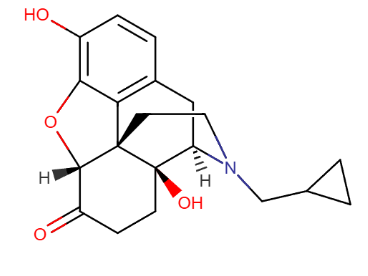
Drug structure
Structural Illustration of Derivative of noroxymorphone that is the N-cyclopropylmethyl congener of naloxone.
https://go.drugbank.com/drugs/DB00704
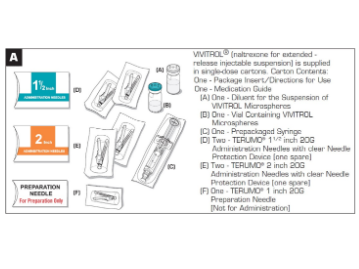
Components provided in a single VIVITROL kit
https://www.accessdata.fda.gov/drugsatfda_docs/label/2022/021897s057lbl.pdf
Drug information
Associated long-acting platforms
Polymer-based particles
Administration route
Intramuscular
Therapeutic area(s)
Use case(s)
Use of drug
Ease of administration
Frequency of administration
User acceptance
Patients receiving opioid analgesics
Patients with current physiologic opioid dependence
Patients in acute opioid withdrawal
Any individual who has failed the naloxone challenge test or has a positive urine
screen for opioids
Patients who have previously exhibited hypersensitivity to naltrexone, PLG,
carboxymethylcellulose, or any other components of the diluent.
Dosage
Available dose and strength
380 mg IM
Maximum dose
380 mg every 4 weeks
Recommended dosing regimen
The recommended dose of VIVITROL is 380 mg delivered intramuscularly (IM) as a gluteal injection, every 4 weeks or once a month, alternating buttocks for each subsequent injection, using the kit components provided in the package.
Additional comments
Prior to initiating VIVITROL, an opioid-free duration of a minimum of 7–10 days is recommended for patients, to avoid precipitation of opioid withdrawal that may be severe enough to require hospitalization
Drug information
Drug's link(s)
Generic name
Brand name
Compound type
Drug class/category
Lifecycle status
Summary
Approval status
Regulatory authorities
Safety
Efficacy
Evidence Summary
Delivery device(s)
No delivery device
Scale-up and manufacturing prospects
Scale-up prospects
VIVITROL is manufactured exclusively at Alkermes' facility in Wilmington, Ohio.
Tentative equipment list for manufacturing
1. Static mixers (first and second inline mixers) 2. Positive‑displacement pumps 3. Stirred extraction vessels (primary & secondary extraction) 4. Custom vibratory sieves (25 µm & 150 µm) 5. Vacuum dryer with nitrogen bleed 6. Freezers (−20 °C) 7. Temperature‑controlled baths (5–10 °C and ambient)
Manufacturing
Manufacturing process of Medisorb Technology based Naltrexone includes: Slow crystallization, fast crystallization, extended‑release PLGA microparticles via solvent extraction, reslurry, static mixing, drying cycles. 1. Prepare polymer solution by dissolving 75:25 DL‑PLGA in ethyl acetate (EtAc) → 16.7% w/w. 2. Solvation / crystallization in different solvents. 3. Solvate formation (ethanol, benzyl alcohol, methanol, DMF, dichloromethane, etc.). 4. Hydrate formation from water. 5. Anhydrous forms from acetonitrile crystallization. 6. Amorphous form generated by melting at 180–190 °C and quenc
Specific analytical instrument required for characterization of formulation
XRPD (phase ID, crystallinity), Differential Scanning Calorimetry (DSC) (thermal behavior), Infrared ATR (IR‑ATR) (functional group identification) using MIRacle™ single‑reflection horizontal ATR (ZnSe)
Clinical trials
ALK21-003-EXT
Identifier
NCT01218971
Link
https://clinicaltrials.gov/study/NCT01218971
Phase
Phase III
Status
Completed
Sponsor
Alkermes, Inc.
More details
This was a Phase 3 multicenter extension of Alkermes' Study ALK21-003 (NCT01218958 \[the base study\]) that evaluated the safety of Medisorb® naltrexone (VIVITROL®) administered every 4 weeks for 48 weeks (13 injections) in alcohol-dependent adults who had completed Study ALK21-003.
Purpose
ALK21-003EXT: An Extension of Study ALK21-003 (NCT01218958) to Test the Long-term Safety of Medisorb® Naltrexone (VIVITROL®)
Interventions
Intervention 1
Intervention 2
Countries
Not provided
Sites / Institutions
Not provided
Trials dates
Anticipated Start Date
Not provided
Actual Start Date
2002-08-01
Anticipated Date of Last Follow-up
2010-12-08
Estimated Primary Completion Date
Not provided
Estimated Completion Date
Not provided
Actual Primary Completion Date
2004-09-01
Actual Completion Date
2004-09-01
Studied populations
Age Cohort
- Adults
- Older Adults
Genders
- All
Accepts pregnant individuals
Unspecified
Accepts lactating individuals
Unspecified
Accepts healthy individuals
No
Comments about the studied populations
Primary Inclusion Criteria: * Completed study drug treatment in Study ALK21-003 (base study \[NCT01218958\]) * Written informed consent for this extension study * Stable address and telephone; reconfirmation of contact's address and phone * Women with childbearing potential must agree to continue to use an approved method of birth control throughout study participation Primary Exclusion Criteria: * Positive urine drug screen for opioids at Visit 1 * Early termination of study drug in the base study * Pregnancy or lactation
Health status
Study type
Interventional (clinical trial)
Enrollment
332
Allocation
Not provided
Intervention model
Parallel Assignment
Intervention model description
Not provided
Masking
Quadruple-blind masking
Masking description
Not provided
Frequency of administration
Studied LA-formulation(s)
Studied route(s) of administration
Use case
Treatment
Indication(s)
Substance use disorders
Key resources
ALK21-010
Identifier
NCT00156923
Link
https://clinicaltrials.gov/study/NCT00156923
Phase
Phase III
Status
Completed
Sponsor
Alkermes, Inc.
More details
This was a Phase 3, multi-center extension of Alkermes' Study ALK21-003EXT (NCT01218971) to further assess the long-term safety of repeat monthly doses of Medisorb® naltrexone (VIVITROL®).
Purpose
ALK21-010: Long-term Safety of Medisorb® Naltrexone (VIVITROL®) in Alcohol-dependent Adults
Interventions
Intervention 1
Intervention 2
Countries
Not provided
Sites / Institutions
Not provided
Trials dates
Anticipated Start Date
Not provided
Actual Start Date
2003-10-01
Anticipated Date of Last Follow-up
2017-06-08
Estimated Primary Completion Date
Not provided
Estimated Completion Date
Not provided
Actual Primary Completion Date
2007-01-01
Actual Completion Date
2007-01-01
Studied populations
Age Cohort
- Adults
- Older Adults
Genders
- All
Accepts pregnant individuals
Unspecified
Accepts lactating individuals
Unspecified
Accepts healthy individuals
No
Comments about the studied populations
Primary Inclusion Criteria: * Completed Study ALK21-003-EXT (NCT01218971), receiving all 13 injections * Willing and able to return for scheduled clinic visits and study assessments * Noncustodial, stable address and phone * Written, informed consent Primary Exclusion Criteria: * Pregnancy or lactation * Terminated early from study drug in Study ALK21-003-EXT (NCT01218971)
Health status
Study type
Interventional (clinical trial)
Enrollment
108
Allocation
Not provided
Intervention model
Parallel Assignment
Intervention model description
Not provided
Masking
Open label
Masking description
Not provided
Frequency of administration
Studied LA-formulation(s)
Studied route(s) of administration
Use case
Treatment
Indication(s)
Substance use disorders
Key resources
ALK21-006EXT
Identifier
NCT00156936
Link
https://clinicaltrials.gov/study/NCT00156936
Phase
Phase III
Status
Terminated
Sponsor
Alkermes, Inc.
More details
This was a multicenter extension of Alkermes' Study ALK21-006 (NCT01218997) designed to assess the long-term safety of repeat monthly doses of naltrexone long-acting injection. All subjects received open-label Medisorb® naltrexone 380 mg (VIVITROL®). Planned treatment duration was up to 3 years. Alkermes terminated the study for business purposes in December 2006. The median duration of treatment among all subjects in this extension study was 43 weeks.
Purpose
ALK21-006EXT: Long-term Safety of Medisorb® Naltrexone (VIVITROL®) in Alcohol- or Opioid-dependent Adults (Extension of Study ALK21-006 [NCT01218997])
Interventions
Intervention 1
Intervention 2
Countries
Not provided
Sites / Institutions
Not provided
Trials dates
Anticipated Start Date
Not provided
Actual Start Date
2004-08-01
Anticipated Date of Last Follow-up
2010-11-05
Estimated Primary Completion Date
Not provided
Estimated Completion Date
Not provided
Actual Primary Completion Date
2007-01-01
Actual Completion Date
2007-01-01
Studied populations
Age Cohort
- Adults
- Older Adults
Genders
- All
Accepts pregnant individuals
Unspecified
Accepts lactating individuals
Unspecified
Accepts healthy individuals
No
Comments about the studied populations
Primary Inclusion Criteria: * Adults with a diagnosis of alcohol and/or opioid dependence as defined by the Diagnostic and Statistical Manual of Mental Disorders (DSM-IV) who had satisfactorily completed Alkermes' Study ALK21-006 or other qualifying Medisorb naltrexone study * Willing and able to return for scheduled clinic visits and study assessments * Had a stable address * Agreed to use a contraception for the duration of the study and for 1 month following the last dose if of childbearing potential * Written informed consent Primary Exclusion Criteria: * Pregnancy or lactation * Terminated early from study drug in a previous Medisorb naltrexone clinical trial * Any finding that, in the view of the investigator, would compromise the ability to fulfill the protocol visit schedule and
Health status
Study type
Interventional (clinical trial)
Enrollment
108
Allocation
Not provided
Intervention model
Parallel Assignment
Intervention model description
Not provided
Masking
Open label
Masking description
Not provided
Frequency of administration
Studied LA-formulation(s)
Studied route(s) of administration
Use case
Treatment
Indication(s)
Substance use disorders
Key resources
ALK21-028
Identifier
NCT01453374
Link
https://clinicaltrials.gov/study/NCT01453374
Phase
Marketed
Status
Completed
Sponsor
Alkermes, Inc.
More details
This phase 4 study will evaluate the feasibility of initiating subjects on VIVITROL in prison and continuing VIVITROL upon release into the community.
Purpose
A Study of VIVITROL in the Prevention of Re-arrest and Re-incarceration
Interventions
Intervention 1
Countries
Sites / Institutions
Not provided
Trials dates
Anticipated Start Date
Not provided
Actual Start Date
2011-01-01
Anticipated Date of Last Follow-up
2015-06-19
Estimated Primary Completion Date
Not provided
Estimated Completion Date
Not provided
Actual Primary Completion Date
2014-05-01
Actual Completion Date
2014-05-01
Studied populations
Age Cohort
- Adults
- Older Adults
Genders
- All
Accepts pregnant individuals
Unspecified
Accepts lactating individuals
Unspecified
Accepts healthy individuals
No
Comments about the studied populations
Inclusion Criteria: * Not currently addicted to opioids, but has a diagnosis of pre-incarceration opioid dependence * Inmate at the Metropolitan Transition Center (Baltimore, MD), Maryland Correctional Institute for Women (Jessup, MD), Baltimore Pre-Release Unit (Baltimore, MD), or Jessup Pre-Release Unit (Jessup, MD) and eligible for release within 30 days of screening * Expressing a goal of opiate-free treatment upon release * Currently opioid free * Planning to live in the Baltimore, MD area for at least 8 months following prison release Exclusion Criteria: * Pregnancy and/or breastfeeding * Clinically significant active medical condition * Active hepatitis * Past or present history of an AIDS-indicator disease in subjects who are infected with HIV * Any untreated or unstable psychia
Health status
Study type
Interventional (clinical trial)
Enrollment
27
Allocation
Not provided
Intervention model
Single group assignment
Intervention model description
Not provided
Masking
Open label
Masking description
Not provided
Frequency of administration
Not provided
Studied LA-formulation(s)
Studied route(s) of administration
Use case
Treatment
Indication(s)
Substance use disorders
Key resources
ALK21-021
Identifier
NCT00834080
Link
https://clinicaltrials.gov/study/NCT00834080
Phase
Phase III
Status
Completed
Sponsor
Alkermes, Inc.
More details
The purpose of this study is to determine the safety and tolerability of Medisorb® naltrexone (VIVITROL®) when administered over a period of 24 months to health care professionals who have a history of opioid dependence.
Purpose
ALK21-021: A Safety Study of Medisorb® Naltrexone (VIVITROL®) Administered to Health Care Professionals
Interventions
Intervention 1
Countries
Sites / Institutions
Not provided
Trials dates
Anticipated Start Date
Not provided
Actual Start Date
2009-03-01
Anticipated Date of Last Follow-up
2018-11-15
Estimated Primary Completion Date
Not provided
Estimated Completion Date
Not provided
Actual Primary Completion Date
2012-05-01
Actual Completion Date
2012-05-01
Studied populations
Age Cohort
- Adults
- Older Adults
Genders
- All
Accepts pregnant individuals
Unspecified
Accepts lactating individuals
Unspecified
Accepts healthy individuals
No
Comments about the studied populations
Primary Inclusion Criteria: * Health care professional (eg, physician, osteopath, nurse, pharmacist) * 18 years of age or older * Enrolled or enrolling in an extended outpatient treatment program for opioid dependence * Women of childbearing potential must agree to use an approved method of contraception for the duration of the study Primary Exclusion Criteria: * Pregnancy and/or lactation * Evidence of hepatic failure * Active hepatitis * Any psychiatric disorder that would compromise ability to complete study requirements * Recent history of suicidal ideation or attempt * Current dependence to any drugs other than prescription opioids or heroin, benzodiazepines, caffeine, marijuana, alcohol, or nicotine * Positive urine drug test or self-reported use of opioids, cocaine, or amphetamin
Health status
Study type
Interventional (clinical trial)
Enrollment
38
Allocation
Not provided
Intervention model
Single group assignment
Intervention model description
Not provided
Masking
Open label
Masking description
Not provided
Frequency of administration
Studied LA-formulation(s)
Studied route(s) of administration
Use case
Treatment
Indication(s)
Substance use disorders
Key resources
ALK21-014
Identifier
NCT00501631
Link
https://clinicaltrials.gov/study/NCT00501631
Phase
Phase III
Status
Completed
Sponsor
Alkermes, Inc.
More details
VIVITROL is indicated for the treatment of alcohol dependence in patients who are able to abstain from alcohol in an outpatient setting prior to initiation of treatment with VIVITROL. This Phase 3B trial was designed to evaluate the efficacy and safety of VIVITROL versus placebo. Injections were administered to patients in whom abstinence was enforced by a period of inpatient hospitalization of 7 to 21 days.
Purpose
ALK21-014: Efficacy and Safety of Medisorb® Naltrexone (VIVITROL®) After Enforced Abstinence
Interventions
Intervention 1
Intervention 2
Countries
Not provided
Sites / Institutions
Not provided
Trials dates
Anticipated Start Date
Not provided
Actual Start Date
2007-07-01
Anticipated Date of Last Follow-up
2011-09-20
Estimated Primary Completion Date
Not provided
Estimated Completion Date
Not provided
Actual Primary Completion Date
2011-01-01
Actual Completion Date
2011-03-01
Studied populations
Age Cohort
- Adults
- Older Adults
Genders
- All
Accepts pregnant individuals
Unspecified
Accepts lactating individuals
Unspecified
Accepts healthy individuals
No
Comments about the studied populations
Primary Inclusion Criteria: * Current diagnosis of alcohol dependence, meeting at least 5 of DSM-IV criteria * Expected to complete inpatient treatment for alcohol dependence within 24 hours of randomization * Must have 7-21 days, inclusive, of inpatient treatment for alcohol dependence prior to first dose * Negative urine toxicological screen for opioids on the day of randomization * Women of childbearing potential must agree to use an approved method of contraception for the study duration Primary Exclusion Criteria: * Pregnancy or lactation * Evidence of hepatic failure including: ascites, bilirubin \>10% above upper limit of normal and/or esophageal variceal disease * Current dependence (within the past year) to benzodiazepines, opioids or cocaine by DSM-IV criteria * Use of any opi
Health status
Study type
Interventional (clinical trial)
Enrollment
300
Allocation
Randomized
Intervention model
Parallel Assignment
Intervention model description
Not provided
Masking
Quadruple-blind masking
Masking description
Not provided
Frequency of administration
Studied LA-formulation(s)
Studied route(s) of administration
Use case
Treatment
Indication(s)
Substance use disorders
Key resources
ALK21-013
Identifier
NCT00678418
Link
https://clinicaltrials.gov/study/NCT00678418
Phase
Phase III
Status
Completed
Sponsor
Alkermes, Inc.
More details
This is a Phase 3 multi-center trial designed to evaluate the clinical efficacy and safety of VIVITROL® (Medisorb® naltrexone 380 mg) versus placebo when administered to adults upon discharge from inpatient treatment for opioid dependence. The study was conducted in 2 parts, Part A and Part B. The clinical portion of both parts has completed. Results for Part B are not yet available.
Purpose
ALK21-013: Efficacy and Safety of Medisorb® Naltrexone (VIVITROL®) in Adults With Opioid Dependence
Interventions
Intervention 1
Intervention 2
Countries
Sites / Institutions
Not provided
Trials dates
Anticipated Start Date
Not provided
Actual Start Date
2008-06-01
Anticipated Date of Last Follow-up
2016-12-21
Estimated Primary Completion Date
Not provided
Estimated Completion Date
Not provided
Actual Primary Completion Date
2009-10-01
Actual Completion Date
2010-11-01
Studied populations
Age Cohort
- Adults
- Older Adults
Genders
- All
Accepts pregnant individuals
Unspecified
Accepts lactating individuals
Unspecified
Accepts healthy individuals
No
Comments about the studied populations
Primary Inclusion Criteria: * Written, informed consent * 18 years of age or older * Current diagnosis of opioid dependence, based on Diagnostic and Statistical Manual of Mental Health Disorders, 4th Ed. (DSM-IV-TR) criteria * Voluntarily seeking treatment for opioid dependence * Completing or recently completed up to 30 days of inpatient treatment for opioid detoxification, and off all opioids (including buprenorphine and methadone) for at least 7 days * Noncustodial, stable residence and phone, plus 1 contact with verifiable address and phone * Significant other (eg, spouse, relative) willing to supervise compliance with the study visit schedule and procedures * Agree to use contraception for study duration if of childbearing potential Primary Exclusion Criteria: * Pregnancy or lactat
Health status
Study type
Interventional (clinical trial)
Enrollment
250
Allocation
Randomized
Intervention model
Parallel Assignment
Intervention model description
Not provided
Masking
Quadruple-blind masking
Masking description
Not provided
Frequency of administration
Studied LA-formulation(s)
Studied route(s) of administration
Use case
Treatment
Indication(s)
Substance use disorders
Key resources
ALK21-006
Identifier
NCT01218997
Link
https://clinicaltrials.gov/study/NCT01218997
Phase
Phase III
Status
Completed
Sponsor
Alkermes, Inc.
More details
This was a Phase 3 multicenter randomized, open-label, safety study assessing the safety of repeat doses of Medisorb® naltrexone 380 mg (VIVITROL®) administered for up to 1 year to adults with alcohol and/or opioid dependence as defined by Diagnostic and Statistical Manual of Mental Health Disorders (DSM-IV) criteria. Eligible subjects were randomized in a 6:1 ratio to receive 1 of the following regimens: a single intramuscular (IM) injection of VIVITROL administered once every 4 weeks or oral naltrexone 50 mg administered daily.
Purpose
ALK21-006: Long-Term Study of Medisorb® Naltrexone (VIVITROL®)
Interventions
Intervention 1
Intervention 2
Countries
Not provided
Sites / Institutions
Not provided
Trials dates
Anticipated Start Date
Not provided
Actual Start Date
2003-08-01
Anticipated Date of Last Follow-up
2010-12-27
Estimated Primary Completion Date
Not provided
Estimated Completion Date
Not provided
Actual Primary Completion Date
2005-03-01
Actual Completion Date
2005-03-01
Studied populations
Age Cohort
- Adults
- Older Adults
Genders
- All
Accepts pregnant individuals
Unspecified
Accepts lactating individuals
Unspecified
Accepts healthy individuals
No
Comments about the studied populations
Primary Inclusion Criteria: * Current diagnosis of DSM-IV alcohol dependence and/or diagnosis of DSM-IV opiate dependence within 3 months prior to screening * 18 years or older * Desire to seek treatment for alcohol and/or opiate abuse/dependence * Agree to use contraception for the study duration if of childbearing potential * Written informed consent and willingness to perform study procedures * Stable address and phone and at least 1 source of contact information (eg, family member, significant other) Primary Exclusion Criteria: * Presence of opiates in the urine (as determined by urine drug test) on Day 0 prior to naltrexone treatment * Clinically significant medical/psychological condition or abnormality at screening (ie, physical examination, electrocardiogram \[ECG\], hematology
Health status
Study type
Interventional (clinical trial)
Enrollment
436
Allocation
Randomized
Intervention model
Parallel Assignment
Intervention model description
Not provided
Masking
Open label
Masking description
Not provided
Frequency of administration
Studied LA-formulation(s)
Studied route(s) of administration
Use case
Treatment
Indication(s)
Substance use disorders
Key resources
ALK21-018
Identifier
NCT00511836
Link
https://clinicaltrials.gov/study/NCT00511836
Phase
Marketed
Status
Completed
Sponsor
Alkermes, Inc.
More details
This was a study of the effects of VIVITROL® on alcohol cue-induced craving and the associated brain activation patterns in alcohol-dependent adults who had recently completed alcohol detoxification and were seeking further treatment for their alcohol dependence. The study was powered to to detect whether VIVITROL attenuates or blocks the BOLD signal increases in response to alcohol-related cues. In the double-blind portion, subjects received a single administration of study drug (VIVITROL 380 mg or placebo). Subjects who completed the double-blind portion could opt to continue to the open-label portion and receive 2 additional months of treatment with VIVITROL 380 mg.
Purpose
ALK21-018: Effects of Medisorb® Naltrexone (VIVITROL®) on Alcohol Craving in Treatment-seeking, Alcohol-dependent Adults
Interventions
Intervention 1
Intervention 2
Countries
Sites / Institutions
Not provided
Trials dates
Anticipated Start Date
Not provided
Actual Start Date
2007-07-01
Anticipated Date of Last Follow-up
2017-06-08
Estimated Primary Completion Date
Not provided
Estimated Completion Date
Not provided
Actual Primary Completion Date
2009-06-01
Actual Completion Date
2009-10-01
Studied populations
Age Cohort
- Adults
- Older Adults
Genders
- All
Accepts pregnant individuals
Unspecified
Accepts lactating individuals
Unspecified
Accepts healthy individuals
No
Comments about the studied populations
Primary Inclusion Criteria: * Current diagnosis of alcohol dependence, meeting at least 3 criteria from the Diagnostic and Statistical Manual of Mental Disorders, 4th Ed. (DSM-IV) * Recently completed alcohol detoxification and seeking treatment for alcohol dependence * Women of childbearing potential must agree to use an approved method of contraception for study duration Primary Exclusion Criteria: * Pregnancy or lactation * Evidence of hepatic failure including: ascites, bilirubin \>10% above upper limit of normal (ULN) and/or esophageal variceal disease * Current dependence (within the past year) to benzodiazepines or cocaine, or current or history of opioid dependence according to DSM-IV criteria * Use of any opioids and/or methadone within 14 days prior to the screening visit, or
Health status
Study type
Interventional (clinical trial)
Enrollment
31
Allocation
Randomized
Intervention model
Parallel Assignment
Intervention model description
Not provided
Masking
Quadruple-blind masking
Masking description
Not provided
Frequency of administration
Studied LA-formulation(s)
Studied route(s) of administration
Use case
Treatment
Indication(s)
Substance use disorders
Key resources
ALK21-003
Identifier
NCT01218958
Link
https://clinicaltrials.gov/study/NCT01218958
Phase
Phase III
Status
Completed
Sponsor
Alkermes, Inc.
More details
This was a Phase 3, multicenter, randomized, double-blind, placebo-controlled study conducted in subjects diagnosed with alcohol dependence as defined by the Diagnostic and Statistical Manual of Mental Disorders, 4th Ed. (DSM-IV). Subjects were randomized (2:2:1:1) to receive intramuscular (IM) injections of Medisorb® naltrexone 190 mg, Medisorb naltrexone 380 mg, placebo for Medisorb naltrexone 190 mg, or placebo for Medisorb naltrexone 380 mg (VIVITROL®). Study drug was administered every 4 weeks for a total of 6 injections.
Purpose
ALK21-003: Study of Medisorb® Naltrexone (VIVITROL®) in Alcohol-Dependent Adults
Interventions
Intervention 1
Intervention 2
Intervention 3
Intervention 4
Countries
Not provided
Sites / Institutions
Not provided
Trials dates
Anticipated Start Date
Not provided
Actual Start Date
2002-02-01
Anticipated Date of Last Follow-up
2017-06-08
Estimated Primary Completion Date
Not provided
Estimated Completion Date
Not provided
Actual Primary Completion Date
2003-09-01
Actual Completion Date
2003-09-01
Studied populations
Age Cohort
- Adults
- Older Adults
Genders
- All
Accepts pregnant individuals
Unspecified
Accepts lactating individuals
Unspecified
Accepts healthy individuals
No
Comments about the studied populations
Primary Inclusion Criteria: * Diagnosis of alcohol dependence based on Diagnostic and Statistical Manual of Mental Disorders, 4th Ed. (DSM-IV) criteria * Male or non-pregnant, non-lactating female * Able to provide TimeLine Follow-Back (TLFB) alcohol consumption information for 90-day period before detoxification and/or screening * At least 2 episodes of heavy alcohol drinking per week during the 30 days before detoxification and/or screening * Negative urine toxicological screen for opiates on day of randomization * Noncustodial, stable residence and phone plus 1 contact with verifiable address and phone Primary Exclusion Criteria: * Evidence of hepatic failure including: ascites, prolonged prothrombin time (PT) (international normalized ratio \[INR\] ≥1.7), bilirubin \>10% above upper
Health status
Study type
Interventional (clinical trial)
Enrollment
624
Allocation
Randomized
Intervention model
Parallel Assignment
Intervention model description
Not provided
Masking
Quadruple-blind masking
Masking description
Not provided
Frequency of administration
Studied LA-formulation(s)
Studied route(s) of administration
Use case
Treatment
Indication(s)
Substance use disorders
Key resources
ALK21-004
Identifier
NCT01218984
Link
https://clinicaltrials.gov/study/NCT01218984
Phase
Phase II
Status
Completed
Sponsor
Alkermes, Inc.
More details
This was a Phase 2, multicenter, randomized, double-blind pilot study in opioid-using adults to assess the presence, duration, and degree of opiate blockade as well as the safety and tolerability of Medisorb® naltrexone (VIVITROL®). Subjects were randomized in a 1:1:1 ratio to receive a single gluteal intramuscular (IM) injection of Medisorb naltrexone 75, 150, or 300 mg.
Purpose
ALK21-004: Single-dose Opiate Challenge of Medisorb® Naltrexone (VIVITROL®) in Adults Who Use Opioids
Interventions
Intervention 1
Intervention 2
Intervention 3
Intervention 4
Intervention 5
Countries
Not provided
Sites / Institutions
Not provided
Trials dates
Anticipated Start Date
Not provided
Actual Start Date
2002-03-01
Anticipated Date of Last Follow-up
2016-11-21
Estimated Primary Completion Date
Not provided
Estimated Completion Date
Not provided
Actual Primary Completion Date
2003-05-01
Actual Completion Date
2003-05-01
Studied populations
Age Cohort
- Adults
- Older Adults
Genders
- All
Accepts pregnant individuals
Unspecified
Accepts lactating individuals
Unspecified
Accepts healthy individuals
Yes
Comments about the studied populations
Primary Inclusion Criteria: * Adults who had used opioids: non-medically for at least 1 year; at least once per week for at least some period during their use history; and fewer than 3 times per week on average for the 30 days prior to screening. * Provided written informed consent * Demonstrated a positive response to hydromorphone challenge during screening * Willing to use contraception for study duration if of childbearing potential Primary Exclusion Criteria: * Any clinically significant medical condition or laboratory abnormality at screening * Participated in a clinical trial within prior 30 days * Dependent on opioids * Seeking treatment for opioid abuse * Psychosis or any major mood or anxiety disorder * Pregnancy or lactation
Health status
Study type
Interventional (clinical trial)
Enrollment
27
Allocation
Randomized
Intervention model
Parallel Assignment
Intervention model description
Not provided
Masking
Quadruple-blind masking
Masking description
Not provided
Frequency of administration
Studied LA-formulation(s)
Studied route(s) of administration
Use case
Treatment
Indication(s)
Substance use disorders
Key resources
BUP/NXT-VIVI
Identifier
NCT01690546
Link
https://clinicaltrials.gov/study/NCT01690546
Phase
Phase II
Status
Completed
Sponsor
Paolo Mannelli
More details
The purpose of this study is to evaluate a very low dose naltrexone-buprenorphine treatment to transfer opioid dependent individuals to extended release naltrexone injection (Vivitrol). The hypothesis is that patients will complete the transfer to Vivitrol successfully, finding the treatment acceptable and showing minimal withdrawal discomfort.
Purpose
Low Dose Naltrexone-buprenorphine Transfer to Vivitrol Injection in Opioid Dependence
Interventions
Intervention 1
Intervention 2
Intervention 3
Countries
Sites / Institutions
Not provided
Trials dates
Anticipated Start Date
Not provided
Actual Start Date
2012-09-01
Anticipated Date of Last Follow-up
2016-04-25
Estimated Primary Completion Date
Not provided
Estimated Completion Date
Not provided
Actual Primary Completion Date
2015-02-01
Actual Completion Date
2015-02-01
Studied populations
Age Cohort
- Adults
- Older Adults
Genders
- All
Accepts pregnant individuals
Unspecified
Accepts lactating individuals
Unspecified
Accepts healthy individuals
No
Comments about the studied populations
Inclusion Criteria: 1. Men and women 18 to 65 years of age who meet DSM-IV criteria for OD of at least six months duration, supported by a positive urine for opiates and a positive naloxone challenge test if the diagnosis is unclear. 2. Individuals must be capable of giving informed consent and capable of complying with study procedures. 3. Participants will be asked to provide locator information including the address and telephone number of a non-drug abusing relative or friend who can reach the participant in emergencies. Exclusion Criteria: 1. Individuals currently prescribed or regularly taking opiates for chronic pain or medical illness. 2. Individuals regularly using licit or illicit methadone or BUP. 3. Individuals meeting DSM-IV criteria for schizophrenia, schizoaffective or ps
Health status
Not provided
Study type
Interventional (clinical trial)
Enrollment
38
Allocation
Not provided
Intervention model
Single group assignment
Intervention model description
Not provided
Masking
Open label
Masking description
Not provided
Frequency of administration
Studied LA-formulation(s)
Studied route(s) of administration
Use case
Treatment
Indication(s)
Substance use disorders
Key resources
TREX
Identifier
NCT01449565
Link
https://clinicaltrials.gov/study/NCT01449565
Phase
Phase II
Status
Completed
Sponsor
San Francisco Department of Public Health
More details
Extended-release naltrexone (XR-NTX, VIVITROL) is an FDA-approved medication with efficacy in treating alcohol dependence and prevention of relapse to opioid dependence. It has shown promise in reducing relapse to amphetamine use among amphetamine-dependent, yet currently amphetamine-abstinent heterosexuals. The investigators will expand upon this promising work to determine whether monthly intramuscular injections of naltrexone will reduce methamphetamine (meth) use among actively using, meth-dependent men who have sex with men (MSM) in this double-blind randomized controlled trial of extended-release naltrexone versus placebo. The investigators will focus on MSM because of the disproportionate and intertwining epidemics of meth use and HIV in this population.
Purpose
Extended-Release Naltrexone to Treat Methamphetamine Dependence in Men Who Have Sex With Men (MSM)
Interventions
Intervention 1
Intervention 2
Countries
Sites / Institutions
Not provided
Trials dates
Anticipated Start Date
Not provided
Actual Start Date
2012-09-01
Anticipated Date of Last Follow-up
2016-04-11
Estimated Primary Completion Date
Not provided
Estimated Completion Date
Not provided
Actual Primary Completion Date
2015-12-01
Actual Completion Date
2016-03-01
Studied populations
Age Cohort
- Adults
- Older Adults
Genders
- Male
Accepts pregnant individuals
Unspecified
Accepts lactating individuals
Unspecified
Accepts healthy individuals
No
Comments about the studied populations
Inclusion criteria: 1. born male; or born female and does not identify as female 2. reports having anal sex with men in the prior six months while under the influence of meth; 3. diagnosed with meth dependence as determined by SCID; 4. interested in stopping or reducing meth use; 5. at least one meth-positive urine during screening and run-in period; 6. no current acute illnesses requiring prolonged medical care; 7. no chronic illnesses that are likely to progress clinically during trial participation; 8. able and willing to provide informed consent and adhere to visit schedule; 9. age 18-65 years; 10. baseline CBC, total protein, albumin, glucose, alkaline phosphatase, creatinine, BUN, total bilirubin, and electrolytes without clinically significant abnormalities as determined by investi
Health status
Not provided
Study type
Interventional (clinical trial)
Enrollment
100
Allocation
Randomized
Intervention model
Parallel Assignment
Intervention model description
Not provided
Masking
Quadruple-blind masking
Masking description
Not provided
Frequency of administration
Studied LA-formulation(s)
Studied route(s) of administration
Use case
Treatment
Indication(s)
Substance use disorders
Key resources
DC
Identifier
NCT02978417
Link
https://clinicaltrials.gov/study/NCT02978417
Phase
Marketed
Status
Completed
Sponsor
Duke University
More details
In preparation for a large-scale randomized controlled trial (RCT) of Vivitrol® effectiveness in drug courts, investigators propose a feasibility study in the Wake County, North Carolina drug court, where an estimated 50% of clients are opioid dependent. Aim 1: Pilot RCT. Pilot-test the delivery of Vivitrol® treatment for 10-20 interested and eligible clients of the Wake County Drug Court.
Purpose
Feasibility Study of Extended-release Naltrexone (Vivitrol) in Drug Court Settings
Interventions
Intervention 1
Intervention 2
Countries
Sites / Institutions
Not provided
Trials dates
Anticipated Start Date
Not provided
Actual Start Date
2017-09-21
Anticipated Date of Last Follow-up
2020-06-12
Estimated Primary Completion Date
Not provided
Estimated Completion Date
Not provided
Actual Primary Completion Date
2019-06-30
Actual Completion Date
2019-06-30
Studied populations
Age Cohort
- Adults
- Older Adults
Genders
- All
Accepts pregnant individuals
Unspecified
Accepts lactating individuals
Unspecified
Accepts healthy individuals
No
Comments about the studied populations
Inclusion Criteria: * Client of Wake County Drug Treatment Court * Interested in medication-assisted treatment for opioid dependence * 18-65 years old * understands and speaks English * understands that study participation is fully voluntary, with no effect on court standing * willing and able to give written informed consent * has an opioid use disorder (DSM-5 diagnosis of moderate or severe opioid use disorder) * has at least 6 months remaining before anticipated Drug Court graduation * (if female) does not intend to become pregnant or breastfeeding during the study period and is willing to adhere to contraception requirements during the study period * is willing to adhere to the study requirements * Has at least 7-10 days without opioid use before beginning extended-release injectable
Health status
Study type
Interventional (clinical trial)
Enrollment
14
Allocation
Randomized
Intervention model
Parallel Assignment
Intervention model description
Not provided
Masking
Open label
Masking description
Not provided
Frequency of administration
Studied LA-formulation(s)
Studied route(s) of administration
Use case
Treatment
Indication(s)
Substance use disorders
Key resources
C18816/6067/DP/US
Identifier
NCT00620750
Link
https://clinicaltrials.gov/study/NCT00620750
Phase
Marketed
Status
Completed
Sponsor
NYU Langone Health
More details
Naltrexone is an opioid antagonist with a high affinity for the mu opioid receptor. The efficacy of extended-release naltrexone (Vivitrol) as a treatment for alcohol dependence has been demonstrated in clinical trials, raising the prospect of integrating pharmacologic treatment for alcohol dependence into general medical care settings. However, the feasibility of implementing this United States Food and Drug Administration approved treatment in the front-line settings in which it is most needed has not been demonstrated. This is an open-label pilot feasibility study of implementing treatment with Vivitrol in primary care medical clinics in a safety net hospital system affiliated with an urban academic center.
Purpose
Extended-release Naltrexone for Alcohol Dependence in Primary Care
Interventions
Intervention 1
Countries
Sites / Institutions
Not provided
Trials dates
Anticipated Start Date
Not provided
Actual Start Date
2007-07-01
Anticipated Date of Last Follow-up
2011-08-22
Estimated Primary Completion Date
Not provided
Estimated Completion Date
Not provided
Actual Primary Completion Date
2008-11-01
Actual Completion Date
2010-02-01
Studied populations
Age Cohort
- Adults
- Older Adults
Genders
- All
Accepts pregnant individuals
Unspecified
Accepts lactating individuals
Unspecified
Accepts healthy individuals
No
Comments about the studied populations
Inclusion Criteria: * Current alcohol dependence * Age 18 or older * English or Spanish-speaking * Without untreated severe mental illness * Liver enzymes (alanine aminotransferase and aspartate aminotransferase) ≤ 3x normal * Kept 2 of last 3 clinic primary care appointments and/or has a working telephone number at which can be contacted directly * Either a) currently abstinent (e.g., referred from an inpatient 'detox' setting) or b) with the ability, in the clinician's judgment, to achieve and maintain abstinence * If female of child-bearing potential, must be using adequate contraception * Able to understand study procedures Exclusion Criteria: * Currently opioid dependent or requiring ongoing treatment with opioids for any indication
Health status
Study type
Interventional (clinical trial)
Enrollment
72
Allocation
Not provided
Intervention model
Single group assignment
Intervention model description
Not provided
Masking
Open label
Masking description
Not provided
Frequency of administration
Studied LA-formulation(s)
Studied route(s) of administration
Use case
Treatment
Indication(s)
Substance use disorders
Key resources
18-26090
Identifier
NCT04094584
Link
https://clinicaltrials.gov/study/NCT04094584
Phase
Marketed
Status
Terminated
Sponsor
University of California, San Francisco
More details
This is a phase 4, open-label, feasibility study of extended release naltrexone (Vivitrol, Alkermes Pharmaceutical) and case management for treatment of alcohol use disorders in the ED. Excess alcohol use is a major cause of morbidity and mortality and contributes to a large number of emergency department (ED) visits. The rate of alcohol-related ED visits is increasing, and there is evidence that this increase may be driven by a subset of patients who frequently visit the ED due to an underlying alcohol use disorder (AUD). The proposed study will assess the feasibility of implementing a multimodal treatment for AUD in the emergency department for 25 patients with AUD. The rationale for including each component of the multimodal treatment is outlined below. Pharmacotherapy is recommended
Purpose
Emergency Department Initiated Extended-Release Naltrexone and Case Management for the Treatment of Alcohol Use Disorder
Interventions
Intervention 1
Countries
Sites / Institutions
Not provided
Trials dates
Anticipated Start Date
Not provided
Actual Start Date
2020-08-14
Anticipated Date of Last Follow-up
2023-05-26
Estimated Primary Completion Date
Not provided
Estimated Completion Date
Not provided
Actual Primary Completion Date
2022-05-01
Actual Completion Date
2022-05-01
Studied populations
Age Cohort
- Adults
- Older Adults
Genders
- All
Accepts pregnant individuals
Unspecified
Accepts lactating individuals
Unspecified
Accepts healthy individuals
No
Comments about the studied populations
Inclusion Criteria: * Active alcohol use by self-report * Known alcohol use disorder or suspected alcohol use disorder and Alcohol Use Disorders Identification Test (AUDIT) score ≥ 8 or AUDIT-C score \> 4, or frequent emergency department visits and hazardous drinking defined as: At least 3 emergency department visits in the past 12 months, including the index visit, and Alcohol Use Disorders Identification Test (AUDIT) score ≥ 8 or AUDIT-C score \> 4 Exclusion Criteria: * Opioid use: currently receiving opioid analgesics, self-report of opioid use in past 7 days, current physiologic opioid dependence, patients in acute opioid withdrawal, urine toxicology screen positive for opiates including fentanyl * History of hypersensitivity to naltrexone, polylactide-co-glycolide (PLG), carboxyme
Health status
Not provided
Study type
Interventional (clinical trial)
Enrollment
179
Allocation
Not provided
Intervention model
Single group assignment
Intervention model description
Not provided
Masking
Open label
Masking description
Not provided
Frequency of administration
Studied LA-formulation(s)
Studied route(s) of administration
Use case
Treatment
Indication(s)
Substance use disorders
Key resources
ALK6428-A301
Identifier
NCT02537574
Link
https://clinicaltrials.gov/study/NCT02537574
Phase
Phase III
Status
Completed
Sponsor
Alkermes, Inc.
More details
This study will evaluate the safety, effectiveness and tolerance of low doses of oral naltrexone along with buprenorphine to treat opioid use disorder prior to the first injection of VIVITROL.
Purpose
Naltrexone for Use in Conjunction With Buprenorphine in Adults With Opioid Use Disorder Prior to First Dose of VIVITROL® (Naltrexone for Extended-Release Injectable Suspension)
Interventions
Intervention 1
Intervention 2
Intervention 3
Countries
Sites / Institutions
Not provided
Trials dates
Anticipated Start Date
Not provided
Actual Start Date
2015-08-01
Anticipated Date of Last Follow-up
2019-03-01
Estimated Primary Completion Date
Not provided
Estimated Completion Date
Not provided
Actual Primary Completion Date
2016-10-27
Actual Completion Date
2017-01-09
Studied populations
Age Cohort
- Adults
Genders
- All
Accepts pregnant individuals
Unspecified
Accepts lactating individuals
Unspecified
Accepts healthy individuals
No
Comments about the studied populations
Inclusion Criteria: * Willing and able to provide informed consent * Willing and able to provide government-issued identification * Has a BMI of 18.0-40.0 kg/m\^2 * Has a physiologic dependence on opioids * Is voluntarily seeking treatment for opioid use disorder and willing to completely withdraw from his/her opioid use throughout the study with desire for or motivation for antagonist therapy * Wiling to abide by the contraception requirements for the duration of the study * Additional criteria may apply Exclusion Criteria: * Is pregnant, planning to become pregnant or breastfeeding during the study * Has used Buprenorphine within 7 days prior to randomization * Has used Methadone within 14 days prior to randomization * Has a history of VIVITROL use within 90 days prior to screening or
Health status
Study type
Interventional (clinical trial)
Enrollment
380
Allocation
Randomized
Intervention model
Parallel Assignment
Intervention model description
Not provided
Masking
Double-blind masking
Masking description
Not provided
Frequency of administration
Not provided
Studied LA-formulation(s)
Studied route(s) of administration
Not provided
Use case
Treatment
Indication(s)
Substance use disorders
Key resources
808641
Identifier
NCT00777062
Link
https://clinicaltrials.gov/study/NCT00777062
Phase
Phase II
Status
Completed
Sponsor
University of Pennsylvania
More details
To evaluate the efficacy of VIVITROL (naltrexone for extended-release injectable suspension) for the treatment of co-occurring cocaine and alcohol dependence
Purpose
VIVITROL as a Treatment for Cocaine and Alcohol Dependence
Interventions
Intervention 1
Intervention 2
Countries
Sites / Institutions
Not provided
Trials dates
Anticipated Start Date
Not provided
Actual Start Date
2009-07-01
Anticipated Date of Last Follow-up
2018-01-24
Estimated Primary Completion Date
Not provided
Estimated Completion Date
Not provided
Actual Primary Completion Date
2012-07-01
Actual Completion Date
2013-09-01
Studied populations
Age Cohort
- Adults
- Older Adults
Genders
- All
Accepts pregnant individuals
Unspecified
Accepts lactating individuals
Unspecified
Accepts healthy individuals
No
Comments about the studied populations
Inclusion Criteria 1. Males and females, 18 to 65 years old. 2. Meets DSM-IV criteria for Cocaine Dependence, as determined by the Structured Clinical Interview for DSM-IV (SCID). 3. Meets DSM-IV criteria for Alcohol Dependence, as determined by the Structured Clinical Interview for DSM-IV (SCID). 4. Meets the following drinking criteria as measured by the Timeline Followback (TLFB) (Sobell, 1995) 1. drank within 30 days of intake day, 2. reports a minimum of XX standard alcoholic drinks in a consecutive 30-day period over the 90-day period prior to starting intake, and 3. has 2 or more days of heavy drinking 5. In the past 30 days prior to consent, used no less than $ of cocaine. 6. Live within a commutable distance of the Treatment Research Center (TRC) at the Penn/VA Center f
Health status
Not provided
Study type
Interventional (clinical trial)
Enrollment
80
Allocation
Randomized
Intervention model
Parallel Assignment
Intervention model description
Not provided
Masking
Triple-blind masking
Masking description
Not provided
Frequency of administration
Studied LA-formulation(s)
Studied route(s) of administration
Use case
Treatment
Indication(s)
Substance use disorders
Key resources
RIH VIVITROL -01
Identifier
NCT01563718
Link
https://clinicaltrials.gov/study/NCT01563718
Phase
Marketed
Status
Completed
Sponsor
Rhode Island Hospital
More details
Naltrexone is a medication that has been shown to help prevent relapse to opioid addiction and it has been reported to be clinically effective in parolee populations although it is rarely used. Recently a depot formulation with one-month duration has received FDA approval for the treatment of alcoholism and opiate dependence. This means that rather than having to take medication daily, individuals can receive one injection that lasts for approximately 30 days. The purpose of this study is to determine whether this monthly injection of naltrexone is practical and useful in the prevention of relapse to opioids and re-incarceration when administered to inmates prior to release from prison. The investigators will also monitor HIV risk behaviors to determine whether the intervention reduces ris
Purpose
Pre-Release VIVITROL for Opioid Dependent Inmates
Interventions
Intervention 1
Countries
Sites / Institutions
Not provided
Trials dates
Anticipated Start Date
Not provided
Actual Start Date
2012-03-01
Anticipated Date of Last Follow-up
2015-10-21
Estimated Primary Completion Date
Not provided
Estimated Completion Date
Not provided
Actual Primary Completion Date
2015-08-01
Actual Completion Date
2015-08-01
Studied populations
Age Cohort
- Adults
Genders
- All
Accepts pregnant individuals
Unspecified
Accepts lactating individuals
Unspecified
Accepts healthy individuals
No
Comments about the studied populations
Inclusion Criteria: 1. Incarcerated adults with known release date. 2. Meet DSM-IV criteria for current (and/or prior to incarceration) opioid dependence. 3. Not interested in agonist (methadone, buprenorphine) treatment. 4. Currently opioid free by history ('detoxed'), with negative urine for all opioids and no sign of opiate withdrawal after IV (or IM if no available venous access) injection of 0.8 mg naloxone. 5. Good health by medical history, physical examination and laboratory tests. 6. Age older than 18. 7. Understands and signs a consent form. 8. Able to speak and understand English. 9. Females: not pregnant (urine hCG negative at baseline and prior to each injection), not planning conception; and planning appropriate contraception if sexually active. Exclusion Criteria: 1. Curr
Health status
Study type
Interventional (clinical trial)
Enrollment
26
Allocation
Randomized
Intervention model
Parallel Assignment
Intervention model description
Not provided
Masking
Open label
Masking description
Not provided
Frequency of administration
Studied LA-formulation(s)
Studied route(s) of administration
Use case
Treatment
Indication(s)
Substance use disorders
Key resources
849558
Identifier
NCT05028062
Link
https://clinicaltrials.gov/study/NCT05028062
Phase
Marketed
Status
Recruiting
Sponsor
University of Pennsylvania
More details
This study is a phase IV, two-arm, randomized, double-blind, placebo-controlled study to assess whether individuals identified as primarily reward drinkers are significantly more likely to reduce heavy drinking if they receive XR-NTX than a matching placebo injection. Study subjects will receive monthly injections of long-acting injectable naltrexone 380 mg (4 mL) or matching placebo. All subjects will also receive 4 sessions of Medical Management (MM). Post-treatment follow-up visits will be conducted at 4 weeks after the scheduled completion of treatment.
Purpose
Naltrexone in AUD Reward Drinkers
Interventions
Intervention 1
Intervention 2
Intervention 3
Countries
Sites / Institutions
Not provided
Trials dates
Anticipated Start Date
Not provided
Actual Start Date
2022-03-07
Anticipated Date of Last Follow-up
2026-01-16
Estimated Primary Completion Date
2027-07-01
Estimated Completion Date
2028-07-01
Actual Primary Completion Date
Not provided
Actual Completion Date
Not provided
Studied populations
Age Cohort
- Adults
- Older Adults
Genders
- All
Accepts pregnant individuals
Unspecified
Accepts lactating individuals
Unspecified
Accepts healthy individuals
No
Comments about the studied populations
Inclusion Criteria: * Age 18-65 years old * Willing to provide signed, informed consent and commit to completing the study procedures * Able to read at an 8th grade or higher level * Current DSM-5 diagnosis of AUD * Reports consuming 24+ standard drinks (men) or 18+ standard drinks (women) weekly on average over the month prior to consent * Expresses a desire to reduce or stop drinking and a willingness to receive two injections of study medication over 8 weeks of treatment. * Either a reward drinker \[i.e., an individual with a score of 19 or greater on the reward subscale and less than or equal to 18 on the relief subscale of the Inventory of Drinking Situations (IDS)\] or a relief drinker (i.e., an individual with a score of 21 or greater on the relief subscale and less than or equal t
Health status
Study type
Interventional (clinical trial)
Enrollment
60
Allocation
Randomized
Intervention model
Parallel Assignment
Intervention model description
Not provided
Masking
Triple-blind masking
Masking description
Not provided
Frequency of administration
Studied LA-formulation(s)
Studied route(s) of administration
Use case
Treatment
Indication(s)
Substance use disorders
Key resources
IPOD
Identifier
NCT02110264
Link
https://clinicaltrials.gov/study/NCT02110264
Phase
Phase III
Status
Completed
Sponsor
University of California, Los Angeles
More details
The aim of this trial is to assess the clinical utility, effectiveness, and cost implications of treatment for incarcerated offenders with opioid use disorders who are randomly assigned to one of three treatment conditions to include a depot formulation of naltrexone (XR-NTX, as Vivitrol®) only (XR-NTX), Vivitrol provided with sessions with a patient navigator (PN) XR-NTX+PN, and a drug education procedure (ETAU) before being released to the community. This trial will investigate whether effective medication therapy used in non-incarcerated populations will also be effective in incarcerated individuals. Empirical evidence demonstrates that starting treatment before release greatly increases the probability of successful outcome including reduced alcohol and drug use, increased employment r
Purpose
Injectable Pharmacotherapy for Opioid Use Disorders (IPOD)
Interventions
Intervention 1
Intervention 2
Intervention 3
Countries
Sites / Institutions
Not provided
Trials dates
Anticipated Start Date
Not provided
Actual Start Date
2015-06-01
Anticipated Date of Last Follow-up
2020-01-13
Estimated Primary Completion Date
Not provided
Estimated Completion Date
Not provided
Actual Primary Completion Date
2018-12-01
Actual Completion Date
2019-05-01
Studied populations
Age Cohort
- Adults
- Older Adults
Genders
- All
Accepts pregnant individuals
Unspecified
Accepts lactating individuals
Unspecified
Accepts healthy individuals
No
Comments about the studied populations
Inclusion Criteria: 1. Be at least 18 years of age or older, 2. Meet criteria for DSM-5 opioid use disorders, 3. Be detained for at least 48 hours, 4. Have an expected release date within one year, 5. Plan to reside in area after release. Exclusion Criteria: 1. Have a medical (e.g., liver failure, congestive heart failure) or psychiatric condition (e.g., suicidal ideation, psychosis) that would make participation unsafe in the judgment of the medical staff or the PI, 2. Have current or chronic pain or have plans to undergo pain treatment/therapy, 3. Have known sensitivity to naltrexone or naloxone, 4. Have participated in an investigational drug study within the past 30 days prior to screening, 5. Be a nursing or pregnant female, or not agree to use a medically acceptable form of birth
Health status
Study type
Interventional (clinical trial)
Enrollment
151
Allocation
Randomized
Intervention model
Parallel Assignment
Intervention model description
Not provided
Masking
Open label
Masking description
Not provided
Frequency of administration
Studied LA-formulation(s)
Studied route(s) of administration
Use case
Treatment
Indication(s)
Substance use disorders
Key resources
NYU IRB Number: 09-0372
Identifier
NCT01180647
Link
https://clinicaltrials.gov/study/NCT01180647
Phase
Phase III
Status
Completed
Sponsor
NYU Langone Health
More details
This pilot study's primary aim is to compare rates of sustained opioid relapse, defined as self-reported opioid use \>50% (\>15 of 30) of days during the first 30 days following release from jail, among persons treated with XR-NTX pre-release vs. controls not receiving XR-NTX.
Purpose
Extended-Release Naltrexone for Opioid Relapse Prevention Following Release From Jail
Interventions
Intervention 1
Intervention 2
Countries
Sites / Institutions
Not provided
Trials dates
Anticipated Start Date
Not provided
Actual Start Date
2010-05-01
Anticipated Date of Last Follow-up
2016-03-08
Estimated Primary Completion Date
Not provided
Estimated Completion Date
Not provided
Actual Primary Completion Date
2013-07-01
Actual Completion Date
2013-07-01
Studied populations
Age Cohort
- Adults
Genders
- All
Accepts pregnant individuals
Unspecified
Accepts lactating individuals
Unspecified
Accepts healthy individuals
No
Comments about the studied populations
Inclusion Criteria: * Adults incarcerated in NYC jails with known release date * DSM-IV criteria for current opioid dependence * No current agonist (methadone, buprenorphine) treatment * Currently opioid free by history ('detoxed') and with a negative urine for all opioids * General good health as determined by complete medical interview and physical examination * Age 18-60 years. Exclusion Criteria: * History of liver failure, cirrhosis, or recent liver function test levels greater than three times normal * Pregnancy, lactation, or planning conception * Active medical illness that might make participation hazardous * Untreated psychiatric disorder * History of allergic reaction to naltrexone, PLG (polylactide co-glycolide), carboxymethylcellulose, or any other components of the diluent
Health status
Study type
Interventional (clinical trial)
Enrollment
48
Allocation
Randomized
Intervention model
Parallel Assignment
Intervention model description
Not provided
Masking
Open label
Masking description
Not provided
Frequency of administration
Studied LA-formulation(s)
Studied route(s) of administration
Use case
Treatment
Indication(s)
Substance use disorders
Key resources
VICTORY
Identifier
NCT01422837
Link
https://clinicaltrials.gov/study/NCT01422837
Phase
Not provided
Status
Completed
Sponsor
Alkermes, Inc.
More details
The objective of the VIVITROL Registry is to gather real world data on opioid dependence and to provide understanding of the health economics of opioid dependence.
Purpose
ALK21-025: Vivitrol's Cost and Treatment Outcomes Registry
Interventions
Not provided
Countries
Sites / Institutions
Not provided
Trials dates
Anticipated Start Date
Not provided
Actual Start Date
2011-08-01
Anticipated Date of Last Follow-up
2018-11-15
Estimated Primary Completion Date
Not provided
Estimated Completion Date
Not provided
Actual Primary Completion Date
2013-10-01
Actual Completion Date
2013-10-01
Studied populations
Age Cohort
- Adults
Genders
- All
Accepts pregnant individuals
Unspecified
Accepts lactating individuals
Unspecified
Accepts healthy individuals
Unspecified
Comments about the studied populations
Not provided
Health status
Not provided
Study type
Not provided
Enrollment
403
Allocation
Not provided
Intervention model
Not provided
Intervention model description
Not provided
Masking
Not provided
Masking description
Not provided
Frequency of administration
Not provided
Studied LA-formulation(s)
Not provided
Studied route(s) of administration
Use case
Treatment
Indication(s)
Substance use disorders
Key resources
7699
Identifier
NCT03711318
Link
https://clinicaltrials.gov/study/NCT03711318
Phase
Phase III
Status
Terminated
Sponsor
New York State Psychiatric Institute
More details
A short-term treatment with buprenorphine prior to initiating treatment with naltrexone may increase the proportion of heroin-dependent patients successfully inducted onto Vivitrol.
Purpose
Buprenorphine Stabilization and Induction Onto Vivitrol for Heroin-dependent Individuals
Interventions
Intervention 1
Countries
Sites / Institutions
Not provided
Trials dates
Anticipated Start Date
Not provided
Actual Start Date
2018-11-01
Anticipated Date of Last Follow-up
2022-11-30
Estimated Primary Completion Date
Not provided
Estimated Completion Date
Not provided
Actual Primary Completion Date
2021-12-31
Actual Completion Date
2021-12-31
Studied populations
Age Cohort
- Adults
Genders
- All
Accepts pregnant individuals
Unspecified
Accepts lactating individuals
Unspecified
Accepts healthy individuals
Yes
Comments about the studied populations
Inclusion Criteria: 1. Individuals between the ages of 18-60 2. Meets DSM-5 criteria of current opioid use disorder with six consecutive months of reported heroin use, supported by a positive urine for opiates indicating regular use of heroin 3. Seeking treatment for opioid use disorder with Vivitrol 4. Capable of giving informed consent and complying with study procedures 5. In otherwise good health based on complete medical history and physical examination, laboratory tests, and EKG 6. BMI between 18-40 Exclusion Criteria: 1. Reported treatment with methadone in the last 3 months or positive urine toxicology for methadone on the day of consent 2. Maintenance on, or regular use of buprenorphine or other prescription opioids 3. Pregnancy, lactation, or failure in a sexually active woman
Health status
Study type
Interventional (clinical trial)
Enrollment
8
Allocation
Not provided
Intervention model
Single group assignment
Intervention model description
Not provided
Masking
Open label
Masking description
Not provided
Frequency of administration
Studied LA-formulation(s)
Studied route(s) of administration
Use case
Treatment
Indication(s)
Substance use disorders
Key resources
HaRP
Identifier
NCT01932801
Link
https://clinicaltrials.gov/study/NCT01932801
Phase
Phase II
Status
Completed
Sponsor
University of Washington
More details
The goal of this study is to test the efficacy of extended-release naltrexone and harm reduction counseling in reducing alcohol-related harm among homeless people with alcohol dependence.
Purpose
Harm Reduction With Pharmacotherapy (HaRP)
Interventions
Intervention 1
Intervention 2
Intervention 3
Countries
Sites / Institutions
Not provided
Trials dates
Anticipated Start Date
Not provided
Actual Start Date
2013-08-01
Anticipated Date of Last Follow-up
2023-05-05
Estimated Primary Completion Date
Not provided
Estimated Completion Date
Not provided
Actual Primary Completion Date
2018-10-11
Actual Completion Date
2019-06-30
Studied populations
Age Cohort
- Adults
- Older Adults
Genders
- All
Accepts pregnant individuals
Unspecified
Accepts lactating individuals
Unspecified
Accepts healthy individuals
No
Comments about the studied populations
Inclusion Criteria: * being a registered client at one of the named partnering sites * being at least 21 years of age (for legal reasons) * agreeing to use an adequate form of birth control (if female and in childbearing years) fulfilling criteria for current alcohol dependence according to DSM-IV-TR criteria as determined by the SCID-I/P Exclusion Criteria: * refusal or inability to consent to participation in research * constituting a risk to safety and security of other clients or staff * known sensitivity or allergy to naltrexone/XR-NTX * current treatment with naltrexone/XR-NTX * being pregnant or nursing * suicide attempts within the past year * renal insufficiency/serum creatinine level \> 1.5 * current opioid dependence according to the DSM-IV-TR criteria * liver transaminases (
Health status
Not provided
Study type
Interventional (clinical trial)
Enrollment
308
Allocation
Randomized
Intervention model
Parallel Assignment
Intervention model description
Not provided
Masking
Quadruple-blind masking
Masking description
Not provided
Frequency of administration
Studied LA-formulation(s)
Studied route(s) of administration
Use case
Treatment
Indication(s)
Substance use disorders
Key resources
Excipients
Proprietary excipients used
Not provided
Novel excipients or existing excipients at a concentration above Inactive Ingredients Database (IID) for the specified route of administration
1. Polylactide-co-glycolide (PLG) 2. Carboxymethylcellulose sodium salt 3. Polysorbate 20 4. Sodium chloride 5. Water for injection (WFI)
Residual solvents used
MeCl (methylene chloride), Heptane, Benzyl alcohol, Ethanol, and Ethyl acetate
Patent info
Compound patent families
Patent informations
| Patent description | Representative patent | Categories | Patent holder | Licence with MPP | Patent source |
|---|---|---|---|---|---|
|
Naltrexone long acting formulations and methods of use
Expiry date: 2025-03-18 The inventions described herein arose from unexpected discoveries made during clinical trials with a long acting formulation of naltrexone. As such, the invention includes a method for treating an individual in need of naltrexone comprising the step of parenterally administering a long acting formulation comprising naltrexone and to the use of naltrexone in the manufacture of medicaments for use in such methods. |
WO2005107753 | Composition | Alkermes Controlled Therapeutic, Ii, Ehrich, Elliot | No |
Patent status
| Patent status/countries | Low, Low- middle and upper-middle | High income |
|---|---|---|
| Granted | ||
| Filed | ||
| Not in force | World Intellectual Property Organization (WIPO), China, Albania, Serbia, Bosnia and Herzegovina, Türkiye, North Macedonia, South Africa, Indonesia, Philippines, Viet Nam | World Intellectual Property Organization (WIPO), Australia, Canada, Liechtenstein, Italy, Denmark, Belgium, United Kingdom, Greece, Netherlands, Hungary, Croatia, Switzerland, Spain, Slovenia, Austria, Romania, Iceland, Cyprus, Finland, France, Bulgaria, Slovakia, Poland, Latvia, Ireland, Estonia, Germany, Luxembourg, Portugal, Czechia, Lithuania, Monaco, Sweden, Japan, Korea, Republic of, New Zealand, Russian Federation, United States of America, Singapore |
Patent informations
| Patent description | Representative patent | Categories | Patent holder | Licence with MPP | Patent source |
|---|---|---|---|---|---|
|
Naltrexone compound and analogues
Expiry date: 1986-12-06 Morphine derivs. (I) and their pharmaceutically accept. salts and compns. (I) Z = O and Y = cyclopropyl, cyclobutyl or 2-Me-1-propenyl; or Z = H.OH&Y = the same and also vinyl, Et, ethynyl or 2-Me-ethynyl As analgesics and narcotic antagonists with absence of side-effects. E.g. in man, N-(3'-Me-2'-butenyl)-14-hydroxydihydronormorphinone. HCl at 35 mg. i.m. shows the same analgesic effect as 15 mg. of morphine sulphate without secondary effects; the related N-cyclopropylmethyl cpd. at 0.005 mg./kg. s.c. in rats antagonises the effect of 0.4 mg./kg. of oxymorphone. |
US3332950 | Compound | Endo Laboratories, Inc | No |
Patent status
| Patent status/countries | Low, Low- middle and upper-middle | High income |
|---|---|---|
| Granted | ||
| Filed | ||
| Not in force | United States of America, Austria, Belgium, Switzerland, Germany, Denmark, Spain, France, United Kingdom, Israel, Luxembourg, Netherlands, Norway, Sweden |
Supporting material
Publications
Saxon, A. J., Akerman, S. C., Liu, C. C., Sullivan, M. A., Silverman, B. L., & Vocci, F. J. (2018). Extended-release naltrexone (XR-NTX) for opioid use disorder in clinical practice: Vivitrol's Cost and Treatment Outcomes Registry. Addiction (Abingdon, England), 113(8), 1477–1487. https://doi.org/10.1111/add.14199
Link: https://doi.org/10.1111/add.14199
Background and aims: Extended-release naltrexone (XR-NTX), a μ-opioid receptor antagonist for prevention of relapse to opioid dependence, has demonstrated efficacy compared with placebo and comparative effectiveness with buprenorphine-naloxone. We report outcomes for XR-NTX in Vivitrol's Cost and Treatment Outcomes Registry.
Design: Observational, open-label, single-arm, multi-center registry assessing baseline characteristics and clinical and health-related quality-of-life outcomes associated with XR-NTX treatment in clinical practice.
Setting: 32 US treatment centers from 2011 to 2013.
Participants: Patients with opioid dependence who were prescribed XR-NTX treatment and then enrolled into the registry.
Measurements: Monthly visits were evaluated for the full population and for patient ubgroups retrospectively, defined by injection number, focusing on the period between baseline and month 6 (1-, 2/3- or 6-XR-NTX).
Findings: Of 403 enrolled patients, 395 were analyzed. Most patients (n = 349) received out-patient care. On average, patients received five injections (median = 3; range = 1-25). The median number of injections administered within 6 months was higher in patients who at baseline were employed (three versus two unemployed, P = 0.02) or had private insurance (five versus two self-payment, P = 0.005; versus two state-funded, P < 0.001). The 1-, 2/3- and 6-XR-NTX groups had 132, 152 and 111 patients, respectively. At baseline, the 6-XR-NTX patients were more likely to meet normal/minimal mental illness criteria and attend school and less likely to report recent drug use. Within 6 months, the 6-XR-NTX group demonstrated improvements in employment, mental health and psychosocial functioning, and decreases in opioid craving, drug use and drug-related behavior.
Conclusions: Among opioid-dependent people receiving XR-NTX treatment, better mental health, higher education and lower recent drug use at baseline are associated with greater treatment duration; in turn, longer treatment duration is associated with lower relapse rates and improved outcomes generally.
Keywords: Extended-release naltrexone; Vivitrol; medication assisted treatment; opioid dependence; opioid use disorder; registry.
Sullivan, M. A., Bisaga, A., Pavlicova, M., Carpenter, K. M., Choi, C. J., Mishlen, K., Levin, F. R., Mariani, J. J., & Nunes, E. V. (2019). A Randomized Trial Comparing Extended-Release Injectable Suspension and Oral Naltrexone, Both Combined With Behavioral Therapy, for the Treatment of Opioid Use Disorder. The American journal of psychiatry, 176(2), 129–137. https://doi.org/10.1176/appi.ajp.2018.17070732
Link: https://doi.org/10.1176/appi.ajp.2018.17070732
Objective:
The oral formulation of the opioid antagonist naltrexone has shown limited effectiveness for treatment of opioid use disorder due to poor adherence. Long-acting injection naltrexone (XR-naltrexone), administered monthly, circumvents the need for daily pill taking, potentially improving adherence, and has been shown to be superior to placebo in reducing opioid use over 6 months of treatment. This open-label trial compared the outcomes of patients with opioid use disorder treated with XR-naltrexone or oral naltrexone in combination with behavioral therapy.
Method:
Sixty opioid-dependent adults completed inpatient opioid withdrawal and were transitioned to oral naltrexone. They were stratified by severity of opioid use (six or fewer bags versus more than six bags of heroin per day) and randomly assigned (1:1) to continue treatment with oral naltrexone (N=32) or XR-naltrexone (N=28) for 24 weeks. The first dose of XR-naltrexone (380 mg) was administered prior to discharge, with monthly doses thereafter, and oral naltrexone was given in a 50-mg daily dose. All participants received weekly behavioral therapy to support treatment and adherence to naltrexone.
Results:
A Cox proportional hazards model adjusting for race, gender, route of use, and baseline opioid use severity indicated that significantly more patients were retained in treatment for 6 months in the XR-naltrexone group (16 of 28 patients, 57.1%) than in the oral naltrexone group (nine of 32 patients, 28.1%) (hazard ratio=2.18, 95% CI=1.07, 4.43).
Conclusions:
Patients receiving XR-naltrexone had twice the rate of treatment retention at 6 months compared with those taking oral naltrexone. These results support the use of XR-naltrexone combined with behavioral therapy as an effective treatment for patients seeking opioid withdrawal and nonagonist treatment for preventing relapse to opioid use disorder.
Additional documents
No documents were uploaded
Useful links
There are no additional links