
|
Developed by 

|
Supported by 


|
LP-98
Developer(s)
|
Shanxi Kangbao Originator
https://baike.baidu.com/en/item/Shanxi%20Kangbao%20Biological%20Products%20Co.%2C%20Ltd./75561
China |

|
Institute of Pathogen Biology, Chinese Academy of Medical Sciences, Beijing Originator
https://www.mgc.ac.cn/IPB_en/
China |
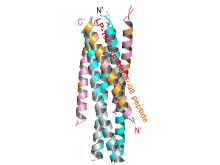
Drug structure
Structure of LP-98 and LP-101 peptides
Yuanmei Zhu et al., Mol Ther. 2026
Drug information
Associated long-acting platforms
Polymer-based particles
Administration route
Subcutaneous, Intravenous
Therapeutic area(s)
Use case(s)
Use of drug
Ease of administration
Frequency of administration
User acceptance
Dosage
Available dose and strength
Investigational. Healthy volunteers: SC 5, 10, 20, 40,80 mg; IV 5, 10, 20, 40, 80,160 mg. Adults with HIV: SC 1.25, 2.5, 5, 10 mg every 2W (multiple-dose study) and 20, 40, 80 mg (exploratory study).
Maximum dose
160 mg intravenous (single dose, healthy volunteers); 80 mg SC
Recommended dosing regimen
No approved regimen. Multiple-dose phase 1/2 study: subcutaneous injection every 14 days, 4 doses in total, at 1.25, 2.5, 5 or 10 mg.
Additional comments
Activity is reduced against enfuvirtide (T20)-resistant HIV-1 carrying single or double mutations in the gp41 N-terminal heptad repeat.
Dosage link(s)
Not provided
Drug information
Drug's link(s)
Not provided
Generic name
Brand name
Compound type
Drug class/category
Lifecycle status
Summary
Approval status
Regulatory authorities
Safety
Efficacy
Evidence Summary
Delivery device(s)
No delivery device
Scale-up and manufacturing prospects
Scale-up prospects
Not reported for this product. Standard synthetic lipopeptide considerations apply: solid-phase peptide synthesis yield and purification, lipid conjugation, solubility and stability of the injectable solution.
Tentative equipment list for manufacturing
Not reported for this product. Solid-phase peptide synthesis, preparative reversed-phase HPLC purification, lyophilisation and aseptic fill-finish may be assumed.
Manufacturing
Synthetic lipopeptide. Process details not published. Developed by Shanxi Kangbao Biological Product Co., Ltd. with the Institute of Pathogen Biology, Beijing.
Specific analytical instrument required for characterization of formulation
Not reported for this product. Standard peptide characterisation applies: reversed-phase HPLC for purity, mass spectrometry for identity, circular dichroism for secondary structure.
Clinical trials
KB_LP-98_103
Identifier
NCT07433387
Link
https://clinicaltrials.gov/study/NCT07433387
Phase
Phase I/II
Status
Recruiting
Sponsor
Shanxi Kangbao Biological Product Co., Ltd.
More details
An Exploratory Multicenter, Open-label, Sequential Cohort Study to Evaluate the Preliminary Efficacy, Safety, and Pharmacokinetic Characteristics of LP-98 for Injection in Antiretroviral Therapy-Naive HIV-Infected Individuals
Purpose
Exploratory Study of LP-98 for Injection in ART-Naive HIV-positive adults
Interventions
Intervention 1
Intervention 2
Intervention 3
Countries
Sites / Institutions
Not provided
Trials dates
Anticipated Start Date
Not provided
Actual Start Date
2026-01-29
Anticipated Date of Last Follow-up
2026-05-06
Estimated Primary Completion Date
2026-07-10
Estimated Completion Date
2026-09-25
Actual Primary Completion Date
Not provided
Actual Completion Date
Not provided
Studied populations
Age Cohort
- Adults
- Older Adults
Genders
- All
Accepts pregnant individuals
Unspecified
Accepts lactating individuals
Unspecified
Accepts healthy individuals
No
Comments about the studied populations
Inclusion Criteria: 1. The subject must voluntarily agree to participate in the study and provide informed consent before undergoing any study-related assessments. 2. At the time of screening, the subject must be between 18 and 65 years of age (inclusive), either male or female. 3. At the time of screening, male subjects must weigh at least 50 kg, and female subjects must weigh at least 45 kg. 4. Plasma HIV RNA levels must be ≥1000 copies/mL, and CD4+ T lymphocyte count must be ≥200 cells/μL. 5. For Female Subjects: Only non-reproductive females will be included, which includes those who have undergone surgical sterilization (documented hysterectomy or bilateral oophorectomy) at least 6 weeks prior to the screening visit, or those who have been postmenopausal for at least 12 months (confi
Health status
Not provided
Study type
Interventional (clinical trial)
Enrollment
30
Allocation
Not provided
Intervention model
Sequential assignment
Intervention model description
Not provided
Masking
Open label
Masking description
Not provided
Frequency of administration
Studied LA-formulation(s)
Studied route(s) of administration
Use case
Treatment
Indication(s)
HIV
Key resources
KB_LP-98_102
Identifier
NCT06560489
Link
https://clinicaltrials.gov/study/NCT06560489
Phase
Phase I/II
Status
Completed
Sponsor
Shanxi Kangbao Biological Product Co., Ltd.
More details
A Randomized, Double-Blind, Parallel-Group, Exploratory Clinical Study to Evaluate the Safety, Pharmacodynamic Effects, and Pharmacokinetic Characteristics of Multiple Subcutaneous Injections of LP-98 in Treatment-Naive HIV-Infected Individuals
Purpose
Pharmacokinetics and Efficacy of Multiple subcutaneous Dosing of LP-98 for Injection in HIV-infected Patients
Interventions
Intervention 1
Countries
Sites / Institutions
Not provided
Trials dates
Anticipated Start Date
Not provided
Actual Start Date
2024-09-02
Anticipated Date of Last Follow-up
2026-05-06
Estimated Primary Completion Date
Not provided
Estimated Completion Date
Not provided
Actual Primary Completion Date
2025-01-10
Actual Completion Date
2025-08-22
Studied populations
Age Cohort
- Adults
- Older Adults
Genders
- All
Accepts pregnant individuals
Unspecified
Accepts lactating individuals
Unspecified
Accepts healthy individuals
No
Comments about the studied populations
Inclusion Criteria: 1. Voluntarily participate in the study and obtain informed consent prior to any study-related evaluation; 2. Aged 18-65 years at the time of the screening visit (including the cut-off), male or female; 3. At the time of screening visit, the weight of male subjects is not less than 50 kg and that of female subjects is not less than 45 kg; 4. Plasma HIV RNA level ≥1000 copies /mL, CD4+T lymphocyte count ≥200 /μL; 5. For female subjects: Only subjects with no reproductive potential were included, including surgical sterilization at least 6 weeks prior to the screening visit (documented hysterectomy or bilateral oopectomies), and menopause ≥12 months prior to the screening visit (menopause confirmed by follicle stimulating hormone (FSH) level ≥40IU/L); 6. For male subject
Health status
Not provided
Study type
Interventional (clinical trial)
Enrollment
40
Allocation
Randomized
Intervention model
Parallel Assignment
Intervention model description
Not provided
Masking
Double-blind masking
Masking description
Not provided
Frequency of administration
Studied LA-formulation(s)
Studied route(s) of administration
Use case
Treatment
Indication(s)
HIV
Key resources
KB_LP-98_101
Identifier
NCT05933824
Link
https://clinicaltrials.gov/study/NCT05933824
Phase
Phase I
Status
Completed
Sponsor
Shanxi Kangbao Biological Product Co., Ltd.
More details
A randomized, placebo-controlled, single-administration, dose-escalation study to evaluate the safety, tolerability, pharmacokinetics and immunogenicity of LP-98 injection in healthy subjects in a first-in-human clinical study
Purpose
Study to Evaluate the Safety, Tolerability, Pharmacokinetics and Immunogenicity of LP-98 Injection in Healthy Subjects
Interventions
Intervention 1
Countries
Sites / Institutions
Not provided
Trials dates
Anticipated Start Date
Not provided
Actual Start Date
2023-07-13
Anticipated Date of Last Follow-up
2026-05-12
Estimated Primary Completion Date
Not provided
Estimated Completion Date
Not provided
Actual Primary Completion Date
2024-04-12
Actual Completion Date
2024-04-12
Studied populations
Age Cohort
- Adults
Genders
- All
Accepts pregnant individuals
Unspecified
Accepts lactating individuals
Unspecified
Accepts healthy individuals
Yes
Comments about the studied populations
Inclusion Criteria: Subjects must meet all of the following inclusion criteria for study entry: 1. Willing to participate in the study and sign ICF with clear date; 2. Aged 18 to 55 years at the screening visit, male or female; 3. Body weight ≥ 50 kg for males or body weight ≥ 45 kg for females, and body mass index (BMI) within the range of 19 to 28 kg/m2 (inclusive); 4. Be in good health in the PI's judgment, with no clinical significance in previous medical history, laboratory tests, physical examinations, vital signs, and ECG findings; 5. All subjects and his/her partners must agree to use effective non-drug contraception (except for subjects had permanent contraception, i.e., bilateral tubal ligation or vasectomy, etc.) from 2 weeks prior to screening to 3 months after finishing the
Health status
Not provided
Study type
Interventional (clinical trial)
Enrollment
36
Allocation
Randomized
Intervention model
Sequential assignment
Intervention model description
Not provided
Masking
Double-blind masking
Masking description
Not provided
Frequency of administration
Studied LA-formulation(s)
Studied route(s) of administration
Use case
Treatment
Indication(s)
HIV
Key resources
Excipients
Proprietary excipients used
Not provided
Novel excipients or existing excipients at a concentration above Inactive Ingredients Database (IID) for the specified route of administration
Not provided
Residual solvents used
Not provided
Patent info
There are either no relevant patents or these were not yet submitted to LAPaL
Supporting material
Publications
Revansiddha H Katte — bioRxiv — 2026-09-15
Link: https://pubmed.ncbi.nlm.nih.gov/42779936/
Peptide fusion inhibitors, an important class of antivirals, block viral entry by targeting fusion proteins required for membrane fusion. However, their interactions with intact trimeric fusion proteins remain elusive; direct observation of binding on virions or native-like trimers has been lacking. Here, we developed a single-molecule imaging platform to visualize peptide binding in real time. LP-98 bound HIV-1 Envelope (Env) trimers on virions and, unexpectedly, prefusion-stabilized soluble Env trimers, with higher affinity for virion-associated Env and, among soluble trimers, a mutant Env. RSV fusion-inhibiting T-118 and 4ca similarly engaged prefusion-stabilized fusion (F) trimers with rapid kinetics and high-nanomolar affinities. Binding to prefusion Env or F demonstrates that peptide inhibitors can act earlier than the canonical prehairpin-intermediate model suggests. Individual binding events revealed heterogeneous peptide-to-trimer stoichiometries, with single-peptide occupancy predominating, while stepwise and simultaneous events revealed multiple routes to higher occupancy. These findings expand the canonical model of peptide fusion inhibition and provide previously inaccessible mechanistic insights into how antiviral peptide fusion inhibitors act.
Yuanmei Zhu — Molecular Therapy — 2026-09-01
Link: https://linkinghub.elsevier.com/retrieve/pii/S1525-0016(26)00801-4
LP-98 is a potent HIV fusion-inhibitory lipopeptide but displays reduced activity against resistant mutants. In this study, we rationally designed a group of new lipopeptides by adding different lengths of gp41 pocket-binding sequence into the N-terminus of LP-98. It was found that a single pocket-inserting residue Ile124 critically determined the anti-HIV activity, whereas incorporation of additional pocket-inserting residues Trp120 and Trp117 generated lipopeptides with greatly reduced activity. As indicated by LP-101 and LP-108, while Ile124-modified lipopeptides maintained or improved the inhibitory activity of LP-98 against divergent HIV and SIV isolates, they had dramatically increased potencies on the resistant mutants. In both the HIV-infected humanized mice and SIV-infected rhesus macaques, LP-101 efficiently suppressed viral replication below detection limits. Mechanically, Ile124-modified lipopeptides exhibited greatly enhanced binding affinity with a target-mimic peptide N44. We determined the crystal structure of LP-101 bound to N44, revealing its N-terminal residues penetrating deeper into the gp41 pocket, forming enhanced interactions with the target site. Molecular dynamics simulations also revealed its flexible N-terminus enables adaptive binding to the wild-type and resistant mutants, with improved binding free energies. Therefore, our data inform the structure-activity relationship of this class of HIV fusion inhibitors and offer new candidates for drug development.
Nian Liu — Antiviral research — 2025-07-01
Link: https://www.sciencedirect.com/science/article/abs/pii/S0166354225001160
Summary: •The binding structure of HIV fusion inhibitor LP-98 has been characterized via multiple approaches. •The N-terminal residue Tyr-127 of LP-98 plays critical roles in binding and inhibition. •Structural models shed light on the molecular basis of LP-98 resistance.
LP-98 is a lipopeptide-based HIV fusion inhibitor with exceptional potency and long-acting antiviral activity, currently in phase II clinical trials. In this study, we elucidated the structural basis of LP-98's antiviral activity and resistance mechanisms. Using AlphaFold3, we first predicted the six-helical bundle (6-HB) structure formed by LP-98 and the gp41-derived NHR peptide N44, identifying key residues mediating interhelical interactions. Subsequent crystallographic analysis of the LP-98/N44 complex confirmed these binding features, revealing that a cluster of hydrophobic residues in LP-98, along with a network of 15 hydrogen bonds, two electrostatic interactions and a salt bridge, critically stabilizes the 6-HB structure. Superposition analyses of the LP-98/N44 crystal structure with either the predicted 6-HB model or the LP-40/N44 crystal structure provided further mechanistic insights into LP-98's binding mode. Additionally, structural and functional characterization of the N-terminal Tyr-127 residue using a truncated variant (LP-98-Y) demonstrated its essential role in inhibitor binding and antiviral activity. Notably, LP-98 exhibited significantly reduced efficacy against T20-resistant HIV strains harboring single or double mutations in NHR. Our structural models shed light on the molecular basis of this resistance, offering critical insights for drug optimization. Collectively, these findings provide a detailed structural understanding of LP-98's antiviral mechanism, supporting its continued development as a promising next-generation HIV fusion inhibitor.
Zhe Cong — Journal of Controlled Release — 2024-12-01
Link: https://www.sciencedirect.com/science/article/pii/S0168365924006898
Summary: •Uniform-sized PLGA MS loading lipopeptide LP-98 was fabricated monthly injection. •LP-98-MS exhibited gradual and sustained release for at least 28 days in vivo. •A single-dose of LP-98-MS sustained long-acting anti-SHIV suppression in macaques. •LP-98-MS provided high-level PrEP for a month against SHIV challenges in macaques.
Non-adherence to antiretroviral treatment is a critical obstacle to effectively managing the progression of AIDS and reducing transmission and mortality rates. A promising strategy to address the clinical disadvantages of user-dependent dosing and decrease medication frequency is the development of long-acting antiretrovirals. In this study, we fabricated PLGA microspheres (MS) incorporating the lipopeptide LP-98 (LP-98-MS), which has previously exhibited potent anti-HIV efficacy. Our findings demonstrate that a single-dose injection of LP-98-MS in SHIV-infected rhesus macaques resulted in sustained and gradual release, maintaining antiviral effects at least 28 days. Notably, a single administration of LP-98-MS provided more than 28 days of sustained release, resulting in high-level pre-exposure prophylaxis (PrEP) for rhesus macaques, even providing complete protection when exposed to repeated intravaginal and intrarectal SHIV challenges. Overall, LP-98-MS holds significant potential in reducing medication frequency and shows promising prospects for further development.
Jing Xue — Cell — 2022-01-06
Summary: •LP-98 shows highly potent in vitro, ex vivo, and in vivo anti-HIV activities •Monkeys with stable virus control have lower viral reservoirs in deep lymph nodes •CD8+ T cells critically contribute to post-treatment control efficacy in monkeys •LP-98 can provide efficient pre-exposure prophylaxis against SHIV or SIV infections
Two HIV fusion-inhibitory lipopeptides (LP-97 and LP-98) were designed with highly potent, long-acting antiviral activity. Monotherapy using a low dose of LP-98 sharply reduced viral loads and maintained long-term viral suppression in 21 SHIVSF162P3-infected rhesus macaques. We found that five treated monkeys achieved potential posttreatment control (PTC) efficacy and had lower viral DNA in deep lymph nodes, whereas monkeys with a stable viral rebound had higher viral DNA in superficial lymph nodes. The tissues of PTC monkeys exhibited significantly decreased quantitative viral outgrowth and fewer PD-1+ central memory CD4+ T cells, and CD8+ T cells contributed to virologic control efficacy. Moreover, LP-98 administrated as a pre-exposure prophylaxis (PrEP) provided complete protection against SHIVSF162P3 and SIVmac239 infections in 51 monkeys via intrarectal, intravaginal, or intravenous challenge. In conclusion, our lipopeptides exhibit high potential as an efficient HIV treatment or prevention strategy.
Additional documents
- TAG Pipeline Report 2026, Antiretroviral Therapy — Treatment Action Group, 2026-08-14
Useful links
There are no additional links