
|
Developed by 

|
Supported by 


|
CAP256V2LS (mAb)
Developer(s)
|
Centre for the AIDS Programme of Research in South Africa (CAPRISA) Originator
https://www.caprisa.org/
South Africa |
Drug structure
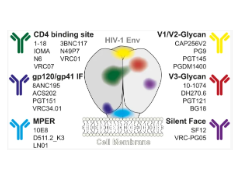
HIV-1 reactive bNAbs, including in yellow the site for CAP256V2LS
Odidika, Front. Immunol., 06 January 2025
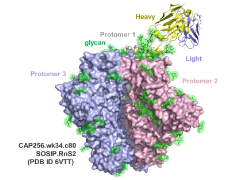
Cryo-EM structure of CAP256-VRC26.25 in complex with the CAP256.wk34.c80 SOSIP.RnS2 Env trimer
Zhang, et al. Engineering of HIV-1 neutralizing antibody CAP256V2LS for manufacturability and improved half life. Sci Rep 12, 17876 (2022).
Drug information
Associated long-acting platforms
Monoclonal antibodies and antibody drug conjugates
Administration route
Subcutaneous, Intravenous
Therapeutic area(s)
Use case(s)
Use of drug
Ease of administration
Frequency of administration
User acceptance
Dosage
Available dose and strength
Investigational: 5 to 20 mg/kg (IV/SC); 1,200 mg fixed SC; 600 mg SC maintenance (CAPRISA 012C part B).
Maximum dose
20 mg/kg SC
Recommended dosing regimen
No approved regimen. CAPRISA 012C part B: loading 1.2 g, then 600 mg SC every 6 months, with VRC07-523LS 1.2 g SC.
Additional comments
Weight-based 20 mg/kg and fixed 1,200 mg gave comparable modelled exposure.
Dosage link(s)
Not provided
Drug information
Drug's link(s)
Not provided
Generic name
Brand name
Compound type
Drug class/category
Lifecycle status
Summary
Approval status
Regulatory authorities
Safety
Efficacy
Evidence Summary
Delivery device(s)
No delivery device
Scale-up and manufacturing prospects
Scale-up prospects
Not provided
Tentative equipment list for manufacturing
Not provided
Manufacturing
Broadly Neutralising Monoclonal Antibody (LS Fc modification). Recombinant human IgG1. Process details not published.
Specific analytical instrument required for characterization of formulation
Not provided
Clinical trials
GS-US-382-5445
Identifier
NCT05281510
Link
https://clinicaltrials.gov/study/NCT05281510
Phase
Phase II
Status
Completed
Sponsor
Gilead Sciences
More details
The goals of this clinical study are to learn more about the study drugs, VRC07-523LS, CAP256V2LS, and vesatolimod (VES) and how safe it is in women that have HIV and are on antiretroviral therapy (ART).
Purpose
Study of VRC07-523LS, CAP256V2LS, and Vesatolimod, in Early Antiretroviral-treated HIV-1 Clade C-infected Women
Interventions
Intervention 1
Intervention 2
Intervention 3
Countries
Sites / Institutions
Not provided
Trials dates
Anticipated Start Date
Not provided
Actual Start Date
2022-06-09
Anticipated Date of Last Follow-up
2025-12-24
Estimated Primary Completion Date
Not provided
Estimated Completion Date
Not provided
Actual Primary Completion Date
2025-01-16
Actual Completion Date
2025-01-16
Studied populations
Age Cohort
- Adults
- Older Adults
Genders
- Female
Accepts pregnant individuals
Unspecified
Accepts lactating individuals
Unspecified
Accepts healthy individuals
No
Comments about the studied populations
Key Inclusion Criteria: * Age ≥ 18 years * Females recruited from the Females Rising through Education, Support, and Health (FRESH) acute human immunodeficiency virus (HIV) infection cohort. * Plasma human immunodeficiency -1 (HIV-1) ribonucleic acid (RNA) levels \< 50 copies/mL at the screening visit. * On antiretroviral (ART) regimen for ≥ 12 consecutive months prior to the screening visit. * Have all the following laboratory values at the screening visit: * Hemoglobin ≥ 10.0 g/dL * White blood cells ≥ 2500 cells/μL * Platelets ≥ 125,000/mL * Absolute neutrophil counts ≥ 1000 cells/μL * Cluster of differentiation (CD)4+ T cell count ≥ 500 cells/μL * Alanine aminotransferase (ALT), aspartate aminotransferase (AST), and bilirubin ≤ 2 × upper limit of normal (ULN) * Creatini
Health status
Not provided
Study type
Interventional (clinical trial)
Enrollment
20
Allocation
Not provided
Intervention model
Single group assignment
Intervention model description
Not provided
Masking
Open label
Masking description
Not provided
Frequency of administration
Studied LA-formulation(s)
Studied route(s) of administration
Use case
Treatment
Key resources
SAMBA III - CAPRISA 012C
Identifier
PACTR202112683307570
Link
https://avac.org/trial/caprisa-012c-samba-trial-iii/
Phase
Phase II
Status
Completed
Sponsor
EDCTP
More details
The CAPRISA 012C trial will evaluate the combination of CAP256V2LS and VRC07-523LS in young HIV-negative South African and Zambian women administered at 4-monthly and 6-monthly dosing intervals. The overall goal of the CAPRISA 012 trials is to develop a new, safe and effective long-acting HIV prevention technology principally for women, to alter the course of the HIV epidemic in Africa
Purpose
A double-blinded, randomized, placebo-controlled phase II trial to assess extended safety and tolerability of subcutaneous CAP256V2LS and VRC07-523LS in HIV-negative women
Interventions
Intervention 1
Countries
Sites / Institutions
Not provided
Trials dates
Anticipated Start Date
Not provided
Actual Start Date
Not provided
Anticipated Date of Last Follow-up
Not provided
Estimated Primary Completion Date
Not provided
Estimated Completion Date
Not provided
Actual Primary Completion Date
Not provided
Actual Completion Date
Not provided
Studied populations
Age Cohort
- Adults
Genders
- Cisgender female
Accepts pregnant individuals
Unspecified
Accepts lactating individuals
Unspecified
Accepts healthy individuals
Unspecified
Comments about the studied populations
Not provided
Health status
Study type
Interventional (clinical trial)
Enrollment
984
Allocation
Randomized
Intervention model
Parallel Assignment
Intervention model description
Not provided
Masking
Double-blind masking
Masking description
Not provided
Frequency of administration
Studied LA-formulation(s)
Studied route(s) of administration
Use case
PrEP
Key resources
| Type | Title | Content | Link |
|---|---|---|---|
| Link | CAPRISA 012C / SAMBA trial III | https://avac.org/trial/caprisa-012c-samba-trial-iii/ | |
| Link | CAPRISA 012C Trial Reveals Viral Resistance as Key Challenge for Broadly Neutralising Antibody-Based HIV Prevention | https://pharmacally.com/caprisa-012c-bnab-trial-hiv-prevention-young-women/ | |
| Link | Results of the CAPRISA 012c clinical trial of a combination of two broadly neutralizing antibodies to prevent HIV infection in young women in southern Africa announced at IAS in Rio de Janeiro | https://www.caprisa.org/PressReleases/Read/20887 | |
| Link | A double-blinded, randomized, placebo-controlled phase II trial to assess extended safety and tolerability of subcutaneous CAP256V2LS and VRC07-523LS in HIV-negative women | https://trial.medpath.com/clinical-trial/79646500f6816e1a/pactr202112683307570-extended-safety-tolerability-subcutaneous-cap256v2ls-vrc07-523ls-hiv-negative-women | |
| Publication | Extended safety and tolerability of subcutaneous CAP256V2LS and VRC07-523LS in HIV-negative women: study protocol for the randomised, placebo-controlled double-blinded, phase 2 CAPRISA 012C trial | Introduction Women-controlled HIV prevention technologies that overcome adherence challenges of available daily oral pre-exposure prophylaxis and give women a choice of options are urgently needed. Broadly neutralising monoclonal antibodies (bnAbs) administered passively may offer a valuable non-antiretroviral biological intervention for HIV prevention. Animal and human studies have demonstrated that bnAbs which neutralise HIV can prevent infection. The optimal plasma antibody concentrations to confer protection against HIV infection in humans is under intense study. The Centre for the AIDS Programme of Research in South Africa (CAPRISA) 012C trial will evaluate extended safety and pharmacokinetics of CAP256V2LS and VRC07-523LS among young HIV-negative South African and Zambian women. The study design also allows for an evaluation of a signal of HIV prevention efficacy.Methods and analysis CAPRISA 012 is a series of trials with three distinct protocols. The completed CAPRISA 012A and 012B phase 1 trials provided critical data for the CAPRISA 012C trial, which is divided into parts A and B. In part A, 90 participants were randomised to receive both CAP256V2LS and VRC07-523LS at 20 mg/kg or placebo, subcutaneously every 16 or 24 weeks. Part B will enrol 900 participants in South Africa and Zambia who will be randomised in a 1:1 ratio and receive an initial loading dose of 1.2 g of CAP256V2LS and VRC07-523LS or placebo followed by 600 mg of CAP256V2LS and 1.2 g of VRC07-523LS or placebo subcutaneously every 6 months. Safety will be assessed by frequency and severity of reactogenicity and other related adverse events. Pharmacokinetics of both antibodies will be measured in systemic and mucosal compartments over time, while participants will be monitored for breakthrough HIV infections.Ethics and dissemination of study findings The University of KwaZulu-Natal Biomedical Research Ethics Committee and South African Health Products Regulatory Authority have approved the trial (BREC/00002492/2021, SAHPRA20210317). Results will be disseminated through conference presentations, peer-reviewed publications and the clinical trial registry.Trial registration number PACTR202112683307570. |
CAPRISA 012C
Identifier
NCT07810062
Link
https://clinicaltrials.gov/study/NCT07810062
Phase
Phase II
Status
Completed
Sponsor
Centre for Infectious Disease Research in Zambia
More details
A double blinded, Randomized, Placebo- controlled phase II trial to assess extended safety and tolerability of subcutaneous CAP256V2LS and VRC07-523LS in HIV- negative women
Purpose
A Phase II Trial to Assess Extended Safety and Tolerability of Subcutaneous CAP256V2LS and VRC07-523LS in HIV- Negative Women
Interventions
Intervention 1
Countries
Sites / Institutions
Not provided
Trials dates
Anticipated Start Date
Not provided
Actual Start Date
2023-08-28
Anticipated Date of Last Follow-up
2026-09-08
Estimated Primary Completion Date
Not provided
Estimated Completion Date
Not provided
Actual Primary Completion Date
2024-06-30
Actual Completion Date
2025-06-30
Studied populations
Age Cohort
- Adults
Genders
- Female
Accepts pregnant individuals
Unspecified
Accepts lactating individuals
Unspecified
Accepts healthy individuals
Yes
Comments about the studied populations
Inclusion Criteria: * 18 to 30 years of age Persons born Female (assigned female sex at birth) and identifying as female.Able and willing to complete the informed consent process * Able to understand the information provided including the potential impact and/or risks linked to SC administration of the study product, willing to comply with protocol procedures, has access to the clinical research site and is available for follow-up for the study duration * Based on clinical assessment, participant must be in good general health as per opinion of the Principal Investigator (PI) or designee * Haemoglobin \> 10g/dl * Creatinine ≤ 1.25 x ULN * ALT \< 1.25 x ULN * HIV negative * Negative β-HCG (human chorionic gonadotropin) pregnancy test on day of enrolment * If of reproductive potential, has
Health status
Not provided
Study type
Interventional (clinical trial)
Enrollment
990
Allocation
Randomized
Intervention model
Single group assignment
Intervention model description
Not provided
Masking
Single blind masking
Masking description
Not provided
Frequency of administration
Studied LA-formulation(s)
Studied route(s) of administration
Use case
PrEP
Key resources
| Type | Title | Content | Link |
|---|---|---|---|
| Link | Safety and preliminary efficacy of 6-monthly subcutaneous CAP256V2LS plus VRC07-523LS for HIV prevention in African women: results of the CAPRISA 012C phase 2 randomised controlled trial | https://programme.aids2026.org/Abstract/Abstract/?abstractid=12779 | |
| Link | Safety and virological outcomes of CAP256V2LS and VRC07-523LS administered at ART initiation with analytical treatment interruption: preliminary results from the NeutART HIV cure trial | https://programme.aids2026.org/Abstract/DesktopAbstractDetail/?abstractid=11262 | |
| Publication | Safety and pharmacokinetics of escalating doses of neutralising monoclonal antibody CAP256V2LS administered with and without VRC07-523LS in HIV-negative women in South Africa (CAPRISA 012B): a phase 1, dose-escalation, randomised controlled trial | Background: Young women in sub-Saharan Africa continue to bear a high burden of HIV infection. Combination anti-HIV monoclonal antibodies are a potential HIV prevention technology that could overcome adherence challenges of daily oral pre-exposure prophylaxis. In this phase 1 clinical trial we aimed to determine the safety and pharmacokinetic profile of the broadly neutralising monoclonal antibody CAP256V2LS. Methods: CAPRISA 012B, a first-in-human dose-escalation phase 1 trial evaluated the safety, pharmacokinetics, and neutralisation activity of CAP256V2LS alone and in combination with VRC07-523LS in young HIV-negative women in Durban, South Africa. Groups 1 and 2 were open label with CAP256V2LS administered at 5 mg/kg and 10 mg/kg intravenously and 5 mg/kg, 10 mg/kg, and 20 mg/kg subcutaneously. In group 3, participants were randomly allocated to receive a combination of CAP256V2LS and VRC07-523LS at 10 mg/kg and 20 mg/kg subcutaneously comixed with ENHANZE, a recombinant human hyaluronidase. Once safety was established in the first three participants, dose escalation took place sequentially following review of safety data. Primary endpoints were the proportion of participants with mild, moderate, and severe reactogenicity or adverse events, graded as per the Division of AIDS toxicity grading. The trial is registered on the Pan African Clinical Trial Registry, PACTR202003767867253, and is recruiting. Findings: From July 13, 2020, to Jan 13, 2021, 42 HIV-negative women, aged 18-45 years, were enrolled. All 42 participants, eight with intravenous and 34 with subcutaneous administration, completed the trial. There were no serious adverse events or dose-limiting toxicities. Most commonly reported symptoms following intravenous administration were headaches in seven (88%) and nausea in four (50%) participants. Commonly reported symptoms following subcutaneous administration were headache in 31 (91%), chills in 25 (74%), and malaise or fatigue in 19 (56%) participants. Adverse events included transient lymphocytopenia in eight (19%), proteinuria in nine (21%), elevated aspartate aminotransferase in ten (24%), and alanine aminotransferase in five (12%) participants. Interpretation: CAP256V2LS administered alone and in combination with VRC07-523LS was safe with favourable pharmacokinetics and neutralisation activity, supporting further assessment in larger clinical studies. | |
| Publication | Cervicovaginal microbiome diversity was not associated with mucosal pharmacokinetics of systemically delivered HIV broadly neutralizing antibodies | Broadly neutralizing antibodies (bNAbs) are a promising HIV prevention strategy due to their potent antiviral activity and potential for long-acting protection. While the vaginal microbiome can influence mucosal immunity and the efficacy of topical interventions, its effect on the pharmacokinetics of systemically administered bNAbs remains unclear. Forty-two women were included in a retrospective analysis of the CAPRISA 012B clinical trial evaluating passive immunization for HIV prevention. Vaginal microbiota were profiled using 16 S rRNA gene sequencing and classified into three community state types (CSTs): CST I (Lactobacillus crispatus-dominated), CST III (Lactobacillus iners-dominated), and CST IV (diverse, non-Lactobacillus-dominated). Mucosal concentrations of CAP256V2LS were measured from Soft-cup® cervicovaginal fluid using the Meso Scale Discovery (MSD) platform with electrochemiluminescence (ECL) detection. Longitudinal analyses assessed CST stability, transitions, and associations with mucosal antibody pharmacokinetics. Lactobacillus-dominated CSTs were most frequent (CST I, 5.3%; CST III, 57.9%), whereas BV-associated CST IV subtypes were less common (CST IV-A, 2.6%; CST IV-B, 34.2%). Lactobacillus-dominated communities were generally stable, while high-diversity CST IV communities were more dynamic, with transitions toward Lactobacillus-dominated states observed over time. Despite these microbial shifts, mucosal bNAb kinetic patterns appeared broadly similar across CSTs. Within the limits of this exploratory analysis, we did not observe clear evidence of an association between CST composition and the timing or magnitude of mucosal bNAb accumulation. These observations were descriptive and not derived from inferential statistical or pharmacokinetic modelling analyses. In this exploratory sub-analysis, cervicovaginal microbiome composition was not clearly associated with differences in mucosal concentrations of systemically administered bNAbs. These findings suggest that systemic bNAb delivery may achieve measurable genital tract exposure across diverse vaginal microbial communities; however, larger studies incorporating inferential pharmacokinetic and immunological analyses are needed to confirm these observations and exclude subtle microbiome-associated effects. |
SAMBA II- CAPRISA 012B
Identifier
PACTR202003767867253
Link
https://pubmed.ncbi.nlm.nih.gov/33243815/
Phase
Phase I
Status
Completed
Sponsor
EDCTP, SAMRC
More details
A Phase I Dose-Escalation Study of the Safety, Tolerability and Pharmacokinetics of a Human Monoclonal Antibody, CAP256V2LS (VRC-HIVMAB0102-00-AB) administered intravenously to HIV-negative and HIV-positive women or subcutaneously alone and in combination with VRC07- 523LS and /or PGT121 to HIV-negative women in South Africa. CAPRISA 012B, described here, is a phase I trial that evaluates the safety and PK of CAP256V2LS. Based on these phase I studies, a bnAb combination will be selected and evaluated in a larger CAPRISA 012C phase II trial. This trial will determine the extended safety and efficacy in preventing HIV infection in young women.Last updated September 14, 2022 https://avac.org/trial/caprisa-012b-samba-trial-ii/
Purpose
A Phase I Dose-Escalation Study of the Safety, Tolerability and PK of CAP256V2LS (VRC-HIVMAB0102-00-AB) alone and in combination with VRC07- 523LS and /or PGT121 to HIV-negative women
Interventions
Intervention 1
Intervention 2
Intervention 3
Intervention 4
Countries
Sites / Institutions
Not provided
Trials dates
Anticipated Start Date
Not provided
Actual Start Date
2020-04-01
Anticipated Date of Last Follow-up
Not provided
Estimated Primary Completion Date
Not provided
Estimated Completion Date
Not provided
Actual Primary Completion Date
Not provided
Actual Completion Date
2022-12-31
Studied populations
Age Cohort
- Adults
Genders
Unspecified
Accepts pregnant individuals
Unspecified
Accepts lactating individuals
Unspecified
Accepts healthy individuals
Unspecified
Comments about the studied populations
Not provided
Health status
Not provided
Study type
Interventional (clinical trial)
Enrollment
Not provided
Allocation
Randomized
Intervention model
Parallel Assignment
Intervention model description
Not provided
Masking
Single blind masking
Masking description
Not provided
Frequency of administration
Not provided
Studied LA-formulation(s)
Studied route(s) of administration
Use case
PrEP
Key resources
| Type | Title | Content | Link |
|---|---|---|---|
| Publication | Assessing the safety and pharmacokinetics of the anti-HIV monoclonal antibody CAP256V2LS alone and in combination with VRC07-523LS and PGT121 in South African women: study protocol for the first-in-human CAPRISA 012B phase I clinical trial | Introduction: New HIV prevention strategies are urgently required. The discovery of broadly neutralising antibodies (bNAbs) has provided the opportunity to evaluate passive immunisation as a potential prevention strategy and facilitate vaccine development. Since 2014, several bNAbs have been isolated from a clade C-infected South African donor, CAPRISA 256. One particular bNAb, CAP256-VRC26.25, was found to be extremely potent, with good coverage against clade C viruses, the dominant HIV clade in sub-Saharan Africa. Challenge studies in non-human primates demonstrated that this antibody was fully protective even at extremely low doses. This bNAb was subsequently structurally engineered and the clinical variant is now referred to as CAP256V2LS.Methods and analysis: CAPRISA 012B is the second of three trials in the CAPRISA 012 bNAb trial programme. It is a first-in-human, phase I study to assess the safety and pharmacokinetics of CAP256V2LS. The study is divided into four groups. Group 1 is a dose escalation of CAP256V2LS administered intravenously to HIV-negative and HIV-positive women. Group 2 is a dose escalation of CAP256V2LS administered subcutaneously (SC), with and without the dispersing agent recombinant human hyaluronidase (rHuPH20) as single or repeat doses in HIV-negative women. Groups 3 and 4 are randomised placebo controlled to assess two (CAP256V2LS+VRC07-523LS; CAP256V2LS+PGT121) and three (CAP256V2LS+VRC07-523LS+PGT121) bNAb combinations administered SC to HIV-negative women. Safety will be assessed by the frequency of reactogenicity and adverse events related to the study product. Pharmacokinetic disposition of CAP256V2LS alone and in combination with VRC07-523LS and PGT121 will be assessed via dose subgroups and route of administration.Ethics and dissemination: The University of KwaZulu-Natal Biomedical Research Ethics Committee (BREC) and the South African Health Products Regulatory Authority (SAHPRA) have granted regulatory approval (trial reference numbers: BREC00000857/2019 and SAHPRA 20200123). Trial results will be disseminated through conference presentations, peer-reviewed publications and the clinical trial registry. |
Excipients
Proprietary excipients used
No proprietary excipient used
Novel excipients or existing excipients at a concentration above Inactive Ingredients Database (IID) for the specified route of administration
SC co-formulation with recombinant human hyaluronidase, ENHANZE, in CAPRISA 012B
Residual solvents used
No residual solvent used
Patent info
There are either no relevant patents or these were not yet submitted to LAPaL
Supporting material
Publications
K. Dong — AIDS 2025 — 2026-07-26
BACKGROUND: We conducted the first interventional HIV cure trial in Africa (NCT05281510) from June 2022 through January 2025. The study included an analytical treatment interruption (ATI) and enrolled early-treated young women living with clade C HIV-1 in South Africa, a population that bears a disproportionate burden of the global epidemic but remains underrepresented in clinical trials.DESCRIPTION: This single-arm, open-label, clinical trial enrolled 20 women from the Females Rising through Education, Support, and Health (FRESH) cohort in Durban, South Africa, detected and treated during acute HIV. Participants received 2 broadly neutralizing antibodies (bNAbs; VRC07-523LS and CAP256V2LS) and a Toll-like receptor 7 agonist, vesatolimod (VES), and underwent ATI for up to 55 weeks or until meeting antiretroviral therapy (ART) restart criteria. There was early community engagement, extensive safety monitoring, including prolonged observation after VES and bNAb dosing, biweekly or weekly visits, frequent blood and tissue sampling, and longitudinal assessment of participant experiences. Participants who remained virally suppressed at the end of study and chose to remain off ART continued close monitoring through FRESH.LESSONS LEARNED: This study provides insights into the implementation of complex trials in resource-limited settings. Having an established cohort and a trusting relationship with the site staff facilitated recruitment and likely improved participant retention and adherence to an intensive study protocol. Gilead Sciences sponsored the trial and worked closely with key collaborators: the NIH Vaccine Research Center contributed extensive knowledge on bNAb development and supplied bNAbs, and the academic partners at the University of KwaZulu-Natal and the Ragon Institute provided scientific input and deep contextual knowledge of the local setting. Finally, the study weathered several disruptive external events, including natural disasters, political unrest, and the COVID-19 pandemic, which required agility, resilience and extensive community engagement.CONCLUSIONS: It is critical to consider context and have a concrete plan for monitoring participants who remain off ART after study conclusion. This trial was a culmination of a productive partnership between academia, government, and industry, and demonstrated the feasibility of conducting complex HIV cure trials in Africa, where the most stand to benefit from these interventions.
Andile Mtshali — Sci Rep — 2026-06-19
Broadly neutralizing antibodies (bNAbs) are a promising HIV prevention strategy due to their potent antiviral activity and potential for long-acting protection. While the vaginal microbiome can influence mucosal immunity and the efficacy of topical interventions, its effect on the pharmacokinetics of systemically administered bNAbs remains unclear. Forty-two women were included in a retrospective analysis of the CAPRISA 012B clinical trial evaluating passive immunization for HIV prevention. Vaginal microbiota were profiled using 16 S rRNA gene sequencing and classified into three community state types (CSTs): CST I (Lactobacillus crispatus-dominated), CST III (Lactobacillus iners-dominated), and CST IV (diverse, non-Lactobacillus-dominated). Mucosal concentrations of CAP256V2LS were measured from Soft-cup® cervicovaginal fluid using the Meso Scale Discovery (MSD) platform with electrochemiluminescence (ECL) detection. Longitudinal analyses assessed CST stability, transitions, and associations with mucosal antibody pharmacokinetics. Lactobacillus-dominated CSTs were most frequent (CST I, 5.3%; CST III, 57.9%), whereas BV-associated CST IV subtypes were less common (CST IV-A, 2.6%; CST IV-B, 34.2%). Lactobacillus-dominated communities were generally stable, while high-diversity CST IV communities were more dynamic, with transitions toward Lactobacillus-dominated states observed over time. Despite these microbial shifts, mucosal bNAb kinetic patterns appeared broadly similar across CSTs. Within the limits of this exploratory analysis, we did not observe clear evidence of an association between CST composition and the timing or magnitude of mucosal bNAb accumulation. These observations were descriptive and not derived from inferential statistical or pharmacokinetic modelling analyses. In this exploratory sub-analysis, cervicovaginal microbiome composition was not clearly associated with differences in mucosal concentrations of systemically administered bNAbs. These findings suggest that systemic bNAb delivery may achieve measurable genital tract exposure across diverse vaginal microbial communities; however, larger studies incorporating inferential pharmacokinetic and immunological analyses are needed to confirm these observations and exclude subtle microbiome-associated effects.
Keywords: Broadly neutralizing antibodies; Vaginal microbiome; Women.
Andile Mtshali — Sci. Rep. — 2026-06-01
Broadly neutralizing antibodies (bNAbs) are a promising HIV prevention strategy due to their potent antiviral activity and potential for long-acting protection. While the vaginal microbiome can influence mucosal immunity and the efficacy of topical interventions, its effect on the pharmacokinetics of systemically administered bNAbs remains unclear. Forty-two women were included in a retrospective analysis of the CAPRISA 012B clinical trial evaluating passive immunization for HIV prevention. Vaginal microbiota were profiled using 16 S rRNA gene sequencing and classified into three community state types (CSTs): CST I (Lactobacillus crispatus-dominated), CST III (Lactobacillus iners-dominated), and CST IV (diverse, non-Lactobacillus-dominated). Mucosal concentrations of CAP256V2LS were measured from Soft-cup® cervicovaginal fluid using the Meso Scale Discovery (MSD) platform with electrochemiluminescence (ECL) detection. Longitudinal analyses assessed CST stability, transitions, and associations with mucosal antibody pharmacokinetics. Lactobacillus-dominated CSTs were most frequent (CST I, 5.3%; CST III, 57.9%), whereas BV-associated CST IV subtypes were less common (CST IV-A, 2.6%; CST IV-B, 34.2%). Lactobacillus-dominated communities were generally stable, while high-diversity CST IV communities were more dynamic, with transitions toward Lactobacillus-dominated states observed over time. Despite these microbial shifts, mucosal bNAb kinetic patterns appeared broadly similar across CSTs. Within the limits of this exploratory analysis, we did not observe clear evidence of an association between CST composition and the timing or magnitude of mucosal bNAb accumulation. These observations were descriptive and not derived from inferential statistical or pharmacokinetic modelling analyses. In this exploratory sub-analysis, cervicovaginal microbiome composition was not clearly associated with differences in mucosal concentrations of systemically administered bNAbs. These findings suggest that systemic bNAb delivery may achieve measurable genital tract exposure across diverse vaginal microbial communities; however, larger studies incorporating inferential pharmacokinetic and immunological analyses are needed to confirm these observations and exclude subtle microbiome-associated effects.
Rémi Latour — J Infect . — 2026-01-16
Objectives: The use of broadly neutralising antibodies (bNAb) to prevent HIV infection is under active investigation, including for the prevention of vertical HIV transmission. In neonates, an uncomplicated sampling method for blood collection is the use of dried blood spots (DBS). We aimed to validate the use of a combination of DBS with ELISA techniques to monitor bNAb concentrations, namely VRC07-523LS and CAP256V2LS, in neonates.
Methods: We evaluated the performance of various DBS elution protocols on spiked adult blood and next on spiked cord blood. The optimised method was validated on blood from infants injected with bNAbs.
Results: After selecting the best elution conditions, we reported good repeatability and reproducibility for both bNAbs in cord blood samples. The concordance study with infant receiving VRC07-523LS or CAP256V2LS samples showed that the values obtained from DBS eluates were closely aligned with those from plasma samples and when corrected by the haematocrit value, the number of outliers was 10.1% with a positive bias of 0.35 µg/mL for CAP256V2LS, and 5.0% with a positive bias of 3 µg/mL for VRC07-523LS.
Conclusions: DBS microsampling allows accurate bNAb concentration measure in neonates, which will facilitate on-going paediatric clinical trials and possible subsequent monitoring in adults with home-sampling if deployed at scale.
Keywords: Antibody quantification; Broadly neutralising antibodies; Dried blood spot; HIV; Pediatric sampling; Vertical transmission.
D. Lim — EACS 2025 — 2025-10-15
Purpose: Understanding the relationship between safety and viral control in HIV cure trials with an analytical treatment interruption (ATI) is paramount given the potential of additive/synergistic immunomodulating effects of investigative drugs. The objective of this analysis was to assess safety and viral control following ATI in an open-label study (NCT05281510) of 2 broadly neutralizing antibodies (bNAbs) combined with an oral Toll-like receptor-7 agonist, vesatolimod (VES), in early-treated women with clade C HIV-1 in South Africa.
Method: Twenty women living with HIV who initiated antiretroviral therapy (ART) during the hyperacute infection phase (suppressed viremia <50 copies/mL and CD4+ T-cell counts ≥500 cells/μL at enrollment) were treated with a biweekly regimen of VES (up to 10 doses) and 2 bNAbs, CAP256V2LS and VRC07-523LS, infused 1 week after the first VES dose. ART was stopped after the third VES dose and participants underwent ATI until they met ART restart criteria. The incidence of treatment-related adverse events (TRAEs) was examined in 3 groups of participants based on how long they remained off ART: early restart (ER; <16 weeks, n=7), delayed restart (DR; 16-44 weeks, n=7), and long-term delayed restart (LTDR; >44 weeks, n=6).
Results: Overall, study treatment was well tolerated with no serious or ≥grade 4 TRAEs (Table). Two DR participants reported grade 3 TRAEs. Across the 3 ATI outcome groups, a similar percentage of participants experienced any TRAEs or infusion-related reactions (ER, 86%; DR, 100%; and LTDR, 83%, respectively). No LTDR participants experienced pyrexia as compared with ER (43%) and DR (57%).
Conclusions: Overall, the combination of bNAbs and VES was generally safe, and safety was comparable across 3 viral control groups, suggesting the potential of an HIV cure regimen with a favorable benefit-risk profile. However, conclusions are limited given the low participant numbers and lack of placebo arm.
Sharana Mahomed — medRxiv [Preprint] — 2025-09-01
Monoclonal antibodies (mAbs) are a major class of drugs for treatment and prevention of disease. In early clinical trials, the pharmacokinetics (pK) of mAbs are usually assessed by measuring mAb concentration in serum. However, it is not a given that the mAbs will retain full functionality over time, emphasizing the need for integrated PK and functional assessments. In a re-analysis of data from the CAPRISA 012B trial, a previously published phase 1 study evaluating mAbs CAP256V2LS and VRC07-523LS in HIV-negative women, we report an unexpected disconnect between serum bNAb concentrations and HIV neutralization activity of CAP256V2LS, with implications for ongoing assessment of passive immunization trials.
Sharana Mahomed — Nature Communications — 2025-09-01
Broadly neutralizing antibodies (bNAbs) offer a promising strategy for HIV prevention. Subcutaneous (SC) administration is more feasible than intravenous delivery but may be limited by prolonged administration times and multiple injections. Here we report a pharmacokinetic (PK) modelling study, an unspecified exploratory analysis that involved 57 HIV-negative African women (median age 25 years; BMI range 18.1-39.3 kg/m²) enrolled in the CAPRISA 012B trial (PACTR202003767867253, total participants n = 76). A predefined sub-analysis directly comparing the 20 mg/kg dose level of ENHANZE™ drug product (EDP) versus no-EDP was conducted in a subset of participants (n = 5 with EDP, n = 5 without). CAP256V2LS and VRC07-523LS-potent HIV-1 bNAbs targeting conserved envelope epitopes-were administered SC with and without EDP. The primary outcome of this sub-analysis was duration of administration. Secondary outcomes included PK and safety. Among the subset of participants (n = 10), EDP significantly reduced median administration time from 49.5 to 10.0 minutes and reduced injections per dose from 3 to 1. CAP256V2LS and VRC07-523LS concentrations at 24 weeks post-dose, were 4.8- and 3.0-fold higher, respectively, with EDP. CAP256V2LS exposure (AUC) increased by 40%, despite a 30% decrease in Cmax. EDP was well tolerated with no safety concerns. These findings support EDP-enhanced SC delivery as a scalable and simplified strategy for long-acting antibody-based HIV prevention.
Sharana Mahomed — J Antimicrob Chemother . — 2025-08-01
Introduction: In the development of broadly neutralizing monoclonal antibodies (bNAb) for HIV prevention, there is a need for simpler dosing strategies. This study assessed whether fixed dosing achieves comparable systemic bNAb concentrations to weight-based dosing across a range of weights.
Methods: The CAPRISA 012B trial was a first-in-human, Phase 1 dose-escalation study conducted in young, HIV-negative women (median age 25 years; IQR: 22-29) in South Africa, evaluating the subcutaneous administration of CAP256V2LS alone and in combination with VRC07-523LS. Weight-based dosing between 5 and 20 mg/kg was assessed. A fixed 1200 mg dose of CAP256V2LS and VRC07-523LS, administered alone or in combination, was evaluated in women weighing from 59.5 kg to 93.2 kg, with a median weight of 78.3 kg (IQR: 67.2-81.5). A population pharmacokinetic model was developed to describe and predict the concentration-time profiles of CAP256V2LS in participants. Model-based simulations then extended this analysis across a broader hypothetical weight range (34.2-119 kg).
Results: Model-based simulations revealed comparable exposure between the 1200 mg fixed-dose and the 20 mg/kg weight-based dosing regimens. Inter-individual variability in bioavailability and clearance was 0.212 and 0.019, respectively, and was consistent across both fixed-dose and weight-based dosing, regardless of the route of administration. Weight-based dosing of CAP256V2LS led to a mean wastage of 265.8 mg for the 5 mg/kg dose, 433.4 mg for the 10 mg/kg dose, and 324.2 mg for the 20 mg/kg dose.
Conclusions: For women weighing 60-93 kg, a fixed-dose of 1200 mg of CAP256V2LS produced similar adverse events and pharmacokinetic profiles as weight-based dosing. The fixed dose reduced variability in the plasma concentrations and product wastage compared with weight-based dosing.
Sharana Mahomed — J Antimicrob Chemother . — 2025-08-01
Introduction: In the development of broadly neutralizing monoclonal antibodies (bNAb) for HIV prevention, there is a need for simpler dosing strategies. This study assessed whether fixed dosing achieves comparable systemic bNAb concentrations to weight-based dosing across a range of weights.
Methods: The CAPRISA 012B trial was a first-in-human, Phase 1 dose-escalation study conducted in young, HIV-negative women (median age 25 years; IQR: 22-29) in South Africa, evaluating the subcutaneous administration of CAP256V2LS alone and in combination with VRC07-523LS. Weight-based dosing between 5 and 20 mg/kg was assessed. A fixed 1200 mg dose of CAP256V2LS and VRC07-523LS, administered alone or in combination, was evaluated in women weighing from 59.5 kg to 93.2 kg, with a median weight of 78.3 kg (IQR: 67.2-81.5). A population pharmacokinetic model was developed to describe and predict the concentration-time profiles of CAP256V2LS in participants. Model-based simulations then extended this analysis across a broader hypothetical weight range (34.2-119 kg).
Results: Model-based simulations revealed comparable exposure between the 1200 mg fixed-dose and the 20 mg/kg weight-based dosing regimens. Inter-individual variability in bioavailability and clearance was 0.212 and 0.019, respectively, and was consistent across both fixed-dose and weight-based dosing, regardless of the route of administration. Weight-based dosing of CAP256V2LS led to a mean wastage of 265.8 mg for the 5 mg/kg dose, 433.4 mg for the 10 mg/kg dose, and 324.2 mg for the 20 mg/kg dose.
Conclusions: For women weighing 60-93 kg, a fixed-dose of 1200 mg of CAP256V2LS produced similar adverse events and pharmacokinetic profiles as weight-based dosing. The fixed dose reduced variability in the plasma concentrations and product wastage compared with weight-based dosing.
Y. Cai — AIDS 2025 — 2025-07-27
BACKGROUND: Vesatolimod (VES), an oral Toll-like receptor-7 (TLR7) agonist, has been shown to upregulate interferon-alpha (IFNa) and interferon-stimulated genes (ISGs). However, VES pharmacodynamic responses in women have not been extensively assessed. We investigated VES pharmacodynamic responses and associations with analytical treatment interruption (ATI) outcomes in an open-label study of VES combined with 2 broadly neutralizing antibodies (bNAbs), VRC07-523LS and CAP256V2LS, in virologically suppressed (VS) women with clade C HIV-1 (NCT05281510).METHODS: This study enrolled 20 acutely treated VS Black women (age =18 years, antiretroviral therapy [ART] for =12 months) from the Females Rising through Education, Support, and Health (FRESH) cohort in South Africa. Participants received up to 10 doses of VES (6 mg for 2 doses, up to 8 mg thereafter) every 2 weeks and intravenous infusions of VRC07-523LS (20 mg/kg) and CAP256V2LS (20 mg/kg) 1 week after the first VES dose. Participants stopped ART by week 5 and remained off ART for 44 weeks or until meeting ART restart criteria (HIV-1 RNA =1000 copies/mL for 8 consecutive weeks; or confirmed HIV-1 RNA >100,000 copies/mL; or confirmed CD4 count <350 cells/µL). Blood samples were collected at baseline and 24 hours after VES doses 1, 5, and 10 for quantification of ISG mRNA expression and serum cytokine levels. Statistical analyses included Wilcoxon rank-sum test and Cox proportional hazards model.RESULTS: 13/20 participants received all 10 VES doses; 6 participants discontinued VES due to viral rebound, and 1 due to adverse events. Consistent upregulation of ISGs (ISG15, MX1, OAS1), cytokines (IFNa, IP10, IL1RA), TLR7, and chemokines (CCL19, CCL8, MCP-1) was observed after each VES dose, with no increase in magnitude after dose escalation. ISG upregulation was more sustained throughout dosing in participants with delayed ART restart (DR; 16-44 weeks) and long-term delayed ART restart (LTDR; >44 weeks), with minimal overall differences in absolute ISG levels across ATI outcomes including early ART restart (ER; <16 weeks), DR and LTDR groups.CONCLUSIONS: VES induced consistent upregulation of ISGs in Black female participants in this small study, suggesting a similar pharmacodynamic effect in this population, compared with previously studied populations.
G. Scarlatti — AIDS 2025 — 2025-07-16
BACKGROUND: PedMAb aims to develop a promising strategy using broadly neutralising antibodies (bNAbs) to interrupt postnatal HIV transmission via breastmilk, which still contributes significantly to paediatric HIV infections in high HIV-prevalence settings. We report on safety and pharmacokinetic (PK) data of 2 anti-HIV-1 bNAbs, CAP256V2LS and VRC07-523LS, administered concurrently to neonates for the first time at delivery and 3 months.
METHODS: Forty HIV-exposed infants born without HIV (HEI) received escalating doses of either CAP256V2LS (arms 1, 2, 3: 5, 10 or 20 mg/kg) or VRC07-523LS (arms 4, 5: 20 or 30 mg/kg) subcutaneously (SC), within 96 hours from birth. Following a safety assessment and PK population analysis 8 infants (arm 6/6b) received a fixed dose of CAP256V2LS (60mg) and VRC07-523LS (90mg) within 96 hours (dose 1) and 120mg of either bNAb at 3 months (dose 2). Infants were observed for 2-4 hours or 1 hour after each dose in arm 6/6b, and seen at days 1, 3, 14 and 28, then monthly until end of follow-up. Internal and external safety committees reviewed safety and PK data monthly and biannually, respectively.
RESULTS: Reactogenicities at 4 hours and over the first 3 days post-dose were observed in 5/24 and 7/16 infants receiving CAP256V2LS or VRC07-523LS, respectively; and in arm 6/6b in 4/8 and 1/8 infants after dose 1 and 2, respectively. 117 Adverse Events (AEs) were reported in 24 infants receiving CAP256V2LS, 82 in 16 infants receiving VRC07-523LS; 43 and 54 AEs were reported in 8 infants of arm 6/6b after dose 1 and 2, respectively. Overall, AEs were grade 1 or 2, except for five grade 3 and two grade 4. In arm 6/6b possibly related AEs were low absolute neutrophil count (n=5) and anaemia (n=1), and one probably related case of irritability. All infants were clinically well, and AEs resolved spontaneously.
CONCLUSIONS: CAP256V2LS and VRC07-523LS are safe when administered alone and in combination to HEI. Phase 2/3 trials are needed to investigate the efficacy of bNAbs to interrupt vertical HIV transmission, thus increasing the armamentarium against postnatal HIV transmission and creating an HIV-free paediatric population. Progress has been hampered by current global development.
Ameena Goga — BMC Infectious Diseases — 2024-07-25
Background The ambitious goal to eliminate new pediatric HIV infections by 2030 requires accelerated prevention strategies in high-risk settings such as South Africa. One approach could be pre-exposure prophylaxis (PrEP) with broadly neutralizing anti-HIV-1 monoclonal antibodies (bNAbs). The aim of our study is to define the optimal dose(s), the ideal combination(s) of bNAbs in terms of potency and breadth, and timing of subcutaneous (SC) administration(s) to prevent breast milk transmission of HIV. Methods Two bNAbs, CAP256V2LS and VRC07-523LS, will be assessed in a sequential and randomized phase I, single-site, single-blind, dose-finding trial. We aim to investigate the 28-day safety and pharmacokinetics (PK) profile of incrementally higher doses of these bNAbs in breastfeeding HIV-1 exposed born without HIV neonates alongside standard of care antiretroviral (ARV) medication to prevent (infants) or treat (mothers) HIV infection. The trial design includes 3 steps and 7 arms (1, 2, 3, 4, 5, 6 and 6b) with 8 infants in each arm. The first step will evaluate the safety and PK profile of the bNAbs when given alone as a single subcutaneous (SC) administration at increasing mg/kg body weight doses within 96 h of birth: arms 1, 2 and 3 at doses of 5, 10, and 20 mg/kg of CAP256V2LS, respectively; arms 4 and 5 at doses of 20 and 30 mg/kg of VRC07-523LS, respectively. Step two will evaluate the safety and PK profile of a combination of the two bNAbs administered SC at fixed doses within 96 h of birth. Step three will evaluate the safety and PK profile of the two bNAbs administered SC in combination at fixed doses, after 3 months. Arms 1 and 6 will follow sequential recruitment, whereas randomization will occur sequentially between arms (a) 2 & 4 and (b) 3 & 5. Before each randomization, a safety pause will allow review of safety data of the preceding arms. Discussion The results of this trial will guide further studies on bNAbs to prevent breast milk transmission of HIV. Protocol version Version 4.0 dated 15 March 2024. Trial registration Pan African Clinical Trial Registry (PACTR): PACTR202205715278722, 21 April 2022; South African National Clinical Trial Registry (SANCTR): DOH-27–062022-6058.
Philippe Van Perre — Immunity, Inflammation and Disease — 2024-04-09
The prospect of preventing HIV infection with broadly neutralising monoclonal antibodies (bNAbs) has generated unprecedented enthusiasm in the scientific community and hope among people living with HIV around the world. HIV bNAbs could be a game changer in the prevention of HIV acquisition. Some of these bNAbs are being tested in early phase clinical trials, and the debate is now about the priorities for strategic large-scale efficacy trials. The prevailing view is that only a fixed combination of at least three bNAbs could prevent HIV, regardless of target populations or routes of transmission. We propose an alternative strategy consisting of evaluating the tolerability and efficacy of one or two bNAbs cocktails tailored to different target populations and indications. The rationale for this alternative strategy is based on ethical, pathophysiological and practical facts and is illustrated by the possibility of preventing HIV transmission through breastfeeding in high incidence/prevalence areas such as southern Africa. There is a prospect of eliminating paediatric HIV acquisition through breastfeeding by using single/dual long-acting bNAb regimens.
Sharana Mahomed — Epidemiology Protocol — 2023-07-25
Introduction Women-controlled HIV prevention technologies that overcome adherence challenges of available daily oral pre-exposure prophylaxis and give women a choice of options are urgently needed. Broadly neutralising monoclonal antibodies (bnAbs) administered passively may offer a valuable non-antiretroviral biological intervention for HIV prevention. Animal and human studies have demonstrated that bnAbs which neutralise HIV can prevent infection. The optimal plasma antibody concentrations to confer protection against HIV infection in humans is under intense study. The Centre for the AIDS Programme of Research in South Africa (CAPRISA) 012C trial will evaluate extended safety and pharmacokinetics of CAP256V2LS and VRC07-523LS among young HIV-negative South African and Zambian women. The study design also allows for an evaluation of a signal of HIV prevention efficacy.
Methods and analysis CAPRISA 012 is a series of trials with three distinct protocols. The completed CAPRISA 012A and 012B phase 1 trials provided critical data for the CAPRISA 012C trial, which is divided into parts A and B. In part A, 90 participants were randomised to receive both CAP256V2LS and VRC07-523LS at 20 mg/kg or placebo, subcutaneously every 16 or 24 weeks. Part B will enrol 900 participants in South Africa and Zambia who will be randomised in a 1:1 ratio and receive an initial loading dose of 1.2 g of CAP256V2LS and VRC07-523LS or placebo followed by 600 mg of CAP256V2LS and 1.2 g of VRC07-523LS or placebo subcutaneously every 6 months. Safety will be assessed by frequency and severity of reactogenicity and other related adverse events. Pharmacokinetics of both antibodies will be measured in systemic and mucosal compartments over time, while participants will be monitored for breakthrough HIV infections.
Ethics and dissemination of study findings The University of KwaZulu-Natal Biomedical Research Ethics Committee and South African Health Products Regulatory Authority have approved the trial (BREC/00002492/2021, SAHPRA20210317). Results will be disseminated through conference presentations, peer-reviewed publications and the clinical trial registry.
Trial registration number PACTR202112683307570.
Sharana Mahomed — The Lancet HIV — 2023-04-01
Background: Young women in sub-Saharan Africa continue to bear a high burden of HIV infection. Combination anti-HIV monoclonal antibodies are a potential HIV prevention technology that could overcome adherence challenges of daily oral pre-exposure prophylaxis. In this phase 1 clinical trial we aimed to determine the safety and pharmacokinetic profile of the broadly neutralising monoclonal antibody CAP256V2LS. Methods: CAPRISA 012B, a first-in-human dose-escalation phase 1 trial evaluated the safety, pharmacokinetics, and neutralisation activity of CAP256V2LS alone and in combination with VRC07-523LS in young HIV-negative women in Durban, South Africa. Groups 1 and 2 were open label with CAP256V2LS administered at 5 mg/kg and 10 mg/kg intravenously and 5 mg/kg, 10 mg/kg, and 20 mg/kg subcutaneously. In group 3, participants were randomly allocated to receive a combination of CAP256V2LS and VRC07-523LS at 10 mg/kg and 20 mg/kg subcutaneously comixed with ENHANZE, a recombinant human hyaluronidase. Once safety was established in the first three participants, dose escalation took place sequentially following review of safety data. Primary endpoints were the proportion of participants with mild, moderate, and severe reactogenicity or adverse events, graded as per the Division of AIDS toxicity grading. The trial is registered on the Pan African Clinical Trial Registry, PACTR202003767867253, and is recruiting. Findings: From July 13, 2020, to Jan 13, 2021, 42 HIV-negative women, aged 18-45 years, were enrolled. All 42 participants, eight with intravenous and 34 with subcutaneous administration, completed the trial. There were no serious adverse events or dose-limiting toxicities. Most commonly reported symptoms following intravenous administration were headaches in seven (88%) and nausea in four (50%) participants. Commonly reported symptoms following subcutaneous administration were headache in 31 (91%), chills in 25 (74%), and malaise or fatigue in 19 (56%) participants. Adverse events included transient lymphocytopenia in eight (19%), proteinuria in nine (21%), elevated aspartate aminotransferase in ten (24%), and alanine aminotransferase in five (12%) participants. Interpretation: CAP256V2LS administered alone and in combination with VRC07-523LS was safe with favourable pharmacokinetics and neutralisation activity, supporting further assessment in larger clinical studies.
Engineering of HIV-1 neutralizing antibody CAP256V2LS for manufacturability and improved half life
Baoshan Zhang — Scientific Reports — 2022-10-25
The broadly neutralizing antibody (bNAb) CAP256-VRC26.25 has exceptional potency against HIV-1 and has been considered for clinical use. During the characterization and production of this bNAb, we observed several unusual features. First, the antibody appeared to adhere to pipette tips, requiring tips to be changed during serial dilution to accurately measure potency. Second, during production scale-up, proteolytic cleavage was discovered to target an extended heavy chain loop, which was attributed to a protease in spent medium from 2-week culture. To enable large scale production, we altered the site of cleavage via a single amino acid change, K100mA. The resultant antibody retained potency and breadth while avoiding protease cleavage. We also added the half-life extending mutation LS, which improved the in vivo persistence in animal models, but did not impact neutralization activity; we observed the same preservation of neutralization for bNAbs VRC01, N6, and PGDM1400 with LS on a 208-virus panel. The final engineered antibody, CAP256V2LS, retained the extraordinary neutralization potency of the parental antibody, had a favorable pharmacokinetic profile in animal models, and was negative in in vitro assessment of autoreactivity. CAP256V2LS has the requisite potency, developability and suitability for scale-up, allowing its advancement as a clinical candidate.
Sharana Mahomed — BMJ Open — 2020-11-26
Introduction: New HIV prevention strategies are urgently required. The discovery of broadly neutralising antibodies (bNAbs) has provided the opportunity to evaluate passive immunisation as a potential prevention strategy and facilitate vaccine development. Since 2014, several bNAbs have been isolated from a clade C-infected South African donor, CAPRISA 256. One particular bNAb, CAP256-VRC26.25, was found to be extremely potent, with good coverage against clade C viruses, the dominant HIV clade in sub-Saharan Africa. Challenge studies in non-human primates demonstrated that this antibody was fully protective even at extremely low doses. This bNAb was subsequently structurally engineered and the clinical variant is now referred to as CAP256V2LS.
Methods and analysis: CAPRISA 012B is the second of three trials in the CAPRISA 012 bNAb trial programme. It is a first-in-human, phase I study to assess the safety and pharmacokinetics of CAP256V2LS. The study is divided into four groups. Group 1 is a dose escalation of CAP256V2LS administered intravenously to HIV-negative and HIV-positive women. Group 2 is a dose escalation of CAP256V2LS administered subcutaneously (SC), with and without the dispersing agent recombinant human hyaluronidase (rHuPH20) as single or repeat doses in HIV-negative women. Groups 3 and 4 are randomised placebo controlled to assess two (CAP256V2LS+VRC07-523LS; CAP256V2LS+PGT121) and three (CAP256V2LS+VRC07-523LS+PGT121) bNAb combinations administered SC to HIV-negative women. Safety will be assessed by the frequency of reactogenicity and adverse events related to the study product. Pharmacokinetic disposition of CAP256V2LS alone and in combination with VRC07-523LS and PGT121 will be assessed via dose subgroups and route of administration.
Ethics and dissemination: The University of KwaZulu-Natal Biomedical Research Ethics Committee (BREC) and the South African Health Products Regulatory Authority (SAHPRA) have granted regulatory approval (trial reference numbers: BREC00000857/2019 and SAHPRA 20200123). Trial results will be disseminated through conference presentations, peer-reviewed publications and the clinical trial registry.
Trial registration number: PACTR202003767867253
Sharana Mahomed — BMJ open — 2020-11-26
Introduction: New HIV prevention strategies are urgently required. The discovery of broadly neutralising antibodies (bNAbs) has provided the opportunity to evaluate passive immunisation as a potential prevention strategy and facilitate vaccine development. Since 2014, several bNAbs have been isolated from a clade C-infected South African donor, CAPRISA 256. One particular bNAb, CAP256-VRC26.25, was found to be extremely potent, with good coverage against clade C viruses, the dominant HIV clade in sub-Saharan Africa. Challenge studies in non-human primates demonstrated that this antibody was fully protective even at extremely low doses. This bNAb was subsequently structurally engineered and the clinical variant is now referred to as CAP256V2LS.
Methods and analysis: CAPRISA 012B is the second of three trials in the CAPRISA 012 bNAb trial programme. It is a first-in-human, phase I study to assess the safety and pharmacokinetics of CAP256V2LS. The study is divided into four groups. Group 1 is a dose escalation of CAP256V2LS administered intravenously to HIV-negative and HIV-positive women. Group 2 is a dose escalation of CAP256V2LS administered subcutaneously (SC), with and without the dispersing agent recombinant human hyaluronidase (rHuPH20) as single or repeat doses in HIV-negative women. Groups 3 and 4 are randomised placebo controlled to assess two (CAP256V2LS+VRC07-523LS; CAP256V2LS+PGT121) and three (CAP256V2LS+VRC07-523LS+PGT121) bNAb combinations administered SC to HIV-negative women. Safety will be assessed by the frequency of reactogenicity and adverse events related to the study product. Pharmacokinetic disposition of CAP256V2LS alone and in combination with VRC07-523LS and PGT121 will be assessed via dose subgroups and route of administration.
Ethics and dissemination: The University of KwaZulu-Natal Biomedical Research Ethics Committee (BREC) and the South African Health Products Regulatory Authority (SAHPRA) have granted regulatory approval (trial reference numbers: BREC00000857/2019 and SAHPRA 20200123). Trial results will be disseminated through conference presentations, peer-reviewed publications and the clinical trial registry.
Additional documents
No documents were uploaded
Useful links
- CAPRISA 012C Trial Reveals Viral Resistance as Key Challenge for Broadly Neutralising Antibody-Based HIV Prevention — Pharmacally, 2026-08-03
- Safety and preliminary efficacy of 6-monthly subcutaneous CAP256V2LS plus VRC07-523LS for HIV prevention in African women: results of the CAPRISA 012C phase 2 randomised controlled trial — AIDS 2026, 2026-07-29
- Safety and virological outcomes of CAP256V2LS and VRC07-523LS administered at ART initiation with analytical treatment interruption: preliminary results from the NeutART HIV cure trial — AIDS 2026, 2026-07-29
- A double-blinded, randomized, placebo-controlled phase II trial to assess extended safety and tolerability of subcutaneous CAP256V2LS and VRC07-523LS in HIV-negative women — MedPath, 2023-05-29
- PedMAb1-Ex: Preventing pediatric HIV with broadly neutralizing anti-HIV-1 monoclonal antibodies — South African Medical Research Council